How Often Can You Heat Style Your Hair?
Every other page here answers which tool and what temperature. This one answers the question nobody in the category will put a number on.
How this page is funded: the buy links below are affiliate links, and Heat Index earns a commission on qualifying purchases at no cost to you. Nothing on this page was supplied by a manufacturer, and commission plays no part in the ranking — read the full disclosure. Picks are chosen from published specifications, not from hands-on testing; the method is written down so you can check it. Prices last verified November 21, 2026.
There is no published answer to this question, and the honest first move is to say so. The American Academy of Dermatology tells you to limit heat styling without naming an interval. Not one of the 43 heated tools on this site publishes a usage frequency. And the research this site cites measures what happens at a temperature, not what happens when you do it again on Thursday.
So anyone telling you "twice a week, maximum" is making it up. What follows is what is actually published, and a procedure you can run on your own hair instead of a number somebody invented.
What the AAD actually says
The American Academy of Dermatology's healthy-hair guidance contains exactly two sentences about heat, and they are worth reading closely because of what is missing from them:
- "Limit blow drying and use of tools like flat or curling irons." The word doing the work is *limit*, and it is not quantified anywhere on the page.
- "Use low or medium heat settings and a product to protect your hair from the heat." This is a setting instruction, not a frequency one — and it is the only actionable number-adjacent advice there.
The page does not compare air drying with blow drying, does not describe how damage accumulates, and does not mention breakage or split ends. That is not a criticism of the AAD; a dermatology body is not going to publish a sessions-per-week figure it cannot support either. It is simply the state of the evidence.
What the tools say, counted
If the health advice will not give a frequency, the obvious next place to look is the manufacturers. They publish wattages, plate materials, ion counts, warranties and settings grids. So here is the count across every product on this site:
| What we looked for | How many publish it |
|---|---|
| A usage frequency — sessions per week, daily-use statement, duty cycle | 0 of 43 heated tools |
| An auto shut-off interval | 6 tools, from 10 minutes to 2 hours |
| A temperature in degrees | 26 of 43 heated tools |
| A warranty term | 12 of 66 products |
The auto shut-off row is the closest the category comes, and it is answering a different question: Dyson's Corrale switches off after 10 minutes of inactivity, ghd's platinum+ after 30, Remington, Revlon and Paul Mitchell at around an hour, and the Hot Tools curler at two. Every one of those is about a tool you left switched on, not about how often you are allowed to pick it up. The brand disclosure record counts the rest of what each maker will and will not print.
Why the research cannot answer it either
The two thresholds this site works from are real and they are specific: published research on thermally treated hair reports cuticle degradation beginning around 150C (302F) and cortex damage from around 200C (392F). Those are the numbers behind every temperature recommendation here.
But they are per-exposure figures. They describe what a temperature does to a fiber, not what ten sessions at a safe temperature add up to against one session at an unsafe one. Nothing in the sources this site can cite converts exposures into a schedule, and preventing heat damage is where the mechanism is set out in full, including the part that cannot be undone.
The one interval anybody does publish
The AAD will not quantify heat frequency, but it does quantify washing — and for most people those two are the same schedule, because heat styling happens on wash day. Its guidance is to wash based on how dirty or oily hair gets: "If you have straight hair and an oily scalp, you may want to shampoo every day. If your hair is dry, textured, curly, or thick, shampoo when needed — at least once every 2 to 3 weeks as needed."
Read that against your own routine and the ceiling appears on its own. If your scalp genuinely needs daily shampooing, daily *drying* is part of that, and the lever is the dryer's heat setting rather than the calendar. If your hair is dry, curly or coarse and you wash it every week or two, you have far fewer forced heat events than the internet's "twice a week" rule implies — and the sessions you do have can be the gentler kind.
That is also why a tool that lets you stretch the gap is worth more than one that is marginally faster. The making it last section of the blowout guide is the technique side of the same arithmetic.
Three levers that cut total heat without cutting sessions
- Fewer passes per session. This is the biggest published lever and it is a hardware one: a longer or wider plate finishes a section in fewer passes. BaBylissPRO publishes 4-inch extended plates on one iron and 5-inch on another, which is why styling tools for long hair ranks on coverage. On short hair the same logic runs the other way — a half-inch plate reaches the root instead of needing three attempts at it.
- A lower published ceiling. Two brands state a temperature their tools will not exceed rather than a maximum they can reach: Shark regulates 1,000 times a second and states it never exceeds 230F, and ghd holds one constant 365F with no dial. Both sit under the 392F cortex figure, and one sits under the 302F cuticle figure too.
- Air dry further before the heat goes on. Not instead of — air drying is not automatically safer, and an iron on wet hair is the single most damaging thing in this category. The move is to let hair dry most of the way, then use heat for the last stretch and the shape.
Quick picks
Ranked, with the reasoning underneath. Tap any row to jump to that write-up; tap the price to check it on Amazon. Prices come from the live layer, never from this page.
| # | Product | Best for | Type | Price |
|---|---|---|---|---|
| 1 | 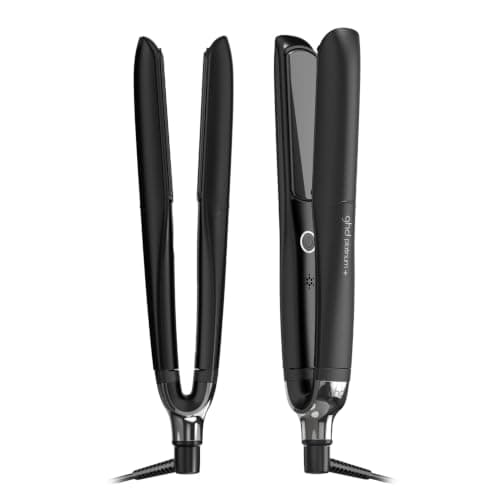 ghd platinum+ StylerOne temperature, 365F, held by a sensor system reading 250 times a second. It is the opposite design philosophy to a 450F iron and it is the better one. | A single temperature chosen for hair health, not marketing | Predictive-heat iron | |
| 2 | 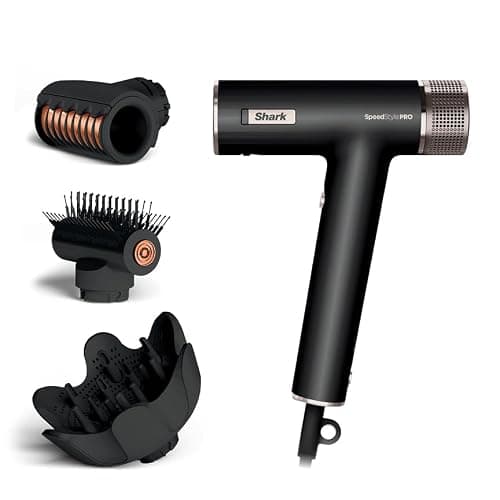 Shark SpeedStyle Pro Ionic Dryer (HD732)The rare dryer that publishes the numbers that matter: every heat setting in degrees, plus a ceiling it says it never exceeds at 230F, which is below every damage threshold in the literature. | A published temperature ceiling you can actually check | High-velocity dryer | |
| 3 | 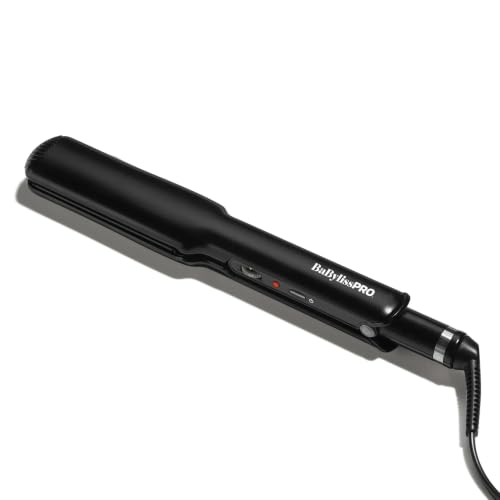 BaBylissPRO Porcelain Ceramic 1.5 in. Flat IronOne of only two irons here that publishes a plate LENGTH, and the only one whose listing states outright that it is built for longer hair — 1.5 inches wide by 4 inches long is coverage per pass, which is the thing long hair actually costs you. | Covering the most hair per pass | 1.5-inch long-plate iron | |
| 4 | 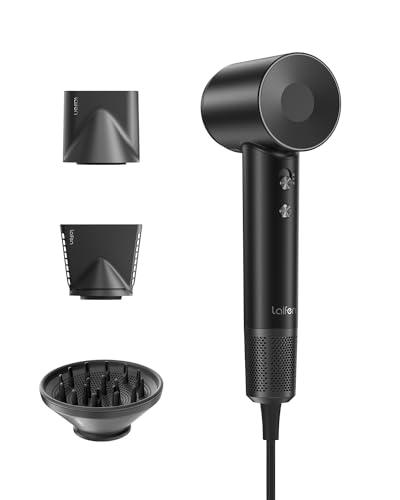 Laifen Swift High-Speed Hair DryerA 110,000 rpm brushless motor moving air at 22.3 m/s, which dries by air speed rather than temperature. That trade is the entire argument for high-speed dryers. | Cutting drying time without cranking the heat | High-speed brushless dryer |
#1 · A single temperature chosen for hair health, not marketing
ghd platinum+ Styler
One temperature, 365F, held by a sensor system reading 250 times a second. It is the opposite design philosophy to a 450F iron and it is the better one.
| Temperature | Optimized constant 365F across the platessource |
|---|---|
| Heat regulation | Ultra-zone predictive technology monitors heat 250 times a secondsource |
| Adaptation | Recognizes hair thickness and speed of styling and adjusts accordinglysource |
| Plates | Precision-milled ceramic plates with a wishbone hinge and round barrelsource |
| Auto shut-off | After 30 minutessource |
| Voltage | Universal voltagesource |
What those numbers mean
365F as a fixed target is a deliberate rejection of the specification race. It sits under every temperature the thermal-damage literature associates with cortex damage, and the tool simply will not let you go higher.
The interesting part is the 250-readings-per-second control loop. A conventional iron cools when cold hair hits it and then overshoots on the way back; a fast loop holds the number, which is why one pass at 365F can beat two at 400F.
ghd publishes percentage claims about stronger hair, more shine and color protection. Those are the manufacturer's own claims from their own testing, and we are not in a position to verify them, so treat them as positioning rather than data.
What it does well
- One well-chosen temperature, under every threshold in the cited research
- 250 temperature readings per second, the fastest control loop published here
- Rounded barrel makes curls and waves possible with the same tool
- Universal voltage and a 30-minute auto shut-off
What it does not
- No adjustment at all, so very coarse hair may need more passes
- Premium price for a single-temperature tool
- The percentage benefit claims are the manufacturer's own and unverifiable from outside
Skip this one if: Skip it if you have dense, coarse or 4C hair and want a silk-press result in one pass. 365F is a health-first ceiling, and on that hair type it will mean revisiting sections.
#2 · A published temperature ceiling you can actually check
Shark SpeedStyle Pro Ionic Dryer (HD732)
The rare dryer that publishes the numbers that matter: every heat setting in degrees, plus a ceiling it says it never exceeds at 230F, which is below every damage threshold in the literature.
| Heat settings | Three published settings — low 65C, medium 80C, high 100C — plus a cool shot and a permanent cool modesource |
|---|---|
| Temperature ceiling | Measures and regulates temperature 1,000 times a second, never exceeding 230F, and never approaching 302Fsource |
| Power | 1,600 watts at 120 voltssource |
| Weight | 1.674 lbsource |
| Noise | About 83 decibelssource |
| Cord | Approximately 8 ftsource |
| Scalp Shield mode | Reduces air temperature to a level Shark states is optimized for scalp comfort and root drying, developed with dermatologistssource |
| Attachments | Three accessories per dryer, chosen from the DefrizzFast diffuser, QuickSmooth brush, Express Touchup brush, Lift & Stretch wide-tooth comb, Turbo concentrator and FrizzFighter finishing toolsource |
What those numbers mean
A stated ceiling of 230F is the single most useful specification on any dryer, and almost nobody publishes one. It puts the airflow well under the 302F figure Shark itself names as the damage line and far under the cuticle-degradation range in the research.
Shark also names each setting in degrees — 65C, 80C and 100C — which is disclosure the rest of the category mostly refuses. It means you can pick a setting against a damage threshold rather than against an unlabeled dial, and note that even the top setting lands under that 230F ceiling.
The accessory list is a choice rather than a fixed bundle, which matters more than it sounds. The DefrizzFast diffuser is the attachment that earns this dryer its place on curly and coily pages, so check it is one of the three in the configuration you buy.
What it does well
- Publishes a temperature ceiling AND every heat setting in degrees
- Published wattage, weight, cord length and even a decibel figure
- Regulates 1,000 times a second, the same control loop as the FlexStyle
- Scalp Shield mode is aimed squarely at root drying on fragile new growth
What it does not
- Shark publishes no airflow figure, so drying speed cannot be checked on paper
- 1,600W is less power than an 1,875W AC dryer, and the low ceiling compounds that
- Three accessories is a choice, so the diffuser is not guaranteed to be in the box
- The retail listing says 1,750W where Shark's own support article says 1,600W
Skip this one if: Skip it if you want maximum heat for a fast, poker-straight blowout on coarse hair. The ceiling that protects fragile hair is the same ceiling that will frustrate you here.
#3 · Covering the most hair per pass
BaBylissPRO Porcelain Ceramic 1.5 in. Flat Iron
One of only two irons here that publishes a plate LENGTH, and the only one whose listing states outright that it is built for longer hair — 1.5 inches wide by 4 inches long is coverage per pass, which is the thing long hair actually costs you.
| Plate width | 1.5 insource |
|---|---|
| Plate length | 4 in extended plates, published as built for longer hairsource |
| Plate material | Porcelain ceramicsource |
| Temperature | Up to 450Fsource |
What those numbers mean
Plate length is the specification long hair depends on and almost nobody publishes it. Two irons on this site do: this one at 4 inches, and BaBylissPRO's own Nano Titanium at 5. A longer plate finishes a section in fewer passes, and fewer passes is the only heat-damage lever that does not involve turning the temperature down.
Width does the same job across the section rather than down it. At 1.5 inches this is three times the width of the half-inch mini on the short-hair page — the same brand, the opposite end of the same decision.
Porcelain ceramic is a coating claim rather than a heat-behavior one. Ceramic heats evenly and dips under a cold dense section, where titanium recovers faster; the plate-material guide works through which of those your hair wants.
450F is a ceiling, not an instruction. It sits above the roughly 392F at which published research reports cortex damage, so the figure to use is the lowest setting that straightens your hair in one pass, not the number on the box.
What it does well
- Publishes a plate LENGTH — 4 in extended — which almost no iron does
- 1.5-inch plates cover the most hair per pass of any iron here
- Stated outright as built for longer hair, rather than left to be inferred
- Costs a fraction of the salon irons with comparable plate area
What it does not
- 450F maximum, above the cortex-damage figure in the published research
- No published weight, cord length or settings count — the listing stops at four figures
- Ceramic dips under load where titanium recovers, so very coarse hair may want the other material
- Too wide to work near the root of a short layer, a fringe or a pixie
Skip this one if: Skip it if your hair is short, fine or bleached. A 1.5-inch plate cannot get near the root of a short layer, and on fragile hair a published 450F ceiling with no stated settings count is the wrong kind of headroom — a fixed 365F iron is the safer buy.
#ad · how this is funded · price as of November 21, 2026
#4 · Cutting drying time without cranking the heat
Laifen Swift High-Speed Hair Dryer
A 110,000 rpm brushless motor moving air at 22.3 m/s, which dries by air speed rather than temperature. That trade is the entire argument for high-speed dryers.
| Motor | 110,000 rpm brushless motorsource |
|---|---|
| Air speed | 22.3 m/ssource |
| Rated power | 1,400Wsource |
| Voltage | 120V — Laifen states plainly that it is not dual voltagesource |
| Heat regulation | Thermo-Control microprocessor monitors air temperature 100 times per second and alternates hot and cold airstreamssource |
| Ions | 200 million negative ionssource |
| Noise | 59 dBsource |
| Weight | 0.9 lb / 407 gsource |
| In the box | Three magnetic attachments — a concentrator nozzle, a diffuser and a smooth nozzlesource |
What those numbers mean
Air speed and heat are two different ways to get water out of hair, and only one of them denatures protein. A dryer that moves air at 22.3 m/s can finish the job at a lower temperature, which is the whole reason this category exists.
0.9 lb is less than half the weight of the AC dryers it competes with. Over a fifteen-minute blowout on long hair that is the difference between finishing properly and giving up damp.
59 dB is a published figure, which almost no dryer brand offers. For context, that is conversational-speech territory rather than the vacuum-cleaner range most 1,875W dryers occupy.
What it does well
- Dries by air speed, so the heat setting can stay lower for the same result
- 0.9 lb, the lightest serious dryer in this roundup
- Publishes both an air-speed and a noise figure, which the mass market does not
- Temperature sampled 100 times a second
What it does not
- No air temperature in degrees — the settings are named hot, warm and cold
- 120V only. Laifen states it is not dual voltage, so it cannot travel abroad
- The magnetic nozzles are proprietary; nothing else fits
- The narrow high-velocity stream takes practice on a big head of hair
Skip this one if: Skip it if you diffuse curls and want a wide, gentle airflow. The current box does include a diffuser, but an attachment cannot undo the character of the motor behind it: a 110,000 rpm narrow stream is close to the opposite of what a curl pattern wants.
| Pick | What it lowers | The catch |
|---|---|---|
| ghd platinum+ | Exposure per pass — one constant 365F, no dial to get wrong | No plate width published, and no way to go lower for fragile hair |
| Shark SpeedStyle Pro | Exposure per session — a stated 230F ceiling it says it never exceeds | 1,600W, so a dense head takes longer than with an AC dryer |
| BaBylissPRO Porcelain Ceramic 1.5 in. | Passes per session — 1.5 in wide by a published 4 in long | 450F maximum published, so the setting you choose is the whole safety story |
| Laifen Swift | Heat per minute — dries by air speed at 22.3 m/s rather than temperature | No temperature published at all, and 120V only |
What this page will not tell you
- A number of sessions per week. No source we can cite contains one. Publishing a figure because readers want a figure is how the rest of this category ended up full of numbers nobody can trace.
- A symptom checklist. There is already one on preventing heat damage — porosity, elasticity, how the ends differ from the roots — and it belongs on the page that explains the mechanism rather than being rewritten here.
- That a particular tool is safe at any frequency. The published ceilings above tell you what a tool does in one pass. Nobody, including us, can tell you what a thousand passes do to your specific hair.
Who should be most conservative
The thresholds do not move with hair type, but the margin does. Bleached and chemically treated hair has less cuticle to lose before the cortex is exposed, which is why tools for damaged and color-treated hair admits a tool only if the maker publishes an actual temperature figure - a ceiling it will not exceed, or the value of every setting. Fine hair has less fiber between the plates, so the same setting does more; fine hair ranks on low published floors for that reason. And on 4C and coily textures the mechanical side matters as much as the thermal one, which 4C tools covers.
For everyone else the honest summary is this: the frequency question has no published answer, the exposure question has one on every tool, and the second is the one you can act on. Lower the number your tool publishes, finish each section in fewer passes, and stop styling the parts of your hair that do not need it.
Questions people actually ask
Is it bad to straighten your hair every day?
Nobody publishes an answer, and that is the honest state of it. The American Academy of Dermatology says to "limit blow drying and use of tools like flat or curling irons" without naming an interval, and not one of the 43 heated tools on this site publishes a usage frequency. What is published is per-pass: cuticle degradation is reported from around 302F and cortex damage from around 392F, so if you do straighten daily, the lever that matters is a tool with a published ceiling under those figures and a plate big enough to finish in one pass.
How often should I blow dry my hair?
As often as you wash it, if the alternative is going out with soaking hair - but with the heat setting low and the fan speed high, which does most of the drying with air rather than temperature. The AAD quantifies washing ("shampoo every day" for straight, oily-scalp hair; "at least once every 2 to 3 weeks as needed" for dry, textured, curly or thick hair) and does not quantify drying, so wash frequency is the practical ceiling for most people.
Does the AAD say how often you can use a flat iron?
No. Its healthy-hair page contains two sentences about heat - "Limit blow drying and use of tools like flat or curling irons" and "Use low or medium heat settings and a product to protect your hair from the heat" - and no interval at all. It also does not describe how damage accumulates or mention breakage or split ends, so any article quoting a dermatology-backed sessions-per-week figure is not quoting that page.
Does using a lower heat setting mean I can style more often?
It means each session puts less heat into your hair, which is the only part anyone can measure. Whether that converts into more sessions is not something the published research answers - the thresholds it reports are per-exposure, not cumulative. Treat a lower published ceiling as a reduction in risk per pass rather than as permission for a schedule.
My hair is bleached. How much should I cut back?
More than unprocessed hair, because bleached hair has less cuticle to lose before the cortex is exposed - and the specification to shop on is a ceiling rather than a maximum. The ghd platinum+ holds one constant 365F and the Shark SpeedStyle states it never exceeds 230F; a 450F maximum with no stated ceiling is the wrong kind of headroom on fragile hair. The damaged and color-treated hair page admits a tool only if its maker publishes an actual temperature figure, which is exactly that basis.
Sources
Every figure on this page traces to one of these. If a number here disagrees with the manufacturer, the manufacturer is right and we want to know — tell us.
- American Academy of Dermatology — tips for healthy hair
- Thermal-induced changes in cuticle and cortex of chemically treated hair, PubMed Central
- Thermal denaturation and structural changes of alpha-helical proteins in keratins, Journal of Structural Biology
- ghd platinum+ styler
- Shark SpeedStyle Pro ionic dryer, curly and coily (HD732) — product listing
- SharkNinja support: HD700 Series Shark SpeedStyle Pro hair dryer FAQs (HD731, HD732, HD731C)
- BaBylissPRO Porcelain Ceramic 1.5 in. flat iron - product listing
- BaBylissPRO Nano Titanium 1-inch ultra-thin straightener (BNT4072TUC)
- Laifen Swift high-speed hair dryer
- Dyson Corrale straightener
- Remington Pearl Pro 1-inch ceramic flat iron (S9500PP)
- Revlon Smoothstay 1-inch coconut oil infused flat iron — product listing
- Paul Mitchell Smooth+ ceramic flat iron (1.25 in)
- Hot Tools Black Gold digital salon curling iron
Read next
Reference
Guides and Reference
Fourteen reference guides covering temperature by hair type, running costs, spec explainers and technique, every figure linked to its source.
Top pick: ghd platinum+ Styler
Damage Guide
How to Prevent Heat Damage
The thermal thresholds from published research, and the seven changes that reduce heat damage most, ordered by how much they help.
Top pick: Dyson Supersonic Nural Hair Dryer
Damage Answer
Does Blow Drying Damage Hair?
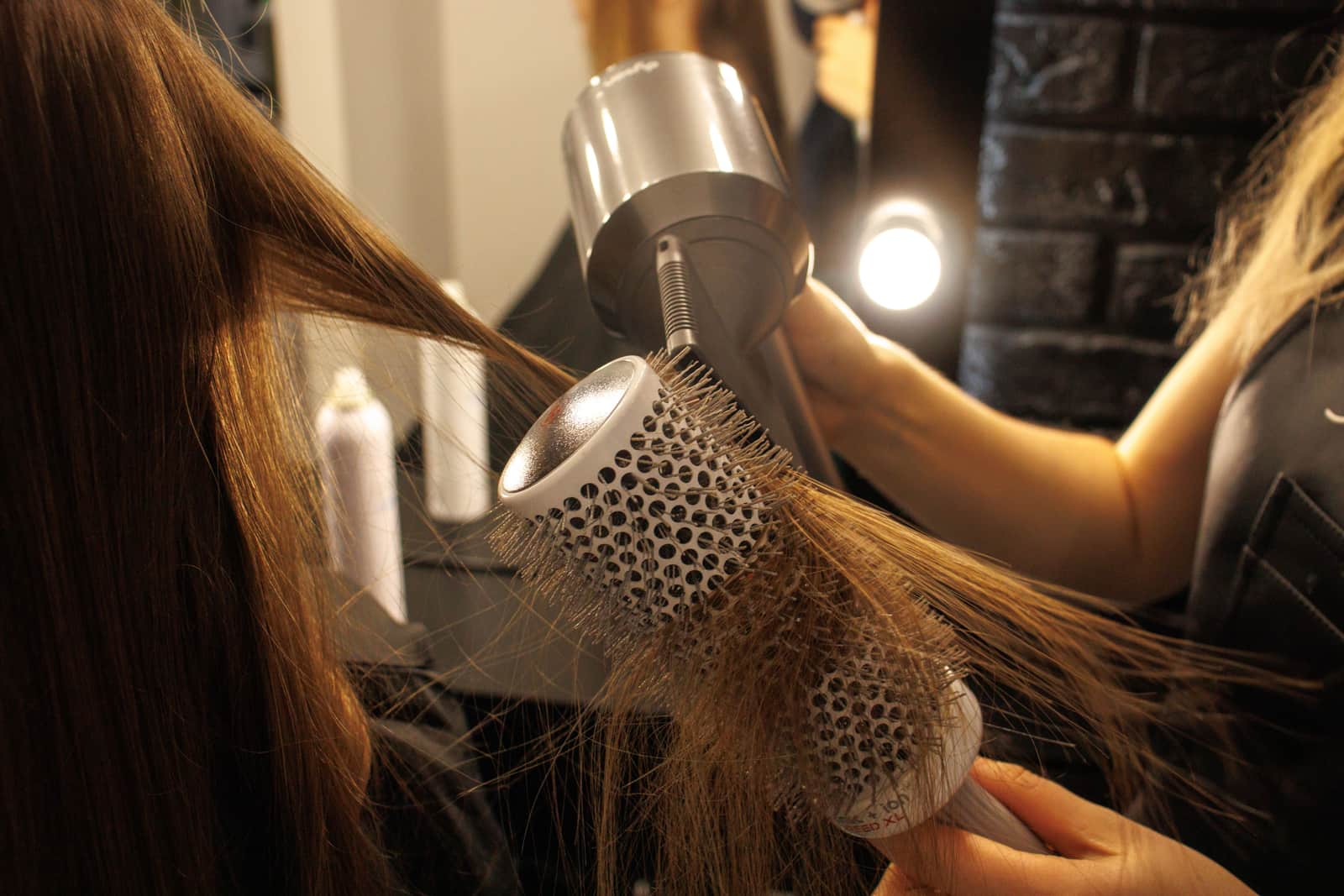
What the published dryer temperatures and damage research actually support, including why air drying is not automatically safer.
Top pick: Dyson Supersonic Nural Hair Dryer
Disclosure Leaders
Hair Styling Tool Brands, Ranked by What They Publish
The disclosure record of all 27 brands on this site, counted from cited specifications: who publishes a temperature, an airflow figure, a weight and a warranty, and who publishes none of them.
Top pick: Dyson Supersonic Nural Hair Dryer
Temperature Chart
Flat Iron Temperature by Hair Type
The temperature-by-hair-type chart, set against the damage thresholds published research reports, with irons that let you hit them.
Top pick: ghd platinum+ Styler
Damaged Hair Guide
Hair Styling Tools for Damaged and Color-Treated Hair
Every tool we recommend for damaged and bleached hair, filtered strictly on published temperature disclosure.
Top pick: Dyson Supersonic Nural Hair Dryer