Laifen Swift Review
The high-speed dryer that publishes more of its own numbers than most of the category — including the one that rules it out for some buyers.
How this page is funded: the buy links below are affiliate links, and Heat Index earns a commission on qualifying purchases at no cost to you. Nothing on this page was supplied by a manufacturer, and commission plays no part in the ranking — read the full disclosure. Picks are chosen from published specifications, not from hands-on testing; the method is written down so you can check it. Prices last verified September 14, 2026.
High-speed dryers are sold on one number, and it is the wrong one. Every brand in the category leads with motor rpm, because 110,000 sounds like it must beat 1,875 watts. Motor speed is not a result, though. What dries hair is the volume of air moved past it, and rpm is only the input that produces that.
What makes the Swift worth a close read is not the rpm figure at all. It is that Laifen publishes a genuine spec sheet — rated power, net weight, voltage, cord length, dimensions, an air-speed figure and a noise figure — when most of the category publishes a wattage and a marketing adjective. More disclosure means more to check, and one line in it disqualifies the dryer for a specific buyer entirely.
Every published specification
| Specification | Published figure |
|---|---|
| Motor | 110,000 rpm brushless |
| Air speed | 22 m/s (Laifen cites third-party testing; the page also states 22.291 m/s) |
| Rated power | 1,400W |
| Rated voltage | 120V — stated as not dual voltage |
| Noise | 59 dB at full speed (third-party testing, stated as an average) |
| Net weight | 407 g / 0.89 lb, without the cord |
| Dimensions | 277 x 70 x 89 mm |
| Cord length | 2.5 m / 8.2 ft |
| Controls | On/off, two speed grades, hot/warm/cold, long press for auto-cycling |
| Heat regulation | Air temperature monitored 100 times per second |
| Ions | 200 million negative ions |
| Motor lifespan | Tested to 1,000 hours |
| Air temperature | Not published in degrees |
The last row is the real gap. Laifen names its heat settings hot, warm and cold and never says what any of them measures, which means the one specification that decides thermal damage is missing. That is the category norm rather than a Laifen failing — but it is worth naming, because the brand publishes so much else that the absence looks deliberate rather than lazy.
Quick picks
Ranked, with the reasoning underneath. Tap any row to jump to that write-up; tap the price to check it on Amazon. Prices come from the live layer, never from this page.
| # | Product | Best for | Type | Price |
|---|---|---|---|---|
| 1 | 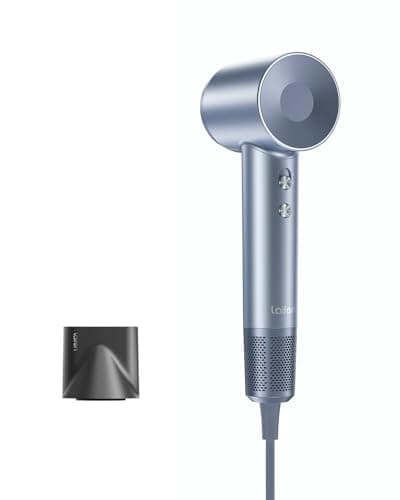 Laifen Swift High-Speed Hair DryerA 110,000 rpm brushless motor moving air at 22.3 m/s, which dries by air speed rather than temperature. That trade is the entire argument for high-speed dryers. Laifen Swift High-Speed Hair DryerA 110,000 rpm brushless motor moving air at 22.3 m/s, which dries by air speed rather than temperature. That trade is the entire argument for high-speed dryers. | Cutting drying time without cranking the heat | High-speed brushless dryer | |
| 2 | 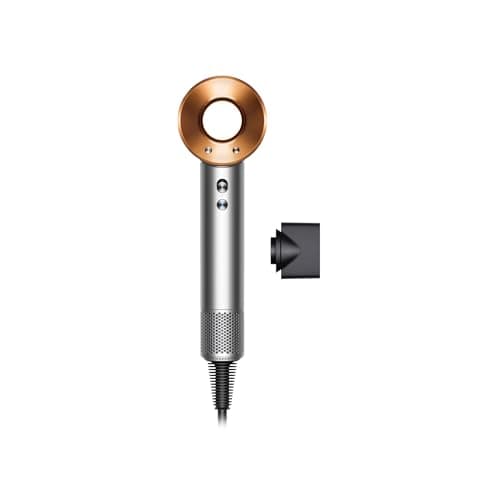 Dyson Supersonic Origin Hair DryerThe one dryer that tells you what each heat setting actually is in degrees, which makes it the only one in the category you can plan a routine around. Dyson Supersonic Origin Hair DryerThe one dryer that tells you what each heat setting actually is in degrees, which makes it the only one in the category you can plan a routine around. | Published temperatures on every heat setting | 1,600W dryer | |
| 3 | 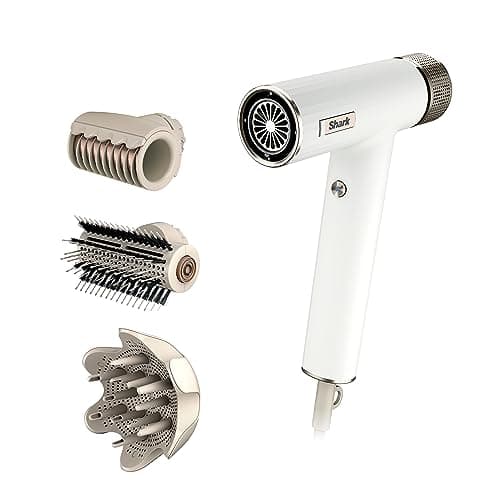 Shark SpeedStyle High-Velocity Dryer (HD332)The only mainstream dryer that publishes the number that matters: it never exceeds 230F, which is below every damage threshold in the literature. Shark SpeedStyle High-Velocity Dryer (HD332)The only mainstream dryer that publishes the number that matters: it never exceeds 230F, which is below every damage threshold in the literature. | A published temperature ceiling you can actually check | High-velocity dryer | Check price#ad |
#1 · Cutting drying time without cranking the heat
Laifen Swift High-Speed Hair Dryer
A 110,000 rpm brushless motor moving air at 22.3 m/s, which dries by air speed rather than temperature. That trade is the entire argument for high-speed dryers.
| Motor | 110,000 rpm brushless motorsource |
|---|---|
| Air speed | 22.3 m/ssource |
| Rated power | 1,400Wsource |
| Voltage | 120V — Laifen states plainly that it is not dual voltagesource |
| Heat regulation | Thermo-Control microprocessor monitors air temperature 100 times per second and alternates hot and cold airstreamssource |
| Ions | 200 million negative ionssource |
| Noise | 59 dBsource |
| Weight | 0.9 lb / 407 gsource |
| In the box | Dryer, one magnetic smooth nozzle, manual — no diffusersource |
What those numbers mean
Air speed and heat are two different ways to get water out of hair, and only one of them denatures protein. A dryer that moves air at 22.3 m/s can finish the job at a lower temperature, which is the whole reason this category exists.
0.9 lb is less than half the weight of the AC dryers it competes with. Over a fifteen-minute blowout on long hair that is the difference between finishing properly and giving up damp.
59 dB is a published figure, which almost no dryer brand offers. For context, that is conversational-speech territory rather than the vacuum-cleaner range most 1,875W dryers occupy.
What it does well
- Dries by air speed, so the heat setting can stay lower for the same result
- 0.9 lb, the lightest serious dryer in this roundup
- Publishes both an air-speed and a noise figure, which the mass market does not
- Temperature sampled 100 times a second
What it does not
- No air temperature in degrees — the settings are named hot, warm and cold
- 120V only. Laifen states it is not dual voltage, so it cannot travel abroad
- Only the smooth nozzle is in the box; the diffuser is a separate purchase
- The magnetic nozzles are proprietary; nothing else fits
- The narrow high-velocity stream takes practice on a big head of hair
Skip this one if: Skip it if you diffuse curls and want a wide, gentle airflow. A high-velocity stream is the opposite of what a curl pattern wants, and the diffuser is a separate purchase here rather than something in the box.
#2 · Published temperatures on every heat setting
Dyson Supersonic Origin Hair Dryer
The one dryer that tells you what each heat setting actually is in degrees, which makes it the only one in the category you can plan a routine around.
| Power | 1,600W at full powersource |
|---|---|
| Heat settings | 4 settings — 212F (100C), 176F (80C), 140F (60C), and constant coldsource |
| Speed settings | 3 — fast drying, regular drying, gentle dryingsource |
| Airflow | Up to 41 liters per secondsource |
| Heat regulation | Measures air temperature over 40 times a secondsource |
| Dimensions | 9.6 in long, 3.9 in wide, 3.1 in deepsource |
What those numbers mean
Four heat settings published as 212F, 176F and 140F plus cold is the disclosure the rest of the category refuses to make. It means you can pick a setting against a damage threshold instead of against a vague label.
Note where those numbers sit. Even the hottest setting, 212F, is below the 302F figure Shark names as its damage line and far below the temperatures at which the literature reports cuticle degradation.
1,600W is less nominal power than a US 1,875W dryer, and 41 l/s of airflow is how it compensates. Again: air speed, not temperature.
What it does well
- Publishes an actual temperature for every heat setting, uniquely in this category
- Airflow figure published in liters per second
- Top setting of 212F is below every damage threshold in the cited research
- Attachments attach magnetically and can be changed mid-dry
What it does not
- Costs several times what a competent 1,875W dryer costs
- 1,600W nominal will feel slower than an AC dryer on very thick hair
- Dyson does not sell through every retailer, so availability moves around
Skip this one if: Skip it if the budget is the constraint rather than the information. Everything the Supersonic does for hair health can be approximated by running a cheaper dryer on medium heat and high speed, which costs nothing.
#ad · how this is funded · price as of September 14, 2026
#3 · A published temperature ceiling you can actually check
Shark SpeedStyle High-Velocity Dryer (HD332)
The only mainstream dryer that publishes the number that matters: it never exceeds 230F, which is below every damage threshold in the literature.
| Settings | 4 heat and 3 airflow settings, plus a cool shotsource |
|---|---|
| Temperature ceiling | Measures and regulates temperature 1,000 times a second, never exceeding 230F, and never approaching 302Fsource |
| Weight | 1.69 lbsource |
| In the box (HD332) | DeFrizzFast diffuser, QuickSmooth brush, RapidGloss finishersource |
What those numbers mean
A stated ceiling of 230F is the single most useful specification on any dryer, and almost nobody publishes one. It puts the airflow well under the 302F figure Shark itself names as the damage line and far under the cuticle-degradation range in the research.
Compare that with the usual disclosure. Most dryers publish wattage and a number of heat settings and never say what those settings actually reach, which makes the whole category impossible to compare on the axis that matters for damage.
The RapidGloss finisher is a separate attachment for flyaways on already-dry hair, not a drying head. Treat it as a finishing step, not a reason to buy.
What it does well
- Publishes an actual temperature ceiling instead of only a heat-setting count
- Diffuser and brush included, so a curly routine needs nothing extra
- Regulates 1,000 times a second, the same control loop as the FlexStyle
What it does not
- Shark does not publish a wattage figure for the HD332
- At 1.69 lb it is heavier than the FlexStyle it sits beside
- The low ceiling is the point, and it does mean a slower dry than a hot 1,875W dryer
Skip this one if: Skip it if you want maximum heat for a fast, poker-straight blowout on coarse hair. The ceiling that protects fragile hair is the same ceiling that will frustrate you here.
What 110,000 rpm actually buys
The claim to check is the air speed, not the motor speed, and Laifen publishes it: 22 m/s. That is the mechanism the whole category rests on. Moving air fast strips water off the hair shaft by evaporation and sheer displacement, so the heat setting does not have to do as much of the work.
This matters because heat is what damages hair and air movement is not. Published research reports cuticle degradation beginning around 302F, and wet keratin denaturing in the 248-302F range — well below the point dry hair suffers. Any dryer that lets you finish at a lower setting is reducing exposure to exactly that range. A high-speed dryer is not a gentler tool because the brand says so; it is potentially gentler because it gives you a reason to turn the heat down.
1,400W is lower than the dryer it replaces, and that is the point
Most US dryers are 1,875W. The Swift is 1,400W, and a shopper reading wattage as a proxy for power will read that as a downgrade. It is not, because the two numbers are measuring different things — wattage is electrical input, and the Swift spends a smaller share of its input on heat and a larger share on moving air.
cost = (watts / 1000) x hours x rate per kWh
(1400 / 1000) x 0.17 h x $0.1834 = $0.044 per 10-minute dry
Using the same 18.34 cents per kilowatt-hour used across this site — the US average residential price for June 2026 reported by the EIA. The 1,875W dryer in the same calculation costs $0.058. Substitute your own rate from your bill.
So the saving is about a penny and a half per dry, which is a rounding error and not a reason to buy anything. The full wattage arithmetic works this through across the category. What 1,400W genuinely buys is a lighter tool and a smaller share of the input arriving as heat.
407 grams is the specification people actually feel
0.89 lb without the cord is less than half the weight of the 1,875W AC dryers it competes with — the Panasonic nanoe is 2.9 lb and the Conair InfinitiPRO is 2.27 lb. On a ten-minute blowout with your arm above your head, that is the difference between finishing the back section properly and deciding it is dry enough.
It is also the reason the Swift turns up on our travel dryers page despite not being a travel dryer. It packs like one. It just cannot be plugged in abroad, which is the next section.
120V only — check this before you pack it
Laifen states the Swift is 120V and not dual voltage, in those words, on its own spec sheet. Plugged into 240V it is destroyed, and a plug adapter does not prevent that — an adapter changes the shape of the pins and nothing else. A voltage converter rated for a 1,400W heating appliance would, but it is bulky enough to defeat the point of a light dryer.
What is in the box, and what is not
- The dryer, one magnetic smooth nozzle, a manual and a QC card. That is the whole list.
- No diffuser. Laifen sells one as a separate accessory. If you have curls, budget for it — and read the skip section below first, because the diffuser does not fully solve the problem.
- The nozzles are magnetic and proprietary. They attach and rotate easily, which is genuinely better than a friction fit, but nothing from any other brand will fit and you are tied to Laifen's accessory prices.
The 59 dB claim, in context
Almost nothing in this category publishes a decibel figure at all, so having one is worth something. 59 dB sits in conversational-speech territory rather than the vacuum-cleaner range a big AC dryer occupies. Laifen also states it controls motor noise above 20 kHz, beyond human hearing, which is a design claim rather than a measured one.
Two caveats. It is stated as an average at full speed from third-party testing, not a peak. And nobody publishes these figures to a common standard, so cross-brand decibel comparisons are not reliable — see quiet hair dryers for how thin the disclosure is across the category.
What the specifications cannot tell you
- How hot it actually gets. No temperature in degrees, so thermal exposure cannot be checked. The Dyson Supersonic names all four of its settings in degrees; this does not.
- Whether the 1,000-hour motor rating holds. Laifen states the motor was tested to 1,000 hours. That is a bench figure, and 1,000 hours at ten minutes a day is about sixteen years — which no one has yet verified in the field.
- How it handles a full head of dense, long hair. A narrow high-velocity stream behaves differently from a wide one and the spec sheet cannot tell you how that feels.
- Durability of the magnetic attachment mechanism, which is the part with moving contact.
Who should skip it
Skip it if you travel internationally. 120V only, stated plainly by the manufacturer. This is not a nuance to work around; it is a hard stop. Dual-voltage options exist and this is not one.
Skip it if you diffuse curls. A narrow, high-velocity stream is close to the opposite of what a curl pattern wants, the diffuser is a separate purchase, and an attachment cannot fully undo the character of the motor behind it. Dryers for curly hair ranks tools built for it.
Skip it if you want a published temperature. If your hair is bleached or fragile and you want a number rather than a word, the Shark SpeedStyle publishes a 230F ceiling it never exceeds, and the Dyson Supersonic names every setting in degrees. Both are more useful documents than hot, warm and cold.
The verdict
The Swift is the most transparently specified dryer at anywhere near its price, and the specification set it publishes is the right one: air speed, rated power, weight, noise, voltage. For a home user with fine, wavy, damaged or generally normal hair who wants to cut drying time and arm ache without paying Dyson money, it is a straightforward recommendation.
Two buyers should look elsewhere, and both for reasons Laifen itself publishes rather than anything we inferred: anyone who flies with a dryer, and anyone who wants heat stated in degrees. The dryers hub has the full ranking with those constraints built in.
Questions people actually ask
Is the Laifen Swift worth it?
For home use on fine, wavy, damaged or normal hair, yes - it publishes a full spec sheet at roughly a third of Dyson money, and 407 g makes a real difference over a ten-minute blowout. Two things rule it out: it is 120V only so it cannot travel abroad, and it publishes no air temperature in degrees, which matters if your hair is bleached or fragile.
How many watts is the Laifen Swift?
Laifen publishes a rated power of 1,400W. That is lower than the 1,875W most US dryers carry, but the two are not directly comparable - wattage is electrical input, and a high-speed dryer spends more of that input on moving air and less on heating it. At 18.34 cents per kWh, a 10-minute dry costs about $0.044 against $0.058 for an 1,875W dryer.
Is the Laifen Swift dual voltage?
No. Laifen's own spec sheet lists the rated voltage as 120V and states plainly that it is not dual voltage. A plug adapter will not protect it - an adapter changes the pin shape only, and plugging it into 240V destroys the dryer. If you need a dryer for international travel, this is not it.
Does the Laifen Swift come with a diffuser?
No. The box contains the dryer, one magnetic smooth nozzle, a user manual and a QC card. Laifen sells a diffuser nozzle as a separate accessory. If you have curls, factor that into the price - and be aware that a diffuser cannot fully offset a narrow high-velocity airstream, which is the opposite of what a curl pattern wants.
How loud is the Laifen Swift?
Laifen publishes 59 dB at full speed, citing third-party testing and describing it as an average rather than a peak. That is roughly conversational-speech territory rather than the vacuum-cleaner range a big AC dryer occupies. Almost nothing else in the category publishes a decibel figure at all, so treat cross-brand comparisons cautiously - there is no common test standard.
Laifen Swift or Dyson Supersonic?
The Supersonic publishes 1,600W, up to 41 liters per second of airflow, and names all four heat settings in degrees - 212F, 176F, 140F and cold. The Swift publishes 1,400W, 22 m/s, 59 dB and 407 g, but no temperature. If you want heat stated in degrees, the Dyson is the better-documented tool. If you want the lightest dryer with a full spec sheet at a fraction of the price, the Swift is the better buy.
Sources
Every figure on this page traces to one of these. If a number here disagrees with the manufacturer, the manufacturer is right and we want to know — tell us.
- Laifen Swift high-speed hair dryer
- Dyson Supersonic hair dryer
- Shark SpeedStyle high-velocity dryer and RapidGloss finisher (HD332) product listing
- U.S. Energy Information Administration, Electric Power Monthly table 5.3 — average retail price of electricity to residential customers
- Thermal-induced changes in cuticle and cortex of chemically treated hair, PubMed Central
- Thermal denaturation and structural changes of alpha-helical proteins in keratins, Journal of Structural Biology
Read next
Reviews
Single-Product Reviews
Seven products read closely from their published specifications, each with a reasons-to-skip section and every figure linked to its source.
Top pick: Dyson Airwrap i.d. Multi-Styler and Dryer

Best Overall
The Best Hair Dryers, Chosen by Hair Type
Nine dryers compared on published wattage, airflow and temperature ceilings, then routed to the hair type each one genuinely suits.
Top pick: Laifen Swift High-Speed Hair Dryer

Quietest Published
The Quietest Hair Dryers
Four dryers assessed for noise, led by the only one publishing a decibel figure - plus how to reason about the rest without inventing numbers.
Top pick: Laifen Swift High-Speed Hair Dryer

Best for Travel
The Best Travel Hair Dryers
Four travel dryers ranked on genuine dual-voltage support, folded size and published power — with the adapter-versus-converter mistake explained.
Top pick: Conair Compact Folding-Handle Dryer (127NPN)
Cost Calculator
How Many Watts Should a Hair Dryer Be?
What hair dryer wattage means, what a blow dry costs on the current EIA average rate, and why airflow matters more than watts.
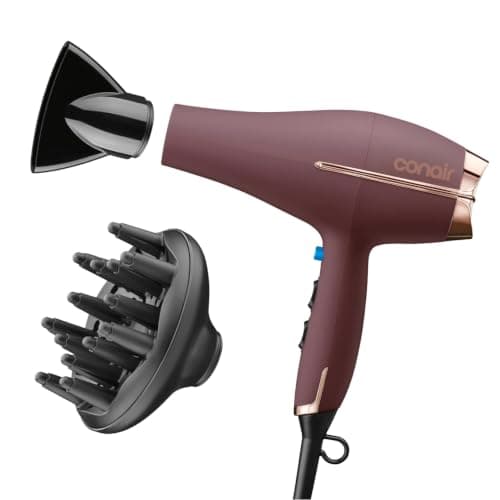
Top pick: Conair InfinitiPro 1875W Salon Performance AC Motor Dryer (259BDNRY)
Supersonic Verdict
Dyson Supersonic Review
The Supersonic read from its published specifications, including the temperature disclosure nothing else in the category matches.
Top pick: Dyson Supersonic Origin Hair Dryer