The Best Hair Dryers, Chosen by Hair Type
Every dryer here is ranked on figures its maker actually published — wattage, airflow, and where the heat tops out. Then matched to the hair it suits.

How this page is funded: the buy links below are affiliate links, and Heat Index earns a commission on qualifying purchases at no cost to you. Nothing on this page was supplied by a manufacturer, and commission plays no part in the ranking — read the full disclosure. Picks are chosen from published specifications, not from hands-on testing; the method is written down so you can check it. Prices last verified October 23, 2026.
Almost every hair dryer sold in the United States advertises 1,875 watts, three heat settings and some combination of ionic, ceramic and tourmaline. That description fits a twenty dollar drugstore dryer and a four hundred dollar one equally well, which tells you the specification everyone publishes is not the specification that matters.
The one that does matter is how hot the air actually gets, and hardly anybody prints it. Of the nine dryers below, exactly three publish a temperature: Dyson names all four of its settings in degrees, Shark states a ceiling it never exceeds, and Laifen publishes how often it samples the air. The rest publish a wattage and leave you to guess. That gap is the reason this page exists.
The short answer, before the list
If you want one sentence: buy on airflow and weight, not on wattage. Wattage tells you how much electricity the dryer converts to heat. It does not tell you how fast the air moves, and moving air is what actually removes water from hair. A dryer that pushes a lot of air can finish the job at a lower temperature, which is the entire reason the high-speed category exists.
The second sentence is about weight. A dryer you hold above your head for fifteen minutes is an endurance event, and the difference between the lightest dryer here and the heaviest is more than two pounds. People do not abandon blowouts because the dryer was underpowered; they abandon them because their arm gave out.
Quick picks
Ranked, with the reasoning underneath. Tap any row to jump to that write-up; tap the price to check it on Amazon. Prices come from the live layer, never from this page.
| # | Product | Best for | Type | Price |
|---|---|---|---|---|
| 1 | 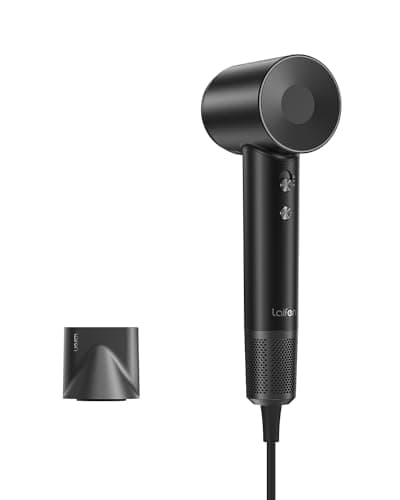 Laifen Swift High-Speed Hair DryerA 110,000 rpm brushless motor moving air at 22.3 m/s, which dries by air speed rather than temperature. That trade is the entire argument for high-speed dryers. Laifen Swift High-Speed Hair DryerA 110,000 rpm brushless motor moving air at 22.3 m/s, which dries by air speed rather than temperature. That trade is the entire argument for high-speed dryers. | Cutting drying time without cranking the heat | High-speed brushless dryer | |
| 2 | 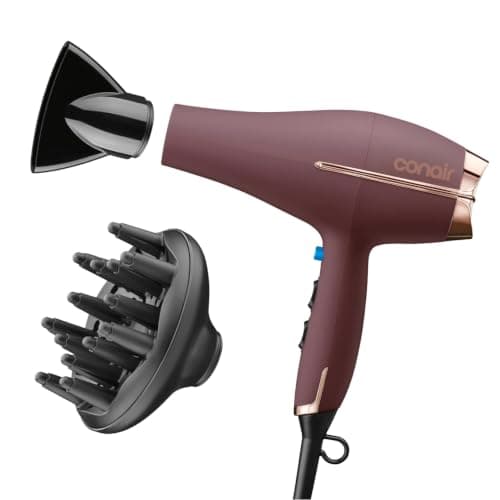 Conair InfinitiPro 1875W Salon Performance AC Motor Dryer (259BDNRY)An AC motor, a diffuser and a concentrator in the box, at a price where most dryers give you a DC motor and one nozzle. This is the sensible default. Conair InfinitiPro 1875W Salon Performance AC Motor Dryer (259BDNRY)An AC motor, a diffuser and a concentrator in the box, at a price where most dryers give you a DC motor and one nozzle. This is the sensible default. | The most drying power per dollar, with a diffuser included | 1,875W AC dryer | |
| 3 | 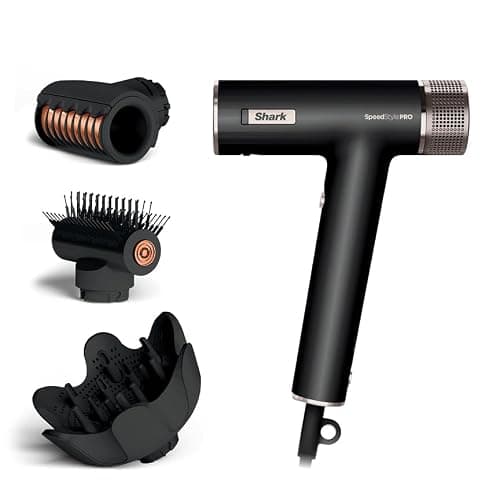 Shark SpeedStyle Pro Ionic Dryer (HD732)The rare dryer that publishes the numbers that matter: every heat setting in degrees, plus a ceiling it says it never exceeds at 230F, which is below every damage threshold in the literature. Shark SpeedStyle Pro Ionic Dryer (HD732)The rare dryer that publishes the numbers that matter: every heat setting in degrees, plus a ceiling it says it never exceeds at 230F, which is below every damage threshold in the literature. | A published temperature ceiling you can actually check | High-velocity dryer | |
| 4 | 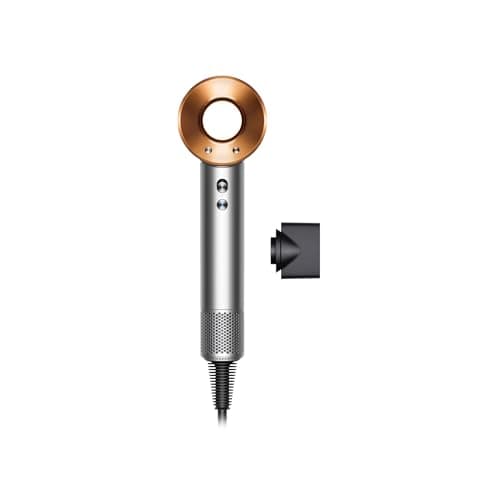 Dyson Supersonic Origin Hair DryerThe one dryer that tells you what each heat setting actually is in degrees, which makes it the only one in the category you can plan a routine around. Dyson Supersonic Origin Hair DryerThe one dryer that tells you what each heat setting actually is in degrees, which makes it the only one in the category you can plan a routine around. | Published temperatures on every heat setting | 1,600W dryer | |
| 5 | 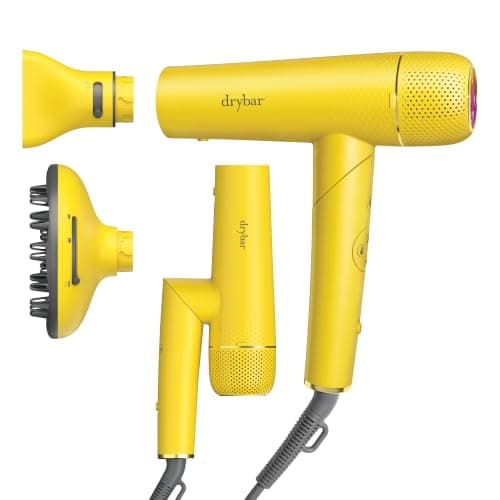 Drybar Buttercup PRO Professional Blow-Dryer1,875W at roughly 540 g, which is the combination almost nothing else in the category manages, plus a mode that alternates hot and cool air specifically to cut heat exposure. Drybar Buttercup PRO Professional Blow-Dryer1,875W at roughly 540 g, which is the combination almost nothing else in the category manages, plus a mode that alternates hot and cool air specifically to cut heat exposure. | A full-power dryer that is genuinely light | 1,875W ionic dryer | |
| 6 | 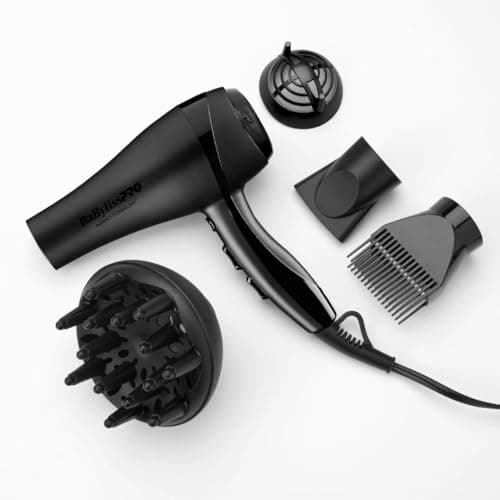 BaBylissPRO Nano Titanium Dryer (BNT5548)Two thousand watts and six heat-and-speed combinations, which is more drying power than the American 1,875W convention and the honest answer for a thick head of hair. BaBylissPRO Nano Titanium Dryer (BNT5548)Two thousand watts and six heat-and-speed combinations, which is more drying power than the American 1,875W convention and the honest answer for a thick head of hair. | Thick hair that needs raw drying power | 2,000W salon dryer |
#1 · Cutting drying time without cranking the heat
Laifen Swift High-Speed Hair Dryer
A 110,000 rpm brushless motor moving air at 22.3 m/s, which dries by air speed rather than temperature. That trade is the entire argument for high-speed dryers.
| Motor | 110,000 rpm brushless motorsource |
|---|---|
| Air speed | 22.3 m/ssource |
| Rated power | 1,400Wsource |
| Voltage | 120V — Laifen states plainly that it is not dual voltagesource |
| Heat regulation | Thermo-Control microprocessor monitors air temperature 100 times per second and alternates hot and cold airstreamssource |
| Ions | 200 million negative ionssource |
| Noise | 59 dBsource |
| Weight | 0.9 lb / 407 gsource |
| In the box | Dryer, one magnetic smooth nozzle, manual — no diffusersource |
What those numbers mean
Air speed and heat are two different ways to get water out of hair, and only one of them denatures protein. A dryer that moves air at 22.3 m/s can finish the job at a lower temperature, which is the whole reason this category exists.
0.9 lb is less than half the weight of the AC dryers it competes with. Over a fifteen-minute blowout on long hair that is the difference between finishing properly and giving up damp.
59 dB is a published figure, which almost no dryer brand offers. For context, that is conversational-speech territory rather than the vacuum-cleaner range most 1,875W dryers occupy.
What it does well
- Dries by air speed, so the heat setting can stay lower for the same result
- 0.9 lb, the lightest serious dryer in this roundup
- Publishes both an air-speed and a noise figure, which the mass market does not
- Temperature sampled 100 times a second
What it does not
- No air temperature in degrees — the settings are named hot, warm and cold
- 120V only. Laifen states it is not dual voltage, so it cannot travel abroad
- Only the smooth nozzle is in the box; the diffuser is a separate purchase
- The magnetic nozzles are proprietary; nothing else fits
- The narrow high-velocity stream takes practice on a big head of hair
Skip this one if: Skip it if you diffuse curls and want a wide, gentle airflow. A high-velocity stream is the opposite of what a curl pattern wants, and the diffuser is a separate purchase here rather than something in the box.
#2 · The most drying power per dollar, with a diffuser included
Conair InfinitiPro 1875W Salon Performance AC Motor Dryer (259BDNRY)
An AC motor, a diffuser and a concentrator in the box, at a price where most dryers give you a DC motor and one nozzle. This is the sensible default.
| Power | 1,875 watts, AC motorsource |
|---|---|
| Settings | 3 heat / 2 speed settingssource |
| Manufacturer claim | Up to 50 percent faster drying time and 3x longer dryer life than a DC motorsource |
| Attachments | Concentrator and diffusersource |
| Other | True cold-shot button, removable filtersource |
| Weight | 2.27 lbsource |
What those numbers mean
AC versus DC is the one motor distinction worth caring about. AC motors are heavier and last longer, and they are the reason a salon dryer survives daily use while a drugstore dryer does not.
The 50-percent and 3x figures are Conair's own claims about their AC motor relative to a DC one, not independent measurements. Read them as the manufacturer's positioning, which is exactly what they are.
2.27 lb is heavy for a home dryer. If you hold a dryer overhead for fifteen minutes, that weight is a real ergonomic cost and the lighter high-speed dryers are worth the price difference.
What it does well
- AC motor at a mass-market price, which is the genuinely uncommon part
- Diffuser in the box, so curly routines need nothing extra
- Removable filter and a true cold shot
- 1,875W is the practical maximum for a US household circuit
What it does not
- 2.27 lb, noticeably heavy in the hand
- Conair does not publish an air temperature, so heat settings are unquantified
- Three heat settings is a coarse grid next to digital tools
Skip this one if: Skip it if arm fatigue is your actual complaint. The AC motor that makes this durable is also what makes it heavy, and no amount of power fixes a tool you put down early.
#3 · A published temperature ceiling you can actually check
Shark SpeedStyle Pro Ionic Dryer (HD732)
The rare dryer that publishes the numbers that matter: every heat setting in degrees, plus a ceiling it says it never exceeds at 230F, which is below every damage threshold in the literature.
| Heat settings | Three published settings — low 65C, medium 80C, high 100C — plus a cool shot and a permanent cool modesource |
|---|---|
| Temperature ceiling | Measures and regulates temperature 1,000 times a second, never exceeding 230F, and never approaching 302Fsource |
| Power | 1,600 watts at 120 voltssource |
| Weight | 1.674 lbsource |
| Noise | About 83 decibelssource |
| Cord | Approximately 8 ftsource |
| Scalp Shield mode | Reduces air temperature to a level Shark states is optimized for scalp comfort and root drying, developed with dermatologistssource |
| Attachments | Three accessories per dryer, chosen from the DefrizzFast diffuser, QuickSmooth brush, Express Touchup brush, Lift & Stretch wide-tooth comb, Turbo concentrator and FrizzFighter finishing toolsource |
What those numbers mean
A stated ceiling of 230F is the single most useful specification on any dryer, and almost nobody publishes one. It puts the airflow well under the 302F figure Shark itself names as the damage line and far under the cuticle-degradation range in the research.
Shark also names each setting in degrees — 65C, 80C and 100C — which is disclosure the rest of the category mostly refuses. It means you can pick a setting against a damage threshold rather than against an unlabeled dial, and note that even the top setting lands under that 230F ceiling.
The accessory list is a choice rather than a fixed bundle, which matters more than it sounds. The DefrizzFast diffuser is the attachment that earns this dryer its place on curly and coily pages, so check it is one of the three in the configuration you buy.
What it does well
- Publishes a temperature ceiling AND every heat setting in degrees
- Published wattage, weight, cord length and even a decibel figure
- Regulates 1,000 times a second, the same control loop as the FlexStyle
- Scalp Shield mode is aimed squarely at root drying on fragile new growth
What it does not
- Shark publishes no airflow figure, so drying speed cannot be checked on paper
- 1,600W is less power than an 1,875W AC dryer, and the low ceiling compounds that
- Three accessories is a choice, so the diffuser is not guaranteed to be in the box
- The retail listing says 1,750W where Shark's own support article says 1,600W
Skip this one if: Skip it if you want maximum heat for a fast, poker-straight blowout on coarse hair. The ceiling that protects fragile hair is the same ceiling that will frustrate you here.
#ad · how this is funded · price as of October 23, 2026
#4 · Published temperatures on every heat setting
Dyson Supersonic Origin Hair Dryer
The one dryer that tells you what each heat setting actually is in degrees, which makes it the only one in the category you can plan a routine around.
| Power | 1,600W at full powersource |
|---|---|
| Heat settings | 4 settings — 212F (100C), 176F (80C), 140F (60C), and constant coldsource |
| Speed settings | 3 — fast drying, regular drying, gentle dryingsource |
| Airflow | Up to 41 liters per secondsource |
| Heat regulation | Measures air temperature over 40 times a secondsource |
| Dimensions | 9.6 in long, 3.9 in wide, 3.1 in deepsource |
What those numbers mean
Four heat settings published as 212F, 176F and 140F plus cold is the disclosure the rest of the category refuses to make. It means you can pick a setting against a damage threshold instead of against a vague label.
Note where those numbers sit. Even the hottest setting, 212F, is below the 302F figure Shark names as its damage line and far below the temperatures at which the literature reports cuticle degradation.
1,600W is less nominal power than a US 1,875W dryer, and 41 l/s of airflow is how it compensates. Again: air speed, not temperature.
What it does well
- Publishes an actual temperature for every heat setting, uniquely in this category
- Airflow figure published in liters per second
- Top setting of 212F is below every damage threshold in the cited research
- Attachments attach magnetically and can be changed mid-dry
What it does not
- Costs several times what a competent 1,875W dryer costs
- 1,600W nominal will feel slower than an AC dryer on very thick hair
- Dyson does not sell through every retailer, so availability moves around
Skip this one if: Skip it if the budget is the constraint rather than the information. Everything the Supersonic does for hair health can be approximated by running a cheaper dryer on medium heat and high speed, which costs nothing.
#ad · how this is funded · price as of October 23, 2026
#5 · A full-power dryer that is genuinely light
Drybar Buttercup PRO Professional Blow-Dryer
1,875W at roughly 540 g, which is the combination almost nothing else in the category manages, plus a mode that alternates hot and cool air specifically to cut heat exposure.
| Power | 1,875 watts at 125 voltssource |
|---|---|
| Weight | Approximately 540 g, about 1 lb 3 ozsource |
| Cord | 8 ft power cordsource |
| Motor | BLDC motorsource |
| Drybar Mode | Alternates between hot and cool air to help limit heat exposure while stylingsource |
| Ion control | Adjustable ion levels, which Drybar states deliver up to 2x shinier hair compared with air-dried hairsource |
| Controls | Digital display for adjusting temperature, airflow and ion levelsource |
| Attachments | 2-in-1 concentrator and a customizable diffuser, with per-attachment memory settingssource |
What those numbers mean
Full wattage at roughly 540 g is the specification to notice. The Conair AC dryer with the same nominal power weighs nearly twice as much, and weight is the variable that decides whether you finish the blowout.
Drybar Mode is the genuinely unusual feature: the dryer alternates hot and cool air rather than holding one temperature, which is a heat-exposure argument rather than a speed one. It is the same reasoning behind every cool-shot finish, applied continuously.
Note what Drybar does not publish. There is a wattage, a voltage, a weight and a cord length, and then it stops — no airflow figure, and no temperature for any setting despite the digital display.
What it does well
- 1,875W at roughly 540 g, among the best power-to-weight here
- A diffuser and a concentrator both in the box
- Drybar Mode targets heat exposure rather than drying speed
- Per-attachment memory, so settings persist per head
What it does not
- Drybar publishes no air velocity figure and says so directly when asked
- No published temperature for any setting, despite the digital display
- Drybar's published warranty list does not yet name the PRO
- Priced well above equivalent-wattage drugstore dryers
Skip this one if: Skip it if you want numbers you can check. Drybar publishes the wattage, voltage, weight and cord length and then stops, and at this price a dryer that names its airflow and its temperatures is the more defensible buy.
#ad · how this is funded · price as of October 23, 2026
#6 · Thick hair that needs raw drying power
BaBylissPRO Nano Titanium Dryer (BNT5548)
Two thousand watts and six heat-and-speed combinations, which is more drying power than the American 1,875W convention and the honest answer for a thick head of hair.
| Power | 2,000 wattssource |
|---|---|
| Settings | 6 heat and speed settings, plus a cool-shot buttonsource |
| Ions | Integrated ion generatorsource |
| Attachments | Concentrator nozzlesource |
| Filter | Removable rear filter for cleaningsource |
| Warranty | Limited 4-year warrantysource |
What those numbers mean
2,000W is unusual in the US market because household circuits and the 1,875W convention keep most dryers just under it. If your hair takes 25 minutes to dry, that extra power is the specification that shortens it.
A removable rear filter sounds trivial and is not. A clogged filter starves the motor, the dryer runs hotter to compensate, and the tool that was supposed to be gentle becomes the one that scorches. Filters you can actually clean last.
The four-year warranty is longer than almost anything at this price and is a reasonable proxy for how the motor is expected to hold up.
What it does well
- 2,000W, genuinely more power than the 1,875W most of the category tops out at
- Six heat and speed combinations rather than the usual three-by-two grid
- Removable filter, which is what keeps a dryer performing after year one
- Four-year warranty
What it does not
- BaBylissPRO does not publish an air temperature figure, so the actual heat is unknown
- Concentrator only in the box; a diffuser is a separate purchase
- All that power is wasted on fine hair, and risky on damaged hair
Skip this one if: Skip it if your hair is fine, bleached or breaking. Buying the most powerful dryer in the room and then never using its top settings is money spent on a specification you have to avoid.
#ad · how this is funded · price as of October 23, 2026
How to read a hair dryer spec sheet
Four numbers decide almost everything, and only one of them is on the box.
| Specification | What it tells you | Usually published? |
|---|---|---|
| Wattage | Total electrical draw. A ceiling on heat output, not a measure of speed. | Always |
| Airflow | How much air moves per second. This is what removes water. Dyson publishes 41 liters per second; Laifen publishes 22.3 m/s. | Almost never |
| Temperature ceiling | The number that decides damage. Shark states 230F; Dyson names 212F, 176F and 140F. | Rarely |
| Weight | Whether you will finish the blowout. Ranges from 0.9 lb to 2.9 lb here. | Usually |
Motor type is the fifth thing worth knowing and it is a genuine fork in the road. An AC motor is heavier, lasts longer and is what salon dryers use — the Conair InfinitiPro here is the affordable example. A brushless high-speed motor is far lighter and spins fast enough to dry by air velocity instead of heat; Laifen's 110,000 rpm figure is that approach, and the Laifen Swift review reads that whole spec sheet closely. A plain DC motor is what the cheapest dryers use and is the one to avoid if the dryer will see daily use.
Why 1,875 watts, and why it is not more
A standard US household circuit runs at 120 volts and is typically protected at 15 amps, which is 1,800 watts of continuous load with a small allowance above it. That is why so many dryers land at exactly 1,875W — it is the practical ceiling for a device on a domestic bathroom circuit, not a performance target someone chose.
The BaBylissPRO here is the exception at 2,000W, and it is worth knowing that running it alongside another heavy load on the same circuit is how a breaker trips. If you want the arithmetic behind what any of this costs to run, we worked it through in what a blow dry actually costs.
Heat, and the number nobody wants to print
Published research on thermally treated hair reports cuticle degradation beginning around 150C (302F) and cortex damage from around 200C (392F), with irreversible keratin denaturation higher still. Shark names 302F explicitly as the line it stays under. Dyson's hottest published setting is 212F. Almost every conventional dryer sold with a high setting and no published figure is, in effect, asking you to trust it.
This is why the practical advice is boring and effective: use a lower heat setting and a higher fan speed. You lose very little drying speed, because the air volume is doing the work, and the heat your hair experiences drops substantially. The heat damage guide goes into what actually happens to the fiber.
Attachments matter more than the marketing does
- Concentrator — narrows the airflow into a directed stream. This is the blowout attachment; without it you are blowing air in every direction and the cuticle never lies flat.
- Diffuser — spreads and slows the airflow so it dries a curl without blowing it apart. Non-negotiable for curly and coily hair, and the reason the Conair InfinitiPro punches above its price here: it comes with one.
- Oscillating head — Panasonic's approach. It moves the airflow for you, which is a mechanical fix for the most common cause of blow-dry damage: holding the nozzle in one place.
- Nothing at all — several premium dryers ship a concentrator and no diffuser, which quietly tells you they were designed for straight and wavy hair.
Start from your hair, not from the dryer
The dryer that is right for fine, color-treated hair and the dryer that is right for dense 4C hair are not the same tool, and no single ranking can honestly serve both. That is why each of these has its own page rather than a paragraph on this one.
- Best hair dryers for curly hair — diffuser first, airflow second, heat last.
- Best hair dryers for fine and thin hair — low ceilings and light bodies.
- Best hair dryers for thick hair — where wattage genuinely earns its keep.
- Best hair dryers for 4C and coily hair — tension drying and what it needs.
- Best hair dryers for frizzy hair — why frizz is a cuticle problem, not a heat problem.
- Best hair dryers for damaged hair — the shortlist that publishes its ceiling.
- Best hair dryers for wavy hair — the one type that needs both attachments.
- Best hair dryers for low porosity hair — why yours takes so long to dry.
- Best hair dryers for men — short hair changes which specs matter.
Or start from the constraint
Hair type is not the only thing that narrows this category. Budget, noise and how the dryer will be used narrow it just as hard, and each of those has its own shortlist.
- Best professional hair dryers — what the word actually guarantees, and the three specs that back it.
- Best budget hair dryers — what you give up under $100, and what you do not.
- Quietest hair dryers — only one manufacturer publishes a decibel figure.
- Best travel hair dryers — dual voltage is not the same as a plug adapter.
- Best ionic hair dryers — which brands publish a real ion claim, and what it buys.
- Best hair dryers for hair extensions — where a published temperature stops being optional.
If you would rather work the other direction, the shop by hair type router lists every tool we cover for a given texture, not just the dryers.
Questions people actually ask
Does a higher wattage hair dryer dry hair faster?
Only up to a point, and less than the number suggests. Wattage caps how much heat the dryer can produce; airflow decides how fast water leaves the hair. The Dyson Supersonic is 1,600W and moves up to 41 liters of air per second, which is why it competes with 1,875W dryers. If two dryers publish the same wattage, the one that publishes an airflow figure is the one telling you something useful.
What temperature is safe for a hair dryer?
Published work on thermally treated hair reports cuticle degradation starting around 302F and cortex damage from around 392F. Shark states its dryers never exceed 230F; Dyson's hottest setting is 212F. Both sit under those thresholds by a wide margin. Most dryers do not publish a figure at all, which is why the practical rule is to use medium heat with a high fan speed rather than trusting an unlabeled maximum.
Is an ionic hair dryer actually better?
Ionic technology addresses static and frizz rather than drying speed, and every dryer on this page has it in some form — which means it is not a distinguishing feature any more. If frizz is your main complaint, the ionic versus ceramic guide is more useful than a spec bullet, because the cause is usually cuticle condition and technique rather than the dryer.
How often should I replace a hair dryer?
There is no manufacturer-published lifespan for the models here, so we will not invent one. What the specs do tell you is that motor type and a cleanable filter drive longevity: an AC motor is built for daily professional use, and a removable rear filter — which the BaBylissPRO and Conair both have — is what stops a clogged intake making the motor run hot. A dryer that suddenly smells hot or cuts out under load is telling you the filter is blocked before it is telling you the motor is dying.
Do I need a diffuser?
If your hair has any curl pattern, yes, and it is the single most important attachment on this page. A diffuser spreads and slows the airflow so it dries the curl in place instead of blowing it into frizz. Of the dryers here, the Conair InfinitiPro and Panasonic nanoe include a full-size diffuser in the box; the Laifen Swift ships a single smoothing nozzle and no diffuser at all.
Sources
Every figure on this page traces to one of these. If a number here disagrees with the manufacturer, the manufacturer is right and we want to know — tell us.
- Dyson Supersonic hair dryer
- Shark SpeedStyle Pro ionic dryer, curly and coily (HD732) — product listing
- Laifen Swift high-speed hair dryer
- InfinitiPro by Conair 1875-watt salon dryer (259BDNRY)
- BaBylissPRO Nano Titanium dryer (BNT5548)
- Drybar Buttercup PRO professional blow-dryer
- Thermal-induced changes in cuticle and cortex of chemically treated hair, PubMed Central
- U.S. Energy Information Administration, Electric Power Monthly table 5.3 — average retail price of electricity to residential customers
Read next
Best for Curls
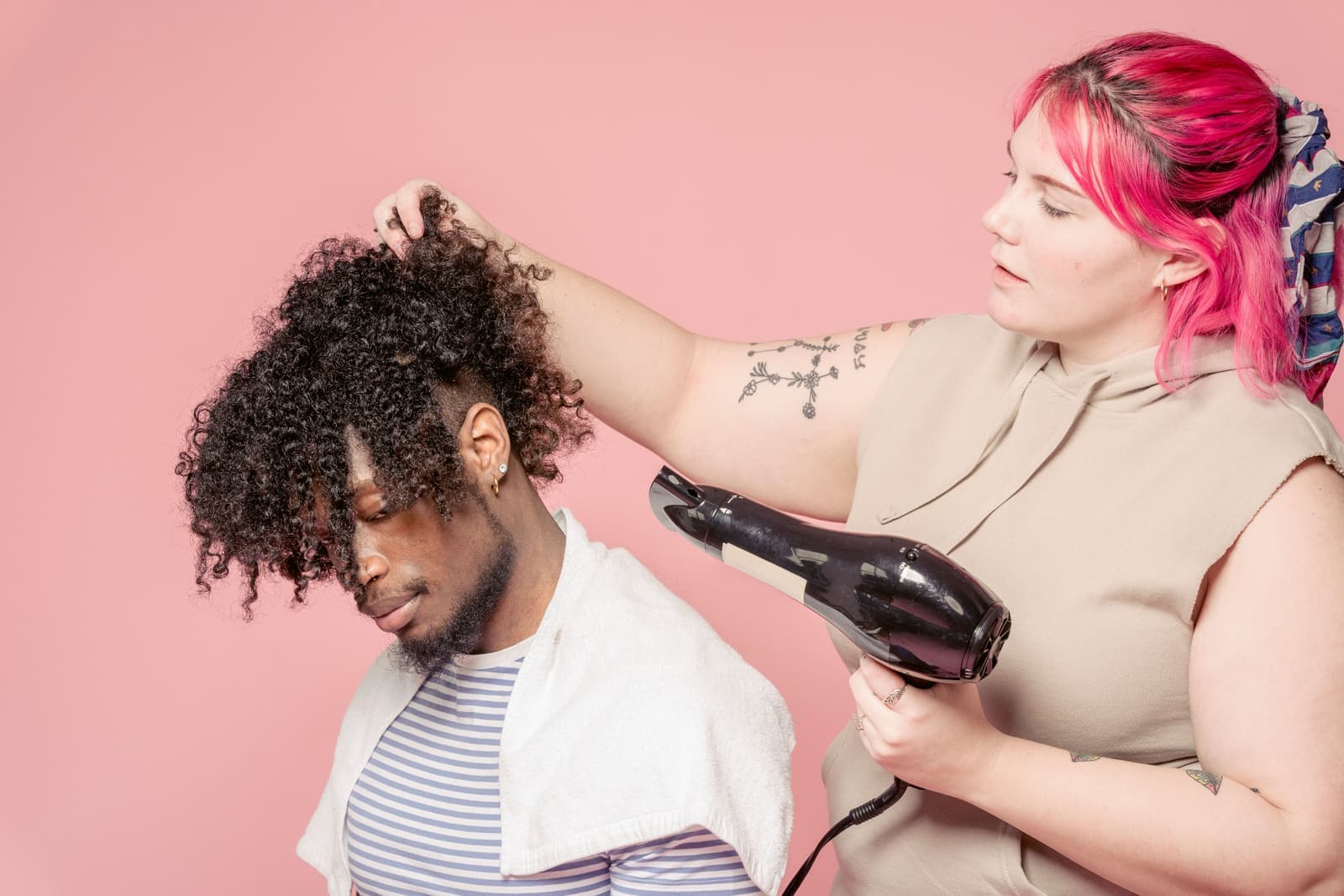
The Best Hair Dryers for Curly Hair
Five dryers ranked for curls on diffuser quality, airflow control and published heat ceilings — including which ones ship a diffuser and which quietly do not.
Top pick: Conair InfinitiPro 1875W Salon Performance AC Motor Dryer (259BDNRY)

Best for Fine Hair
The Best Hair Dryers for Fine and Thin Hair
Five dryers for fine and thin hair, ranked on published temperature ceilings and weight rather than on wattage nobody needs.
Top pick: Shark SpeedStyle Pro Ionic Dryer (HD732)

Best for Thick Hair
The Best Hair Dryers for Thick Hair
Five dryers for thick and dense hair, ranked on published wattage and airflow — because on this hair type, shortening the session is the safety measure.
Top pick: BaBylissPRO Nano Titanium Dryer (BNT5548)

Spec Explainer
Ionic vs Ceramic Hair Dryers
Ionic, ceramic, tourmaline and nanoe decoded — which are mechanisms, which are materials, and which specification to shop on instead.
Top pick: Laifen Swift High-Speed Hair Dryer
Cost Calculator
How Many Watts Should a Hair Dryer Be?
What hair dryer wattage means, what a blow dry costs on the current EIA average rate, and why airflow matters more than watts.
Top pick: Conair InfinitiPro 1875W Salon Performance AC Motor Dryer (259BDNRY)

Multi-Styler Verdict
Dyson Airwrap vs Shark FlexStyle
The Airwrap and the FlexStyle compared on published motor, heat and attachment specs, with a verdict that names a buyer rather than a winner.
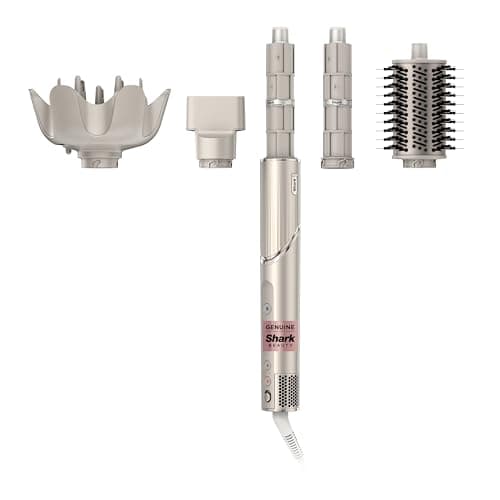
Top pick: Shark FlexStyle Air Styling & Drying System (HD435)