Hair Styling Tools for Thick and Coarse Hair
This is the one hair type where the answer to a long session is a more powerful tool rather than a gentler one.
How this page is funded: the buy links below are affiliate links, and Heat Index earns a commission on qualifying purchases at no cost to you. Nothing on this page was supplied by a manufacturer, and commission plays no part in the ranking — read the full disclosure. Picks are chosen from published specifications, not from hands-on testing; the method is written down so you can check it. Prices last verified October 23, 2026.
Almost everything else on this site argues for less: lower temperatures, gentler tools, shorter exposure. Thick hair is the honest exception, and the reason is arithmetic rather than preference.
total exposure = temperature x contact time x passes
40 minutes at medium heat > 15 minutes at the same setting
An underpowered dryer does not reduce the heat your hair sees; it stretches the same heat over a much longer session. On dense hair the fastest tool is frequently the least damaging one, which inverts the usual advice.
What thick hair needs, in order
- Real power or real airflow. 1,875W and up on an AC motor, or a high-speed brushless motor moving serious air. The BaBylissPRO's 2,000W is above the usual US ceiling.
- Plate length on irons. Longer plates cover more hair per pass, and passes are the exposure variable you control. The BaBylissPRO's published 5-inch plates are the clearest example here.
- Fast heat recovery. Titanium, not ceramic, on this hair type. A plate that dips under a cold dense section and recovers slowly is what forces a second pass.
- A cleanable filter. Dense hair sheds into the intake, and a clogged filter is why a dryer feels tired by month six.
- Sectioning discipline. Free, and worth more than any upgrade.
Quick picks
Ranked, with the reasoning underneath. Tap any row to jump to that write-up; tap the price to check it on Amazon. Prices come from the live layer, never from this page.
| # | Product | Best for | Type | Price |
|---|---|---|---|---|
| 1 | 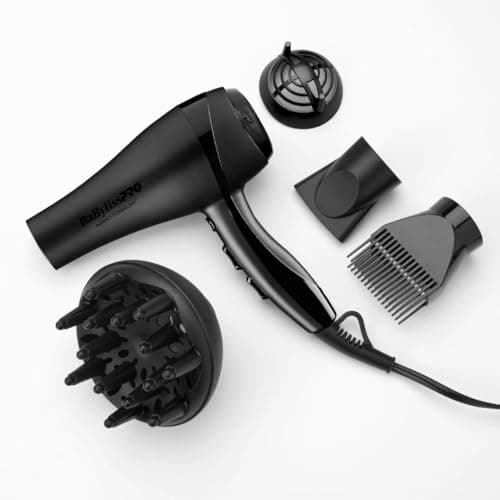 BaBylissPRO Nano Titanium Dryer (BNT5548)Two thousand watts and six heat-and-speed combinations, which is more drying power than the American 1,875W convention and the honest answer for a thick head of hair. BaBylissPRO Nano Titanium Dryer (BNT5548)Two thousand watts and six heat-and-speed combinations, which is more drying power than the American 1,875W convention and the honest answer for a thick head of hair. | Thick hair that needs raw drying power | 2,000W salon dryer | |
| 2 | 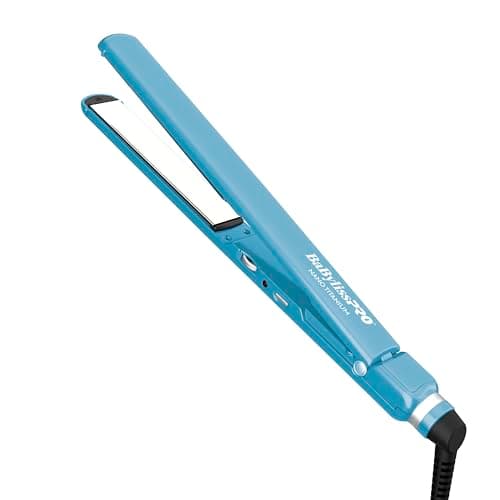 BaBylissPRO Nano Titanium 1-inch Ultra-Thin StraightenerFifty heat settings from 240F to 450F on extra-long 5-inch titanium plates — the reach coarse hair needs, and a floor low enough for fine hair if you trust yourself with the dial. BaBylissPRO Nano Titanium 1-inch Ultra-Thin StraightenerFifty heat settings from 240F to 450F on extra-long 5-inch titanium plates — the reach coarse hair needs, and a floor low enough for fine hair if you trust yourself with the dial. | Thick or coarse hair that needs one pass, not four | Titanium iron, 50 settings | |
| 3 | 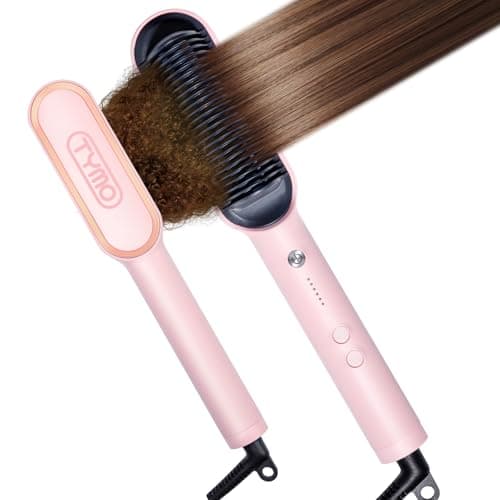 TYMO Ring Hair Straightener BrushFive published temperatures from 266F to 410F, each labeled for a hair type, on a tool that smooths rather than clamps. That last part is the whole point. TYMO Ring Hair Straightener BrushFive published temperatures from 266F to 410F, each labeled for a hair type, on a tool that smooths rather than clamps. That last part is the whole point. | Smoothing thick hair without pressing it flat | Straightening brush | |
| 4 | 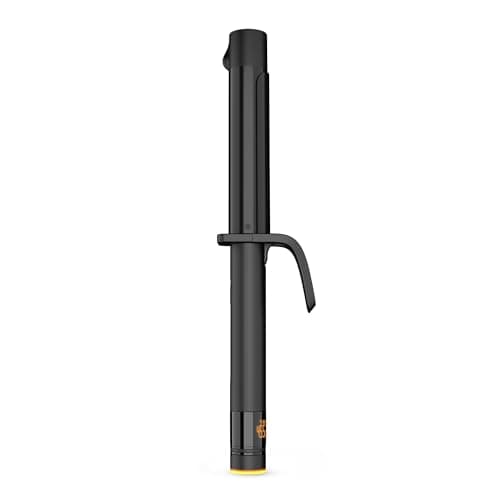 Hot Tools Black Gold Digital Curling Iron (1.25 in)A digital display, a 455F ceiling and a two-hour auto shut-off. The ceiling is far more heat than most hair needs, and the display is why you can avoid it. Hot Tools Black Gold Digital Curling Iron (1.25 in)A digital display, a 455F ceiling and a two-hour auto shut-off. The ceiling is far more heat than most hair needs, and the display is why you can avoid it. | Coarse hair that will not hold a curl | Digital salon iron |
#1 · Thick hair that needs raw drying power
BaBylissPRO Nano Titanium Dryer (BNT5548)
Two thousand watts and six heat-and-speed combinations, which is more drying power than the American 1,875W convention and the honest answer for a thick head of hair.
| Power | 2,000 wattssource |
|---|---|
| Settings | 6 heat and speed settings, plus a cool-shot buttonsource |
| Ions | Integrated ion generatorsource |
| Attachments | Concentrator nozzlesource |
| Filter | Removable rear filter for cleaningsource |
| Warranty | Limited 4-year warrantysource |
What those numbers mean
2,000W is unusual in the US market because household circuits and the 1,875W convention keep most dryers just under it. If your hair takes 25 minutes to dry, that extra power is the specification that shortens it.
A removable rear filter sounds trivial and is not. A clogged filter starves the motor, the dryer runs hotter to compensate, and the tool that was supposed to be gentle becomes the one that scorches. Filters you can actually clean last.
The four-year warranty is longer than almost anything at this price and is a reasonable proxy for how the motor is expected to hold up.
What it does well
- 2,000W, genuinely more power than the 1,875W most of the category tops out at
- Six heat and speed combinations rather than the usual three-by-two grid
- Removable filter, which is what keeps a dryer performing after year one
- Four-year warranty
What it does not
- BaBylissPRO does not publish an air temperature figure, so the actual heat is unknown
- Concentrator only in the box; a diffuser is a separate purchase
- All that power is wasted on fine hair, and risky on damaged hair
Skip this one if: Skip it if your hair is fine, bleached or breaking. Buying the most powerful dryer in the room and then never using its top settings is money spent on a specification you have to avoid.
#ad · how this is funded · price as of October 23, 2026
#2 · Thick or coarse hair that needs one pass, not four
BaBylissPRO Nano Titanium 1-inch Ultra-Thin Straightener
Fifty heat settings from 240F to 450F on extra-long 5-inch titanium plates — the reach coarse hair needs, and a floor low enough for fine hair if you trust yourself with the dial.
| Plates | 1-inch wide, extra-long 5-inch platessource |
|---|---|
| Temperature | 50 heat settings, up to 450Fsource |
| Heater | Dual-voltage ceramic heater for rapid heat-up and recoverysource |
| Housing | Ryton, to resist high heatsource |
| Ions | Emits negative ionssource |
| Cord | 9 ft swivel cordsource |
| Warranty | Limited 4-year warrantysource |
What those numbers mean
Plate length is the specification nobody markets and everybody should. Five inches of plate covers more hair per pass, which means fewer passes, which is the only heat-damage variable fully in your control.
Fifty settings is not gimmickry when the range runs to 450F. It means you can sit at 320F or 340F precisely rather than choosing between a low, medium and high that nobody has defined.
Titanium conducts heat faster than ceramic and recovers faster after a cold section of hair pulls the temperature down. That is genuinely useful on coarse hair and genuinely dangerous on fine hair.
What it does well
- Extra-long 5-inch plates mean fewer passes on long hair
- Fifty discrete settings, so a low temperature is actually selectable
- Fast titanium heat recovery mid-section
- Four-year warranty and a 9-foot cord
What it does not
- 450F is above every threshold in the research and should not be used
- Titanium's fast heat transfer is unforgiving of a slow hand
- No auto shut-off — the manual warns it burns out if left on, voiding the warranty
Skip this one if: Skip it if you are the kind of person who reaches for the maximum setting. Fifty settings only helps if you use the low ones, and the top of this range is a number no hair needs.
#3 · Smoothing thick hair without pressing it flat
TYMO Ring Hair Straightener Brush
Five published temperatures from 266F to 410F, each labeled for a hair type, on a tool that smooths rather than clamps. That last part is the whole point.
| Temperature settings | 5 settings — 266F, 302F, 338F, 374F and 410F, labeled by hair type on the toolsource |
|---|---|
| Coating | Keratin-infused ceramicsource |
| Heating surface | 25 ceramic heating plates, 3D heating teethsource |
| Heat-up | 20 secondssource |
| Voltage | Dual voltagesource |
| Safety | Anti-scald protection, 30-minute auto shut-offsource |
| Cord | 360-degree swivel cordsource |
What those numbers mean
A brush cannot press hair between two plates, so it cannot deliver a poker-straight finish. What it does instead is smooth the cuticle with much less mechanical stress, which is why it suits hair that breaks under a clamp.
Publishing all five temperatures with a hair type attached to each is unusually honest labeling. It means the tool is telling you not to use 410F on fine hair rather than leaving you to guess.
Twenty seconds to heat is faster than any iron here, and on a weekday that is the difference between using it and not.
What it does well
- All five temperatures published and labeled by hair type
- Far less mechanical stress than a clamping iron
- 20-second heat-up
- Anti-scald protection and a 30-minute auto shut-off
What it does not
- Cannot produce a fully straight, pressed finish
- The bristles need care around the scalp even with anti-scald
- 410F top setting is above the thresholds in the research
Skip this one if: Skip it if you want a sleek, glass-straight result or a silk press. A brush smooths; it does not press, and no setting on it will change that.
#4 · Coarse hair that will not hold a curl
Hot Tools Black Gold Digital Curling Iron (1.25 in)
A digital display, a 455F ceiling and a two-hour auto shut-off. The ceiling is far more heat than most hair needs, and the display is why you can avoid it.
| Temperature | Up to 455Fsource |
|---|---|
| Controls | Digital controls and displaysource |
| Auto shut-off | 2-hour auto shut-offsource |
| Voltage | Universal dual voltagesource |
What those numbers mean
455F exists so the box can say 455F. Nothing in the thermal-damage literature supports taking hair there, and the reason to buy a digital iron is precisely so you can sit at 330F or 350F and know it.
A two-hour auto shut-off is generous to the point of being a safety note rather than a safety feature. Most irons here shut off in thirty minutes or one hour.
Dual voltage on a curling iron is more useful than it sounds, because curling irons are the tool people most often ruin abroad.
What it does well
- Digital display means you know the actual number
- Enough heat ceiling for genuinely coarse hair
- Universal dual voltage
What it does not
- 455F is well above every threshold in the cited research
- A two-hour shut-off is a long time for a hot metal object
- Hot Tools does not publish a heat-up time for this model
Skip this one if: Skip it if your hair is fine or color-treated. You would be buying headroom you must never use, and a lower-ceiling iron removes the temptation entirely.
Titanium over ceramic, here specifically
This inverts the advice on the fine-hair page and it should. Titanium conducts heat quickly in both directions, so it re-reaches its set point fast after a cold, dense section pulls it down. That is exactly what stops the second half of a pass finishing cooler than the first.
Ceramic is the gentler material and the right one for fine or damaged hair. On coarse hair it dips under load and recovers slowly, which shows up as the last two inches of every section needing a second pass — and the second pass is the cost. Ceramic versus titanium has the full comparison.
Sectioning, which is not optional
No tool works quickly on thick hair pointed at the whole head. Air and heat only reach surfaces they can touch, so the outer layer finishes while the interior stays wet or unstraightened, and the session drags while you redo work that is already done.
- Clip into at least four sections. Six on very dense hair.
- Work bottom layer to top. The underneath is what gets skipped and then needs a second session.
- Sub-sections no thicker than the tool can heat through — about a quarter inch on an iron, which feels thin and is correct.
- One pass. If it needs two, the section was too thick.
- Do not revisit finished sections. That is where a long session turns into damage.
Every page for thick hair
- Hair dryers for thick hair — where wattage genuinely earns its keep.
- Flat irons for thick hair — plate length and the pass-count arithmetic.
- Blow-dry brushes for thick hair — and the honest limits of 1,100W.
- Curling irons for long thick hair — where drop-out is the failure mode.
- Straightening brushes — the lower-stress smoothing route.
If your thick hair is also coily, the 4C router covers what changes.
Questions people actually ask
What styling tools work best on thick hair?
Powerful ones, which is the opposite of the advice everywhere else on this site. A 1,875W-and-up dryer or a high-speed brushless motor, a titanium iron with long plates, and a tool that recovers its temperature fast after a dense section. The BaBylissPRO dryer at 2,000W and its flat iron with published 5-inch plates are the clearest examples here.
Is high heat necessary for thick hair?
Less than people assume. Coarse hair does need more than fine hair, but the damage on thick hair usually comes from a long session and repeat passes rather than from a single hot pass. Medium heat with maximum airflow, proper sectioning and one pass per section produces the same finish with less total exposure.
Why does thick hair take so long to dry?
Because it is usually being dried as one mass. Air only removes water from surfaces it reaches, so the outer layer dries while the interior stays soaked and the total time balloons. Clipping into four or more sections and working bottom-up typically halves the session on any dryer, at no cost.
Should I use ceramic or titanium on thick hair?
Titanium. It conducts heat faster in both directions, so it recovers its set point quickly after a cold dense section pulls it down — which is what stops the end of a pass finishing cooler than the start. Ceramic is the gentler material and the right choice for fine or damaged hair; on coarse hair it dips under load and forces second passes.
Sources
Every figure on this page traces to one of these. If a number here disagrees with the manufacturer, the manufacturer is right and we want to know — tell us.
Read next
Best for Thick Hair
The Best Hair Dryers for Thick Hair
Five dryers for thick and dense hair, ranked on published wattage and airflow — because on this hair type, shortening the session is the safety measure.
Top pick: BaBylissPRO Nano Titanium Dryer (BNT5548)
Best for Thick Hair
The Best Flat Irons for Thick Hair
Five flat irons for thick and coarse hair, ranked on plate length and heat recovery — the two specs that cut pass count.
Top pick: BaBylissPRO Nano Titanium 1-inch Ultra-Thin Straightener
Best for Thick Hair
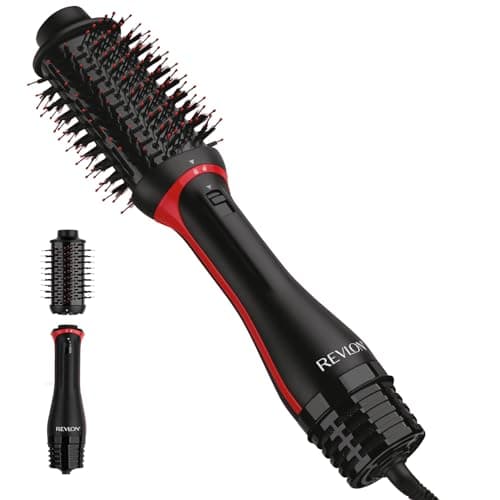
The Best Blow-Dry Brushes for Thick Hair
Four blow-dry brushes for thick hair ranked on barrel diameter and power, plus where the one-step approach genuinely runs out.
Top pick: Revlon One-Step Volumizer PLUS 2.0
Best for Long Hair
The Best Curling Irons for Long Thick Hair
Four curling tools for long thick hair, ranked on heat recovery and barrel length, with the sectioning and cooling method that fixes drop-out.
Top pick: Hot Tools Black Gold Digital Curling Iron (1.25 in)
Plate Material Guide
Ceramic vs Titanium Flat Irons
The plate material decision explained by heat transfer rather than price, with which material suits which hair type and why.
Top pick: BaBylissPRO Nano Titanium 1-inch Ultra-Thin Straightener
Start Here
Hair Styling Tools, Sorted by Hair Type
Six hair types with the specifications each one genuinely needs, routing to every dryer, iron, brush and curler we cover for it.
Top pick: Shark SpeedStyle Pro Ionic Dryer (HD732)