The Best Hair Dryers for Hair Extensions
Extensions turn a vague preference for lower heat into a hard requirement, because the thing that fails first is not the hair - it is the attachment holding it in.
How this page is funded: the buy links below are affiliate links, and Heat Index earns a commission on qualifying purchases at no cost to you. Nothing on this page was supplied by a manufacturer, and commission plays no part in the ranking — read the full disclosure. Picks are chosen from published specifications, not from hands-on testing; the method is written down so you can check it. Prices last verified October 23, 2026.
Most hair-drying advice treats heat as a question of damage you will notice in six months. With extensions it is a question of attachment failure you will notice this week, because keratin bonds and adhesive tape both soften well below the temperature a dryer can reach.
That changes the buying criteria completely. The specification that matters is not power — it is whether the manufacturer tells you what temperature the air actually is, and whether you can hold it low while still finishing a full head of thick, doubled-up hair.
How we judged this list
- A published air temperature, in degrees. This is the whole page. A dryer that names its settings in degrees lets you keep the air away from the bonds deliberately rather than by feel.
- A genuine cold shot or cold setting, because cooling a section under tension is how you set a blowout without going back over it with more heat.
- Airflow strength, so heat does less of the work. Moving more air lets you dry at a lower setting, which is the same trade every high-speed dryer is built around.
- A concentrator that aims the stream. Precision matters more than usual when there is a zone you are actively trying not to heat.
- Weight, because extensions add length and drying time. A long session with a heavy dryer ends early, and half-dry wefts tangle.
Quick picks
Ranked, with the reasoning underneath. Tap any row to jump to that write-up; tap the price to check it on Amazon. Prices come from the live layer, never from this page.
| # | Product | Best for | Type | Price |
|---|---|---|---|---|
| 1 | 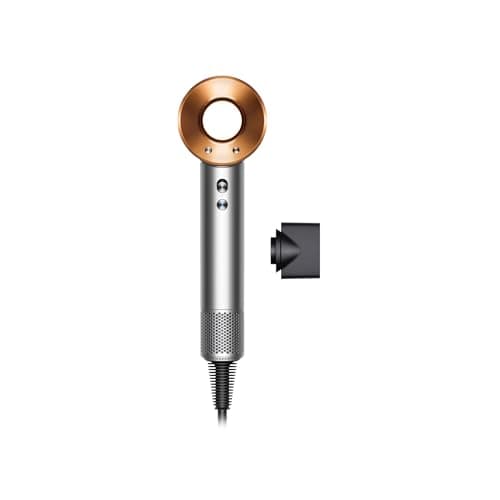 Dyson Supersonic Origin Hair DryerThe one dryer that tells you what each heat setting actually is in degrees, which makes it the only one in the category you can plan a routine around. | Published temperatures on every heat setting | 1,600W dryer | |
| 2 | 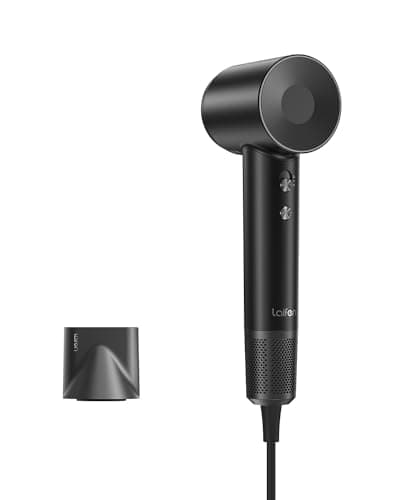 Laifen Swift High-Speed Hair DryerA 110,000 rpm brushless motor moving air at 22.3 m/s, which dries by air speed rather than temperature. That trade is the entire argument for high-speed dryers. | Cutting drying time without cranking the heat | High-speed brushless dryer | |
| 3 | 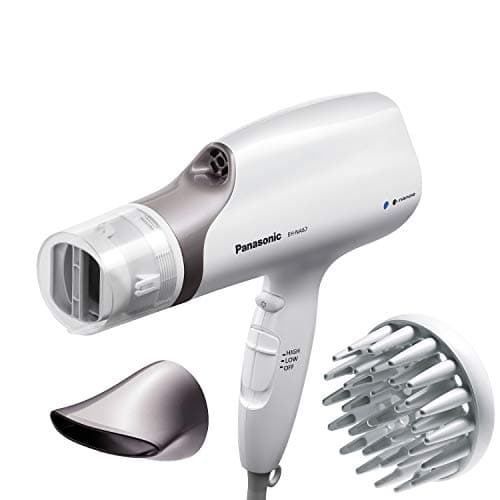 Panasonic nanoe Hair Dryer (EH-NA67)The oscillating nozzle is a real mechanical idea rather than a coating claim: it moves the airflow for you, which is what stops one section cooking while another stays wet. | Even drying without holding the dryer perfectly still | 1,875W ionic dryer | |
| 4 | 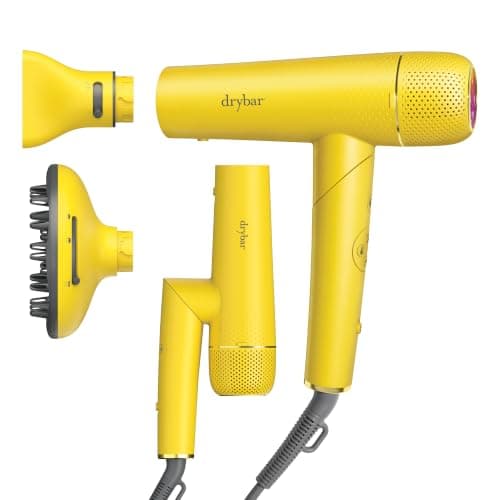 Drybar Buttercup PRO Professional Blow-Dryer1,875W at roughly 540 g, which is the combination almost nothing else in the category manages, plus a mode that alternates hot and cool air specifically to cut heat exposure. | A full-power dryer that is genuinely light | 1,875W ionic dryer |
#1 · Published temperatures on every heat setting
Dyson Supersonic Origin Hair Dryer
The one dryer that tells you what each heat setting actually is in degrees, which makes it the only one in the category you can plan a routine around.
| Power | 1,600W at full powersource |
|---|---|
| Heat settings | 4 settings — 212F (100C), 176F (80C), 140F (60C), and constant coldsource |
| Speed settings | 3 — fast drying, regular drying, gentle dryingsource |
| Airflow | Up to 41 liters per secondsource |
| Heat regulation | Measures air temperature over 40 times a secondsource |
| Dimensions | 9.6 in long, 3.9 in wide, 3.1 in deepsource |
What those numbers mean
Four heat settings published as 212F, 176F and 140F plus cold is the disclosure the rest of the category refuses to make. It means you can pick a setting against a damage threshold instead of against a vague label.
Note where those numbers sit. Even the hottest setting, 212F, is below the 302F figure Shark names as its damage line and far below the temperatures at which the literature reports cuticle degradation.
1,600W is less nominal power than a US 1,875W dryer, and 41 l/s of airflow is how it compensates. Again: air speed, not temperature.
What it does well
- Publishes an actual temperature for every heat setting, uniquely in this category
- Airflow figure published in liters per second
- Top setting of 212F is below every damage threshold in the cited research
- Attachments attach magnetically and can be changed mid-dry
What it does not
- Costs several times what a competent 1,875W dryer costs
- 1,600W nominal will feel slower than an AC dryer on very thick hair
- Dyson does not sell through every retailer, so availability moves around
Skip this one if: Skip it if the budget is the constraint rather than the information. Everything the Supersonic does for hair health can be approximated by running a cheaper dryer on medium heat and high speed, which costs nothing.
#ad · how this is funded · price as of October 23, 2026
#2 · Cutting drying time without cranking the heat
Laifen Swift High-Speed Hair Dryer
A 110,000 rpm brushless motor moving air at 22.3 m/s, which dries by air speed rather than temperature. That trade is the entire argument for high-speed dryers.
| Motor | 110,000 rpm brushless motorsource |
|---|---|
| Air speed | 22.3 m/ssource |
| Rated power | 1,400Wsource |
| Voltage | 120V — Laifen states plainly that it is not dual voltagesource |
| Heat regulation | Thermo-Control microprocessor monitors air temperature 100 times per second and alternates hot and cold airstreamssource |
| Ions | 200 million negative ionssource |
| Noise | 59 dBsource |
| Weight | 0.9 lb / 407 gsource |
| In the box | Dryer, one magnetic smooth nozzle, manual — no diffusersource |
What those numbers mean
Air speed and heat are two different ways to get water out of hair, and only one of them denatures protein. A dryer that moves air at 22.3 m/s can finish the job at a lower temperature, which is the whole reason this category exists.
0.9 lb is less than half the weight of the AC dryers it competes with. Over a fifteen-minute blowout on long hair that is the difference between finishing properly and giving up damp.
59 dB is a published figure, which almost no dryer brand offers. For context, that is conversational-speech territory rather than the vacuum-cleaner range most 1,875W dryers occupy.
What it does well
- Dries by air speed, so the heat setting can stay lower for the same result
- 0.9 lb, the lightest serious dryer in this roundup
- Publishes both an air-speed and a noise figure, which the mass market does not
- Temperature sampled 100 times a second
What it does not
- No air temperature in degrees — the settings are named hot, warm and cold
- 120V only. Laifen states it is not dual voltage, so it cannot travel abroad
- Only the smooth nozzle is in the box; the diffuser is a separate purchase
- The magnetic nozzles are proprietary; nothing else fits
- The narrow high-velocity stream takes practice on a big head of hair
Skip this one if: Skip it if you diffuse curls and want a wide, gentle airflow. A high-velocity stream is the opposite of what a curl pattern wants, and the diffuser is a separate purchase here rather than something in the box.
#3 · Even drying without holding the dryer perfectly still
Panasonic nanoe Hair Dryer (EH-NA67)
The oscillating nozzle is a real mechanical idea rather than a coating claim: it moves the airflow for you, which is what stops one section cooking while another stays wet.
| Power | 1,875 wattssource |
|---|---|
| Settings | 3 heat settings plus a cool shot, and 2 speed settingssource |
| Attachments | Oscillating quick-dry nozzle, concentrator nozzle, full-size diffusersource |
| Ion technology | nanoe, stated to hold 1,000x more moisture than regular ionssource |
| Weight | 2.9 lbsource |
What those numbers mean
Most heat damage from a dryer is not about the setting, it is about holding the nozzle in one spot. An oscillating head spreads the same energy over a wider area, which is a mechanical fix for a technique problem.
The 1,000x moisture claim is Panasonic's own description of nanoe versus conventional ions. It is a manufacturer claim about their own technology, and we are quoting it as that rather than endorsing the number.
2.9 lb is the heaviest dryer here by a clear margin. Everything the oscillating head gains you costs something in the wrist.
What it does well
- Oscillating nozzle addresses the actual cause of most blow-dry damage
- Three attachments including a full-size diffuser
- Full 1,875W with a genuine cool shot
What it does not
- 2.9 lb, the heaviest dryer in this roundup
- No published air-temperature figure
- The nanoe moisture claim is unverifiable from outside Panasonic
Skip this one if: Skip it if wrist strain or shoulder pain is why you stopped blow-drying. Three pounds held above your head is the wrong answer to that problem no matter how good the nozzle is.
#ad · how this is funded · price as of October 23, 2026
#4 · A full-power dryer that is genuinely light
Drybar Buttercup PRO Professional Blow-Dryer
1,875W at roughly 540 g, which is the combination almost nothing else in the category manages, plus a mode that alternates hot and cool air specifically to cut heat exposure.
| Power | 1,875 watts at 125 voltssource |
|---|---|
| Weight | Approximately 540 g, about 1 lb 3 ozsource |
| Cord | 8 ft power cordsource |
| Motor | BLDC motorsource |
| Drybar Mode | Alternates between hot and cool air to help limit heat exposure while stylingsource |
| Ion control | Adjustable ion levels, which Drybar states deliver up to 2x shinier hair compared with air-dried hairsource |
| Controls | Digital display for adjusting temperature, airflow and ion levelsource |
| Attachments | 2-in-1 concentrator and a customizable diffuser, with per-attachment memory settingssource |
What those numbers mean
Full wattage at roughly 540 g is the specification to notice. The Conair AC dryer with the same nominal power weighs nearly twice as much, and weight is the variable that decides whether you finish the blowout.
Drybar Mode is the genuinely unusual feature: the dryer alternates hot and cool air rather than holding one temperature, which is a heat-exposure argument rather than a speed one. It is the same reasoning behind every cool-shot finish, applied continuously.
Note what Drybar does not publish. There is a wattage, a voltage, a weight and a cord length, and then it stops — no airflow figure, and no temperature for any setting despite the digital display.
What it does well
- 1,875W at roughly 540 g, among the best power-to-weight here
- A diffuser and a concentrator both in the box
- Drybar Mode targets heat exposure rather than drying speed
- Per-attachment memory, so settings persist per head
What it does not
- Drybar publishes no air velocity figure and says so directly when asked
- No published temperature for any setting, despite the digital display
- Drybar's published warranty list does not yet name the PRO
- Priced well above equivalent-wattage drugstore dryers
Skip this one if: Skip it if you want numbers you can check. Drybar publishes the wattage, voltage, weight and cord length and then stops, and at this price a dryer that names its airflow and its temperatures is the more defensible buy.
#ad · how this is funded · price as of October 23, 2026
Why the Dyson leads a list it does not lead anywhere else
The Supersonic is not the most powerful dryer on this site and it is the most expensive. It leads here for one reason: it names all four of its settings in degrees — 212F, 176F, 140F and constant cold — and measures air temperature over 40 times a second to hold them.
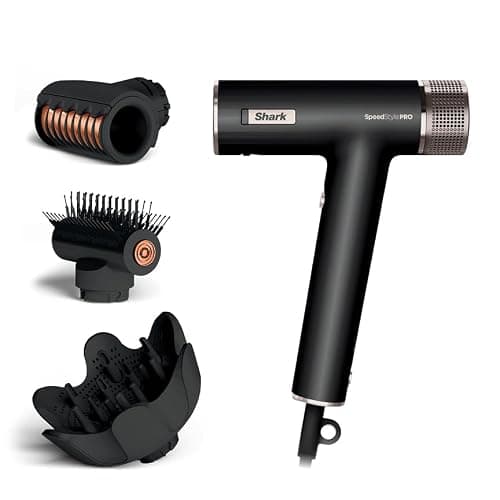
For an extension wearer that is worth more than any amount of wattage. You can choose 140F deliberately near the roots and know what you are choosing, which is simply not possible on a dryer whose settings are labeled low, medium and high. Almost nothing else in the category publishes this. The Shark SpeedStyle publishes a ceiling it never exceeds, which is the other useful form of this disclosure.
| Dryer | Temperature disclosure | Cold setting |
|---|---|---|
| Dyson Supersonic | 212F, 176F, 140F named in degrees | Constant cold, not a momentary button |
| Laifen Swift | No degrees published; air temperature monitored 100 times a second and alternated hot and cold | Cold within the auto-cycling mode |
| Panasonic nanoe EH-NA67 | 3 heat settings, not published in degrees | Cool shot |
| Drybar Buttercup | 3 heat settings, not published in degrees | Not published |
Two of those rows are honest gaps rather than failings — most of the category publishes nothing here. They earn their places on airflow, weight and attachments, and if the temperature disclosure is what you are buying, the ranking order on this page is the answer.
The technique matters as much as the dryer
- Dry the attachment zone first, on cool, before anything else. Wet bonds and wet tape are at their most vulnerable, and leaving them until last means they get the most total heat.
- Keep the concentrator pointed down the shaft, never at the scalp. The nozzle exists to aim the stream away from the row.
- Never sleep on damp wefts. Friction against a pillow on a damp attachment point is how tangling at the root starts.
- Finish cool and under light tension. The cuticle sets as it cools, and this is free.
- Use a heat protectant on the lengths — what it does and does not do — and keep product away from the bonds themselves unless your installer says otherwise.
The attachment method changes what you have to protect
Extensions are not one product. The method holding them in decides what heat does to them, and it is worth knowing which you have before deciding how careful to be.
| Method | How it attaches | Where the heat risk is |
|---|---|---|
| Keratin / fusion bonds | Individual strands fused with a keratin polymer | The bond itself, which is a thermoplastic — heat is what installed it and heat is what releases it |
| Tape-in wefts | Adhesive tabs sandwiching your own hair | The adhesive, which softens with heat and can slip |
| Micro-link / bead | Small metal rings clamped around sections | The metal, which conducts heat to the root rather than softening |
| Clip-in wefts | Removable clips | Minimal — take them out and dry them separately |
| Sew-in / hand-tied wefts | Stitched to a braided base | Drying time. The braid base holds water long after the surface feels dry |
We are deliberately not publishing a temperature limit for any of those rows, because no manufacturer of any of them publishes one we could cite, and the bond chemistry varies between brands. What the table does establish is that the risk is concentrated at the attachment point in almost every case — which is why the technique below is built around treating that zone differently from the lengths.
Why airflow matters more than heat here
There is a real tension in drying extensions: the attachment zone is the part you most want to keep cool, and it is also the part that takes longest to dry because it sits against the scalp under extra hair. Turning the heat up is the intuitive fix and the wrong one.
The alternative is to move more air at a lower temperature, which is why two of the four picks here are built around airflow rather than wattage. The Laifen publishes 22.3 m/s of air speed at just 1,400W; the Dyson publishes up to 41 liters per second at 1,600W. Those two figures are not comparable with each other — one is a speed and one is a volume — but both describe dryers that do more of the work with air than with heat.
What extensions cost you in drying time
Two practical consequences follow from simply having more hair, and both belong in a buying decision rather than being discovered later.
- Sessions get longer, so weight compounds. The Panasonic on this list is 2.9 lb and the Laifen is 0.9 lb. Over a session that is now noticeably longer than it used to be, that is the difference between finishing properly and leaving the under-layer damp.
- Damp attachment points are the failure mode. Tangling, matting and slippage all start at a row that never fully dried, which is why the method above dries that zone first rather than last.
- A concentrator becomes a precision tool rather than a nicety. You are aiming a stream along the hair shaft and away from a specific zone, and a bare dryer nozzle cannot do that.
What to ask before you buy either the dryer or the extensions
Because no extension manufacturer publishes a heat limit we can cite, the useful move is to get the answer from the person who installed yours. These are the questions worth asking, and they are the ones a good installer will answer without hesitating:
- What is the attachment method, by name? Keratin bond, tape, micro-link, sew-in and clip-in behave differently under heat, and knowing which you have changes the routine.
- Is there a heat limit for this brand of bond or tape? Some suppliers give installers a figure even when it is not printed on a consumer page.
- Should the attachment zone be dried first or last? Most answers are first and cool, but a sew-in with a braided base is a different conversation.
- How long before I can wash and dry it after installation? This one is method-specific and getting it wrong is a common cause of early slippage.
- Which products should stay away from the attachment points? Oils and silicones near a tape tab are a known cause of failure.
That list is short because the honest scope of a dryer page ends there. What we can rank is which dryers give you the control to follow whatever answer you get — and the ranking above is built on exactly that, with the Dyson leading because it is the only one that tells you what its air is doing in degrees.
If your extensions are on fine natural hair, the weight of the dryer matters more than the spec sheet suggests — dryers for fine hair covers that side. For the general thresholds both natural and added hair share, preventing heat damage has the published research.
Questions people actually ask
What heat setting should I use with hair extensions?
The lowest that still dries the hair, and cooler still around the attachment points. The problem with a general answer is that most dryers do not publish what their settings mean in degrees - which is exactly why the Dyson Supersonic leads this list, since it names 212F, 176F and 140F outright. Ask whoever installed your extensions what their bond chemistry tolerates.
Can you blow dry hair extensions?
Yes, and with most types you should rather than letting them air dry, because damp attachment points tangle and slip. What changes is the method: dry the row first on a cool setting, keep the concentrator aimed down the hair shaft rather than at the scalp, and finish cool.
Do ionic dryers help with extension tangling?
A little, for the static component. Negative ions neutralize the charge that makes strands separate and catch, and extension wefts tangle partly for that reason. It is a secondary benefit though - the primary specifications for extensions are a controllable low temperature and enough airflow to finish drying without turning the heat up.
Is a high wattage dryer bad for extensions?
Not inherently. Wattage is electrical input, not temperature, and a powerful dryer that moves a lot of air can dry faster at a lower heat setting - which is better for bonds, not worse. The risk is using that power as heat rather than airflow. The 1,875W Panasonic on this list is a reasonable extension dryer for exactly that reason.
How long do hair extensions take to blow dry?
Longer than your natural hair alone, because there is more hair and the attachment rows need drying separately and gently. That is why weight is on our criteria list - a dryer that is uncomfortable to hold gets put down before the job is finished, and half-dry wefts are how tangling starts.
Sources
Every figure on this page traces to one of these. If a number here disagrees with the manufacturer, the manufacturer is right and we want to know — tell us.
Read next
Best Overall
The Best Hair Dryers, Chosen by Hair Type
Nine dryers compared on published wattage, airflow and temperature ceilings, then routed to the hair type each one genuinely suits.
Top pick: Laifen Swift High-Speed Hair Dryer

Best for Fine Hair
The Best Hair Dryers for Fine and Thin Hair
Five dryers for fine and thin hair, ranked on published temperature ceilings and weight rather than on wattage nobody needs.
Top pick: Shark SpeedStyle Pro Ionic Dryer (HD732)
Best for Damaged Hair
The Best Hair Dryers for Damaged and Bleached Hair
Five dryers ranked strictly on published temperature disclosure — the only specification that matters when the cuticle is already compromised.
Top pick: Dyson Supersonic Origin Hair Dryer
Damage Guide
How to Prevent Heat Damage
The thermal thresholds from published research, and the seven changes that reduce heat damage most, ordered by how much they help.
Top pick: Dyson Supersonic Origin Hair Dryer
Guide
Do I Need a Heat Protectant?
What a heat protectant does and does not do, what the AAD recommends, and why it is not permission to raise the temperature.
Supersonic Verdict
Dyson Supersonic Review
The Supersonic read from its published specifications, including the combined temperature and airflow disclosure nothing else in the category matches.
Top pick: Dyson Supersonic Origin Hair Dryer