The Best Straightening Brushes
A brush cannot make hair glass-straight, and any page that says otherwise is setting you up for a refund. What it can do is worth understanding.
How this page is funded: the buy links below are affiliate links, and Heat Index earns a commission on qualifying purchases at no cost to you. Nothing on this page was supplied by a manufacturer, and commission plays no part in the ranking — read the full disclosure. Picks are chosen from published specifications, not from hands-on testing; the method is written down so you can check it. Prices last verified October 23, 2026.
There are two different products both sold as straightening brushes, and confusing them is the main source of disappointment.
| Heated straightening brush | Hot-air blow-dry brush | |
|---|---|---|
| Example here | TYMO Ring | Revlon One-Step, amika, Hot Tools |
| Heat source | Heated ceramic plates and teeth | A hair dryer inside the handle |
| Used on | Dry hair | Damp hair, around 80 percent dried |
| What it does | Smooths dry hair without clamping | Dries and smooths in one step |
| Result | Smooth, stretched, not pressed | A blowout finish with volume |
Neither is a flat iron. Nothing here presses hair between two plates, and pressing is what makes hair look sleek and flat. If you want the glass finish, that is the flat iron page, and no brush will get you there.
Quick picks
Ranked, with the reasoning underneath. Tap any row to jump to that write-up; tap the price to check it on Amazon. Prices come from the live layer, never from this page.
| # | Product | Best for | Type | Price |
|---|---|---|---|---|
| 1 | 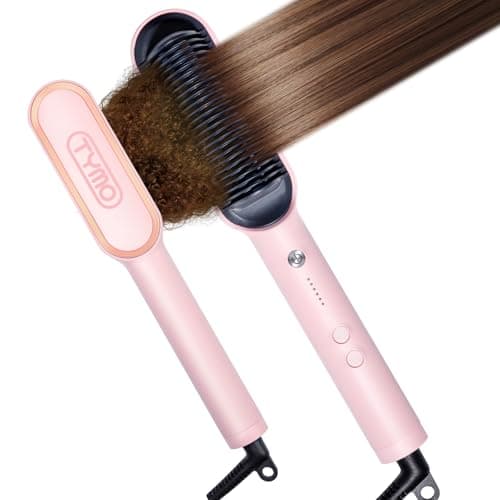 TYMO Ring Hair Straightener BrushFive published temperatures from 266F to 410F, each labeled for a hair type, on a tool that smooths rather than clamps. That last part is the whole point. TYMO Ring Hair Straightener BrushFive published temperatures from 266F to 410F, each labeled for a hair type, on a tool that smooths rather than clamps. That last part is the whole point. | Smoothing thick hair without pressing it flat | Straightening brush | |
| 2 | 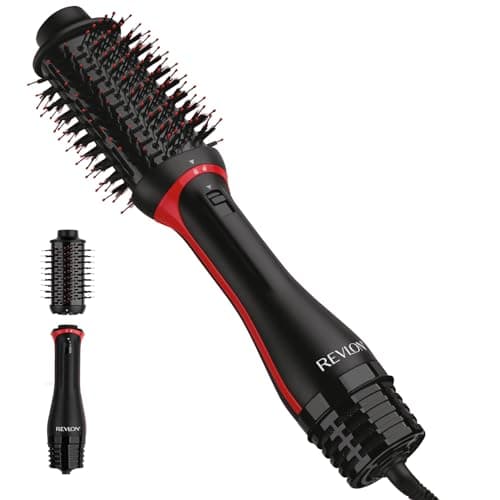 Revlon One-Step Volumizer PLUS 2.0A 2.4-inch oval barrel at 1,100W and 15 ounces: the tool that made at-home blowouts a normal thing, in its most refined version. Revlon One-Step Volumizer PLUS 2.0A 2.4-inch oval barrel at 1,100W and 15 ounces: the tool that made at-home blowouts a normal thing, in its most refined version. | A first blow-dry brush that does not need technique | One-step dryer brush | |
| 3 | 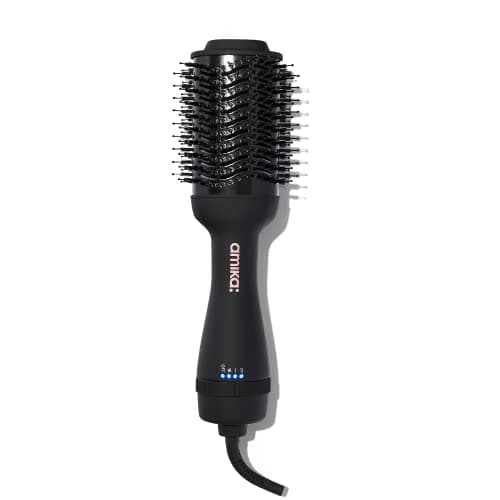 amika Hair Blow Dryer Brush 2.0The only blow-dry brush here that publishes its three temperatures — 115F, 190F and 230F — and every one of them is below the damage thresholds in the research. amika Hair Blow Dryer Brush 2.0The only blow-dry brush here that publishes its three temperatures — 115F, 190F and 230F — and every one of them is below the damage thresholds in the research. | Knowing exactly how hot the brush is | One-step dryer brush | Check price#ad |
| 4 | 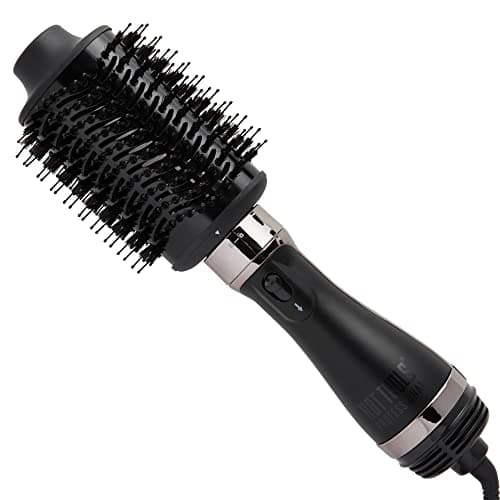 Hot Tools Black Gold One-Step Detachable BlowoutA detachable head, so the same handle takes a 2.8-inch barrel for length and a 2.4-inch for shorter layers instead of buying two brushes. Hot Tools Black Gold One-Step Detachable BlowoutA detachable head, so the same handle takes a 2.8-inch barrel for length and a 2.4-inch for shorter layers instead of buying two brushes. | Two barrel sizes on one handle | Detachable dryer brush |
#1 · Smoothing thick hair without pressing it flat
TYMO Ring Hair Straightener Brush
Five published temperatures from 266F to 410F, each labeled for a hair type, on a tool that smooths rather than clamps. That last part is the whole point.
| Temperature settings | 5 settings — 266F, 302F, 338F, 374F and 410F, labeled by hair type on the toolsource |
|---|---|
| Coating | Keratin-infused ceramicsource |
| Heating surface | 25 ceramic heating plates, 3D heating teethsource |
| Heat-up | 20 secondssource |
| Voltage | Dual voltagesource |
| Safety | Anti-scald protection, 30-minute auto shut-offsource |
| Cord | 360-degree swivel cordsource |
What those numbers mean
A brush cannot press hair between two plates, so it cannot deliver a poker-straight finish. What it does instead is smooth the cuticle with much less mechanical stress, which is why it suits hair that breaks under a clamp.
Publishing all five temperatures with a hair type attached to each is unusually honest labeling. It means the tool is telling you not to use 410F on fine hair rather than leaving you to guess.
Twenty seconds to heat is faster than any iron here, and on a weekday that is the difference between using it and not.
What it does well
- All five temperatures published and labeled by hair type
- Far less mechanical stress than a clamping iron
- 20-second heat-up
- Anti-scald protection and a 30-minute auto shut-off
What it does not
- Cannot produce a fully straight, pressed finish
- The bristles need care around the scalp even with anti-scald
- 410F top setting is above the thresholds in the research
Skip this one if: Skip it if you want a sleek, glass-straight result or a silk press. A brush smooths; it does not press, and no setting on it will change that.
#2 · A first blow-dry brush that does not need technique
Revlon One-Step Volumizer PLUS 2.0
A 2.4-inch oval barrel at 1,100W and 15 ounces: the tool that made at-home blowouts a normal thing, in its most refined version.
| Power | 1,100W motorsource |
|---|---|
| Barrel | 2.4-inch oval barrelsource |
| Settings | Four settings — low, medium, high and coolsource |
| Barrel materials | Ceramic, titanium and tourmaline, with ionic technologysource |
| Weight | 15 ozsource |
What those numbers mean
An oval barrel is doing something a round brush cannot: the flat faces smooth while the curved ends bend the end of the section. That is why one pass produces both smoothness and a bit of shape.
1,100W is modest next to a standalone dryer, and it should be. This tool is in contact with your hair rather than held six inches away, so the same wattage delivers far more heat to the strand.
Fifteen ounces is the specification that decides whether you finish. A brush you hold at head height for twenty minutes is an endurance event if it is heavy.
What it does well
- Combines the dryer and the round brush, which removes the two-handed coordination problem
- Oval barrel smooths and shapes in one pass
- A genuine cool setting for setting the style
- 15 oz, light enough for a long session
What it does not
- Revlon does not publish an actual temperature for any setting
- A one-step brush cannot match a separate dryer and round brush for control
- 2.4 inches is too large for short hair or a fringe
Skip this one if: Skip it if your hair is soaking wet and very thick. These brushes are designed for hair towel-dried to roughly 80 percent, and starting from wet is where people conclude they are underpowered.
#3 · Knowing exactly how hot the brush is
amika Hair Blow Dryer Brush 2.0
The only blow-dry brush here that publishes its three temperatures — 115F, 190F and 230F — and every one of them is below the damage thresholds in the research.
| Heat and speed settings | 3 adjustable settings at 115F, 190F and 230Fsource |
|---|---|
| Power | 950Wsource |
| Barrel | Tourmaline-coated oval barrel generating negative ions and infrared heatsource |
| Bristles | Mixed long and short bristles to detangle, smooth and minimize breakagesource |
| Weight | 0.85 lb / 380 gsource |
| Cord | 9 ft with 360-degree swivelsource |
| Warranty | 2-year warrantysource |
What those numbers mean
Three published temperatures on a blow-dry brush is close to unique, and the numbers are the reassuring part. Even the top setting of 230F sits below the 302F line and far below anything the thermal research associates with cortex damage.
950W is the lowest wattage of any brush here and, for hair that is bleached or fine, that is a feature. Less power means a slower dry and a lower ceiling, and slower is the safe direction.
0.85 lb is the lightest tool in this entire registry. On a twenty-minute blowout, that is the specification you will notice most.
What it does well
- Publishes all three temperatures, and all three are conservative
- 0.85 lb, the lightest tool here
- 9-foot swivel cord and a 2-year warranty
- Mixed bristle lengths for detangling without dragging
What it does not
- 950W is genuinely slow on thick hair
- A 230F ceiling will not produce a sharp, glassy finish
- Priced above the Revlon brushes it competes with
Skip this one if: Skip it if your hair is thick and you want to be done quickly. 950W and a 230F ceiling are a deliberate choice for hair health, and on dense hair that choice reads as a long, slow blowout.
#4 · Two barrel sizes on one handle
Hot Tools Black Gold One-Step Detachable Blowout
A detachable head, so the same handle takes a 2.8-inch barrel for length and a 2.4-inch for shorter layers instead of buying two brushes.
| Attachment | 2.8-inch blowout volumizer attachment; a 2.4-inch small head is also soldsource |
|---|---|
| Barrel | Ceramic-titanium barrel with Direct Ion technologysource |
| Bristles | Boartech bristles with refresh activated charcoalsource |
| Cord | 9 ft professional swivel cordsource |
What those numbers mean
Detachable is the genuinely useful idea. Barrel diameter decides how much bend you get at the ends, and hair that is layered wants different diameters in different places.
Boar-blend bristles grip and smooth the cuticle better than pure nylon, at the cost of more drag. On fine hair that is exactly right; on thick, tangle-prone hair it is a fight.
Hot Tools does not publish wattage or temperature for the Black Gold detachable models, which is a real gap next to amika's disclosure.
What it does well
- One handle, two barrel diameters
- Boar-blend bristles smooth the cuticle better than nylon alone
- 9-foot professional swivel cord
What it does not
- No published wattage or temperature for this model
- The second head is a separate purchase
- Boar bristles drag on thick or tangled hair
Skip this one if: Skip it if you only ever use one barrel size. The detachable system is the reason to buy this, and paying for modularity you will not use makes no sense.
#ad · how this is funded · price as of October 23, 2026
What a brush is genuinely better at
- Mechanical stress. A brush passes through the hair rather than compressing it. On fragile or bleached hair, that difference is real and matters as much as temperature.
- Speed on a big head of hair. A brush covers far more hair per stroke than a 1-inch plate. On thick hair the whole job is often faster.
- Keeping some volume. Plates flatten. A brush smooths while leaving body, which is why people with fine hair often prefer the result.
- Root access. Bristles get closer to the scalp than plates can without touching skin.
And what it cannot do
- A sleek, pressed finish. No brush produces this. If your reference photo is glass-straight, you need plates.
- A silk press. Same reason. The TYMO's 410F setting still is not pressing anything.
- Very short hair. The bristles need length to work with.
- A perfectly flat crown. Brushes leave body, which is a feature until it is not.
The one that publishes its temperatures
The TYMO leads this page for a reason that will be familiar if you have read the rest of the site, and the full TYMO Ring review goes through it: it publishes all five of its temperatures — 266F, 302F, 338F, 374F and 410F — and labels each one with the hair type it is for, on the tool itself. That is more useful guidance than most premium flat irons print.
The amika brush does the same thing in the hot-air category, publishing 115F, 190F and 230F. All three sit below the reported cuticle-degradation threshold, which makes it the pick here for hair that is fine or damaged.
Getting the best out of one
- Heated brush: completely dry hair only. Wet keratin denatures far lower than dry, and a heated brush is not a wet-to-dry tool — the tools that are work by venting the steam or by never touching the hair with a hot surface.
- Hot-air brush: about 80 percent dry. Starting from soaking wet is why people conclude these are underpowered — they are a finishing tool, not a primary dryer.
- Section the same way you would for an iron. Brushes tempt you into grabbing too much.
- Slow, steady strokes from root to tip. Follow with your other hand to keep tension.
- Cool shot at the end of each section if the tool has one. This is what makes the smoothing hold.
The full blow-dry brush ranking, including the hair-type breakdowns, is on the blow-dry brushes hub.
Questions people actually ask
Does a straightening brush work as well as a flat iron?
Not for a sleek finish, and nothing will change that — a brush cannot compress hair between two plates, which is the mechanism that makes hair look glass-straight. What it does better is smooth with much less mechanical stress, keep some volume, and cover a large head of hair faster. Different result, not a worse version of the same one.
Is a straightening brush less damaging than a flat iron?
On the mechanical side, yes — it does not clamp or compress the fiber, and that matters on hair that is already fragile. On the heat side it depends on the setting, and a brush at 410F is not gentler than an iron at 320F. The TYMO here publishes all five of its temperatures, which at least lets you make the comparison.
Can you use a straightening brush on wet hair?
Not a heated straightening brush like the TYMO — dry hair only. Wet keratin is reported to denature between 120C and 150C, far below dry keratin, so heat on wet hair is a categorically different risk. A hot-air blow-dry brush is designed for damp hair, but even those work best from around 80 percent dry.
Which straightening brush is best for thick hair?
The TYMO Ring, on published specification: 25 ceramic heating plates, a 410F top setting explicitly labeled for thick, curly and wavy hair, and a 20-second heat-up. Its ability to cover a lot of hair per stroke is exactly what a dense head needs, and it does it without the repeat passes a 1-inch plate would require.
Sources
Every figure on this page traces to one of these. If a number here disagrees with the manufacturer, the manufacturer is right and we want to know — tell us.
Read next
Best Overall
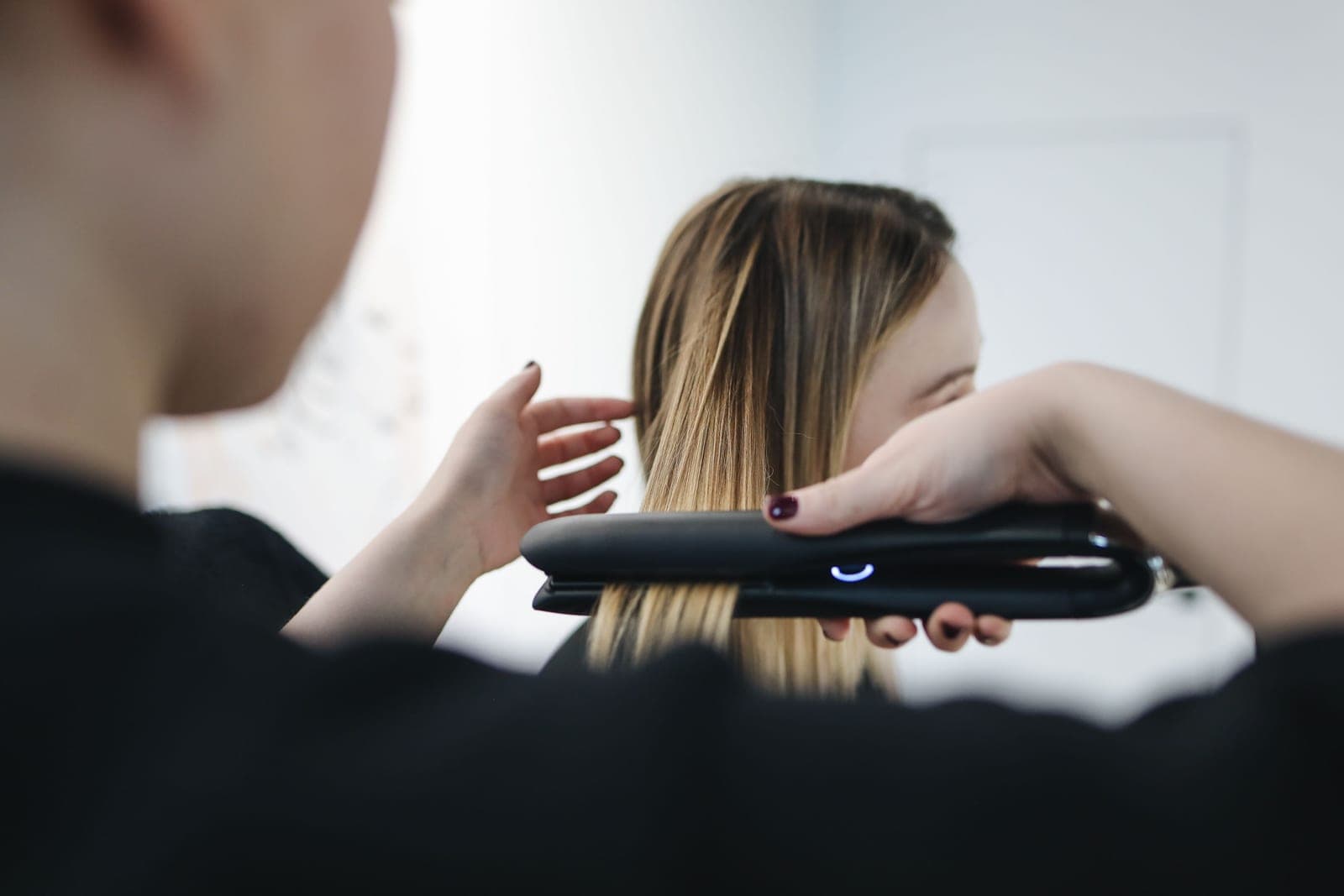
The Best Hair Straighteners and Flat Irons
Six flat irons compared on plate material, plate length and published temperature range, then matched to hair type.
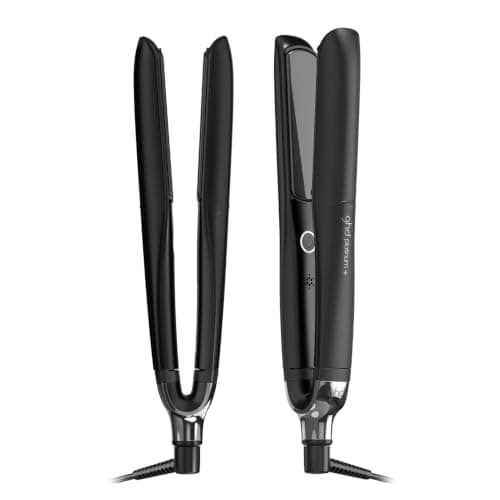
Top pick: ghd platinum+ Styler
Best Overall
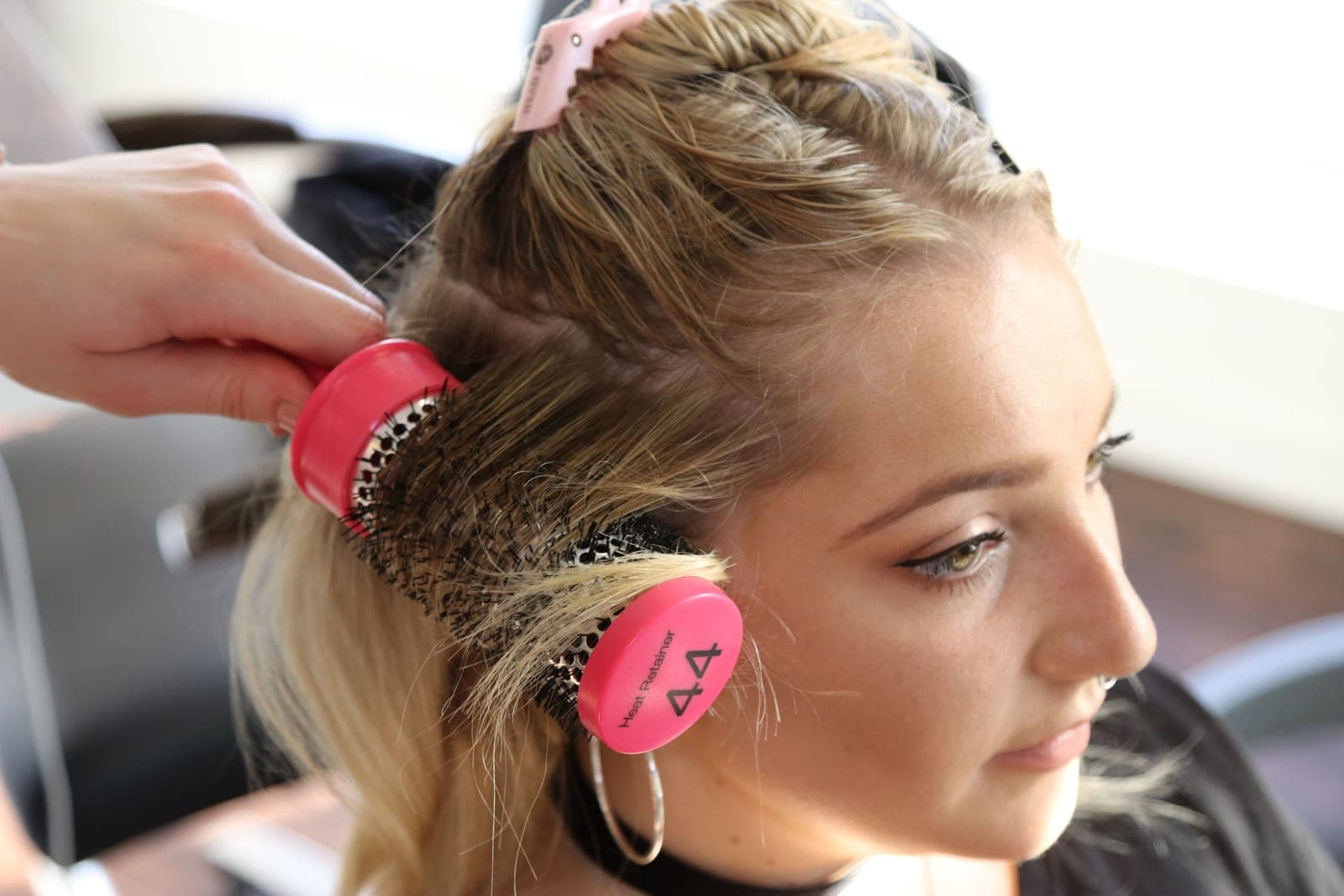
The Best Blow-Dry Brushes
Six blow-dry and hot-air brushes ranked on barrel diameter, bristle design and published temperature, from budget to multi-styler.
Top pick: Revlon One-Step Volumizer PLUS 2.0
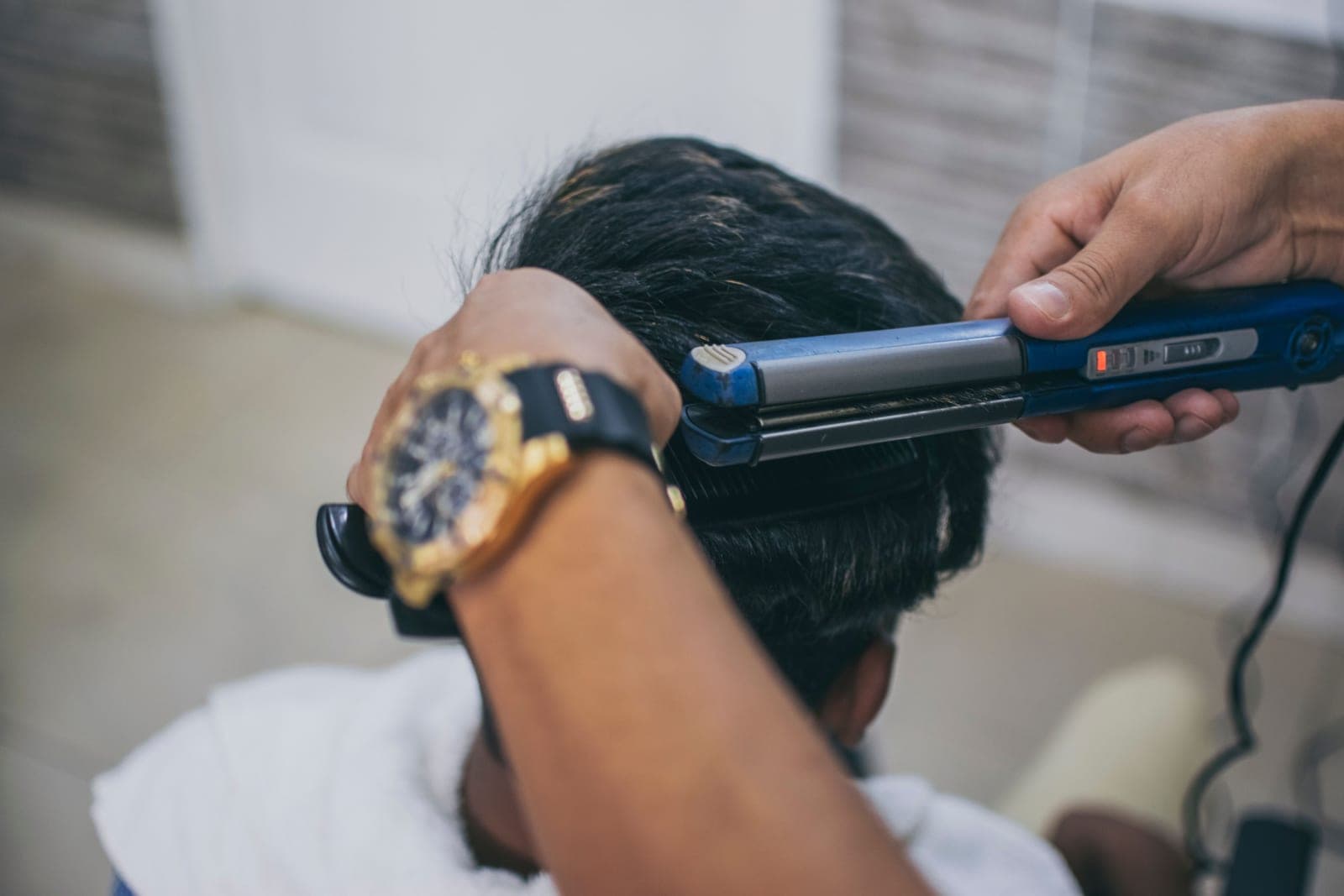
Best for Thick Hair
The Best Flat Irons for Thick Hair
Five flat irons for thick and coarse hair, ranked on plate length and heat recovery — the two specs that cut pass count.
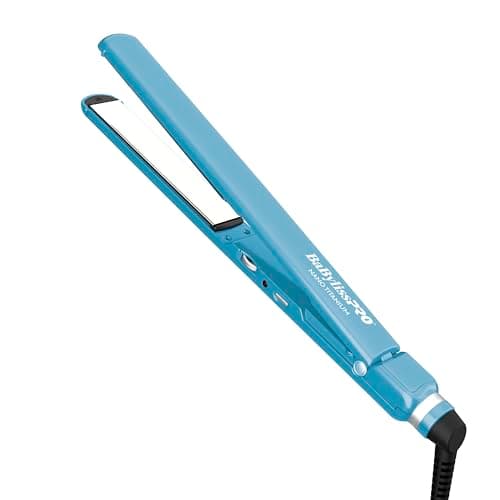
Top pick: BaBylissPRO Nano Titanium 1-inch Ultra-Thin Straightener
Best for Damaged Hair
The Best Flat Irons for Damaged and Bleached Hair
Four flat irons for damaged and bleached hair, ranked strictly on published temperature and how precisely each holds it.
Top pick: ghd platinum+ Styler
Blowout Technique
How to Get a Blowout at Home
The salon blowout method step by step — sectioning, tension and the cool shot — with the tools that make each stage easier.
Top pick: Revlon One-Step Volumizer PLUS 2.0