The Best Tools for Beach Waves
A beach wave is an S-bend, not a spiral. Once you see the difference, the tool choice stops being a matter of taste.

How this page is funded: the buy links below are affiliate links, and Heat Index earns a commission on qualifying purchases at no cost to you. Nothing on this page was supplied by a manufacturer, and commission plays no part in the ranking — read the full disclosure. Picks are chosen from published specifications, not from hands-on testing; the method is written down so you can check it. Prices last verified October 23, 2026.
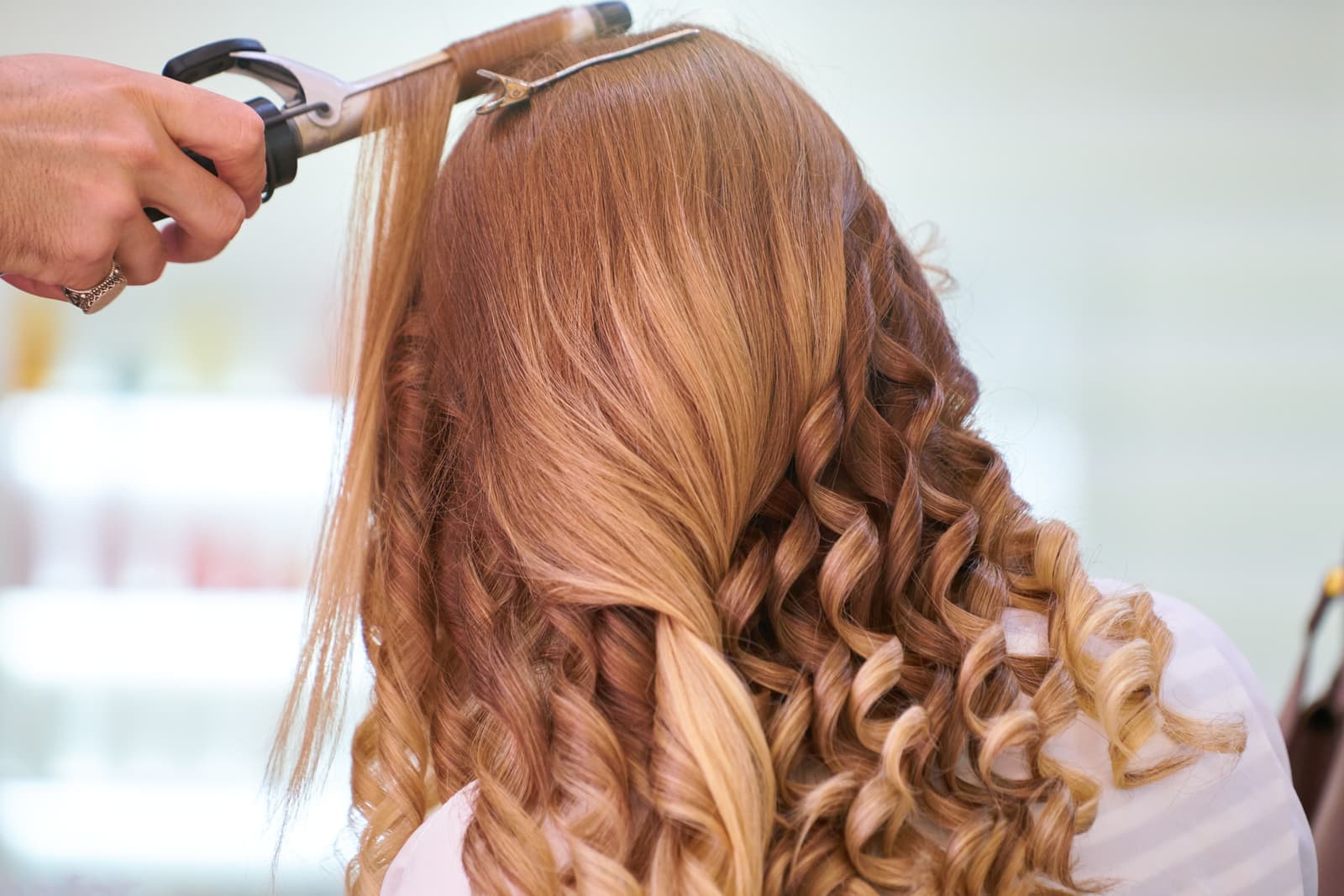
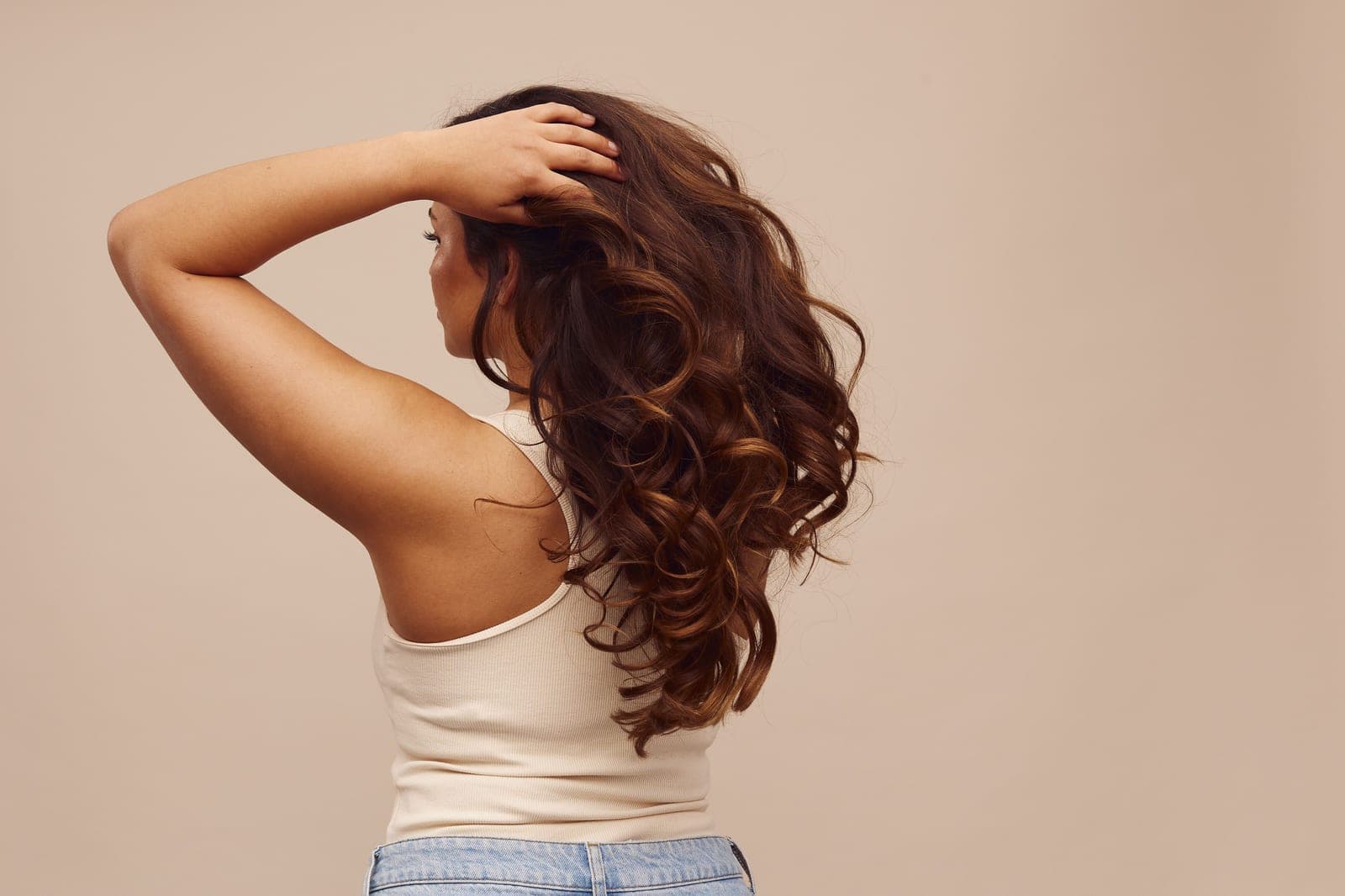
The shape people mean by beach waves is an S-bend that runs down the length of the hair with the ends left relatively straight. It is not a spiral, which is what a curling iron makes, and that mismatch is why so many attempts end up looking like curls that have been brushed at rather than waves.
There are two legitimate routes to the shape, and they are genuinely different amounts of work.
| Waver | Curl and brush out | |
|---|---|---|
| Tool | Triple-barrel waver, e.g. Bed Head Wave Artist | 1.25 in iron or tapered wand |
| Method | Clamp a whole section, press the bend in | Curl, cool, then brush out |
| Time | Fast — one clamp per section | Slow — curl every section, then brush |
| Evenness | Very high; the barrel makes the shape | Depends entirely on your brushing |
| Flexibility | One shape, fixed by the barrel | Any shape you like |
Quick picks
Ranked, with the reasoning underneath. Tap any row to jump to that write-up; tap the price to check it on Amazon. Prices come from the live layer, never from this page.
| # | Product | Best for | Type | Price |
|---|---|---|---|---|
| 1 | 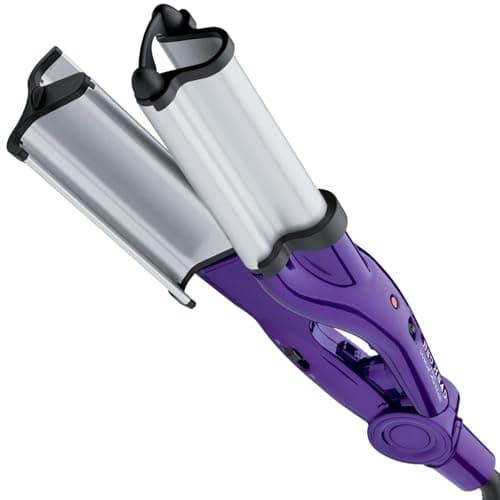 Bed Head Wave Artist Tourmaline Ceramic Deep WaverA three-barrel waver produces the S-bend directly instead of asking you to curl and then brush it out, which is a completely different and much faster route to the same look. Bed Head Wave Artist Tourmaline Ceramic Deep WaverA three-barrel waver produces the S-bend directly instead of asking you to curl and then brush it out, which is a completely different and much faster route to the same look. | Beachy waves without curling anything | Deep waver | |
| 2 | 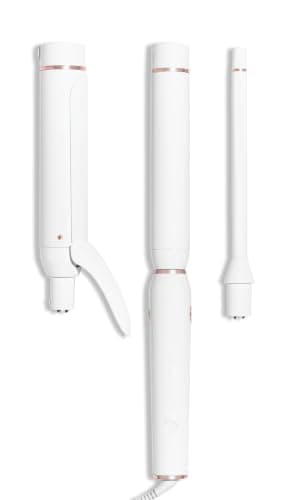 T3 Switch Kit Curl TrioOne handle and three barrels — half-inch and 1.25-inch wands plus a 1.5-inch clip barrel — with nine temperature settings, which covers the whole curl vocabulary in one purchase. T3 Switch Kit Curl TrioOne handle and three barrels — half-inch and 1.25-inch wands plus a 1.5-inch clip barrel — with nine temperature settings, which covers the whole curl vocabulary in one purchase. | Three curl shapes from one handle | Interchangeable barrel set | |
| 3 | 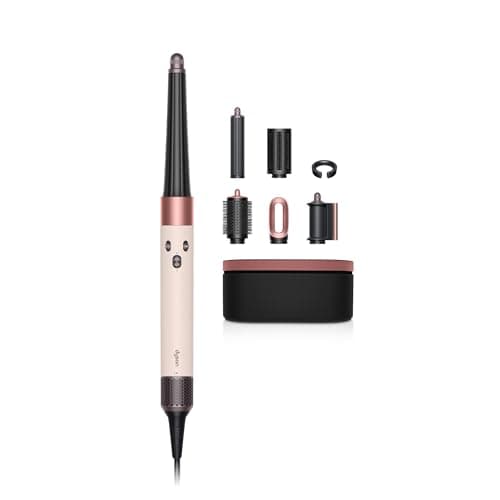 Dyson Airwrap i.d. Multi-Styler and DryerIt wraps hair around the barrel with airflow rather than heat, and it holds below 302F while doing it. That is a genuinely different mechanism, not a better version of a curling iron. Dyson Airwrap i.d. Multi-Styler and DryerIt wraps hair around the barrel with airflow rather than heat, and it holds below 302F while doing it. That is a genuinely different mechanism, not a better version of a curling iron. | Curling with air instead of a hot barrel | Coanda multi-styler | |
| 4 | 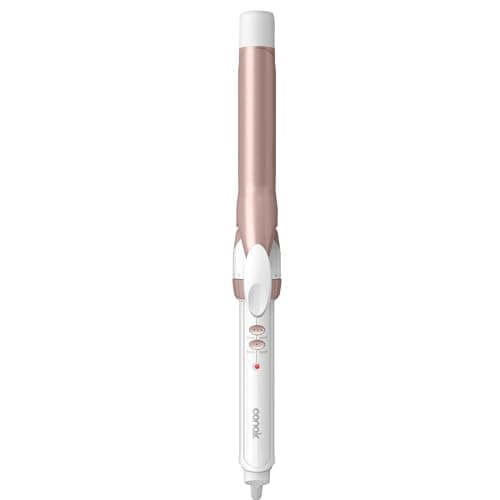 Conair Double Ceramic Curling IronThirty settings topping out at 375F, and Conair publishes which settings suit which hair type. That is more honest guidance than most premium irons print. Conair Double Ceramic Curling IronThirty settings topping out at 375F, and Conair publishes which settings suit which hair type. That is more honest guidance than most premium irons print. | A fine-grained dial at a low price | 30-setting ceramic iron |
#1 · Beachy waves without curling anything
Bed Head Wave Artist Tourmaline Ceramic Deep Waver
A three-barrel waver produces the S-bend directly instead of asking you to curl and then brush it out, which is a completely different and much faster route to the same look.
| Temperature | High heat up to 400Fsource |
|---|---|
| Technology | 2X tourmaline ceramic technologysource |
| Barrel | Deep wave barrel for beach or sculpted wavessource |
| Voltage | Dual voltagesource |
| Dimensions | 14.3 x 2.5 x 4.6 insource |
What those numbers mean
A waver clamps a whole section at once and puts the bend in with one press. Curling the same section and brushing it out takes several times as long and is much harder to keep even.
The trade is that the wave shape is fixed by the barrel. You cannot make it looser or tighter; you get the S-bend the tool makes.
400F is high for what this is doing. Waves set with a lot of contact area and hold well below the maximum, so treat the top of the dial as headroom rather than a starting point.
What it does well
- Produces the wave directly, far faster than curl-and-brush-out
- Very even results because the whole section is clamped at once
- Dual voltage
What it does not
- The wave shape is fixed by the barrel and cannot be varied
- 400F is above the thresholds in the research
- Bed Head does not publish how many temperature settings this model has
Skip this one if: Skip it if you want defined ringlets or a polished curl. A waver makes one shape, and that shape is a bend rather than a curl.
#ad · how this is funded · price as of October 23, 2026
#2 · Three curl shapes from one handle
T3 Switch Kit Curl Trio
One handle and three barrels — half-inch and 1.25-inch wands plus a 1.5-inch clip barrel — with nine temperature settings, which covers the whole curl vocabulary in one purchase.
| Barrels | Half-inch wand, 1.25-inch wand, and 1.5-inch clip barrelsource |
|---|---|
| Settings | 9 temperature settings with T3 Rapid HeatIQ technologysource |
What those numbers mean
Barrel diameter is what decides curl shape, and it is not a preference so much as a physical fact: a half-inch barrel makes a tight spiral and a 1.5-inch barrel makes a loose bend. Owning three is owning three tools.
The clip barrel among two wands is a deliberate mix. Clips are easier and faster; wands give a more natural end because there is no crimp where the clamp sat.
T3 does not publish what the nine settings are in degrees, which is the same disclosure gap as their brushes.
What it does well
- Three barrel diameters covering tight spirals to loose waves
- Nine settings rather than a three-step dial
- One handle, so storage and travel are simpler than three irons
What it does not
- T3 does not publish actual temperatures for the nine settings
- Swapping barrels means handling a hot component
- Premium price for a kit where most people use one barrel
Skip this one if: Skip it if you already know the one curl you want. A single iron in the right diameter costs far less and does that job identically.
#ad · how this is funded · price as of October 23, 2026
#3 · Curling with air instead of a hot barrel
Dyson Airwrap i.d. Multi-Styler and Dryer
It wraps hair around the barrel with airflow rather than heat, and it holds below 302F while doing it. That is a genuinely different mechanism, not a better version of a curling iron.
| Motor | 13-blade impeller spinning at up to 110,000 rpm, generating 3.2 kPasource |
|---|---|
| Heat control | Intelligent Heat Control keeps the temperature below 302Fsource |
| Heat settings | Three precise heat settingssource |
| Ions | Ionizer adds negatively charged particles to the airflow to reduce staticsource |
| Connectivity | Bluetooth to the MyDyson app for a personalized curling sequencesource |
What those numbers mean
The Coanda effect is the actual product. Fast-moving air over a curved surface pulls nearby air, and hair, along with it — so the barrel wraps the section for you and sets it with airflow rather than by pressing hot metal onto it.
A published ceiling below 302F is the number that justifies the price to anyone with fragile hair. Compare it to a 455F curling iron doing the same job.
It works on damp hair by design, which collapses the dry-then-style sequence into one step. That is where the time saving comes from, not from being faster per section.
What it does well
- Sets curls below 302F, far under any conventional iron
- Dries and styles in one pass from damp
- Three published heat settings and a stated ceiling
- No hot metal in contact with the hair
What it does not
- The most expensive tool in this registry by a wide margin
- Curls set with air drop out faster than curls set with a hot barrel
- A large attachment set to store
Skip this one if: Skip it if you need curls that survive a humid day at work. Air-set curls are gentler and looser, and on hair that resists holding a curl they will fall out well before an iron-set curl would.
#ad · how this is funded · price as of October 23, 2026
#4 · A fine-grained dial at a low price
Conair Double Ceramic Curling Iron
Thirty settings topping out at 375F, and Conair publishes which settings suit which hair type. That is more honest guidance than most premium irons print.
| Temperature | 30 heat settings, up to 375Fsource |
|---|---|
| Setting guidance | Settings 1-5 for fragile or fine hair, 6-10 thin, 11-15 medium or normal, 16-20 wavy or curly, 21-30 coarse or thicksource |
| Turbo Heat | Up to a 27F burst of heat for difficult-to-style spotssource |
| Other | Instant heat-up, cool tip, recessed buttons, auto-offsource |
| Voltage and cord | Dual voltage, 5-foot cordsource |
What those numbers mean
A 375F ceiling is the quiet advantage. It is high enough to set a curl on almost any hair and low enough that the worst-case setting is not catastrophic, which is not true of the 455F irons.
Publishing a settings-to-hair-type map on the product page is genuinely useful and almost unheard of. It converts an abstract dial into instructions.
The five-foot cord is the shortest here by a wide margin, and it will decide where you can stand.
What it does well
- 375F ceiling, a sane maximum rather than a marketing one
- Thirty settings with published hair-type guidance
- Cool tip and recessed buttons, both real usability features
- Dual voltage
What it does not
- Five-foot cord, the shortest in this registry
- Conair does not publish a heat-up time figure
- Coarse hair may want more than 375F for a lasting set
Skip this one if: Skip it if you are curling very coarse or very long hair that historically drops out by lunchtime. 375F may not be enough to set it, and no number of settings changes the ceiling.
The waver route
A waver clamps a whole section between three barrels and presses the S-bend in with one press. There is no wrapping technique and almost no way to get it uneven, because the shape is defined by the tool rather than by your hand.
- Start on dry hair. A waver is not a wet-to-dry tool and wet keratin denatures far lower than dry.
- Take a section about two inches wide and clamp at the top, near the root.
- Hold for a few seconds, release, and move down so the top barrel sits in the last bend you made. Overlapping is what makes the wave continuous.
- Work down the section, stopping about two inches from the ends. Straight ends are what makes it read as beachy rather than as a curl.
- Let it cool completely before touching it, then break it up with your fingers.
The curl-and-brush-out route
Slower, more flexible, and how most editorial beach waves are actually made. Curl with a 1.25-inch iron or a tapered wand, alternating the direction section by section, let everything cool completely, then brush it all out with a paddle brush and break it up with your fingers.
Alternating direction is the whole trick. Curling every section the same way produces a uniform set that reads as styled. Alternating produces the irregularity that reads as natural, and it is the single difference between the two outcomes.
The airflow option
The Dyson Airwrap is well suited to this specific look, for a reason that is usually a criticism elsewhere on this site: air-set curls are looser and drop faster than iron-set curls. For a defined ringlet that is a problem. For a beach wave, a curl that relaxes into a soft bend is exactly the destination.
It also holds below 302F while doing it, which is the lowest exposure of anything on this page. Airwrap alternatives covers whether the price is defensible.
Questions people actually ask
What is the best tool for beach waves?
A triple-barrel waver, if you want the shape reliably and fast — it presses the S-bend in directly rather than asking you to make a curl and then undo most of it. A 1.25-inch iron or tapered wand with a brush-out gives more flexibility and takes considerably longer. The Bed Head Wave Artist here is the waver route and publishes a 400F maximum.
What size curling iron for beach waves?
1.25 inches or larger, or a tapered wand. Anything smaller produces a defined curl that has to be brushed out heavily to read as a wave, which adds a whole step. Whatever the size, alternate the curl direction section by section — that irregularity is what makes it look natural rather than set.
How do I get beach waves that do not look like curls?
Leave the last two inches straight, alternate the direction of every section, and break the shape up with your fingers rather than a brush. Waving or curling all the way to the tips is the single most common thing that turns a beach wave into a ringlet, and it is easy to fix.
Can you use a waver on wet hair?
No. A waver is a dry-hair tool. Wet keratin is reported to denature between 120C and 150C, far below dry keratin, so clamping wet hair at 400F is well past the point of irreversible damage. Dry completely first, and the wave will hold better anyway.
Sources
Every figure on this page traces to one of these. If a number here disagrees with the manufacturer, the manufacturer is right and we want to know — tell us.
Read next
Best Overall
The Best Curling Irons and Wands
Six curling irons, wands and wavers ranked on published temperature and barrel size, with the diameter-to-curl-shape chart.
Top pick: T3 Switch Kit Curl Trio

Wavy Hair Guide
Hair Styling Tools for Wavy Hair
Every tool we recommend for wavy hair, organized around the one specification that matters here: versatility.
Top pick: Drybar Buttercup PRO Professional Blow-Dryer
Best for Fine Hair
The Best Curling Irons for Fine Hair
Four curling tools for fine hair, ranked on published low temperature settings, with the cooling technique that actually makes curls hold.
Top pick: Conair InfinitiPRO Curl Secret
Airwrap Verdict
Dyson Airwrap i.d. Review
The Airwrap read from its published specifications: how the Coanda effect works, what the heat ceiling means, and who should skip it.
Top pick: Dyson Airwrap i.d. Multi-Styler and Dryer
Blowout Technique
How to Get a Blowout at Home
The salon blowout method step by step — sectioning, tension and the cool shot — with the tools that make each stage easier.
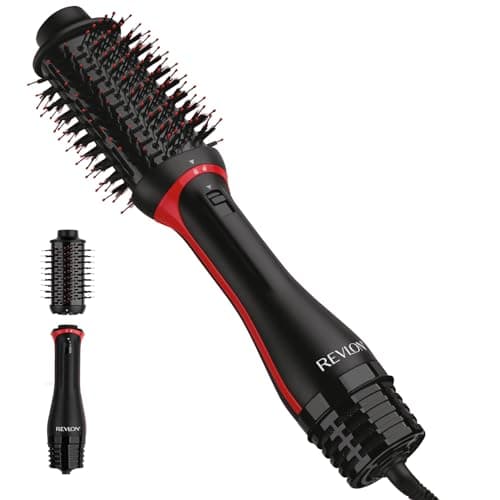
Top pick: Revlon One-Step Volumizer PLUS 2.0