The Best Flat Irons for Frizzy Hair
Most people fight frizz by turning the heat up. That is the mechanism that causes it, which is why the ranking here is built on control rather than power.
How this page is funded: the buy links below are affiliate links, and Heat Index earns a commission on qualifying purchases at no cost to you. Nothing on this page was supplied by a manufacturer, and commission plays no part in the ranking — read the full disclosure. Picks are chosen from published specifications, not from hands-on testing; the method is written down so you can check it. Prices last verified October 23, 2026.
Frizz is not one problem. It is three, they have different causes, and a flat iron addresses two of them at best. Buying the wrong iron for the wrong cause is why so many people conclude that nothing works on their hair.
| Cause | What is happening | Can an iron fix it? |
|---|---|---|
| Raised cuticle | The outer scale layer is lifted, so strands catch on each other instead of lying flat | Yes — heat and pressure lay the cuticle down. This is the job irons do well. |
| Static | Dry hair holds a positive charge and individual strands repel each other | Partly — an ion coating neutralizes charge, which is what ionic and tourmaline plates are for. |
| Humidity | Hair absorbs water from the air and swells, lifting the cuticle again | No. Nothing in a plate changes how your hair reacts to a humid day. |
That third row is the honest limit of this page, and it is why the ranking below refuses to reward maximum temperature. Frizz caused by damage gets worse with heat, and heat damage is cumulative. An iron that gets the cuticle down at 365F and stops there is doing more for frizz-prone hair over a year than one that hits 450F and wins the first morning.
How we judged this list
- A published temperature, and a low one. Frizz-prone hair is usually dry or damaged hair, which is the hair least able to survive a high setting. An iron that publishes what it reaches is the only kind you can hold to a limit.
- Control, not just a number. A plate that dips when it meets a thick section and then overshoots is applying two temperatures. Published sampling rates are how a manufacturer proves the plate holds its setting.
- An ion or tourmaline coating. This is the one plate feature that addresses the static component directly, and it is cheap enough that its absence is a choice.
- Plate contact in a single pass. Every extra pass is another dose of heat on hair that frizzes because it has had too much. Floating plates and flexible plates both exist to hold the whole section evenly the first time.
- A finish that is not flat. Frizzy wavy hair usually wants smoothing rather than pressing. Rounded edges and brush formats are ranked here because glass-straight is not the only acceptable result.
Quick picks
Ranked, with the reasoning underneath. Tap any row to jump to that write-up; tap the price to check it on Amazon. Prices come from the live layer, never from this page.
| # | Product | Best for | Type | Price |
|---|---|---|---|---|
| 1 | 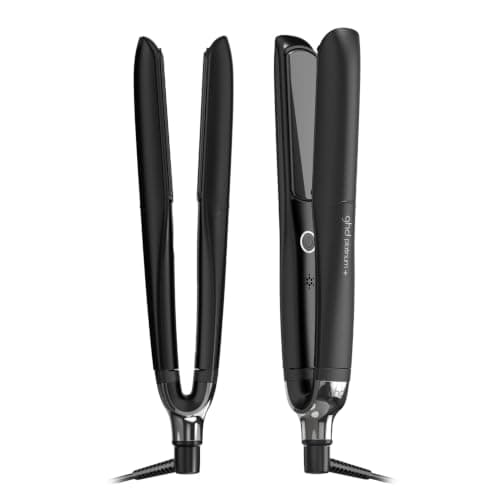 ghd platinum+ StylerOne temperature, 365F, held by a sensor system reading 250 times a second. It is the opposite design philosophy to a 450F iron and it is the better one. | A single temperature chosen for hair health, not marketing | Predictive-heat iron | |
| 2 | No photoHSI Professional Glider Ceramic Tourmaline Ionic Flat IronA 140F floor is the useful number here. Almost nothing in this price bracket goes low enough to be usable on fine or bleached hair, and this does. | A wide adjustable range at a low price | Ceramic tourmaline iron | Check price#ad |
| 3 | 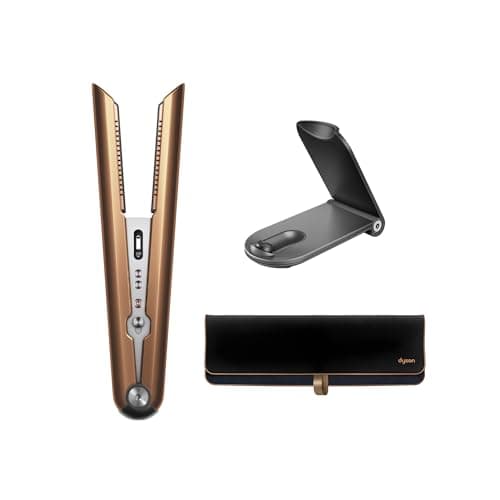 Dyson Corrale StraightenerFlexing manganese-copper plates gather the hair instead of squashing it, which is a mechanical route to the same result at a lower number on the dial. | Getting a result at a lower temperature | Cordless flexing-plate iron | |
| 4 | 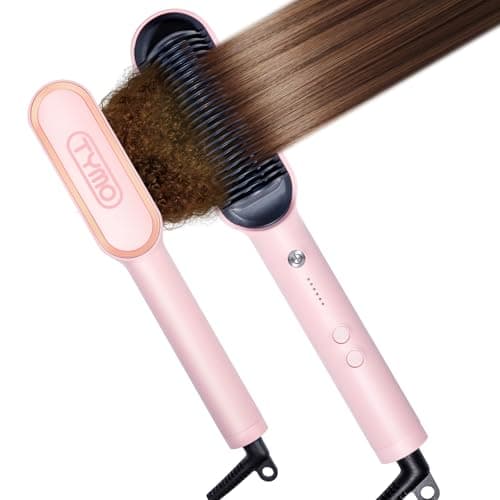 TYMO Ring Hair Straightener BrushFive published temperatures from 266F to 410F, each labeled for a hair type, on a tool that smooths rather than clamps. That last part is the whole point. | Smoothing thick hair without pressing it flat | Straightening brush |
#1 · A single temperature chosen for hair health, not marketing
ghd platinum+ Styler
One temperature, 365F, held by a sensor system reading 250 times a second. It is the opposite design philosophy to a 450F iron and it is the better one.
| Temperature | Optimized constant 365F across the platessource |
|---|---|
| Heat regulation | Ultra-zone predictive technology monitors heat 250 times a secondsource |
| Adaptation | Recognizes hair thickness and speed of styling and adjusts accordinglysource |
| Plates | Precision-milled ceramic plates with a wishbone hinge and round barrelsource |
| Auto shut-off | After 30 minutessource |
| Voltage | Universal voltagesource |
What those numbers mean
365F as a fixed target is a deliberate rejection of the specification race. It sits under every temperature the thermal-damage literature associates with cortex damage, and the tool simply will not let you go higher.
The interesting part is the 250-readings-per-second control loop. A conventional iron cools when cold hair hits it and then overshoots on the way back; a fast loop holds the number, which is why one pass at 365F can beat two at 400F.
ghd publishes percentage claims about stronger hair, more shine and color protection. Those are the manufacturer's own claims from their own testing, and we are not in a position to verify them, so treat them as positioning rather than data.
What it does well
- One well-chosen temperature, under every threshold in the cited research
- 250 temperature readings per second, the fastest control loop published here
- Rounded barrel makes curls and waves possible with the same tool
- Universal voltage and a 30-minute auto shut-off
What it does not
- No adjustment at all, so very coarse hair may need more passes
- Premium price for a single-temperature tool
- The percentage benefit claims are the manufacturer's own and unverifiable from outside
Skip this one if: Skip it if you have dense, coarse or 4C hair and want a silk-press result in one pass. 365F is a health-first ceiling, and on that hair type it will mean revisiting sections.
#ad · how this is funded · price as of October 23, 2026
photo
#2 · A wide adjustable range at a low price
HSI Professional Glider Ceramic Tourmaline Ionic Flat Iron
A 140F floor is the useful number here. Almost nothing in this price bracket goes low enough to be usable on fine or bleached hair, and this does.
| Temperature range | 140F to 450F, adjustablesource |
|---|---|
| Plates | 1-inch ceramic tourmaline floating platessource |
| Heat regulation | 8 HeatBalance micro-sensors, 4 on each platesource |
| Voltage | Worldwide dual voltage, 110V-220Vsource |
| Plate shape | Floating plates with curved edges for straightening, curling or flippingsource |
What those numbers mean
A 140F floor is the specification that makes this the fine-hair pick in its price class. Most cheap irons start at 250F or 300F, which is already too hot for hair that is bleached or breaking.
Eight sensors across two plates is a real design choice, not a coating claim. Sensors are how an iron notices that a cold, wet section has dragged the plate temperature down, and how it avoids overshooting on the recovery.
Curved edges mean the same iron can bend a curl instead of only flattening. On short hair especially, that turns one tool into two.
What it does well
- 140F floor, genuinely low enough for fine and bleached hair
- Eight temperature sensors, unusual disclosure at this price
- Curved plates work for curls and flips as well as straightening
- Worldwide dual voltage
What it does not
- Ceramic recovers more slowly than titanium on very coarse hair
- HSI does not publish a plate length or a heat-up time
- The 450F top end exists and should be left alone
Skip this one if: Skip it if your hair is coarse and dense and you are straightening it fully. Ceramic plates will lose temperature against that hair and you will end up doing repeat passes, which is worse than one pass with a titanium iron.
#3 · Getting a result at a lower temperature
Dyson Corrale Straightener
Flexing manganese-copper plates gather the hair instead of squashing it, which is a mechanical route to the same result at a lower number on the dial.
| Heat settings | Three settings — 330F, 365F and 410Fsource |
|---|---|
| Plates | Flexing plates engineered from a manganese copper alloysource |
| Heat regulation | Integrated sensor system regulates plate temperature 100 times a secondsource |
| Power | 4-cell lithium-ion battery, cord-freesource |
| Auto shut-off | Switches off after 10 minutes of inactivitysource |
What those numbers mean
Rigid plates only touch the outside of a section, so the hair in the middle needs more heat or more passes. Plates that flex to gather the section apply pressure across all of it, which is why the same style lands at a lower setting.
Three published temperatures is the disclosure that matters, and 330F is a genuinely usable low setting rather than a token one.
Cordless is a convenience feature with a real cost: a battery has a runtime and a lifespan, and both are finite in a way a cord is not.
What it does well
- Three published temperatures including a low, usable 330F
- Flexing plates are a real mechanism rather than a coating claim
- Cordless, which makes back sections and travel genuinely easier
- Plates lock and it shuts off after ten minutes
What it does not
- Battery runtime limits a long styling session
- The most expensive straightener in this roundup by a wide margin
- A battery is a wear part; a corded iron has none
Skip this one if: Skip it if you style at home beside an outlet and never take an iron anywhere. You would be paying a large premium for cordless operation you will not use, and the flexing-plate benefit alone is unlikely to justify it.
#ad · how this is funded · price as of October 23, 2026
#4 · Smoothing thick hair without pressing it flat
TYMO Ring Hair Straightener Brush
Five published temperatures from 266F to 410F, each labeled for a hair type, on a tool that smooths rather than clamps. That last part is the whole point.
| Temperature settings | 5 settings — 266F, 302F, 338F, 374F and 410F, labeled by hair type on the toolsource |
|---|---|
| Coating | Keratin-infused ceramicsource |
| Heating surface | 25 ceramic heating plates, 3D heating teethsource |
| Heat-up | 20 secondssource |
| Voltage | Dual voltagesource |
| Safety | Anti-scald protection, 30-minute auto shut-offsource |
| Cord | 360-degree swivel cordsource |
What those numbers mean
A brush cannot press hair between two plates, so it cannot deliver a poker-straight finish. What it does instead is smooth the cuticle with much less mechanical stress, which is why it suits hair that breaks under a clamp.
Publishing all five temperatures with a hair type attached to each is unusually honest labeling. It means the tool is telling you not to use 410F on fine hair rather than leaving you to guess.
Twenty seconds to heat is faster than any iron here, and on a weekday that is the difference between using it and not.
What it does well
- All five temperatures published and labeled by hair type
- Far less mechanical stress than a clamping iron
- 20-second heat-up
- Anti-scald protection and a 30-minute auto shut-off
What it does not
- Cannot produce a fully straight, pressed finish
- The bristles need care around the scalp even with anti-scald
- 410F top setting is above the thresholds in the research
Skip this one if: Skip it if you want a sleek, glass-straight result or a silk press. A brush smooths; it does not press, and no setting on it will change that.
Why the constant-temperature argument wins here
The ghd Platinum+ leads this list because of a specification most irons do not have: it holds one optimized constant 365F and monitors the plates 250 times a second rather than offering a dial. On frizz-prone hair that is not a limitation, it is the entire point — you cannot creep the setting up on a bad morning, and creeping the setting up is how frizzy hair becomes damaged hair.
365F also sits below the 392F figure at which published research reports cortex damage beginning, and above the point at which a cuticle will lie down. That is a narrow band, and choosing it deliberately is a different product decision from offering fifty settings and hoping.
| Tool | Published temperature | Control |
|---|---|---|
| ghd Platinum+ | Constant 365F, not adjustable | Monitored 250 times a second |
| HSI Glider | 140F to 450F, adjustable | 8 HeatBalance micro-sensors, 4 per plate |
| Dyson Corrale | 330F, 365F, 410F | Regulated 100 times a second |
| TYMO Ring | 266F, 302F, 338F, 374F, 410F | Not published beyond the five set points |
The HSI's 140F floor is the other number worth noticing. Most irons will not go anywhere near that low, and on fine hair that frizzes because it is fried, the lowest setting that still works is the correct one. Our flat iron temperature guide has the working ranges by hair type.
What the ion coating is actually doing
Tourmaline is not a plate material. It is a mineral coating over ceramic that emits negative ions when heated, and those ions neutralize the positive charge that makes dry strands stand apart from each other. That is a real effect on the static component of frizz and it does nothing whatsoever for the other two.
So an ionic iron is worth having if your frizz is the halo kind that appears in dry winter air, and it is close to irrelevant if your frizz appears the moment you step outside in August. Ionic versus ceramic unpacks which words on a box describe a mechanism and which describe a material.
Why a brush is on a flat iron list
The TYMO Ring is a straightening brush rather than an iron, and it is here deliberately. A brush applies less pressure over a wider area, which smooths the cuticle without pressing the hair flat — and on thick, wavy, frizz-prone hair, flat is often not what the person wanted in the first place.
It publishes all five of its temperatures, which almost no brush does, and the lowest is 266F. The trade is honest and absolute: it will not give you a sleek glass-straight finish or a silk press, and no setting on it changes that. The straightening brushes roundup covers the format properly.
The routine matters more than the tool
- Iron on dry hair only. Water trapped between hot plates turns to steam inside the shaft. Wet keratin is reported to denature between 248F and 302F, well below where dry hair is affected.
- One pass, moving. Two slow passes at a low temperature do more damage than one at the same temperature, and holding still in one spot is how a single section gets cooked.
- Heat protectant every time. It does not make hair heatproof — see what it actually does — but a thermal barrier is the cheapest part of this entire setup.
- Finish cool. The cuticle sets as it cools. Letting a section cool under tension before you touch it is free and it is most of the smoothness.
Where on the strand your frizz appears tells you the cause
This is the most useful diagnostic on the page and it costs nothing. Look at where the frizz actually is, because each location points at a different cause and therefore a different fix.
| Where it shows up | Most likely cause | What actually helps |
|---|---|---|
| The last two to four inches only | Accumulated damage — the oldest hair has had the most heat | A lower iron temperature and fewer passes. No plate coating reverses this |
| A halo across the crown, worst in winter | Static | An ion or tourmaline coating, plus not over-drying in the first place |
| Everywhere, and worst on humid days | Porosity and moisture absorption | A sealing product. The iron is not the variable here |
| New frizz that appeared after a color service | A raised cuticle from chemical processing | The lowest temperature that still works — see flat irons for damaged hair |
The reason this matters commercially: three of those four rows are not solved by buying a better iron, and two of them get worse if the iron you buy tempts you into a higher setting. An honest page about frizz has to say that before it ranks anything.
Why the second pass is the one that costs you
Every specification on this page is ultimately about how many passes a section needs, because passes are how thermal exposure accumulates. Two passes at 365F deliver more total heat than one pass at 410F — which is the argument against turning the dial up to finish faster.
What makes a second pass necessary is usually one of three things: the plate lost temperature against a thick section and never recovered, the section was too big for the plate to hold evenly, or the hair was not fully dry. The first is a recovery specification, the second is a plate-geometry one, and the third is free to fix.
- Ceramic dips and recovers slowly, which is forgiving on fine hair and frustrating on dense hair. That trade is covered properly in ceramic vs titanium.
- Floating plates self-align to the thickness of the section, so pressure is even across it rather than concentrated in the middle. The HSI publishes floating plates; Dyson's flexing plates are a more aggressive version of the same idea.
- Smaller sections beat a hotter iron, every time. A section thicker than the plate can close on evenly will need a second pass no matter what the dial says.
The order of operations that actually reduces frizz
- Get the drying stage right first. Most frizz is created before the iron is switched on — the best hair dryers for frizzy hair ranks that half of the routine, and the cuticle you raise while drying is the one the iron then has to lay back down.
- Fully dry, then protectant, then iron. Not damp-and-finish-with-the-iron, which is the single most common cause of the crunchy, over-processed frizz that appears a month later.
- Set the temperature once, at the bottom of your range, and only raise it if a whole test section genuinely fails. Most people raise it after one hesitant pass on a section that was too thick.
- Work in sections you can see through. If the plate cannot close evenly on it, it is too big.
- Let each section cool before touching it. The cuticle sets as it cools; brushing it warm undoes the pass you just made.
None of that costs anything, and on frizz-prone hair it does more than the difference between any two irons on this page. Preventing heat damage has the published thresholds that sit behind all five steps.
Questions people actually ask
What temperature should I use on frizzy hair?
Lower than you think, and the lowest that actually works on your hair. Published research reports cuticle damage beginning around 302F and cortex damage around 392F, so the usable band for most frizz-prone hair sits between them. The ghd Platinum+ takes the decision away by holding a constant 365F; the HSI Glider goes down to 140F if your hair is fine or already damaged.
Do ionic flat irons really help with frizz?
For one of the three causes, yes. Negative ions neutralize the static charge that makes dry strands repel each other, which is the halo frizz you see in dry indoor air. They do nothing about a raised cuticle - that is what heat and pressure are for - and nothing at all about humidity. An ion coating is worth having and is not a solution on its own.
Will a flat iron stop frizz in humidity?
No, and any product claiming otherwise is selling you something. Humidity frizz happens because hair absorbs water from the air and swells, lifting the cuticle that the iron just laid down. A smoothing product with a hydrophobic finish helps; the iron itself cannot change how your hair responds to damp air.
Is a straightening brush better than a flat iron for frizz?
For smoothing without pressing, often yes. A brush spreads lower pressure over a wider area, so it lays the cuticle down while leaving movement in the hair - which suits thick or wavy frizz-prone hair that does not want to be poker straight. The trade is that it cannot deliver a sleek glass finish or a silk press at any setting.
Does using a flat iron make frizz worse over time?
It can, and that is the trap this page is built around. Frizz caused by damage gets worse with heat, so an iron used hot and often creates more of the problem it was bought to solve. Heat damage is cumulative and is not reversible - the iron that helps long term is the one you can hold to a low, published, constant temperature.
Sources
Every figure on this page traces to one of these. If a number here disagrees with the manufacturer, the manufacturer is right and we want to know — tell us.
- ghd platinum+ styler
- HSI Professional Glider ceramic tourmaline ionic flat iron
- Dyson Corrale straightener
- TYMO Ring hair straightener brush
- Thermal-induced changes in cuticle and cortex of chemically treated hair, PubMed Central
- Thermal denaturation and structural changes of alpha-helical proteins in keratins, Journal of Structural Biology
Read next
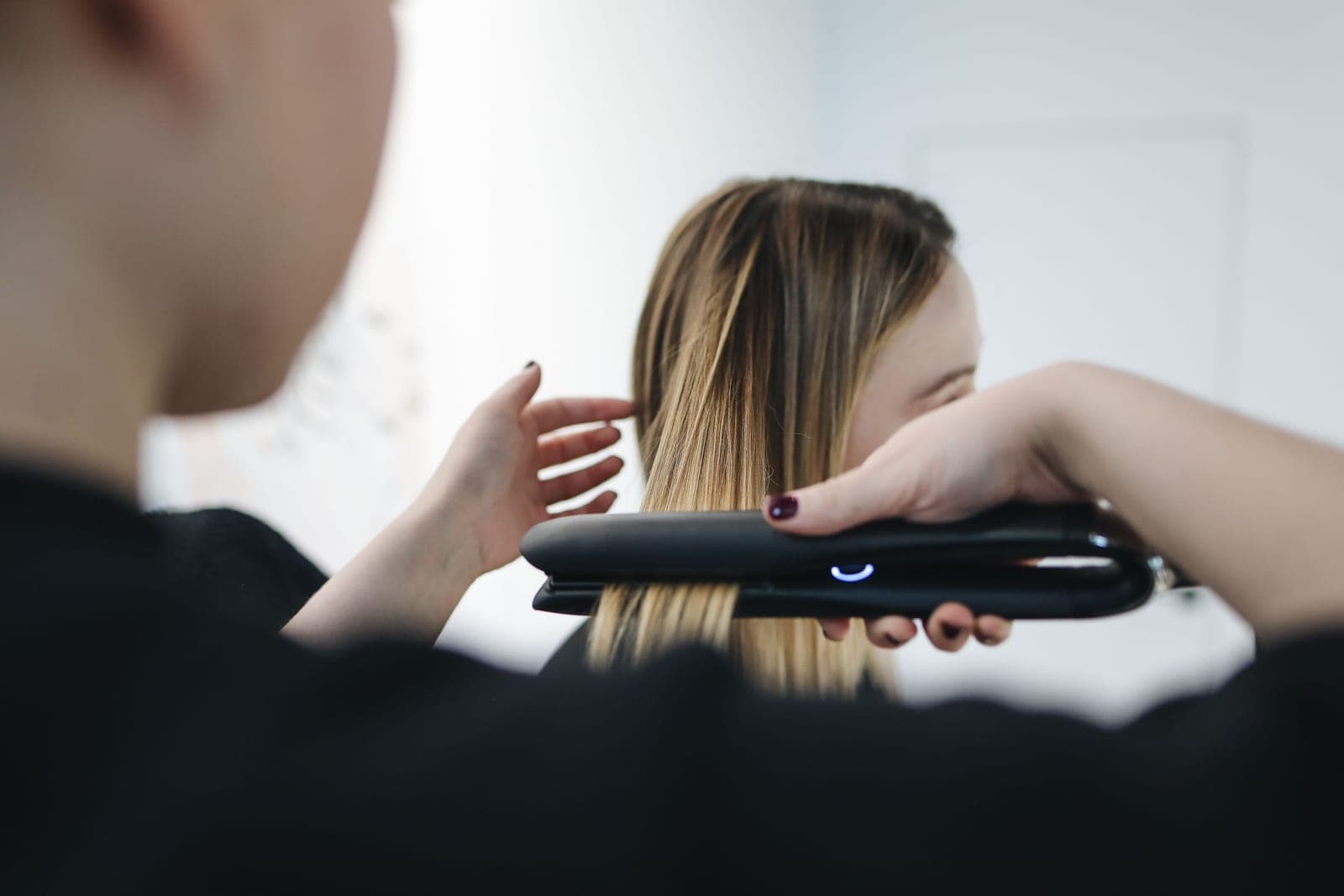
Best Overall
The Best Hair Straighteners and Flat Irons
Six flat irons compared on plate material, plate length and published temperature range, then matched to hair type.
Top pick: ghd platinum+ Styler

Best for Frizz
The Best Hair Dryers for Frizzy Hair
Four dryers ranked for frizz control on published specs, plus an honest account of the part of the problem no dryer can solve.
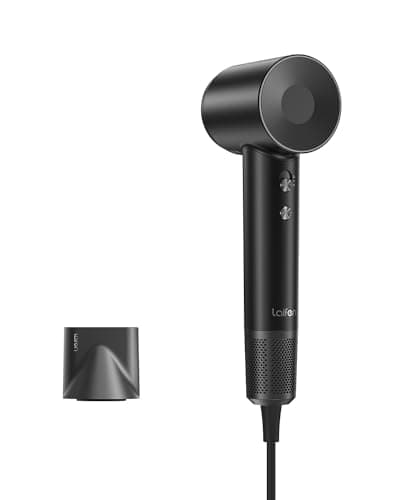
Top pick: Laifen Swift High-Speed Hair Dryer
Temperature Chart
Flat Iron Temperature by Hair Type
The temperature-by-hair-type chart, set against the damage thresholds published research reports, with irons that let you hit them.
Top pick: ghd platinum+ Styler
Damage Guide
How to Prevent Heat Damage
The thermal thresholds from published research, and the seven changes that reduce heat damage most, ordered by how much they help.
Top pick: Dyson Supersonic Origin Hair Dryer
Best Brush
The Best Straightening Brushes
Four straightening and smoothing brushes ranked on published temperature and bristle design, with an honest account of the finish they cannot produce.
Top pick: TYMO Ring Hair Straightener Brush
Curly Hair Guide
Hair Styling Tools for Curly Hair
Every dryer, iron, brush and styler we recommend for curly hair, with the airflow and technique rules that apply to all of them.
Top pick: Conair InfinitiPro 1875W Salon Performance AC Motor Dryer (259BDNRY)