Ceramic vs Titanium Flat Irons
This is sold as a price tier and it is not one. It is a decision about how fast heat moves into your hair, and the right answer depends on the hair.
How this page is funded: the buy links below are affiliate links, and Heat Index earns a commission on qualifying purchases at no cost to you. Nothing on this page was supplied by a manufacturer, and commission plays no part in the ranking — read the full disclosure. Picks are chosen from published specifications, not from hands-on testing; the method is written down so you can check it. Prices last verified October 22, 2026.
The short answer: titanium for coarse, thick or resistant hair. Ceramic for fine, damaged or color-treated hair. This is not a quality ranking and titanium is not the upgrade — the two materials transfer heat differently, and each difference is an advantage on one hair type and a liability on the other.
| Ceramic | Titanium | |
|---|---|---|
| Heat transfer | Slower, gentler, more even | Fast and direct |
| Recovery after a cold section | Slower — the plate temperature dips and stays down | Fast — returns to the set point quickly |
| Forgiveness of a slow or hesitant hand | High | Low |
| Passes needed on coarse hair | Often more than one | Usually one |
| Risk on fine hair | Low | Higher — the speed is unforgiving |
| Typically found on | Mid-market and premium irons | Professional and salon irons |
Why recovery is the specification that decides it
When a cold, wet-feeling section of hair meets a hot plate, the plate loses heat into it and its temperature drops. What happens over the next second decides whether you need a second pass.
Titanium conducts heat quickly in both directions, so it re-reaches the set point before the pass finishes. Ceramic conducts more slowly, so the plate is measurably cooler at the end of a long section than at the start — which shows up as the last two inches never quite straightening, and then a second pass over hair that has already been heated once.
Quick picks
Ranked, with the reasoning underneath. Tap any row to jump to that write-up; tap the price to check it on Amazon. Prices come from the live layer, never from this page.
| # | Product | Best for | Type | Price |
|---|---|---|---|---|
| 1 | 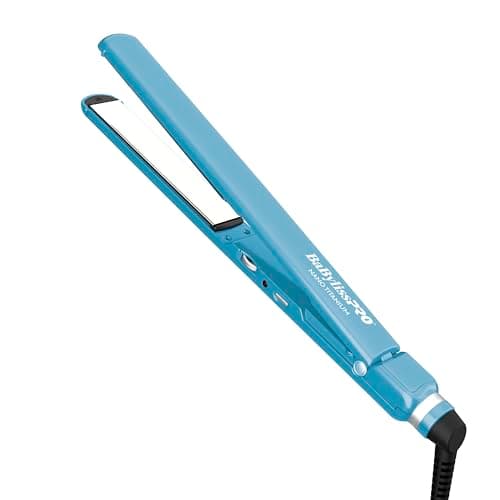 BaBylissPRO Nano Titanium 1-inch Ultra-Thin StraightenerFifty heat settings from 240F to 450F on extra-long 5-inch titanium plates — the reach coarse hair needs, and a floor low enough for fine hair if you trust yourself with the dial. BaBylissPRO Nano Titanium 1-inch Ultra-Thin StraightenerFifty heat settings from 240F to 450F on extra-long 5-inch titanium plates — the reach coarse hair needs, and a floor low enough for fine hair if you trust yourself with the dial. | Thick or coarse hair that needs one pass, not four | Titanium iron, 50 settings | |
| 2 | 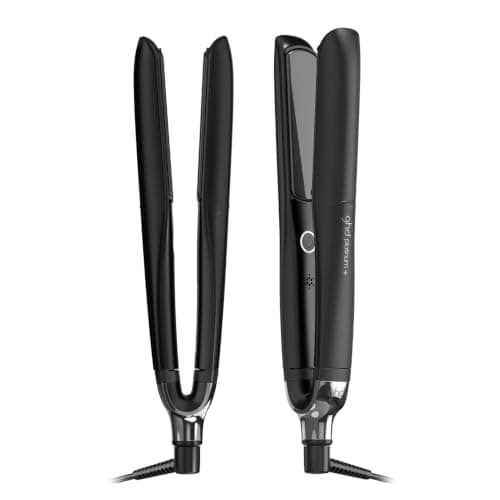 ghd platinum+ StylerOne temperature, 365F, held by a sensor system reading 250 times a second. It is the opposite design philosophy to a 450F iron and it is the better one. ghd platinum+ StylerOne temperature, 365F, held by a sensor system reading 250 times a second. It is the opposite design philosophy to a 450F iron and it is the better one. | A single temperature chosen for hair health, not marketing | Predictive-heat iron | Check price#ad |
| 3 | No photoHSI Professional Glider Ceramic Tourmaline Ionic Flat IronA 140F floor is the useful number here. Almost nothing in this price bracket goes low enough to be usable on fine or bleached hair, and this does. | A wide adjustable range at a low price | Ceramic tourmaline iron | Check price#ad |
| 4 | 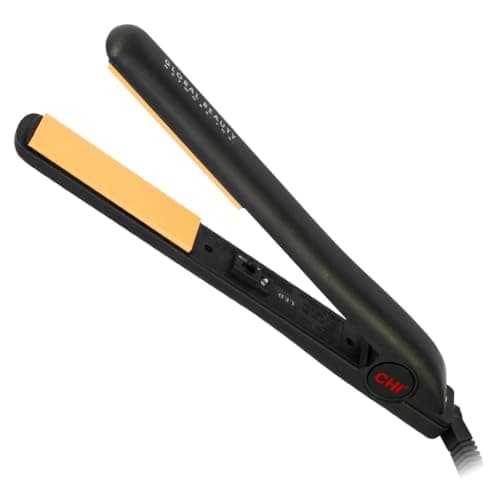 CHI Original 1-inch Ceramic Hairstyling Iron (GF1001)A single preset of 392F and no dial at all, which removes the most common way people damage their hair: turning it up because the first pass did not work. CHI Original 1-inch Ceramic Hairstyling Iron (GF1001)A single preset of 392F and no dial at all, which removes the most common way people damage their hair: turning it up because the first pass did not work. | One fixed, sensible temperature and nothing to get wrong | Single-temperature ceramic iron |
#1 · Thick or coarse hair that needs one pass, not four
BaBylissPRO Nano Titanium 1-inch Ultra-Thin Straightener
Fifty heat settings from 240F to 450F on extra-long 5-inch titanium plates — the reach coarse hair needs, and a floor low enough for fine hair if you trust yourself with the dial.
| Plates | 1-inch wide, extra-long 5-inch platessource |
|---|---|
| Temperature | 50 heat settings, up to 450Fsource |
| Heater | Dual-voltage ceramic heater for rapid heat-up and recoverysource |
| Housing | Ryton, to resist high heatsource |
| Ions | Emits negative ionssource |
| Cord | 9 ft swivel cordsource |
| Warranty | Limited 4-year warrantysource |
What those numbers mean
Plate length is the specification nobody markets and everybody should. Five inches of plate covers more hair per pass, which means fewer passes, which is the only heat-damage variable fully in your control.
Fifty settings is not gimmickry when the range runs to 450F. It means you can sit at 320F or 340F precisely rather than choosing between a low, medium and high that nobody has defined.
Titanium conducts heat faster than ceramic and recovers faster after a cold section of hair pulls the temperature down. That is genuinely useful on coarse hair and genuinely dangerous on fine hair.
What it does well
- Extra-long 5-inch plates mean fewer passes on long hair
- Fifty discrete settings, so a low temperature is actually selectable
- Fast titanium heat recovery mid-section
- Four-year warranty and a 9-foot cord
What it does not
- 450F is above every threshold in the research and should not be used
- Titanium's fast heat transfer is unforgiving of a slow hand
- No auto shut-off — the manual warns it burns out if left on, voiding the warranty
Skip this one if: Skip it if you are the kind of person who reaches for the maximum setting. Fifty settings only helps if you use the low ones, and the top of this range is a number no hair needs.
#2 · A single temperature chosen for hair health, not marketing
ghd platinum+ Styler
One temperature, 365F, held by a sensor system reading 250 times a second. It is the opposite design philosophy to a 450F iron and it is the better one.
| Temperature | Optimized constant 365F across the platessource |
|---|---|
| Heat regulation | Ultra-zone predictive technology monitors heat 250 times a secondsource |
| Adaptation | Recognizes hair thickness and speed of styling and adjusts accordinglysource |
| Plates | Precision-milled ceramic plates with a wishbone hinge and round barrelsource |
| Auto shut-off | After 30 minutessource |
| Voltage | Universal voltagesource |
What those numbers mean
365F as a fixed target is a deliberate rejection of the specification race. It sits under every temperature the thermal-damage literature associates with cortex damage, and the tool simply will not let you go higher.
The interesting part is the 250-readings-per-second control loop. A conventional iron cools when cold hair hits it and then overshoots on the way back; a fast loop holds the number, which is why one pass at 365F can beat two at 400F.
ghd publishes percentage claims about stronger hair, more shine and color protection. Those are the manufacturer's own claims from their own testing, and we are not in a position to verify them, so treat them as positioning rather than data.
What it does well
- One well-chosen temperature, under every threshold in the cited research
- 250 temperature readings per second, the fastest control loop published here
- Rounded barrel makes curls and waves possible with the same tool
- Universal voltage and a 30-minute auto shut-off
What it does not
- No adjustment at all, so very coarse hair may need more passes
- Premium price for a single-temperature tool
- The percentage benefit claims are the manufacturer's own and unverifiable from outside
Skip this one if: Skip it if you have dense, coarse or 4C hair and want a silk-press result in one pass. 365F is a health-first ceiling, and on that hair type it will mean revisiting sections.
photo
#3 · A wide adjustable range at a low price
HSI Professional Glider Ceramic Tourmaline Ionic Flat Iron
A 140F floor is the useful number here. Almost nothing in this price bracket goes low enough to be usable on fine or bleached hair, and this does.
| Temperature range | 140F to 450F, adjustablesource |
|---|---|
| Plates | 1-inch ceramic tourmaline floating platessource |
| Heat regulation | 8 HeatBalance micro-sensors, 4 on each platesource |
| Voltage | Worldwide dual voltage, 110V-220Vsource |
| Plate shape | Floating plates with curved edges for straightening, curling or flippingsource |
What those numbers mean
A 140F floor is the specification that makes this the fine-hair pick in its price class. Most cheap irons start at 250F or 300F, which is already too hot for hair that is bleached or breaking.
Eight sensors across two plates is a real design choice, not a coating claim. Sensors are how an iron notices that a cold, wet section has dragged the plate temperature down, and how it avoids overshooting on the recovery.
Curved edges mean the same iron can bend a curl instead of only flattening. On short hair especially, that turns one tool into two.
What it does well
- 140F floor, genuinely low enough for fine and bleached hair
- Eight temperature sensors, unusual disclosure at this price
- Curved plates work for curls and flips as well as straightening
- Worldwide dual voltage
What it does not
- Ceramic recovers more slowly than titanium on very coarse hair
- HSI does not publish a plate length or a heat-up time
- The 450F top end exists and should be left alone
Skip this one if: Skip it if your hair is coarse and dense and you are straightening it fully. Ceramic plates will lose temperature against that hair and you will end up doing repeat passes, which is worse than one pass with a titanium iron.
#4 · One fixed, sensible temperature and nothing to get wrong
CHI Original 1-inch Ceramic Hairstyling Iron (GF1001)
A single preset of 392F and no dial at all, which removes the most common way people damage their hair: turning it up because the first pass did not work.
| Temperature | Pre-set 392F (202C), not adjustablesource |
|---|---|
| Plates | 1-inch ceramic floating platessource |
| Cord | 11 ft swivel cordsource |
| Voltage | Dual voltagesource |
| Weight | 1.4 lbsource |
| Warranty | 2-year limited warrantysource |
What those numbers mean
A fixed 392F is a design decision with a real argument behind it. It sits above the range dermatological guidance points fine hair toward and below the 450F that irons advertise, so it is a defensible single answer for medium and coarse hair.
It is also the reason this iron is wrong for fine or bleached hair. There is no way to turn it down, and 392F on hair that snaps when you brush it wet is not a setting anyone should be using.
An 11-foot cord is the longest here and it changes where you can stand. Combined with dual voltage, this is a genuinely travel-capable professional iron.
What it does well
- One temperature means one fewer way to damage your hair
- 11-foot swivel cord, the longest in this roundup
- 1.4 lb, with the weight published
- Dual voltage
What it does not
- No temperature control at all, which rules out fine and fragile hair
- Ceramic plates heat more slowly than titanium on coarse hair
- No auto shut-off published
- CHI publishes no heat-up time, only a "flash-quick heating" claim
Skip this one if: Skip it if your hair is fine, bleached or already breaking. A locked 392F cannot be turned down, and this is exactly the temperature that hair should not be seeing.
Tourmaline, and what it is doing here
Tourmaline appears on flat iron boxes as if it were a third plate material. It is not — it is a mineral coating applied over ceramic that emits negative ions when heated, which addresses static in the same way an ionic dryer does. A tourmaline iron is a ceramic iron with an ion coating, and it behaves like a ceramic iron thermally.
The HSI Glider on this site is a ceramic tourmaline iron, and its heat behavior is ceramic behavior. The same word is decoded on the dryer side in ionic versus ceramic.
Plate length and width, which nobody discusses
Material gets all the attention and plate dimensions get almost none, despite deciding how many passes you make — and passes are the exposure variable most under your control.
- Width is usually published. 1 inch is the default; 1.25 inch covers roughly a quarter more hair per pass on long hair and is too wide for a fringe.
- Length is almost never published, and it should be. The BaBylissPRO's stated extra-long 5-inch plates are the clearest example on this site of a specification that reduces passes — the BaBylissPRO Nano Titanium review covers what its titanium plates mean for fine versus coarse hair.
- Floating plates — which almost all of these have — let the plates self-align to the section thickness so pressure is even. Without them, one edge grips harder than the other.
- Rounded edges let the same iron bend a curl instead of only flattening. On short hair that turns one tool into two.
So which should you buy?
- Fine, thin, bleached or damaged hair — ceramic, and prioritize the lowest published temperature the iron offers. See flat irons for fine hair.
- Medium, healthy hair — either works. Choose on temperature control and plate size instead.
- Thick, coarse or resistant hair — titanium, with the longest plates you can find. See flat irons for thick hair.
- Coily hair or a silk press — titanium, for the recovery speed that lets a pass finish as straight as it started. See 4C and silk press.
Whichever material, the temperature question is settled on the temperature chart.
Questions people actually ask
Is titanium or ceramic better for a flat iron?
Neither in general — they suit different hair. Titanium transfers heat fast and recovers its set point quickly, which coarse resistant hair needs and which makes it unforgiving on fine hair. Ceramic heats more gently and evenly, which suits fine, damaged or color-treated hair but dips under load on dense hair and forces second passes.
Is a titanium flat iron more damaging?
On fine hair, yes — heat arrives faster than a hesitant hand can move and there is less mass to absorb it. On coarse hair it is often LESS damaging, because its fast recovery means one pass instead of two, and passes are the bigger exposure variable. Same property, opposite conclusion depending on the hair.
What is a tourmaline flat iron?
A ceramic iron with a tourmaline mineral coating that emits negative ions when heated, addressing static in the same way an ionic dryer does. It is not a third plate material — thermally it behaves like ceramic, so all the ceramic guidance on this page applies to it.
Does plate size matter more than material?
It matters at least as much and gets far less attention. Plate width and length decide how much hair each pass covers, and passes are the exposure variable most under your control. A 1.25-inch plate covers roughly a quarter more per pass on long hair; plate LENGTH is rarely published, which is why the BaBylissPRO's stated 5-inch plates stand out.
What are floating plates?
Plates mounted so they can move slightly and self-align to the thickness of the section, which keeps pressure even across the whole plate. Without them one edge grips harder than the other, which produces uneven straightening and more snagging. Almost every iron on this site has them, and it is a reason to avoid the very cheapest irons that do not.
Sources
Every figure on this page traces to one of these. If a number here disagrees with the manufacturer, the manufacturer is right and we want to know — tell us.
Read next
Reference
Guides and Reference
Fourteen reference guides covering temperature by hair type, running costs, spec explainers and technique, every figure linked to its source.
Top pick: ghd platinum+ Styler
Best Overall
The Best Hair Straighteners and Flat Irons
Six flat irons compared on plate material, plate length and published temperature range, then matched to hair type.
Top pick: ghd platinum+ Styler
Temperature Chart
Flat Iron Temperature by Hair Type
The temperature-by-hair-type chart, set against the damage thresholds published research reports, with irons that let you hit them.
Top pick: ghd platinum+ Styler
Best for Thick Hair
The Best Flat Irons for Thick Hair
Five flat irons for thick and coarse hair, ranked on plate length and heat recovery — the two specs that cut pass count.
Top pick: BaBylissPRO Nano Titanium 1-inch Ultra-Thin Straightener
Best for Fine Hair
The Best Flat Irons for Fine Hair
Four flat irons for fine and thin hair, ranked on published temperature floor and control precision rather than on maximum heat.
photo
Top pick: HSI Professional Glider Ceramic Tourmaline Ionic Flat Iron
Spec Explainer
Ionic vs Ceramic Hair Dryers
Ionic, ceramic, tourmaline and nanoe decoded — which are mechanisms, which are materials, and which specification to shop on instead.
Top pick: Laifen Swift High-Speed Hair Dryer