Ionic vs Ceramic Hair Dryers
Four words appear on nearly every dryer box. Two describe a mechanism, two describe a material, and none of them is a reason to pick one dryer over another any more.

How this page is funded: the buy links below are affiliate links, and Heat Index earns a commission on qualifying purchases at no cost to you. Nothing on this page was supplied by a manufacturer, and commission plays no part in the ranking — read the full disclosure. Picks are chosen from published specifications, not from hands-on testing; the method is written down so you can check it. Prices last verified October 22, 2026.
Ionic and ceramic are not alternatives to each other, which is what the question assumes. They describe different parts of the dryer: ionic is about what the airstream carries, ceramic is about what the heating element is made of. Almost every dryer sold today has both.
| Term | What it describes | What it actually does |
|---|---|---|
| Ionic | The airstream — a mechanism | Adds negative ions that neutralize the positive static charge building on hair as it dries. Addresses static frizz and nothing else |
| Ceramic | The heating element — a material | Heats evenly and avoids the localized hot spots a bare metal coil can produce |
| Tourmaline | A coating on the element — a material | A mineral that emits negative ions when heated. In practice, a way of doing ionic |
| Nanoe | Panasonic's own ion technology — a mechanism | Panasonic states it holds 1,000x more moisture than regular ions. Their claim about their own technology |
What ionic genuinely does, and does not
As hair dries and moves against a brush, it picks up a positive electrostatic charge. Like charges repel, so individual strands push away from each other — which is one of the several things that read as frizz. Negative ions in the airstream neutralize that charge.
That is real and modest. What it does not do is close a cuticle that heat has already damaged, or stop humidity swelling the fiber. If your frizz is worst on the last four inches of your hair, that is damage rather than static, and no ion count addresses it. Best dryers for frizzy hair separates the causes properly.
Quick picks
Ranked, with the reasoning underneath. Tap any row to jump to that write-up; tap the price to check it on Amazon. Prices come from the live layer, never from this page.
| # | Product | Best for | Type | Price |
|---|---|---|---|---|
| 1 | 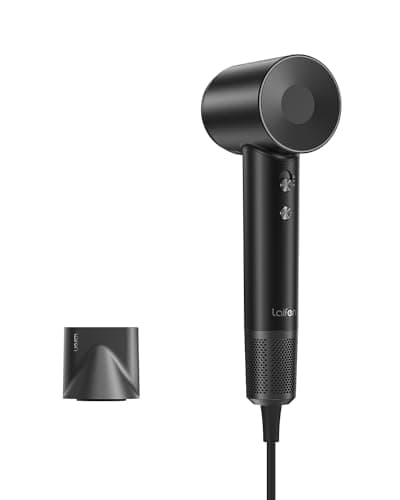 Laifen Swift High-Speed Hair DryerA 110,000 rpm brushless motor moving air at 22.3 m/s, which dries by air speed rather than temperature. That trade is the entire argument for high-speed dryers. Laifen Swift High-Speed Hair DryerA 110,000 rpm brushless motor moving air at 22.3 m/s, which dries by air speed rather than temperature. That trade is the entire argument for high-speed dryers. | Cutting drying time without cranking the heat | High-speed brushless dryer | |
| 2 | 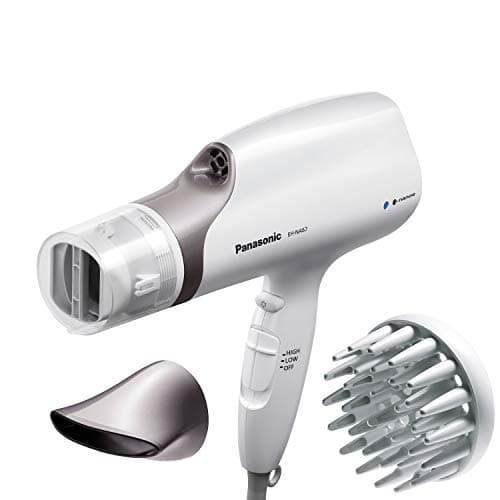 Panasonic nanoe Hair Dryer (EH-NA67)The oscillating nozzle is a real mechanical idea rather than a coating claim: it moves the airflow for you, which is what stops one section cooking while another stays wet. Panasonic nanoe Hair Dryer (EH-NA67)The oscillating nozzle is a real mechanical idea rather than a coating claim: it moves the airflow for you, which is what stops one section cooking while another stays wet. | Even drying without holding the dryer perfectly still | 1,875W ionic dryer | |
| 3 | 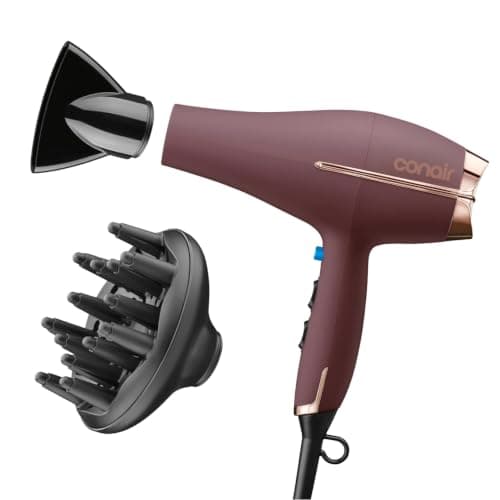 Conair InfinitiPro 1875W Salon Performance AC Motor Dryer (259BDNRY)An AC motor, a diffuser and a concentrator in the box, at a price where most dryers give you a DC motor and one nozzle. This is the sensible default. Conair InfinitiPro 1875W Salon Performance AC Motor Dryer (259BDNRY)An AC motor, a diffuser and a concentrator in the box, at a price where most dryers give you a DC motor and one nozzle. This is the sensible default. | The most drying power per dollar, with a diffuser included | 1,875W AC dryer |
#1 · Cutting drying time without cranking the heat
Laifen Swift High-Speed Hair Dryer
A 110,000 rpm brushless motor moving air at 22.3 m/s, which dries by air speed rather than temperature. That trade is the entire argument for high-speed dryers.
| Motor | 110,000 rpm brushless motorsource |
|---|---|
| Air speed | 22.3 m/ssource |
| Rated power | 1,400Wsource |
| Voltage | 120V — Laifen states plainly that it is not dual voltagesource |
| Heat regulation | Thermo-Control microprocessor monitors air temperature 100 times per second and alternates hot and cold airstreamssource |
| Ions | 200 million negative ionssource |
| Noise | 59 dBsource |
| Weight | 0.9 lb / 407 gsource |
| In the box | Dryer, one magnetic smooth nozzle, manual — no diffusersource |
What those numbers mean
Air speed and heat are two different ways to get water out of hair, and only one of them denatures protein. A dryer that moves air at 22.3 m/s can finish the job at a lower temperature, which is the whole reason this category exists.
0.9 lb is less than half the weight of the AC dryers it competes with. Over a fifteen-minute blowout on long hair that is the difference between finishing properly and giving up damp.
59 dB is a published figure, which almost no dryer brand offers. For context, that is conversational-speech territory rather than the vacuum-cleaner range most 1,875W dryers occupy.
What it does well
- Dries by air speed, so the heat setting can stay lower for the same result
- 0.9 lb, the lightest serious dryer in this roundup
- Publishes both an air-speed and a noise figure, which the mass market does not
- Temperature sampled 100 times a second
What it does not
- No air temperature in degrees — the settings are named hot, warm and cold
- 120V only. Laifen states it is not dual voltage, so it cannot travel abroad
- Only the smooth nozzle is in the box; the diffuser is a separate purchase
- The magnetic nozzles are proprietary; nothing else fits
- The narrow high-velocity stream takes practice on a big head of hair
Skip this one if: Skip it if you diffuse curls and want a wide, gentle airflow. A high-velocity stream is the opposite of what a curl pattern wants, and the diffuser is a separate purchase here rather than something in the box.
#2 · Even drying without holding the dryer perfectly still
Panasonic nanoe Hair Dryer (EH-NA67)
The oscillating nozzle is a real mechanical idea rather than a coating claim: it moves the airflow for you, which is what stops one section cooking while another stays wet.
| Power | 1,875 wattssource |
|---|---|
| Settings | 3 heat settings plus a cool shot, and 2 speed settingssource |
| Attachments | Oscillating quick-dry nozzle, concentrator nozzle, full-size diffusersource |
| Ion technology | nanoe, stated to hold 1,000x more moisture than regular ionssource |
| Weight | 2.9 lbsource |
What those numbers mean
Most heat damage from a dryer is not about the setting, it is about holding the nozzle in one spot. An oscillating head spreads the same energy over a wider area, which is a mechanical fix for a technique problem.
The 1,000x moisture claim is Panasonic's own description of nanoe versus conventional ions. It is a manufacturer claim about their own technology, and we are quoting it as that rather than endorsing the number.
2.9 lb is the heaviest dryer here by a clear margin. Everything the oscillating head gains you costs something in the wrist.
What it does well
- Oscillating nozzle addresses the actual cause of most blow-dry damage
- Three attachments including a full-size diffuser
- Full 1,875W with a genuine cool shot
What it does not
- 2.9 lb, the heaviest dryer in this roundup
- No published air-temperature figure
- The nanoe moisture claim is unverifiable from outside Panasonic
Skip this one if: Skip it if wrist strain or shoulder pain is why you stopped blow-drying. Three pounds held above your head is the wrong answer to that problem no matter how good the nozzle is.
#ad · how this is funded · price as of October 22, 2026
#3 · The most drying power per dollar, with a diffuser included
Conair InfinitiPro 1875W Salon Performance AC Motor Dryer (259BDNRY)
An AC motor, a diffuser and a concentrator in the box, at a price where most dryers give you a DC motor and one nozzle. This is the sensible default.
| Power | 1,875 watts, AC motorsource |
|---|---|
| Settings | 3 heat / 2 speed settingssource |
| Manufacturer claim | Up to 50 percent faster drying time and 3x longer dryer life than a DC motorsource |
| Attachments | Concentrator and diffusersource |
| Other | True cold-shot button, removable filtersource |
| Weight | 2.27 lbsource |
What those numbers mean
AC versus DC is the one motor distinction worth caring about. AC motors are heavier and last longer, and they are the reason a salon dryer survives daily use while a drugstore dryer does not.
The 50-percent and 3x figures are Conair's own claims about their AC motor relative to a DC one, not independent measurements. Read them as the manufacturer's positioning, which is exactly what they are.
2.27 lb is heavy for a home dryer. If you hold a dryer overhead for fifteen minutes, that weight is a real ergonomic cost and the lighter high-speed dryers are worth the price difference.
What it does well
- AC motor at a mass-market price, which is the genuinely uncommon part
- Diffuser in the box, so curly routines need nothing extra
- Removable filter and a true cold shot
- 1,875W is the practical maximum for a US household circuit
What it does not
- 2.27 lb, noticeably heavy in the hand
- Conair does not publish an air temperature, so heat settings are unquantified
- Three heat settings is a coarse grid next to digital tools
Skip this one if: Skip it if arm fatigue is your actual complaint. The AC motor that makes this durable is also what makes it heavy, and no amount of power fixes a tool you put down early.
How to compare ion claims that are not comparable
Manufacturers quantify this differently and the numbers do not translate. Laifen publishes 200 million negative ions. Panasonic publishes a multiplier against regular ions rather than a count. Conair states up to 75 percent less frizz. Those are three different claim types from three companies, measured three ways.
Ranking dryers by which prints the biggest ion figure is exactly the kind of spec-sheet reasoning that produces bad purchases. The figures are useful within a brand; across brands they are marketing units.
Ceramic, and what it is competing against
A heating element has to convert electricity to heat and hand that heat to the passing air. A bare metal coil does this unevenly, with hot spots — and a hot spot is a small area of air much hotter than the average, which is what scorches hair while the dial reads medium.
Ceramic distributes heat more evenly across the element, so the airstream is more uniform. That is a genuine benefit and, like ionic, it is now near-universal. It is a reason to avoid the very cheapest dryers rather than a reason to pick between good ones.
So what should you compare instead?
- A published temperature or ceiling. Shark states 230F on the SpeedStyle; Dyson names 212F, 176F and 140F. Almost nobody else publishes anything, and this is the specification that decides damage.
- Airflow. Dyson publishes 41 liters per second; Laifen publishes 22.3 m/s. Air is what dries hair.
- Motor type. AC for durability under daily load, brushless high-speed for air velocity at low weight, DC for cheap.
- Weight. The difference between 0.9 lb and 2.9 lb decides whether you finish the blowout.
- Attachments. A diffuser in the box is worth more to curly hair than any coating claim on the barrel.
The plate-material version of this same question is in ceramic versus titanium flat irons, where the material choice does genuinely change the outcome.
Questions people actually ask
Is ionic or ceramic better for a hair dryer?
The question assumes they are alternatives and they are not. Ionic describes the airstream — negative ions neutralizing static — and ceramic describes the heating element, which heats evenly and avoids hot spots. Almost every dryer sold today has both, so neither is a way to choose between them any more.
Do ionic hair dryers actually work?
For static frizz, yes and modestly. Hair picks up a positive charge as it dries and moves, like charges repel, and negative ions neutralize that. What ionic does not do is close a cuticle already damaged by heat or stop humidity swelling the fiber, which for most people is the larger share of the frizz problem.
What is tourmaline in a hair dryer?
A mineral used as a coating on the heating element that emits negative ions when heated. Functionally it is a way of delivering ionic output rather than a separate technology, which is why boxes list ionic and tourmaline together — they are describing the same effect twice.
Is nanoe better than ionic?
Nanoe is Panasonic's own ion technology, and Panasonic states it holds a thousand times more moisture than regular ions. That is a manufacturer claim about its own technology and we are not in a position to verify it, so we quote it rather than endorse it. What is verifiable on that dryer is the oscillating nozzle, which is a real mechanism doing a real thing.
What should I look for in a hair dryer instead?
A published temperature ceiling, a published airflow figure, the motor type, the weight, and whether a diffuser is in the box. Those five decide how a dryer performs and how it treats your hair. Ionic and ceramic are now on almost everything and tell you nothing about which dryer to buy.
Sources
Every figure on this page traces to one of these. If a number here disagrees with the manufacturer, the manufacturer is right and we want to know — tell us.
Read next
Reference
Guides and Reference
Fourteen reference guides covering temperature by hair type, running costs, spec explainers and technique, every figure linked to its source.
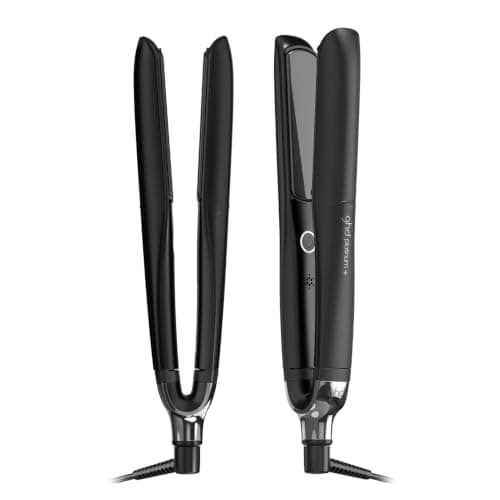
Top pick: ghd platinum+ Styler
Best Overall
The Best Hair Dryers, Chosen by Hair Type
Nine dryers compared on published wattage, airflow and temperature ceilings, then routed to the hair type each one genuinely suits.
Top pick: Laifen Swift High-Speed Hair Dryer
Plate Material Guide
Ceramic vs Titanium Flat Irons
The plate material decision explained by heat transfer rather than price, with which material suits which hair type and why.
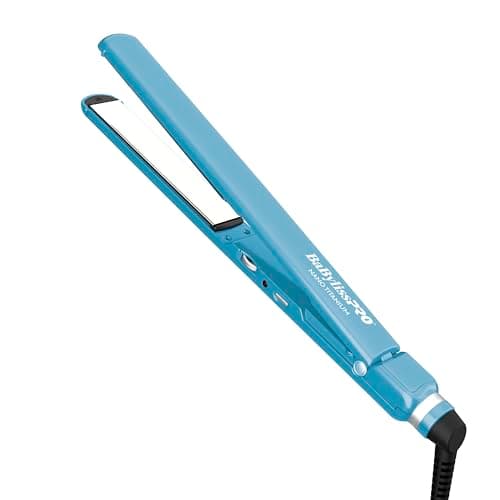
Top pick: BaBylissPRO Nano Titanium 1-inch Ultra-Thin Straightener

Best for Frizz
The Best Hair Dryers for Frizzy Hair
Four dryers ranked for frizz control on published specs, plus an honest account of the part of the problem no dryer can solve.
Top pick: Laifen Swift High-Speed Hair Dryer
Cost Calculator
How Many Watts Should a Hair Dryer Be?
What hair dryer wattage means, what a blow dry costs on the current EIA average rate, and why airflow matters more than watts.
Top pick: Conair InfinitiPro 1875W Salon Performance AC Motor Dryer (259BDNRY)
Best for Curls
The Best Hair Dryers for Curly Hair
Five dryers ranked for curls on diffuser quality, airflow control and published heat ceilings — including which ones ship a diffuser and which quietly do not.
Top pick: Conair InfinitiPro 1875W Salon Performance AC Motor Dryer (259BDNRY)