The Best Beard Trimmers for Stubble
Stubble is a length, and it is a narrow one. Most trimmers cannot express it, because their shortest guard is already too long.

How this page is funded: the buy links below are affiliate links, and Heat Index earns a commission on qualifying purchases at no cost to you. Nothing on this page was supplied by a manufacturer, and commission plays no part in the ranking — read the full disclosure. Picks are chosen from published specifications, not from hands-on testing; the method is written down so you can check it. Prices last verified October 24, 2026.
A maintained stubble lives between roughly 1 mm and 2 mm. That is a one-millimeter working window, and it is the reason most beard trimmers cannot produce it: their shortest guard is 3 mm, which is already a short beard rather than stubble.
So this is not a general beard trimmer page — the beard trimmers hub is that. This one is about the specific specification that decides whether a trimmer can hold a designed stubble day after day, and about the second problem stubble creates, which is skin.
How we judged this list
- Published sub-millimeter control, weighted first. Either a stated range in fractions of a millimeter, or a guardless cut that lands naturally in stubble territory. A trimmer whose shortest published setting is 3 mm is excluded from the top of this list on that basis alone.
- Skin-contact design. Stubble means the blade runs close to the skin on every pass, every day, which makes irritation a design question rather than a technique one. Rounded blade tips and a glide coating are the published features that address it.
- Consistency across the face. A blade that flexes to follow jaw and neck contours holds one length; a rigid one leaves patches.
- Blade running temperature. Daily close passes generate friction heat, and warm metal dragged across skin is the sensation people mistake for pulling.
- Running cost, stated honestly. One pick here uses consumable blades on a published schedule. Over three years that changes which trimmer is actually cheapest, and it belongs in the comparison rather than the small print.
Quick picks
Ranked, with the reasoning underneath. Tap any row to jump to that write-up; tap the price to check it on Amazon. Prices come from the live layer, never from this page.
| # | Product | Best for | Type | Price |
|---|---|---|---|---|
| 1 | 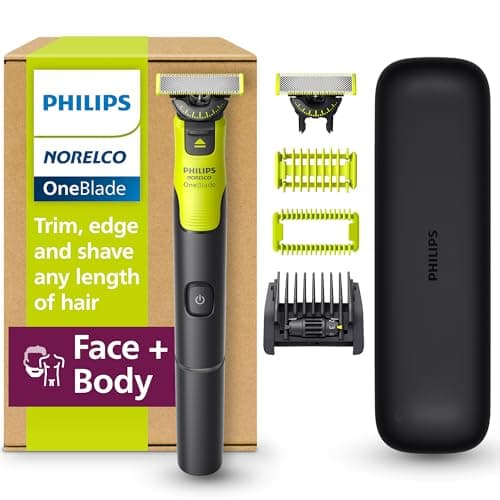 Philips Norelco OneBlade 360 Face + Body (QP4631/90)It trims, edges and shaves any length without ever giving a truly bald result, which is exactly right if the goal is stubble rather than skin. Philips Norelco OneBlade 360 Face + Body (QP4631/90)It trims, edges and shaves any length without ever giving a truly bald result, which is exactly right if the goal is stubble rather than skin. | Stubble you actually want to keep | Trim, edge and shave | |
| 2 | 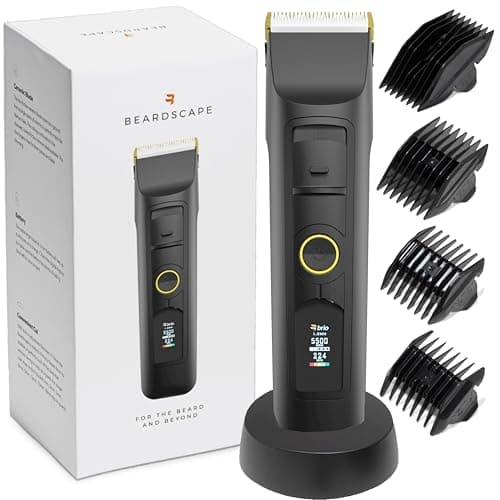 Brio Beardscape Beard and Body TrimmerA ceramic blade Brio states is four times tougher than stainless, five speeds from 5,000 to 7,000 rpm, and a 1 mm to 18 mm range that actually covers a long beard. Brio Beardscape Beard and Body TrimmerA ceramic blade Brio states is four times tougher than stainless, five speeds from 5,000 to 7,000 rpm, and a 1 mm to 18 mm range that actually covers a long beard. | Long beards and anyone who hates blade heat | Ceramic-blade trimmer | |
| 3 | 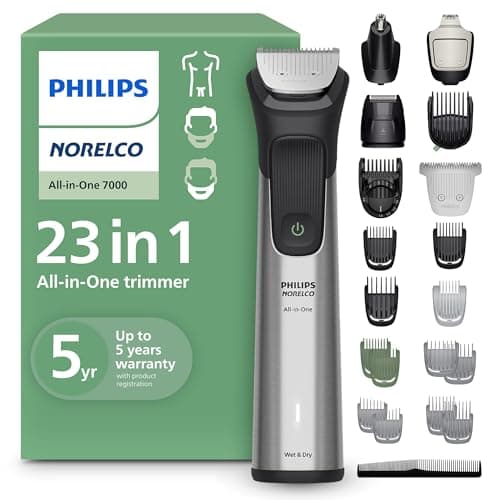 Philips Norelco All-in-One 7000 Trimmer, 23-in-1 (Multigroom 7000)Twenty-three tools and a five-hour battery, with self-sharpening titanium-coated blades that need no oil. It is the widest coverage per dollar in grooming. Philips Norelco All-in-One 7000 Trimmer, 23-in-1 (Multigroom 7000)Twenty-three tools and a five-hour battery, with self-sharpening titanium-coated blades that need no oil. It is the widest coverage per dollar in grooming. | One kit that covers face, head and body | 23-piece all-in-one | |
| 4 | 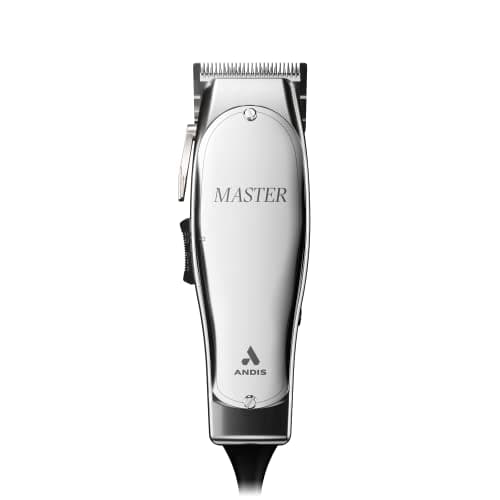 Andis Master Adjustable-Blade ClipperCarbon-steel blades adjustable from 000 to 1 in an aluminum body at 1.25 lb — the tool barbers actually use, with a lever instead of a guard for the close end. Andis Master Adjustable-Blade ClipperCarbon-steel blades adjustable from 000 to 1 in an aluminum body at 1.25 lb — the tool barbers actually use, with a lever instead of a guard for the close end. | Close, adjustable cutting on any hair texture | Professional adjustable clipper | Check price#ad |
#1 · Stubble you actually want to keep
Philips Norelco OneBlade 360 Face + Body (QP4631/90)
It trims, edges and shaves any length without ever giving a truly bald result, which is exactly right if the goal is stubble rather than skin.
| Cutting speed | Fast-moving cutter at 12,000 cuts per minutesource |
|---|---|
| Blade | 360 Blade flexes in all directions to follow facial curvessource |
| Skin protection | Dual protection system — glide coating plus rounded tipssource |
| Blade life | Stainless steel blade lasts up to 4 months of use; two blades in the box, one for face and one for bodysource |
| Replacement indicator | An eject icon appears on the blade when performance may no longer be optimalsource |
| Battery | Li-ion battery gives 60 minutes of shaving after a 1-hour chargesource |
| App | Connects to the Philips OneBlade app for blade-change and charging guidancesource |
What those numbers mean
The OneBlade is not a shaver and Philips does not claim it is. It cuts close but not to the skin, which is why it suits a maintained stubble length and why anyone wanting a bare face will be disappointed.
A blade that lasts four months is a running cost, not a footnote. The two blades in the box are not spares of each other — one is a face blade, one is a body blade — so the face blade is the four-month consumable, after which this becomes a consumable-based tool like a cartridge razor.
Rounded tips plus a glide coating is the specific reason this is the sensitive-skin pick. Most irritation comes from blade edges catching skin, not from the cut itself.
What it does well
- One tool genuinely covers trimming, edging and shaving
- Rounded tips and glide coating, which is what sensitive skin needs
- A wear indicator on the blade rather than a guess
- Face and body version handles both areas
What it does not
- Cannot give a fully bald shave, by design
- Blades are a recurring cost roughly every four months
- Ships with a USB-A charging cable only — the power adapter is not in the box
Skip this one if: Skip it if you want a genuinely bare, close shave. The OneBlade is engineered to stop short of the skin and no technique will get you past that.
#ad · how this is funded · price as of October 24, 2026
#2 · Long beards and anyone who hates blade heat
Brio Beardscape Beard and Body Trimmer
A ceramic blade Brio states is four times tougher than stainless, five speeds from 5,000 to 7,000 rpm, and a 1 mm to 18 mm range that actually covers a long beard.
| Blade | Low-friction ceramic blade, stated to be 4x tougher than stainless steelsource |
|---|---|
| Speeds | Five settings from 5,000 to 7,000 rpmsource |
| Cutting range | 1 mm to 18 mm, with stubble lengths between 1 mm and 1.9 mmsource |
| Battery | Lithium-ion, up to 4 hours depending on speed settingsource |
| Guards | 1, 2, 3, 4, 5, 6, 9, 12, 15 and 18 mmsource |
| Display | LCD showing speed and battery, with oiling and cleaning indicatorssource |
What those numbers mean
Ceramic runs cooler than steel because it conducts heat less readily. Blade heat is the usual culprit when a trimmer starts to feel like it is burning, so a cooler blade is a comfort specification, not a durability one.
An 18 mm top guard is genuinely long. Most beard trimmers stop around 10 or 12 mm, which means a full beard has to be scissor-trimmed instead.
Adjustable rpm is unusual and useful. Lower speed for detail work near the lip line, higher speed for bulk removal, and the LCD tells you which you are on.
What it does well
- Ceramic blade runs cooler than steel
- 1 mm to 18 mm range covers stubble through a full beard
- Five adjustable speeds
- LCD with oiling and cleaning reminders
What it does not
- Ceramic is harder but more brittle, and a drop can chip it
- Brio does not publish a cuts-per-minute figure
- Priced above mainstream beard trimmers
Skip this one if: Skip it if you keep short stubble and nothing else. The long-guard range and adjustable speed are what you are paying for, and a basic trimmer covers a 3 mm stubble identically.
#ad · how this is funded · price as of October 24, 2026
#3 · One kit that covers face, head and body
Philips Norelco All-in-One 7000 Trimmer, 23-in-1 (Multigroom 7000)
Twenty-three tools and a five-hour battery, with self-sharpening titanium-coated blades that need no oil. It is the widest coverage per dollar in grooming.
| Contents | 23 tools for face, head and body — metal trimmer, narrow detail trimmer, 41 mm extra-wide clipper, nose and ear trimmer, eyebrow comb and click-on body combssource |
|---|---|
| Battery | Lithium-ion, up to 5 hours of runtimesource |
| Quick charge | 5-minute quick charge for one complete trimsource |
| Blades | Self-sharpening titanium-coated blades, stated to stay as sharp as day one with no blade oil requiredsource |
| Combs | Premium precision comb, 11 settings from 1 to 3 mm in 0.2 mm steps; multi-comb set covering 26 settings from 0.5 to 16 mmsource |
| Power control | BeardSense scans beard density 125 times per second and boosts power in denser areassource |
| Cleaning | 100 percent showerproof, for wet or dry usesource |
What those numbers mean
Five hours of runtime is unusually long and changes the ownership experience: this is a tool you charge occasionally rather than one you find dead when you need it.
The blades are stated to stay as sharp as day one and to need no oil, which is Philips' own claim about their own blades rather than an independent test. What it means in practice is no scheduled consumable, unlike the OneBlade's four-month blade.
A 1 to 3 mm comb stepping in 0.2 mm increments is the part worth noticing. Stubble length is decided in fractions of a millimeter, and most trimmers jump in whole millimeters through that range.
What it does well
- Genuinely covers face, head and body in one purchase
- Five-hour runtime and a five-minute emergency charge
- Showerproof, which is the difference between a clean tool and a clogged one
- No blade oil needed
What it does not
- It trims and lines but does not shave — nothing in the kit takes skin bare
- Twenty-three pieces is twenty-three things to store
- Philips does not publish a cutting-speed figure for this model
Skip this one if: Skip it if you only maintain a beard. A dedicated beard trimmer will do that one job better and take up a fraction of the drawer space.
#ad · how this is funded · price as of October 24, 2026
#4 · Close, adjustable cutting on any hair texture
Andis Master Adjustable-Blade Clipper
Carbon-steel blades adjustable from 000 to 1 in an aluminum body at 1.25 lb — the tool barbers actually use, with a lever instead of a guard for the close end.
| Motor | 14,000 cutting strokes per minutesource |
|---|---|
| Blades | Extra-sharp carbon-steel blades, adjustable from size 000 to 1source |
| Housing | aluminum casingsource |
| Weight and size | 1.25 lb, 2 x 1.75 x 6 insource |
| Power | 120V / 60 Hzsource |
| Control | Thumb-controlled on/off for one-handed operationsource |
What those numbers mean
The 000-to-1 lever range is the point. It covers the closest part of a fade continuously, where guards can only step. That is why this is a fading clipper and the Wahl kit is a length-cutting kit.
Carbon steel takes a sharper edge than stainless and holds it well, at the cost of needing oil and a dry storage spot. It will rust if you ignore both.
An aluminum body at 1.25 lb feels heavy in the hand and that is deliberate: the mass is what keeps the clipper stable against the head instead of chattering.
What it does well
- Continuous 000-to-1 adjustment, which is what fades need
- Carbon-steel blades take and hold a sharper edge than stainless
- aluminum body, built for daily professional use
- One-handed thumb control
What it does not
- Carbon steel requires oiling and will rust if neglected
- No guards included in the base clipper
- 1.25 lb is heavy for a long session on your own head
Skip this one if: Skip it if this is your first clipper and you want to cut your own hair. It ships without guards, it demands maintenance, and the adjustable lever rewards skill you have not built yet.
The length problem, in numbers
| Tool | Published short end | Can it hold stubble? |
|---|---|---|
| Philips OneBlade 360 | Trims, edges and shaves any length; does not cut bare | Yes — guardless, it lands in stubble territory by design |
| Brio Beardscape | Stubble settings published between 1 mm and 1.9 mm | Yes — the only tool here with a stated sub-2 mm range |
| Philips Multigroom 7000 | 14 reinforced guards across 5 attachments | Partly — the metal trimmer without a guard runs close |
| Andis Master | Adjustable lever, 000 to 1, no guards included | Yes at the closest end, but it is a clipper, not a face tool |
The Brio is the only one publishing an explicit sub-2 mm range, and that is why it is the precision pick. The difference between 1.2 mm and 1.8 mm is genuinely visible on a face — it is the difference between five-o'clock shadow and a deliberate short beard — and a trimmer whose grid jumps from 1 mm to 3 mm cannot express it.
The OneBlade takes the opposite approach and arrives in the same place. Philips states it trims, edges and shaves any length but does not give a bare-skin finish. That is a design decision rather than a shortcoming, and it means the guardless cut naturally lands at stubble length every time without you selecting anything.
Why stubble is a skin problem as much as a length one
Cutting close every day means the blade contacts skin every day. Most irritation from a trimmer comes from blade edges catching skin rather than from the cut itself, which is why the published skin-contact features matter more on this page than on a general beard trimmer page.
- Rounded blade tips and a glide coating — Philips calls this a dual protection system on the OneBlade, and it is aimed exactly at the close-pass problem. It is why that tool leads here.
- A blade that flexes in all directions, which keeps constant skin contact without pressure. Philips publishes this as the 360 Blade.
- A cooler blade. Brio states its ceramic blade is four times tougher than stainless steel and it runs cooler, because ceramic conducts heat less readily. Blade heat is the usual culprit when a trimmer starts to feel like it is burning.
- Light pressure, which is on you. Pressing harder does not cut closer; it just puts more blade edge into skin. This is the single most common self-inflicted cause of irritation.
The running-cost arithmetic
The OneBlade uses replaceable blades, and Philips states each lasts up to four months. Two come in the box, but they are not spares of each other — one is a face blade and one is a body blade — so on face use it is a recurring purchase after about four months. That is a real ongoing cost and it deserves to be in the decision rather than discovered later.
The Brio's ceramic blade, the Multigroom's self-sharpening titanium-coated blades (which Philips states stay as sharp as day one and need no oil) and the Andis's carbon steel have no scheduled replacement. Carbon steel does need oiling and dry storage or it rusts, which is a maintenance cost rather than a cash one.
How to actually keep a stubble
- Pick one length and write it down. The whole look depends on consistency, and guessing each time is why stubble drifts into scruff.
- Trim dry, on a clean face. Wet hair sits longer than dry and springs up shorter, so a wet trim finishes shorter than intended.
- Every two to three days, not weekly. Stubble has a narrow window and a week of growth is past it.
- Against the grain for the bulk, with the grain to finish.
- Neckline two fingers above the Adam's apple, curving up to behind the ears. Higher ages the shape; lower reads unkempt. The neckline guide covers the order to cut it in.
- Cheek line last, following natural growth. Straight drawn lines are what make a stubble look styled rather than worn.
Related
Best beard trimmers is the general roundup, beard trimmers for long beards is the other end of the range, and beard trimmer versus electric shaver settles the category question if you are not sure which tool you need.
Questions people actually ask
What is the best beard trimmer for stubble?
The Philips OneBlade 360 leads because it is engineered to cut close without going bare, so a guardless pass lands in stubble territory every time with nothing to select - and its rounded blade tips and glide coating address the skin irritation that daily close passes cause. The Brio Beardscape is the precision alternative, publishing stubble settings between 1 mm and 1.9 mm.
What guard length is stubble?
Roughly 1 mm to 2 mm. That is a narrow window, and it is why most trimmers cannot hold it - their shortest guard is 3 mm, which is a short beard rather than stubble. The Brio Beardscape is the only tool here publishing explicit settings between 1 mm and 1.9 mm, and the difference between 1.2 mm and 1.8 mm is genuinely visible on a face.
Why does my trimmer irritate my skin on short settings?
Two usual causes. Blade edges catching skin, which is what rounded tips and a glide coating are designed to prevent - Philips publishes that as a dual protection system on the OneBlade. And blade heat from friction, which ceramic blades like the Brio's reduce because ceramic conducts heat less readily. Pressing harder makes both worse, not better.
How often should I trim stubble?
Every two to three days. Stubble occupies a roughly one-millimeter window, so a week of growth has already passed through it into short-beard territory. Trim dry on a clean face - wet hair sits longer and springs up shorter, so a wet trim finishes shorter than you intended.
Can an electric shaver maintain stubble?
No. A shaver cuts at skin level and has no guards, so it cannot leave a controlled length - that is the whole distinction between the categories. A trimmer sets a length; a shaver removes it. The Philips OneBlade sits deliberately between the two, which is why it suits stubble better than either.
Sources
Every figure on this page traces to one of these. If a number here disagrees with the manufacturer, the manufacturer is right and we want to know — tell us.
Read next

Best Overall
The Best Grooming Devices
Six grooming devices ranked on published cutting rates, blade materials and guard ranges, with the trimmer-shaver-clipper distinction made plain.
Top pick: Philips Norelco All-in-One 7000 Trimmer, 23-in-1 (Multigroom 7000)
Best Beard Trimmer
The Best Beard Trimmers
Four beard trimmers ranked on published guard range, blade material and stubble precision — including which ones handle a genuinely long beard.
Top pick: Brio Beardscape Beard and Body Trimmer

Best for Long Beards
The Best Beard Trimmers for Long Beards
Four trimmers ranked on published maximum guard length and torque - the two specs that decide whether a trimmer can cut a full beard at all.
Top pick: Brio Beardscape Beard and Body Trimmer

Grooming Verdict
Beard Trimmer vs Electric Shaver
Trimmers and shavers compared on what each one physically can and cannot cut, with a decision rule based on the look you want.
Top pick: Philips Norelco OneBlade 360 Face + Body (QP4631/90)
Best Shaver
The Best Electric Shavers
Four electric shavers ranked on published cutting rates and skin-contact design, with the foil-versus-rotary decision made concrete.
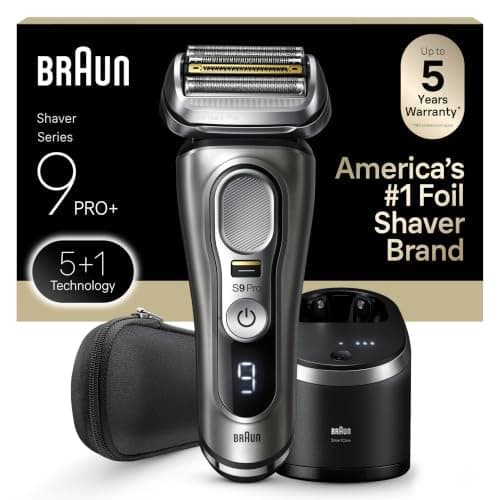
Top pick: Braun Series 9 Pro Electric Shaver (9465cc)
Shaver Verdict
Foil vs Rotary Shaver
Foil against rotary, decided by growth pattern with a five-second test, plus published cutting rates and what they do and do not mean.
Top pick: Braun Series 9 Pro Electric Shaver (9465cc)