Hair Styling Tools for Fine and Thin Hair
Most of the heat tool market is built for someone with more hair than you. Here is the part of it that is not.
How this page is funded: the buy links below are affiliate links, and Heat Index earns a commission on qualifying purchases at no cost to you. Nothing on this page was supplied by a manufacturer, and commission plays no part in the ranking — read the full disclosure. Picks are chosen from published specifications, not from hands-on testing; the method is written down so you can check it. Prices last verified October 23, 2026.
Fine hair is a thickness measurement, not a quantity one. A fine strand is physically thinner than a coarse strand, which means less material between the outside of the fiber and the cortex — so the same heat reaches further in, faster.
Every specification decision on this page follows from that one fact, and so does the frustrating shopping experience: an aisle full of boxes advertising 450F when what you need is something that will reliably do 280F.
What fine hair needs, in order
- A published low temperature. Not a dial marked LOW. An actual number. The HSI Glider's 140F floor and amika's 115F setting are the two clearest examples on this site.
- Light weight. Fine hair is usually styled for volume, which means working at the root with the tool held overhead. amika's brush at 0.85 lb and the Laifen dryer at 0.9 lb are the two lightest tools here.
- A real cool shot. Fine hair holds a set less well than coarse hair, so the cooling step matters more. A tool without one is a tool whose results drop by lunchtime.
- Bristle grip, on brushes. Boar or boar-blend grips better, creating the tension that produces root lift. The usual objection about drag barely applies to fine hair.
- Not much power. Fine hair dries fast. A 950W brush that would frustrate thick hair is exactly right here.
Quick picks
Ranked, with the reasoning underneath. Tap any row to jump to that write-up; tap the price to check it on Amazon. Prices come from the live layer, never from this page.
| # | Product | Best for | Type | Price |
|---|---|---|---|---|
| 1 | 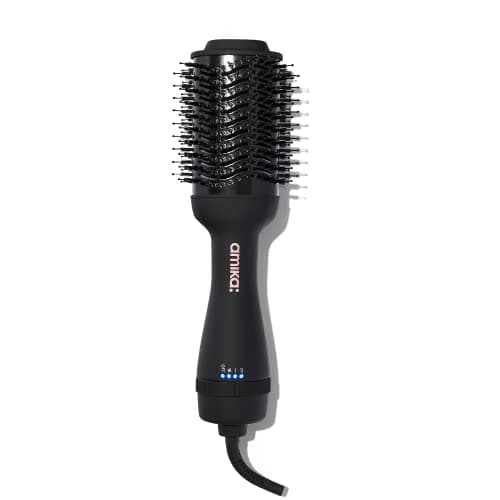 amika Hair Blow Dryer Brush 2.0The only blow-dry brush here that publishes its three temperatures — 115F, 190F and 230F — and every one of them is below the damage thresholds in the research. amika Hair Blow Dryer Brush 2.0The only blow-dry brush here that publishes its three temperatures — 115F, 190F and 230F — and every one of them is below the damage thresholds in the research. | Knowing exactly how hot the brush is | One-step dryer brush | Check price#ad |
| 2 | No photoHSI Professional Glider Ceramic Tourmaline Ionic Flat IronA 140F floor is the useful number here. Almost nothing in this price bracket goes low enough to be usable on fine or bleached hair, and this does. | A wide adjustable range at a low price | Ceramic tourmaline iron | Check price#ad |
| 3 | 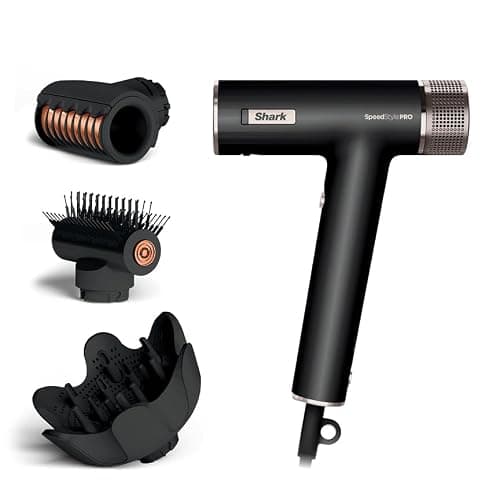 Shark SpeedStyle Pro Ionic Dryer (HD732)The rare dryer that publishes the numbers that matter: every heat setting in degrees, plus a ceiling it says it never exceeds at 230F, which is below every damage threshold in the literature. Shark SpeedStyle Pro Ionic Dryer (HD732)The rare dryer that publishes the numbers that matter: every heat setting in degrees, plus a ceiling it says it never exceeds at 230F, which is below every damage threshold in the literature. | A published temperature ceiling you can actually check | High-velocity dryer | |
| 4 | 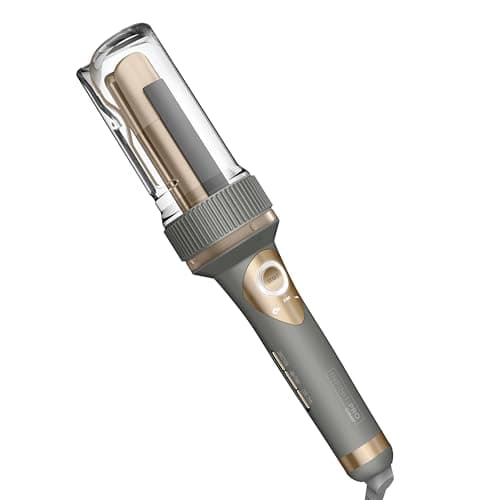 Conair InfinitiPRO Curl SecretFive published temperatures from 300F to 410F and three curl directions, on a tool that draws the hair in for you rather than asking you to wrap it. Conair InfinitiPRO Curl SecretFive published temperatures from 300F to 410F and three curl directions, on a tool that draws the hair in for you rather than asking you to wrap it. | Consistent curls without any wrapping technique | Automatic curler |
#1 · Knowing exactly how hot the brush is
amika Hair Blow Dryer Brush 2.0
The only blow-dry brush here that publishes its three temperatures — 115F, 190F and 230F — and every one of them is below the damage thresholds in the research.
| Heat and speed settings | 3 adjustable settings at 115F, 190F and 230Fsource |
|---|---|
| Power | 950Wsource |
| Barrel | Tourmaline-coated oval barrel generating negative ions and infrared heatsource |
| Bristles | Mixed long and short bristles to detangle, smooth and minimize breakagesource |
| Weight | 0.85 lb / 380 gsource |
| Cord | 9 ft with 360-degree swivelsource |
| Warranty | 2-year warrantysource |
What those numbers mean
Three published temperatures on a blow-dry brush is close to unique, and the numbers are the reassuring part. Even the top setting of 230F sits below the 302F line and far below anything the thermal research associates with cortex damage.
950W is the lowest wattage of any brush here and, for hair that is bleached or fine, that is a feature. Less power means a slower dry and a lower ceiling, and slower is the safe direction.
0.85 lb is the lightest tool in this entire registry. On a twenty-minute blowout, that is the specification you will notice most.
What it does well
- Publishes all three temperatures, and all three are conservative
- 0.85 lb, the lightest tool here
- 9-foot swivel cord and a 2-year warranty
- Mixed bristle lengths for detangling without dragging
What it does not
- 950W is genuinely slow on thick hair
- A 230F ceiling will not produce a sharp, glassy finish
- Priced above the Revlon brushes it competes with
Skip this one if: Skip it if your hair is thick and you want to be done quickly. 950W and a 230F ceiling are a deliberate choice for hair health, and on dense hair that choice reads as a long, slow blowout.
photo
#2 · A wide adjustable range at a low price
HSI Professional Glider Ceramic Tourmaline Ionic Flat Iron
A 140F floor is the useful number here. Almost nothing in this price bracket goes low enough to be usable on fine or bleached hair, and this does.
| Temperature range | 140F to 450F, adjustablesource |
|---|---|
| Plates | 1-inch ceramic tourmaline floating platessource |
| Heat regulation | 8 HeatBalance micro-sensors, 4 on each platesource |
| Voltage | Worldwide dual voltage, 110V-220Vsource |
| Plate shape | Floating plates with curved edges for straightening, curling or flippingsource |
What those numbers mean
A 140F floor is the specification that makes this the fine-hair pick in its price class. Most cheap irons start at 250F or 300F, which is already too hot for hair that is bleached or breaking.
Eight sensors across two plates is a real design choice, not a coating claim. Sensors are how an iron notices that a cold, wet section has dragged the plate temperature down, and how it avoids overshooting on the recovery.
Curved edges mean the same iron can bend a curl instead of only flattening. On short hair especially, that turns one tool into two.
What it does well
- 140F floor, genuinely low enough for fine and bleached hair
- Eight temperature sensors, unusual disclosure at this price
- Curved plates work for curls and flips as well as straightening
- Worldwide dual voltage
What it does not
- Ceramic recovers more slowly than titanium on very coarse hair
- HSI does not publish a plate length or a heat-up time
- The 450F top end exists and should be left alone
Skip this one if: Skip it if your hair is coarse and dense and you are straightening it fully. Ceramic plates will lose temperature against that hair and you will end up doing repeat passes, which is worse than one pass with a titanium iron.
#3 · A published temperature ceiling you can actually check
Shark SpeedStyle Pro Ionic Dryer (HD732)
The rare dryer that publishes the numbers that matter: every heat setting in degrees, plus a ceiling it says it never exceeds at 230F, which is below every damage threshold in the literature.
| Heat settings | Three published settings — low 65C, medium 80C, high 100C — plus a cool shot and a permanent cool modesource |
|---|---|
| Temperature ceiling | Measures and regulates temperature 1,000 times a second, never exceeding 230F, and never approaching 302Fsource |
| Power | 1,600 watts at 120 voltssource |
| Weight | 1.674 lbsource |
| Noise | About 83 decibelssource |
| Cord | Approximately 8 ftsource |
| Scalp Shield mode | Reduces air temperature to a level Shark states is optimized for scalp comfort and root drying, developed with dermatologistssource |
| Attachments | Three accessories per dryer, chosen from the DefrizzFast diffuser, QuickSmooth brush, Express Touchup brush, Lift & Stretch wide-tooth comb, Turbo concentrator and FrizzFighter finishing toolsource |
What those numbers mean
A stated ceiling of 230F is the single most useful specification on any dryer, and almost nobody publishes one. It puts the airflow well under the 302F figure Shark itself names as the damage line and far under the cuticle-degradation range in the research.
Shark also names each setting in degrees — 65C, 80C and 100C — which is disclosure the rest of the category mostly refuses. It means you can pick a setting against a damage threshold rather than against an unlabeled dial, and note that even the top setting lands under that 230F ceiling.
The accessory list is a choice rather than a fixed bundle, which matters more than it sounds. The DefrizzFast diffuser is the attachment that earns this dryer its place on curly and coily pages, so check it is one of the three in the configuration you buy.
What it does well
- Publishes a temperature ceiling AND every heat setting in degrees
- Published wattage, weight, cord length and even a decibel figure
- Regulates 1,000 times a second, the same control loop as the FlexStyle
- Scalp Shield mode is aimed squarely at root drying on fragile new growth
What it does not
- Shark publishes no airflow figure, so drying speed cannot be checked on paper
- 1,600W is less power than an 1,875W AC dryer, and the low ceiling compounds that
- Three accessories is a choice, so the diffuser is not guaranteed to be in the box
- The retail listing says 1,750W where Shark's own support article says 1,600W
Skip this one if: Skip it if you want maximum heat for a fast, poker-straight blowout on coarse hair. The ceiling that protects fragile hair is the same ceiling that will frustrate you here.
#ad · how this is funded · price as of October 23, 2026
#4 · Consistent curls without any wrapping technique
Conair InfinitiPRO Curl Secret
Five published temperatures from 300F to 410F and three curl directions, on a tool that draws the hair in for you rather than asking you to wrap it.
| Heat settings | 5 settings — 300F, 330F, 355F, 385F and 410Fsource |
|---|---|
| Curl directions | 3 directionssource |
What those numbers mean
Publishing all five temperatures as actual numbers is the reason this is here. A 300F floor is genuinely usable on fine hair, and you can see exactly what you are choosing.
An automatic curler removes the wrapping skill, which is the part people find hardest and the part that produces uneven curls. What it cannot do is handle a section bigger than the chamber, so long thick hair means many small sections.
Three curl directions matters more than it sounds: alternating direction section by section is what stops a head of curls looking like a wig.
What it does well
- All five temperatures published, starting at a usable 300F
- No wrapping technique required, so curls are consistent
- Three directions, which is what makes a full head look natural
What it does not
- Only handles small sections, so long thick hair takes a long time
- Conair does not publish a chamber size or timing figure for this model
- The mechanism is more to go wrong than a barrel and a clamp
Skip this one if: Skip it if your hair is long and dense. Feeding a whole head through a small chamber section by section is slower than a barrel, and the time cost outweighs the consistency gain.
#ad · how this is funded · price as of October 23, 2026
The temperature question, specifically
Published research on thermally treated hair reports cuticle degradation beginning around 150C (302F). Fine hair has less cuticle mass than coarse hair to begin with, so the practical working range sits below that: most stylists work fine hair at 250-300F on an iron, and the AAD's general guidance is to use the lowest setting that achieves the style.
Volume, which is the other half of the problem
Fine hair is rarely styled to be smoother. It is styled to look like there is more of it, and volume comes from root lift, tension and cooling — not from heat.
- Rough dry upside down to 80 percent before any brush comes out. Most of the volume is won here.
- Overdirect at the root — pull each section past vertical, opposite to how it will sit, and dry it there.
- Cool shot at the root before releasing. This is the step people skip and it is why blowouts drop.
- Skip the concentrator for volume. A concentrator exists to flatten the cuticle, which is the opposite goal.
- Do not over-dry. Fine hair is dry well before it feels finished, and past that point you get static and flyaways.
Every page for fine hair
- Hair dryers for fine hair — ranked by what each one publishes about its heat.
- Flat irons for fine hair — the low-floor shortlist and the ghd exception.
- Blow-dry brushes for fine hair — the category fine hair benefits from most.
- Curling irons for fine hair — and the cooling method that stops curls dropping.
- Preventing heat damage — what the published research actually reports.
If your fine hair is also bleached, the damaged hair router is the stricter version of everything here.
Questions people actually ask
What styling tools are best for fine hair?
Tools that publish a genuinely low temperature and weigh little. On this site that means the amika blow-dry brush (115F, 190F and 230F published, 0.85 lb) and the HSI Glider flat iron (a 140F floor, which almost nothing in its price class matches). Power matters less than on any other hair type, because fine hair dries fast.
Why does my fine hair go flat after styling?
Almost always a missing or too-brief cool shot. Heat makes the hydrogen bonds in hair moldable and cool air re-sets them in the new shape; if you shape with heat and release while the section is warm, it relaxes as it cools. Fine hair holds a set less well than coarse hair, so this step matters more here than anywhere else.
Is fine hair the same as thin hair?
No, and the difference changes what you should buy. Fine describes the thickness of an individual strand; thin describes how many strands you have. Fine dense hair is common — it needs a low temperature because the strands are thin, and real airflow because there is a lot of it. Confusing the two is why people buy underpowered tools.
What temperature should fine hair be styled at?
Below the roughly 302F at which published research reports cuticle degradation beginning — most stylists work fine hair at 250-300F on an iron. That is why an iron whose range starts at 300F is already starting at the top of your usable range, and why a published low floor matters more than a high maximum.
Sources
Every figure on this page traces to one of these. If a number here disagrees with the manufacturer, the manufacturer is right and we want to know — tell us.
- amika hair blow dryer brush 2.0
- HSI Professional Glider ceramic tourmaline ionic flat iron
- Shark SpeedStyle Pro ionic dryer, curly and coily (HD732) — product listing
- InfinitiPRO by Conair Curl Secret (CD1031)
- Thermal-induced changes in cuticle and cortex of chemically treated hair, PubMed Central
- American Academy of Dermatology — tips for healthy hair
Read next
Best for Fine Hair
The Best Hair Dryers for Fine and Thin Hair
Five dryers for fine and thin hair, ranked on published temperature ceilings and weight rather than on wattage nobody needs.
Top pick: Shark SpeedStyle Pro Ionic Dryer (HD732)
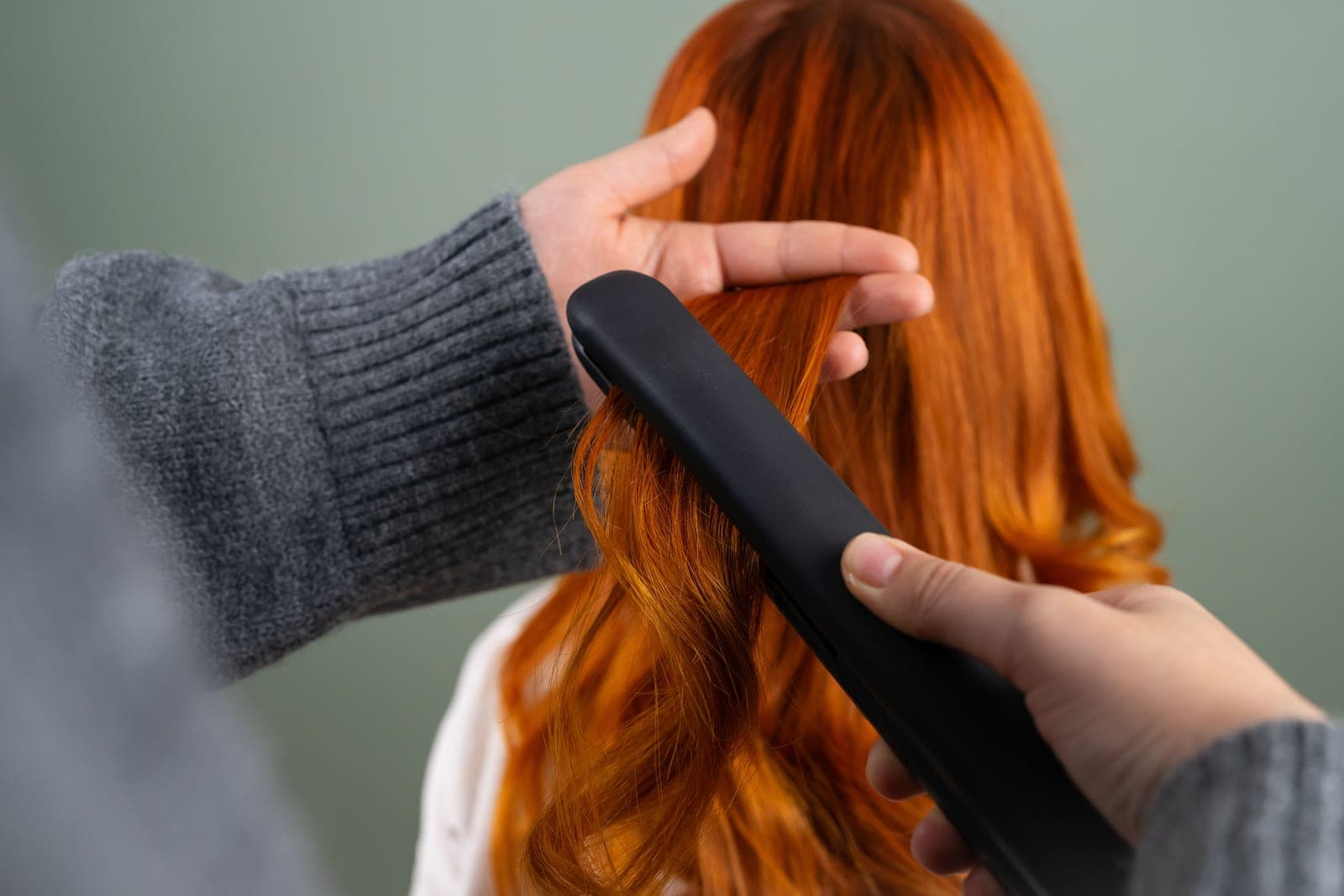
Best for Fine Hair
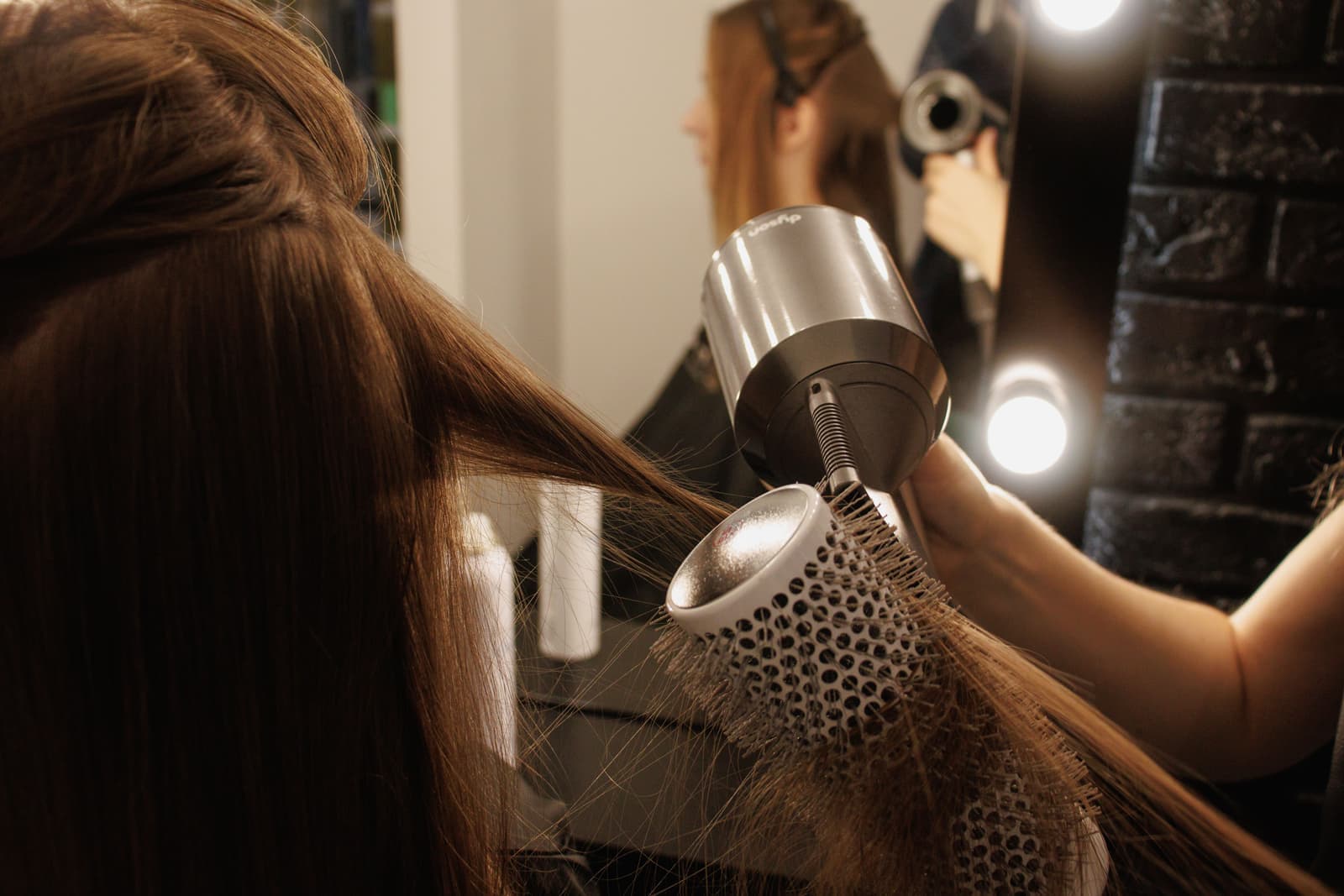
The Best Flat Irons for Fine Hair
Four flat irons for fine and thin hair, ranked on published temperature floor and control precision rather than on maximum heat.
photo
Top pick: HSI Professional Glider Ceramic Tourmaline Ionic Flat Iron
Best for Fine Hair
The Best Blow-Dry Brushes for Fine Hair
Four blow-dry brushes for fine and thin hair, ranked on published temperature and bristle grip, plus the root-lift technique that actually holds.
Top pick: amika Hair Blow Dryer Brush 2.0
Best for Fine Hair
The Best Curling Irons for Fine Hair
Four curling tools for fine hair, ranked on published low temperature settings, with the cooling technique that actually makes curls hold.
Top pick: Conair InfinitiPRO Curl Secret
Damaged Hair Guide
Hair Styling Tools for Damaged and Color-Treated Hair
Every tool we recommend for damaged and bleached hair, filtered strictly on published temperature disclosure.
Top pick: Dyson Supersonic Origin Hair Dryer
Start Here
Hair Styling Tools, Sorted by Hair Type
Six hair types with the specifications each one genuinely needs, routing to every dryer, iron, brush and curler we cover for it.
Top pick: Shark SpeedStyle Pro Ionic Dryer (HD732)