The Best Professional Flat Irons
Nothing stops a brand printing professional on a box. These four earn it on published specifications, and the reasons are not the ones the marketing gives.
How this page is funded: the buy links below are affiliate links, and Heat Index earns a commission on qualifying purchases at no cost to you. Nothing on this page was supplied by a manufacturer, and commission plays no part in the ranking — read the full disclosure. Picks are chosen from published specifications, not from hands-on testing; the method is written down so you can check it. Prices last verified October 23, 2026.
Professional is not a regulated term on a hair tool. There is no certification, no minimum specification and nobody checking. A brand can print it on a $25 iron and has.
What the word is gesturing at is real, though: tools built for a stylist who uses them for six hours a day rather than six minutes. That difference shows up in four checkable places — temperature control, plate construction, cord length and what happens to the iron under continuous load. This page ranks on those.
How we judged this list
- Published temperature control, not just a maximum. A salon iron holds its setting through section after section. A sampling rate is the manufacturer proving it; a single maximum number proves nothing.
- Plate construction and length. Longer plates cover more hair per pass and passes are the exposure variable most under your control. Floating and flexing plates hold a thick section evenly rather than gripping only its middle.
- Cord length and swivel. This is the giveaway. A 9-foot swivel cord exists because a stylist walks around a chair; a 5-foot fixed cord exists because a cost sheet said so.
- Safety features that cost money. Auto shut-off and dual voltage are cheap to publish and revealing when absent — and one iron here deliberately has no shut-off at all.
- Warranty. The honest proxy for how long a manufacturer expects its own tool to survive daily use.
Quick picks
Ranked, with the reasoning underneath. Tap any row to jump to that write-up; tap the price to check it on Amazon. Prices come from the live layer, never from this page.
| # | Product | Best for | Type | Price |
|---|---|---|---|---|
| 1 | 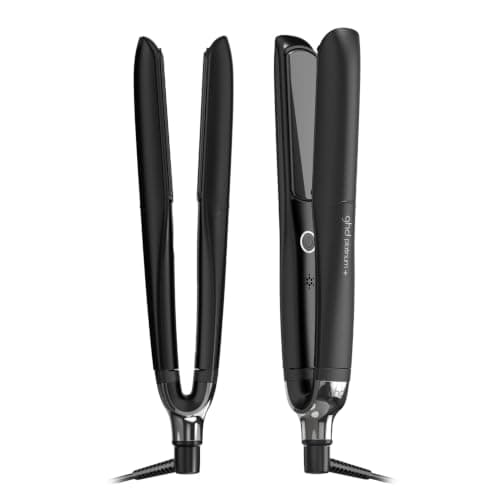 ghd platinum+ StylerOne temperature, 365F, held by a sensor system reading 250 times a second. It is the opposite design philosophy to a 450F iron and it is the better one. | A single temperature chosen for hair health, not marketing | Predictive-heat iron | |
| 2 | 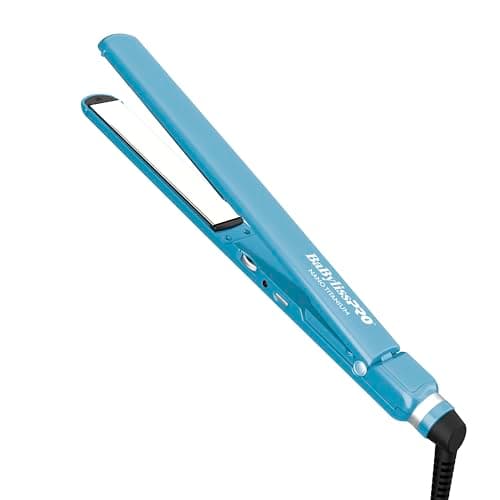 BaBylissPRO Nano Titanium 1-inch Ultra-Thin StraightenerFifty heat settings from 240F to 450F on extra-long 5-inch titanium plates — the reach coarse hair needs, and a floor low enough for fine hair if you trust yourself with the dial. | Thick or coarse hair that needs one pass, not four | Titanium iron, 50 settings | |
| 3 | 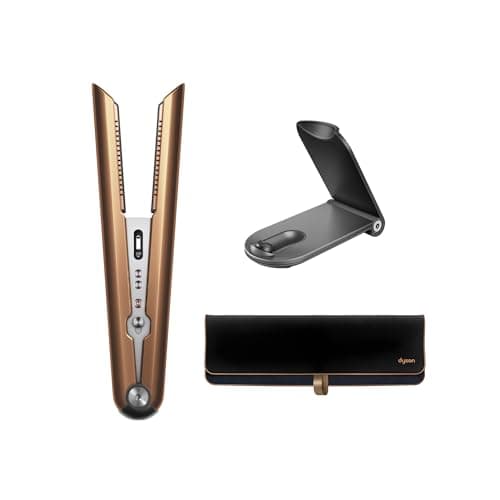 Dyson Corrale StraightenerFlexing manganese-copper plates gather the hair instead of squashing it, which is a mechanical route to the same result at a lower number on the dial. | Getting a result at a lower temperature | Cordless flexing-plate iron | |
| 4 | 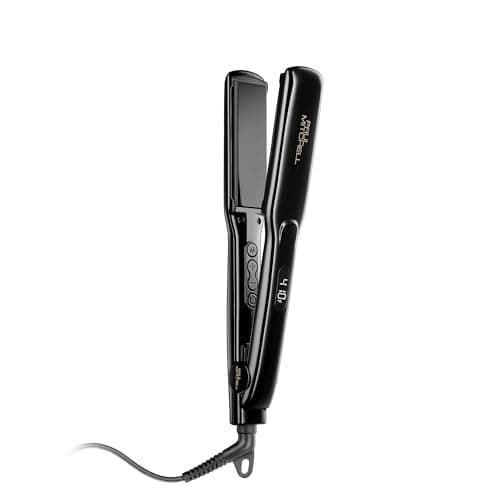 Paul Mitchell Smooth+ Ceramic Flat Iron (1.25 in)A 1.25-inch plate and a 410F ceiling: wider than the standard inch so it covers more hair per pass, and capped below the 450F irons that exist to win a spec sheet. | Long, thick hair where plate width saves passes | 1.25-inch ceramic iron |
#1 · A single temperature chosen for hair health, not marketing
ghd platinum+ Styler
One temperature, 365F, held by a sensor system reading 250 times a second. It is the opposite design philosophy to a 450F iron and it is the better one.
| Temperature | Optimized constant 365F across the platessource |
|---|---|
| Heat regulation | Ultra-zone predictive technology monitors heat 250 times a secondsource |
| Adaptation | Recognizes hair thickness and speed of styling and adjusts accordinglysource |
| Plates | Precision-milled ceramic plates with a wishbone hinge and round barrelsource |
| Auto shut-off | After 30 minutessource |
| Voltage | Universal voltagesource |
What those numbers mean
365F as a fixed target is a deliberate rejection of the specification race. It sits under every temperature the thermal-damage literature associates with cortex damage, and the tool simply will not let you go higher.
The interesting part is the 250-readings-per-second control loop. A conventional iron cools when cold hair hits it and then overshoots on the way back; a fast loop holds the number, which is why one pass at 365F can beat two at 400F.
ghd publishes percentage claims about stronger hair, more shine and color protection. Those are the manufacturer's own claims from their own testing, and we are not in a position to verify them, so treat them as positioning rather than data.
What it does well
- One well-chosen temperature, under every threshold in the cited research
- 250 temperature readings per second, the fastest control loop published here
- Rounded barrel makes curls and waves possible with the same tool
- Universal voltage and a 30-minute auto shut-off
What it does not
- No adjustment at all, so very coarse hair may need more passes
- Premium price for a single-temperature tool
- The percentage benefit claims are the manufacturer's own and unverifiable from outside
Skip this one if: Skip it if you have dense, coarse or 4C hair and want a silk-press result in one pass. 365F is a health-first ceiling, and on that hair type it will mean revisiting sections.
#ad · how this is funded · price as of October 23, 2026
#2 · Thick or coarse hair that needs one pass, not four
BaBylissPRO Nano Titanium 1-inch Ultra-Thin Straightener
Fifty heat settings from 240F to 450F on extra-long 5-inch titanium plates — the reach coarse hair needs, and a floor low enough for fine hair if you trust yourself with the dial.
| Plates | 1-inch wide, extra-long 5-inch platessource |
|---|---|
| Temperature | 50 heat settings, up to 450Fsource |
| Heater | Dual-voltage ceramic heater for rapid heat-up and recoverysource |
| Housing | Ryton, to resist high heatsource |
| Ions | Emits negative ionssource |
| Cord | 9 ft swivel cordsource |
| Warranty | Limited 4-year warrantysource |
What those numbers mean
Plate length is the specification nobody markets and everybody should. Five inches of plate covers more hair per pass, which means fewer passes, which is the only heat-damage variable fully in your control.
Fifty settings is not gimmickry when the range runs to 450F. It means you can sit at 320F or 340F precisely rather than choosing between a low, medium and high that nobody has defined.
Titanium conducts heat faster than ceramic and recovers faster after a cold section of hair pulls the temperature down. That is genuinely useful on coarse hair and genuinely dangerous on fine hair.
What it does well
- Extra-long 5-inch plates mean fewer passes on long hair
- Fifty discrete settings, so a low temperature is actually selectable
- Fast titanium heat recovery mid-section
- Four-year warranty and a 9-foot cord
What it does not
- 450F is above every threshold in the research and should not be used
- Titanium's fast heat transfer is unforgiving of a slow hand
- No auto shut-off — the manual warns it burns out if left on, voiding the warranty
Skip this one if: Skip it if you are the kind of person who reaches for the maximum setting. Fifty settings only helps if you use the low ones, and the top of this range is a number no hair needs.
#3 · Getting a result at a lower temperature
Dyson Corrale Straightener
Flexing manganese-copper plates gather the hair instead of squashing it, which is a mechanical route to the same result at a lower number on the dial.
| Heat settings | Three settings — 330F, 365F and 410Fsource |
|---|---|
| Plates | Flexing plates engineered from a manganese copper alloysource |
| Heat regulation | Integrated sensor system regulates plate temperature 100 times a secondsource |
| Power | 4-cell lithium-ion battery, cord-freesource |
| Auto shut-off | Switches off after 10 minutes of inactivitysource |
What those numbers mean
Rigid plates only touch the outside of a section, so the hair in the middle needs more heat or more passes. Plates that flex to gather the section apply pressure across all of it, which is why the same style lands at a lower setting.
Three published temperatures is the disclosure that matters, and 330F is a genuinely usable low setting rather than a token one.
Cordless is a convenience feature with a real cost: a battery has a runtime and a lifespan, and both are finite in a way a cord is not.
What it does well
- Three published temperatures including a low, usable 330F
- Flexing plates are a real mechanism rather than a coating claim
- Cordless, which makes back sections and travel genuinely easier
- Plates lock and it shuts off after ten minutes
What it does not
- Battery runtime limits a long styling session
- The most expensive straightener in this roundup by a wide margin
- A battery is a wear part; a corded iron has none
Skip this one if: Skip it if you style at home beside an outlet and never take an iron anywhere. You would be paying a large premium for cordless operation you will not use, and the flexing-plate benefit alone is unlikely to justify it.
#ad · how this is funded · price as of October 23, 2026
#4 · Long, thick hair where plate width saves passes
Paul Mitchell Smooth+ Ceramic Flat Iron (1.25 in)
A 1.25-inch plate and a 410F ceiling: wider than the standard inch so it covers more hair per pass, and capped below the 450F irons that exist to win a spec sheet.
| Temperature | Customizable heat settings up to 410Fsource |
|---|---|
| Plates | 1.25-inch cushioned ceramic plates with beveled edgessource |
| Heat-up | Up to 410F in 60 secondssource |
| Voltage | Automatic dual voltage, for worldwide usesource |
| Display | Large digital temperature displaysource |
| Auto shut-off | Automatic one-hour shut-offsource |
| Cord | 9 ft professional swivel cordsource |
What those numbers mean
The quarter inch of extra plate width sounds like nothing and is roughly a quarter fewer passes down a long section. Passes are the damage variable you control, so plate width is a hair-health specification disguised as a convenience one.
Capping at 410F instead of 450F is a choice we would like to see more of. Nothing about the extra 40 degrees produces a better result; it produces a better bullet point.
A digital display means you actually know the number. Irons with a dial marked low-to-high are asking you to guess, and people guess high.
What it does well
- 1.25-inch plates cover more hair per pass
- 410F ceiling rather than a spec-sheet 450F
- Digital display shows the real number
- One-hour auto shut-off and a 9-foot cord
What it does not
- Too wide for a fringe, short layers or edges
- 60-second heat-up is slower than the brushes here
- Paul Mitchell does not publish a low-end temperature figure
Skip this one if: Skip it if your hair is short, or if you style a fringe and face-framing pieces. A 1.25-inch plate cannot get close to the root on short sections without touching skin.
#ad · how this is funded · price as of October 23, 2026
What actually separates a salon iron
| Iron | Temperature control | Cord | Auto shut-off |
|---|---|---|---|
| ghd Platinum+ | One constant 365F, monitored 250 times a second | Not published | After 30 minutes |
| BaBylissPRO Nano Titanium | 50 settings, 240F to 450F | 9 ft swivel | None — the manual warns the unit burns out if left on |
| Dyson Corrale | 330F, 365F, 410F; regulated 100 times a second | Cordless, up to 30 minutes | After 10 minutes of inactivity |
| Paul Mitchell Smooth+ | Adjustable up to 410F, reached in 60 seconds | 9 ft swivel | After 1 hour |
Two rows deserve a second look. The BaBylissPRO has no auto shut-off at all — its own manual warns in capital letters that the unit will burn out if power is left on, and that the warranty is voided when it does. That is a genuinely professional design decision (a stylist never walks away from a hot iron) and a genuinely bad one for a home user in a hurry. The full review works through the manual's dial chart.
And two of the four publish a 9-foot swivel cord, which is the single most reliable tell of a tool designed around a salon chair rather than a bathroom mirror.
The sampling rate is the professional specification
If you only check one number, check how often the iron measures its own plates. A plate that dips when it meets a thick, cool section and then overshoots on the way back is applying two different temperatures to the same head of hair, and on a stylist's tenth client of the day that inconsistency compounds.
ghd publishes 250 readings a second and holds a single 365F rather than offering a dial at all. Dyson publishes 100 a second across three named settings. Those are the two irons here making a control claim you can hold them to — and it is not a coincidence that they are also the two most expensive. Our temperature guide sets out where your own hair should sit within those ranges.
Where professional is the wrong purchase
A salon iron is built for volume, not for beginners, and three of these four will let you do real damage without complaint.
- If you reach for the top of any dial, a 450F ceiling is an invitation rather than a capability. The ghd removes the decision entirely by not having one.
- If you style once a week, the durability you are paying for never gets tested. The premium here buys survival under daily professional load.
- If your hair is fine or bleached, the floor matters more than the ceiling — see flat irons for fine hair and for damaged hair, both of which rank on low settings instead.
- If you want one pass on coarse hair, plate length does more than the word professional. The BaBylissPRO's 5-inch plates are the relevant specification and they are on the cheaper of the two titanium options.
Ceramic, titanium and the plate that flexes
The four picks split across three plate approaches, and the split is the real buying decision underneath the professional label.
- Ceramic — ghd and Paul Mitchell. Heats evenly and forgivingly, dips under a dense section and recovers slowly. The right default for fine, damaged or color-treated hair.
- Titanium — BaBylissPRO. Transfers heat fast and recovers fast, which is what coarse hair needs and what fine hair cannot survive. Ceramic vs titanium settles that choice properly.
- Flexing plates — Dyson Corrale. A manganese copper alloy that bends around the section to gather it, so fewer strands escape the first pass. Dyson's own damage claim for this is footnoted as Corrale-with-flexing-plates against Corrale-with-solid-plates, not against any rival — the review covers that.
Note that the most expensive iron here is not the one with the highest ceiling or the longest plates. It is the cordless one, and cordless is a working-pattern feature rather than a performance one.
Plate width is the decision under the label
Every iron here is sold in more than one width, and the width decides more about your result than the brand does. It is also the specification most likely to be wrong in a rushed purchase, because listings bury it.
- 1 inch — the default, and the right one for most hair. Narrow enough to work near the root and to bend a curl, wide enough not to take all evening on long hair.
- 1.25 inch — the Paul Mitchell's size, and a sensible step up if your hair is long and thick. Covers more per pass, which is fewer passes, which is less total heat.
- 1.5 inch and wider — faster on very long, very dense hair and clumsy everywhere else. It cannot work close to the face or bend an end.
- Plate length matters more than width and is published less. BaBylissPRO states 5-inch extended plates; ghd, Dyson and Paul Mitchell publish no length at all.
If you are choosing between two widths of the same iron, pick on hair length and density rather than on price — they usually cost the same, and the wrong width is the version you stop using.
Warranty is the honest durability proxy
Nobody publishes a duty cycle, so the warranty is the closest thing to a manufacturer stating how long it expects its own tool to survive. Across these four it is the specification with the widest spread and the least marketing attached to it.
BaBylissPRO publishes a limited 4-year warranty — and, in the same manual, the burn-out clause that voids it. Dyson publishes 2 years on the Corrale. That pairing is worth sitting with: the longest warranty here comes with the most specific way to lose it, on the only iron with no automatic shut-off to prevent the failure in question.
What none of them publish
- Plate coating lifespan. Every one of these coatings wears, and not one manufacturer states over how many hours.
- A weight for the ghd or the Paul Mitchell, which matters over a long styling session more than any other omitted figure.
- Any duty-cycle rating, which is the actual professional specification — how long the iron can run continuously — and nobody in the category publishes it.
- Plate length for the ghd, the Corrale or the Paul Mitchell. Only BaBylissPRO publishes one, at 5 inches.
- Whether the plates are replaceable. On a tool sold as professional and priced accordingly, a coating that cannot be renewed makes the whole iron the consumable, and none of the four says either way.
The same question on the drying side is answered at best professional hair dryers, which found the word guarantees even less there. The straighteners hub has the full ranking by hair type.
Questions people actually ask
What makes a flat iron professional?
Nothing regulated - the word is unprotected and any brand can print it. What it usually signals in practice is construction for repeated daily use: a longer swivel cord, better plate material, and temperature control that holds through section after section. Two of the four irons here publish a 9-foot swivel cord, which is the most reliable tell of a tool designed around a salon chair rather than a bathroom.
Are professional flat irons worth it for home use?
It depends how often you style. The premium buys survival under daily professional load and consistent temperature across many hours, neither of which gets tested if you straighten once a week. What does transfer to home use is the control - ghd's constant 365F and Dyson's three named temperatures are worth having at any usage level, because they stop you creeping the heat up.
Do professional flat irons get hotter?
Often yes, and that is not the advantage it sounds like. Three of these four reach 410F or above, and published research reports cortex damage beginning around 392F. A high ceiling is a spec-sheet number. The ghd Platinum+ deliberately holds one constant 365F and cannot be turned up, which on frizz-prone or fragile hair is the better engineering decision.
Which professional flat iron is best for thick hair?
The BaBylissPRO Nano Titanium, on published specifications. Titanium transfers heat faster and recovers faster than ceramic, which is what dense hair needs, and its extra-long 5-inch plates cover more hair per pass - and passes are the damage. Be aware it has no auto shut-off, which its own manual addresses directly with a burn-out warning.
Do salons use ceramic or titanium flat irons?
Both, for different clients, which is why this list contains both. Ceramic heats evenly and forgivingly and suits fine, damaged or color-treated hair; titanium transfers heat fast and suits coarse, dense hair in fewer passes. The plate material decision matters more than the professional label, and our ceramic versus titanium guide settles it by heat transfer rather than by price.
Sources
Every figure on this page traces to one of these. If a number here disagrees with the manufacturer, the manufacturer is right and we want to know — tell us.
- ghd platinum+ styler
- BaBylissPRO Nano Titanium 1-inch ultra-thin straightener (BNT4072TUC)
- BaBylissPRO Nano Titanium ultra-thin straightener owner's manual (BNT4072TUC / BNT4073TUC / BNT4074TUC)
- Dyson Corrale straightener
- Paul Mitchell Smooth+ ceramic flat iron (1.25 in)
- Thermal-induced changes in cuticle and cortex of chemically treated hair, PubMed Central
Read next
Best Overall
The Best Hair Straighteners and Flat Irons
Six flat irons compared on plate material, plate length and published temperature range, then matched to hair type.
Top pick: ghd platinum+ Styler
Best Professional
The Best Professional Hair Dryers
Four salon-grade dryers ranked on motor type, published power and serviceability - and what the word professional does and does not guarantee.
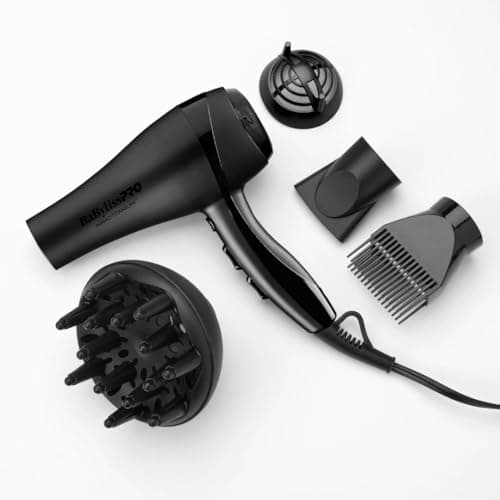
Top pick: BaBylissPRO Nano Titanium Dryer (BNT5548)
Plate Material Guide
Ceramic vs Titanium Flat Irons
The plate material decision explained by heat transfer rather than price, with which material suits which hair type and why.
Top pick: BaBylissPRO Nano Titanium 1-inch Ultra-Thin Straightener
Temperature Chart
Flat Iron Temperature by Hair Type
The temperature-by-hair-type chart, set against the damage thresholds published research reports, with irons that let you hit them.
Top pick: ghd platinum+ Styler
Corrale Verdict
Dyson Corrale Review
The Corrale read from Dyson's published specs: flexing plates, 30 minutes cordless, three named temperatures - and the comparison hiding in the footnote.
Top pick: Dyson Corrale Straightener
Best for Thick Hair
The Best Flat Irons for Thick Hair
Five flat irons for thick and coarse hair, ranked on plate length and heat recovery — the two specs that cut pass count.
Top pick: BaBylissPRO Nano Titanium 1-inch Ultra-Thin Straightener