The Best Flat Irons Under $50
At this price the plates are rarely the problem. What you give up is the number at the bottom of the dial, and only one iron here prints it.
How this page is funded: the buy links below are affiliate links, and Heat Index earns a commission on qualifying purchases at no cost to you. Nothing on this page was supplied by a manufacturer, and commission plays no part in the ranking — read the full disclosure. Picks are chosen from published specifications, not from hands-on testing; the method is written down so you can check it. Prices last verified October 23, 2026.
A cheap flat iron is not a worse version of an expensive one in the way a cheap dryer is. A dryer's price buys a better motor, and you can feel it. An iron is two heated plates on a hinge, and the plates on a thirty-dollar iron are made of the same ceramic as the plates on a two-hundred-dollar one. The physics does not get cheaper.
What gets cheaper is disclosure. The expensive irons on the straighteners hub tell you exactly what temperature they hold and how often they check it. Down here, four of these five irons print the number at the top of the dial and say nothing at all about the number at the bottom — and the bottom is the one that decides whether the tool is safe for your hair. That is the real trade in this bracket, and it is worth more attention than the plate marketing.
How we judged this list
Criteria first, weighted for this price bracket specifically rather than borrowed from the premium tier:
- A published temperature range, not just a maximum. Every iron here states its ceiling. Exactly one states where its range starts. If your hair is fine, bleached or breaking, the floor is the only number that matters and an unlabeled dial cannot give it to you.
- Floating plates. Plates mounted on a little travel self-align to the section instead of pinching it at one edge. It is the difference between one clean pass and three corrective ones, and three passes at 400F is how cheap irons earn their reputation.
- A lock of some kind. A temperature lock stops the set point creeping while your palm rests on the controls; a hinge lock stops the iron springing open in a drawer. Both are rare under $50 and both are worth more than another coating claim.
- Dual voltage, or an honest admission that there is none. Plugging a single-voltage 120V iron into a 240V socket destroys it instantly. Two irons here are rated for both; the rest publish nothing, which you should read as a no.
- A published warranty term. At the bottom of the market, build quality is exactly what gets cut, and the warranty is the only durability signal a manufacturer puts in writing before you buy.
Quick picks
Ranked, with the reasoning underneath. Tap any row to jump to that write-up; tap the price to check it on Amazon. Prices come from the live layer, never from this page.
| # | Product | Best for | Type | Price |
|---|---|---|---|---|
| 1 | 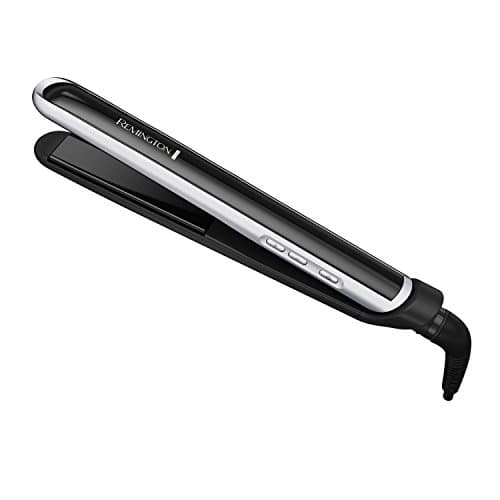 Remington Pearl Pro 1-inch Ceramic Flat Iron (S9500PP)The only iron in the sub-$50 bracket that pairs a digital set point with a temperature lock, which is the feature that stops the dial creeping while you work. | Digital control with a temperature lock | Digital ceramic iron | |
| 2 | 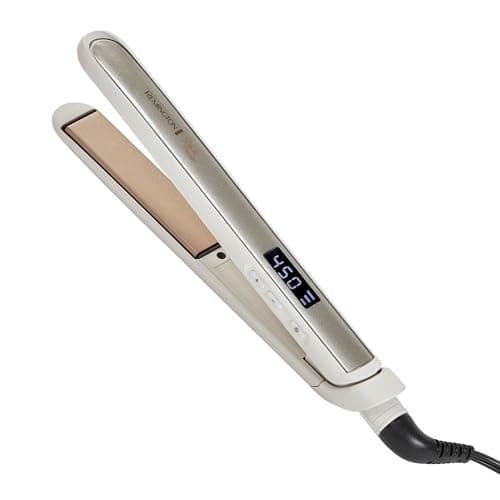 Remington Shine Therapy 1-inch Argan Oil & Keratin Flat Iron (S9511)The only iron under $50 that publishes both ends of its range — 300F to 450F — so you can buy it knowing the low setting exists rather than hoping it does. | Knowing where the temperature range starts | Ceramic iron, stated range | |
| 3 | 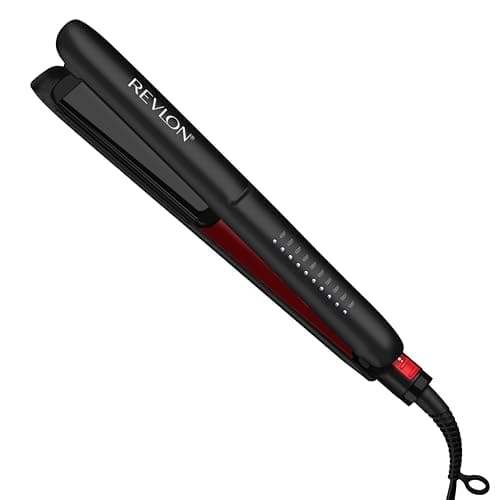 Revlon Smoothstay 1-inch Coconut Oil Infused Flat IronThe travel pick of the bracket, and the finest-grained dial here: 120V/240V dual voltage and ten settings instead of the usual five. | Dual voltage and a ten-step dial | Dual-voltage ceramic iron | |
| 4 | 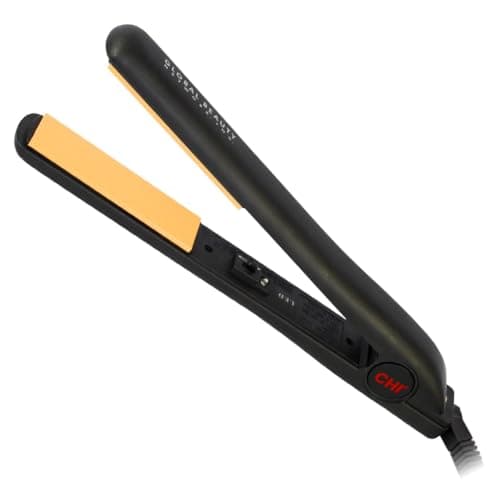 CHI Original 1-inch Ceramic Hairstyling Iron (GF1001)A single preset of 392F and no dial at all, which removes the most common way people damage their hair: turning it up because the first pass did not work. | One fixed, sensible temperature and nothing to get wrong | Single-temperature ceramic iron | |
| 5 | 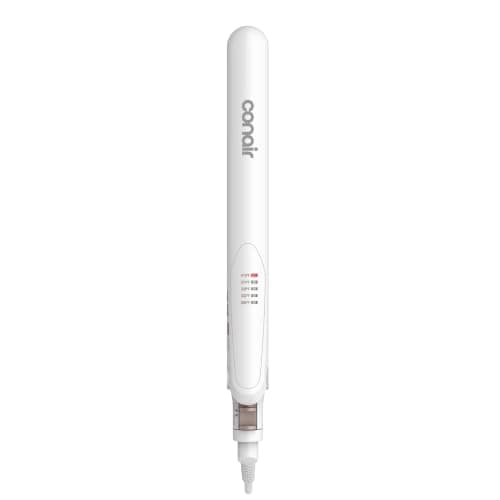 Conair Double Ceramic 1-inch Extra-Long Plate Flat IronThe floor of the market, and it still states its maximum and its plate geometry — which is more than most irons at this price manage. | The lowest price that still publishes a number | Entry ceramic iron |
#1 · Digital control with a temperature lock
Remington Pearl Pro 1-inch Ceramic Flat Iron (S9500PP)
The only iron in the sub-$50 bracket that pairs a digital set point with a temperature lock, which is the feature that stops the dial creeping while you work.
| Temperature | 450F maximum, digital salon-high heatsource |
|---|---|
| Plates | 1-inch floating plates, ceramic infused with crushed pearlsource |
| Heat-up | 15 secondssource |
| Controls | Digital controls with LED temperature display and temperature locksource |
| Auto shut-off | 60 minutessource |
| Ions | Evenly-distributed ionic heatsource |
| Warranty | 3-year limited warrantysource |
What those numbers mean
The temperature lock is the reason this leads the bracket. Cheap irons put the controls where your palm sits, and a set point that drifts upward mid-style is how people end up ironing at 450F without choosing to. Locking it is a thirty-dollar feature doing a two-hundred-dollar job.
What Remington does NOT publish is where the range starts. The 450F ceiling is stated and the floor is not, so if your hair needs a genuinely low setting you cannot confirm from the spec sheet that this iron offers one.
A 3-year warranty at this price is the longest here and it is the most honest durability signal available at the bottom of the market, where build quality is exactly what gets cut.
What it does well
- A temperature lock, which almost nothing under $50 has
- Digital set point with an LED readout rather than a numberless dial
- Floating plates and a 15-second heat-up
- 3-year limited warranty, the longest in this bracket
What it does not
- The bottom of the temperature range is not published, only the 450F top
- 450F is above both the cuticle and cortex damage thresholds in the research
- Remington publishes no cord length, weight or dual-voltage figure
- Pearl infusion is a coating claim with no published performance figure behind it
Skip this one if: Skip it if you need a confirmed low setting. The ceiling is published and the floor is not, so for bleached or breaking hair the Shine Therapy's stated 300F start is the safer purchase.
#2 · Knowing where the temperature range starts
Remington Shine Therapy 1-inch Argan Oil & Keratin Flat Iron (S9511)
The only iron under $50 that publishes both ends of its range — 300F to 450F — so you can buy it knowing the low setting exists rather than hoping it does.
| Temperature range | 300F to 450Fsource |
|---|---|
| Plates | 1-inch advanced ceramic infused with a micro-conditioner, argan oil and keratinsource |
| Heat-up | 15 secondssource |
| Ceramic content | 9X more ceramic than standard Remington ceramicsource |
| Locks | Hinge lock and temperature locksource |
| Cord | Salon-length tangle-free swivel cordsource |
| Warranty | 3-year limited warrantysource |
What those numbers mean
Publishing the floor is the whole point of this pick. Every other iron in the bracket prints its maximum and leaves the bottom of the dial unlabeled, which is useless if your hair is the kind that needs 300F and not 400F. A stated 300F start is a number you can style against.
300F is still not low. It sits at the cuticle-degradation threshold that published research puts near 302F, so this is the floor of a usable range rather than a gentle setting. Fine hair wants the bottom of this dial and a heat protectant, not the middle.
The shine claims — 50% shinier, 68% smoother — are Remington's own, measured against naturally dried hair and against its own standard ceramic coating respectively. They are comparisons to Remington's baseline, not to the rest of this page.
What it does well
- The only iron here publishing both ends of its range, 300F to 450F
- Hinge lock and temperature lock both included
- 3-year limited warranty
- Salon-length swivel cord, which is rare this cheap
What it does not
- A 300F floor is the threshold where cuticle degradation is reported to begin, not a gentle setting
- No published cord length, weight, voltage or auto shut-off figure
- The shine and smoothness percentages are measured against Remington's own baseline
- Single-voltage as far as the spec sheet goes — nothing published for travel
Skip this one if: Skip it if you travel with your iron. Remington publishes no dual-voltage rating for it, and the Revlon Smoothstay here states 120V/240V outright for less money.
#ad · how this is funded · price as of October 23, 2026
#3 · Dual voltage and a ten-step dial
Revlon Smoothstay 1-inch Coconut Oil Infused Flat Iron
The travel pick of the bracket, and the finest-grained dial here: 120V/240V dual voltage and ten settings instead of the usual five.
| Temperature | 10 heat settings up to 430Fsource |
|---|---|
| Plates | 1-inch plates, triple ceramic coating infused with coconut oilsource |
| Voltage | 120V/240V dual voltagesource |
| Glide | 30% smoother glide with no creasesource |
| Ions | Tourmaline ionic technologysource |
| Auto shut-off | After one hour of non-usesource |
| Controls | LED temperature display with on-off buttonsource |
What those numbers mean
Ten settings rather than five is the practical difference. A five-step dial on a 410F iron moves in roughly 35-degree jumps, which is a lot when the gap between a usable setting and a damaging one is narrower than that. Ten steps lets you find the lowest temperature that actually works on your hair.
Dual voltage is the other reason to pick it, and it is the specification that quietly destroys cheap irons: plugging a single-voltage 120V tool into 240V kills it instantly. This one is rated for both.
430F is also the lowest ceiling in this roundup, and on an iron that is a feature rather than a shortfall — there is nothing above 430F that fine or colored hair should be seeing.
What it does well
- 120V/240V dual voltage, stated outright
- Ten heat settings, the finest-grained dial in the bracket
- A 430F ceiling rather than 450F
- LED readout and a one-hour auto shut-off
What it does not
- The bottom of the ten-step range is not published, only the 430F top
- Revlon publishes no US spec sheet — the figures come from the retail listing
- No published warranty term, weight or heat-up time
- Rounded plate edges are sold as a curling feature; they make a sharp straight line harder
Skip this one if: Skip it if you want a published warranty. Revlon states no term for this iron, while both Remingtons here carry a documented 3-year limited warranty.
#4 · One fixed, sensible temperature and nothing to get wrong
CHI Original 1-inch Ceramic Hairstyling Iron (GF1001)
A single preset of 392F and no dial at all, which removes the most common way people damage their hair: turning it up because the first pass did not work.
| Temperature | Pre-set 392F (202C), not adjustablesource |
|---|---|
| Plates | 1-inch ceramic floating platessource |
| Cord | 11 ft swivel cordsource |
| Voltage | Dual voltagesource |
| Weight | 1.4 lbsource |
| Warranty | 2-year limited warrantysource |
What those numbers mean
A fixed 392F is a design decision with a real argument behind it. It sits above the range dermatological guidance points fine hair toward and below the 450F that irons advertise, so it is a defensible single answer for medium and coarse hair.
It is also the reason this iron is wrong for fine or bleached hair. There is no way to turn it down, and 392F on hair that snaps when you brush it wet is not a setting anyone should be using.
An 11-foot cord is the longest here and it changes where you can stand. Combined with dual voltage, this is a genuinely travel-capable professional iron.
What it does well
- One temperature means one fewer way to damage your hair
- 11-foot swivel cord, the longest in this roundup
- 1.4 lb, with the weight published
- Dual voltage
What it does not
- No temperature control at all, which rules out fine and fragile hair
- Ceramic plates heat more slowly than titanium on coarse hair
- No auto shut-off published
- CHI publishes no heat-up time, only a "flash-quick heating" claim
Skip this one if: Skip it if your hair is fine, bleached or already breaking. A locked 392F cannot be turned down, and this is exactly the temperature that hair should not be seeing.
#5 · The lowest price that still publishes a number
Conair Double Ceramic 1-inch Extra-Long Plate Flat Iron
The floor of the market, and it still states its maximum and its plate geometry — which is more than most irons at this price manage.
| Temperature | 5 heat settings up to 410Fsource |
|---|---|
| Plates | 1-inch extra-long double-ceramic floating platesource |
| Heat-up | 30 secondssource |
| Weight | Lightweight; no figure publishedsource |
What those numbers mean
The extra-long plate is the one specification here worth paying attention to, because plate length is what decides how much hair each pass covers and passes are the heat exposure you control. Conair states the plate is extra-long and nobody at this price states a length in millimeters.
A 410F ceiling is lower than the 450F both Remingtons reach, which on an iron is the right direction. Five settings is a coarse dial, though — roughly 35-degree jumps, with no labels on where they land.
This is the pick where you accept what is missing. There is no published warranty, no voltage rating, no weight figure and no stated floor. At the bottom of this bracket that is the trade, and it is a real one rather than a hidden one.
What it does well
- An extra-long floating plate, which reduces passes on long hair
- A 410F ceiling rather than 450F
- 30-second heat-up
- The cheapest iron here by a wide margin
What it does not
- Only five heat settings, and none of them is labeled with a temperature
- No published floor, warranty term, voltage rating or weight
- Conair publishes no US spec sheet for this SKU — the figures come from the retail listing
- Nothing here protects you from a set point moving under your palm
Skip this one if: Skip it if your hair is fine, bleached or breaking. An unlabeled five-step dial with no published floor is the wrong tool for hair that needs a specific low temperature.
What $50 does not buy you
Sorting the real losses from the assumed ones is more useful than a ranking, so here they are separately. These are the genuine gaps against the premium tier:
| What you lose | Why it matters | Who should care |
|---|---|---|
| The bottom of the temperature range | Four of these five publish only a maximum. You cannot style to a threshold you cannot see | Fine, bleached or breaking hair — this is the big one |
| Active temperature regulation | A premium iron measures the plate many times a second and corrects it. These set a target and drift toward it | Anyone doing a slow pass on a thick section |
| A published plate length | Length decides how much hair a pass covers. Only one iron here says anything about it, and then only the word extra-long | Long hair, where passes multiply |
| Weight and balance figures | One iron here publishes a weight. The rest leave you to find out how it sits in the hand after you buy it | Anyone styling for more than ten minutes |
| Recovery after a cold section | Cheap ceramic dips in temperature when it meets dense hair and takes time to come back, which is what turns one pass into three | Thick and coarse hair especially |
| A warranty you can rely on | Two irons here publish three years. Two publish nothing at all, which is its own answer | Everyone, eventually |
What you do NOT give up
- Ceramic plates. Every iron on this page has them, and ceramic is the material that suits fine, damaged and color-treated hair better anyway — the plate decision explained properly. Paying more mostly buys titanium, which is the right choice only if your hair genuinely resists straightening.
- Floating plates. Four of these five state them. Several irons costing five times as much do not.
- Ionic output. Universal at this price, exactly as it is at every other price. It stopped distinguishing styling tools a long time ago.
- A 450F maximum. Which is not a feature. Published research reports cuticle degradation beginning near 302F and cortex damage from around 392F, so the top of these dials is a number to avoid rather than a capability you are buying.
- Auto shut-off. Two of these publish an hour. It is the specification that matters at the front door rather than in the mirror.
The number four of these five will not tell you
Here is the whole argument of this page in one table. Every iron states a ceiling. The column that decides whether a cheap iron is safe for your hair is the other one.
| Iron | Published floor | Published ceiling | Settings |
|---|---|---|---|
| Remington Shine Therapy | 300F | 450F | Stated range |
| Remington Pearl Pro | Not published | 450F | Digital set point |
| Revlon Smoothstay | Not published | 430F | 10 steps |
| CHI Original | 392F fixed | 392F fixed | None — one preset |
| Conair Double Ceramic | Not published | 410F | 5 steps |
The CHI row is the interesting one, because it is not a gap. CHI publishes a single fixed 392F and no dial at all, which means the floor and the ceiling are the same known number. That is a more honest specification than an unlabeled five-step dial, even though it looks like less of one — and it is also why that iron is wrong for fine hair, since there is no way to come down from it.
passes x temperature x contact time = total thermal load
one pass at 300F is a smaller load than three passes at 450F
All three terms are under your control and only one of them is printed on the box. Dropping the temperature and taking one slow, properly-sectioned pass beats a hot iron used quickly — which is why an iron that publishes a usable floor is worth more than an iron that advertises a higher ceiling. The full breakdown by hair type is in the flat iron temperature chart.
Which one, by hair
- Fine, bleached or breaking hair — the Shine Therapy, because it is the only iron here that tells you where its range starts. Even then, 300F is the threshold at which cuticle degradation is reported to begin rather than a gentle setting, so use the bottom of the dial with a heat protectant. If the budget can stretch, flat irons for fine hair has the irons with genuinely low floors.
- Medium or wavy hair that just wants a clean finish — the Pearl Pro. The temperature lock is the feature you will actually notice, because it stops the set point wandering upward while you work.
- Anyone who travels with an iron — the Smoothstay or the CHI. They are the only two here rated for 120V and 240V, and a single-voltage iron on a foreign socket dies in about two seconds. Travel and dual-voltage flat irons covers that mistake in full.
- Thick or coarse hair — the Conair's extra-long plate reduces passes, which is the variable that matters most on dense hair. Be honest about the ceiling though: ceramic at this price recovers slowly between sections, and flat irons for thick hair explains where titanium starts to earn its money.
- Hair you keep damaging by turning the iron up — the CHI, precisely because it has no dial. One fixed 392F removes the most common way people hurt their hair, which is reaching for a higher setting when the first pass did not work.
The one thing worth spending more on
If you take a single recommendation from this page: a published low temperature is the specification worth paying for, and it is barely available in this bracket. One iron here states a 300F floor and the rest leave it blank. Spend more and that changes immediately — the irons on the professional flat irons page publish tight ranges and hold them actively, and that is what the money buys. It is not sharper plates.
For everyone else — healthy hair, straightening once or twice a week, no bleach — a ceramic iron with floating plates and a lock is a genuinely good purchase at this price, and the gap to a premium iron is smaller than the gap in the price suggests. Use the lowest setting that works, take one slow pass instead of three fast ones, and the tool will not be the limiting factor.
Related
The straighteners hub has the full ranking across every price, best budget hair dryers is the same question asked of dryers, and straightening brushes is the lower-stress alternative if a plated iron is more tool than you need. Curling irons under $30 is the third price band, and the one place where the cheap end of the market publishes MORE than the expensive end.
Questions people actually ask
What is the best flat iron under $50?
The Remington Pearl Pro leads here because it pairs a digital set point with a temperature lock, which is the feature that stops the dial creeping while you style, and it carries a 3-year limited warranty. The Shine Therapy is the one to choose instead if your hair is fine or fragile, because it is the only iron in this bracket that publishes where its temperature range starts rather than only where it ends. Prices move, so we do not print them - tap any buy button for the live figure.
Are cheap flat irons bad for your hair?
Not inherently - the plates are the same ceramic used further up the market. The real risk is that most cheap irons publish only their maximum temperature, so you cannot check a setting against a damage threshold. Published research reports cuticle degradation beginning around 302F and cortex damage from about 392F. The free mitigations are to use the lowest setting that works, section thinly, take one slow pass rather than three fast ones, and never iron hair that is not completely dry.
Is a $50 flat iron as good as an expensive one?
For plate material, no meaningful difference - ceramic is ceramic. What more money buys is active temperature regulation, a published and usually lower range, better recovery between dense sections, lighter weight and a longer warranty. If your hair is healthy and straightens easily, the gap is smaller than the price gap suggests. If your hair is bleached, fine or breaking, the published low temperature you get further up the market is a genuine safety feature rather than a luxury.
What temperature should a cheap flat iron be set to?
Roughly 250-300F for fine hair, 300-350F for medium, and 350-400F for thick or coarse hair. The difficulty in this bracket is that four of these five irons do not label their settings with temperatures, so you are working from a numbered dial rather than a figure. In that case start at the lowest setting, take one pass, and only move up if the section genuinely did not hold - and never go to the top of the dial by default.
Can I take a cheap flat iron abroad?
Only if it states dual voltage. On this page the Revlon Smoothstay publishes 120V/240V and the CHI Original is dual voltage; the two Remingtons and the Conair publish no voltage rating at all, which you should treat as single voltage. Plugging a 120V-only iron into a 240V socket destroys it immediately, and a plug adapter does not change the voltage - only a converter does.
How long should a flat iron under $50 last?
There is no honest universal answer, but the warranty is the signal the manufacturer is willing to put in writing. Both Remingtons here publish a 3-year limited warranty and the CHI publishes two years; Revlon and Conair publish no term for these models. The parts that fail first at this price are the cord at the strain relief and the hinge, so a swivel cord and a hinge lock are worth more for longevity than any plate coating claim.
Sources
Every figure on this page traces to one of these. If a number here disagrees with the manufacturer, the manufacturer is right and we want to know — tell us.
- Remington Pearl Pro 1-inch ceramic flat iron (S9500PP)
- Remington Shine Therapy 1-inch argan oil & keratin flat iron (S9511)
- Revlon Smoothstay 1-inch coconut oil infused flat iron — product listing
- CHI 1-inch original ceramic hairstyling iron (GF1001)
- Conair Double Ceramic 1-inch extra-long plate flat iron — product listing
- Thermal-induced changes in cuticle and cortex of chemically treated hair, PubMed Central
- Thermal denaturation and structural changes of alpha-helical proteins in keratins, Journal of Structural Biology
- American Academy of Dermatology — tips for healthy hair
Read next
Best Overall
The Best Hair Straighteners and Flat Irons
Six flat irons compared on plate material, plate length and published temperature range, then matched to hair type.
Top pick: ghd platinum+ Styler
Best for Fine Hair
The Best Flat Irons for Fine Hair
Four flat irons for fine and thin hair, ranked on published temperature floor and control precision rather than on maximum heat.
photo
Top pick: HSI Professional Glider Ceramic Tourmaline Ionic Flat Iron
Best for Travel
The Best Travel and Dual Voltage Flat Irons
Four genuinely dual-voltage flat irons ranked for travel, with the adapter-versus-converter mistake explained and the label to check before you pack.
Top pick: CHI Original 1-inch Ceramic Hairstyling Iron (GF1001)
Best Professional Iron
The Best Professional Flat Irons
Four professional flat irons ranked on published temperature control, plate construction and cord length - plus what the word professional does and does not guarantee.
Top pick: ghd platinum+ Styler
Best Budget
The Best Budget Hair Dryers
Five affordable dryers ranked on published power, attachments and serviceability - plus an honest account of what the bottom of the market costs you.
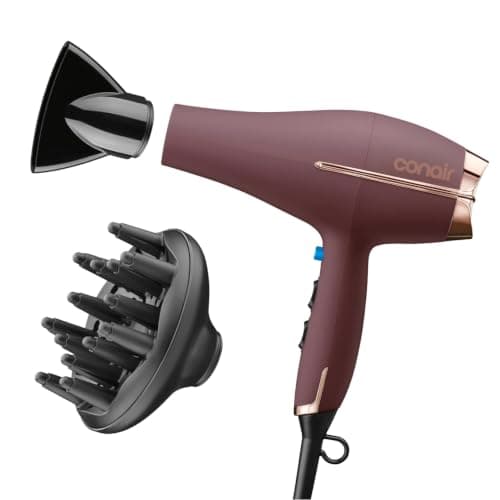
Top pick: Conair InfinitiPro 1875W Salon Performance AC Motor Dryer (259BDNRY)
Temperature Chart
Flat Iron Temperature by Hair Type
The temperature-by-hair-type chart, set against the damage thresholds published research reports, with irons that let you hit them.
Top pick: ghd platinum+ Styler