The Best Blow-Dry Brushes for Fine Hair
Fine hair is what a blow-dry brush was made for. It is also the hair type with the least margin for an unpublished temperature.
How this page is funded: the buy links below are affiliate links, and Heat Index earns a commission on qualifying purchases at no cost to you. Nothing on this page was supplied by a manufacturer, and commission plays no part in the ranking — read the full disclosure. Picks are chosen from published specifications, not from hands-on testing; the method is written down so you can check it. Prices last verified October 23, 2026.
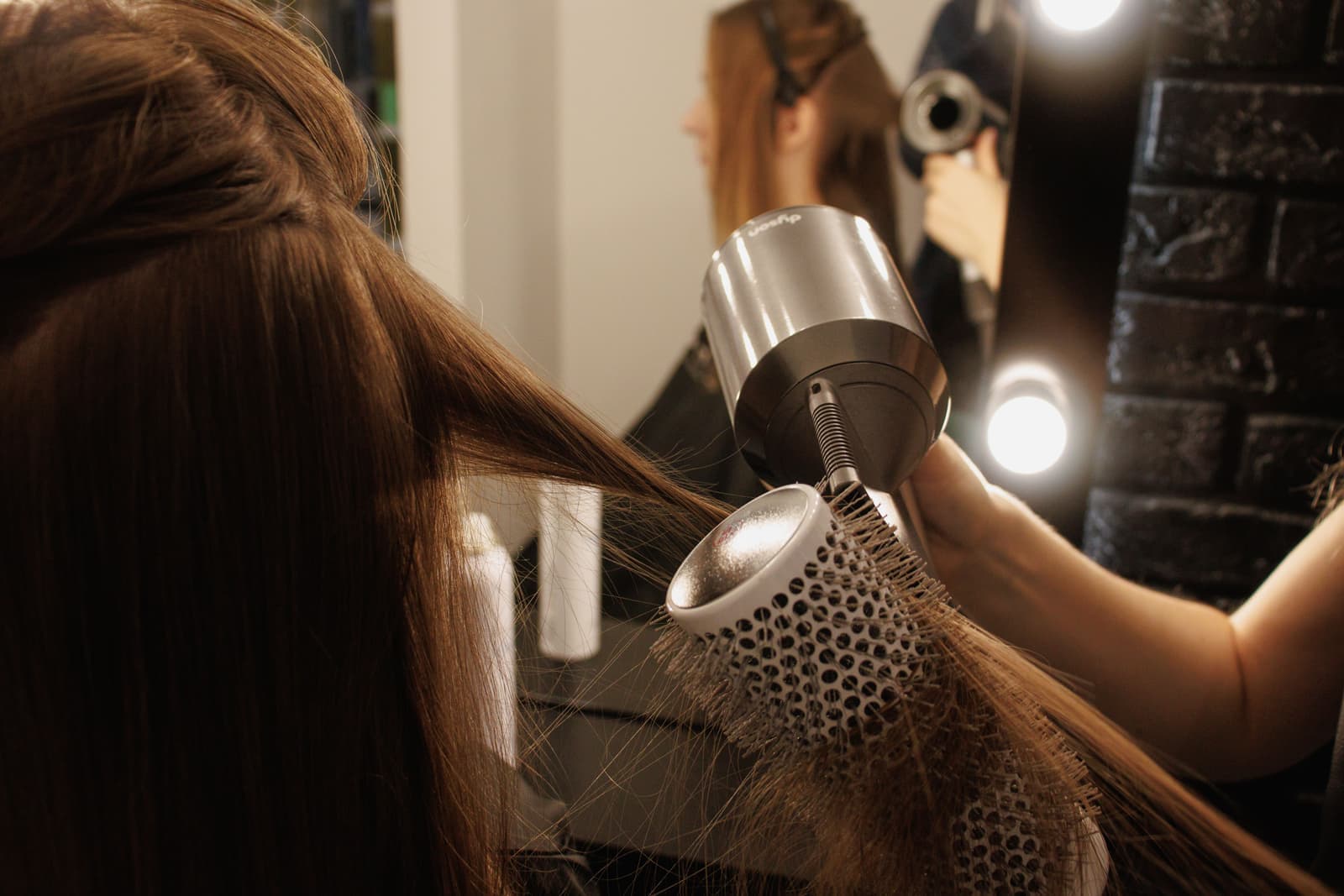
Fine hair and blow-dry brushes are a genuinely good match. Fine hair dries fast, so the modest wattage that frustrates thick hair is fine here; it needs volume rather than smoothing, and a round barrel with grippy bristles creates volume at the root better than a dryer and a hand ever will.
The catch is heat. A brush is in contact with the hair rather than blowing at it from a distance, and fine strands have less mass to absorb that energy. Which makes this the one category where the missing temperature spec is genuinely expensive — and why the ranking below starts with the only brush that publishes one.
Quick picks
Ranked, with the reasoning underneath. Tap any row to jump to that write-up; tap the price to check it on Amazon. Prices come from the live layer, never from this page.
| # | Product | Best for | Type | Price |
|---|---|---|---|---|
| 1 | 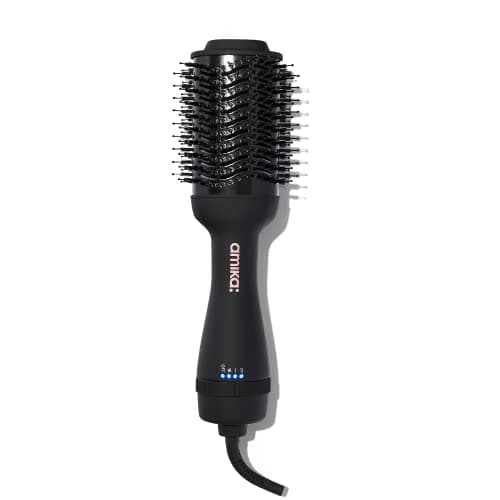 amika Hair Blow Dryer Brush 2.0The only blow-dry brush here that publishes its three temperatures — 115F, 190F and 230F — and every one of them is below the damage thresholds in the research. amika Hair Blow Dryer Brush 2.0The only blow-dry brush here that publishes its three temperatures — 115F, 190F and 230F — and every one of them is below the damage thresholds in the research. | Knowing exactly how hot the brush is | One-step dryer brush | Check price#ad |
| 2 | 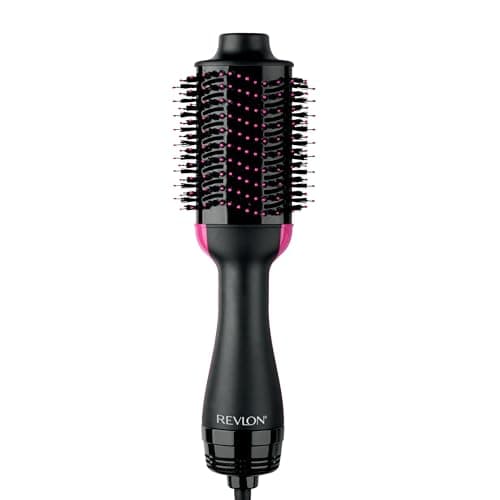 Revlon Salon One-Step Hair Dryer and Volumizer (RVDR5222)The original. Same 1,100W and three heat-and-speed settings, without the upgraded barrel coatings, at a considerably lower price. Revlon Salon One-Step Hair Dryer and Volumizer (RVDR5222)The original. Same 1,100W and three heat-and-speed settings, without the upgraded barrel coatings, at a considerably lower price. | The cheapest honest route to a home blowout | One-step dryer brush | |
| 3 | No photoT3 AireBrush Duo Interchangeable Blow-Dry BrushFifteen heat-and-speed combinations and two interchangeable attachments, which is the most granular control in a category that usually offers three settings. | Fine control over heat and speed together | Interchangeable dryer brush | Check price#ad |
| 4 | 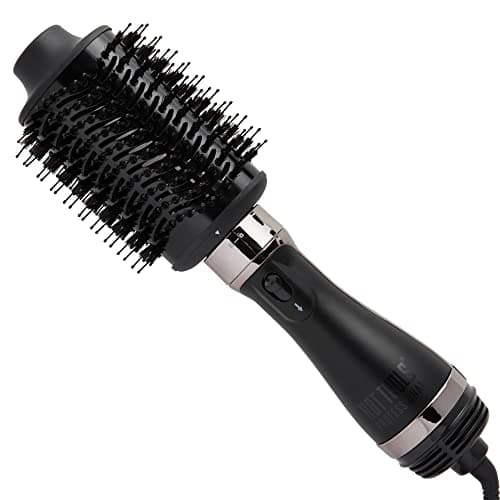 Hot Tools Black Gold One-Step Detachable BlowoutA detachable head, so the same handle takes a 2.8-inch barrel for length and a 2.4-inch for shorter layers instead of buying two brushes. Hot Tools Black Gold One-Step Detachable BlowoutA detachable head, so the same handle takes a 2.8-inch barrel for length and a 2.4-inch for shorter layers instead of buying two brushes. | Two barrel sizes on one handle | Detachable dryer brush |
#1 · Knowing exactly how hot the brush is
amika Hair Blow Dryer Brush 2.0
The only blow-dry brush here that publishes its three temperatures — 115F, 190F and 230F — and every one of them is below the damage thresholds in the research.
| Heat and speed settings | 3 adjustable settings at 115F, 190F and 230Fsource |
|---|---|
| Power | 950Wsource |
| Barrel | Tourmaline-coated oval barrel generating negative ions and infrared heatsource |
| Bristles | Mixed long and short bristles to detangle, smooth and minimize breakagesource |
| Weight | 0.85 lb / 380 gsource |
| Cord | 9 ft with 360-degree swivelsource |
| Warranty | 2-year warrantysource |
What those numbers mean
Three published temperatures on a blow-dry brush is close to unique, and the numbers are the reassuring part. Even the top setting of 230F sits below the 302F line and far below anything the thermal research associates with cortex damage.
950W is the lowest wattage of any brush here and, for hair that is bleached or fine, that is a feature. Less power means a slower dry and a lower ceiling, and slower is the safe direction.
0.85 lb is the lightest tool in this entire registry. On a twenty-minute blowout, that is the specification you will notice most.
What it does well
- Publishes all three temperatures, and all three are conservative
- 0.85 lb, the lightest tool here
- 9-foot swivel cord and a 2-year warranty
- Mixed bristle lengths for detangling without dragging
What it does not
- 950W is genuinely slow on thick hair
- A 230F ceiling will not produce a sharp, glassy finish
- Priced above the Revlon brushes it competes with
Skip this one if: Skip it if your hair is thick and you want to be done quickly. 950W and a 230F ceiling are a deliberate choice for hair health, and on dense hair that choice reads as a long, slow blowout.
#2 · The cheapest honest route to a home blowout
Revlon Salon One-Step Hair Dryer and Volumizer (RVDR5222)
The original. Same 1,100W and three heat-and-speed settings, without the upgraded barrel coatings, at a considerably lower price.
| Power | 1,100 wattssource |
|---|---|
| Settings | 3 heat and speed settingssource |
| Barrel | Oval brush designsource |
| Bristles | Nylon pin and tufted bristlessource |
| Ions | Built-in ion generatorsource |
| Coating | Ceramic coating for even heat distributionsource |
What those numbers mean
The original and the PLUS share the motor. What the PLUS adds is barrel coating material and a fourth cool setting, and whether that is worth the difference depends entirely on whether you use a cool shot.
Mixed nylon pin and tufted bristles is the detail worth knowing: the pins detangle and the tufts grip. On fine hair the grip is what creates root lift; on thick hair it is what makes the brush hard to pull through.
There is no published temperature here either, which is the standing complaint about this whole category.
What it does well
- Same 1,100W motor as the PLUS at a lower price
- Mixed bristle types genuinely help with root lift
- The most widely available blow-dry brush there is
What it does not
- No cool setting, so nothing sets the style at the end
- No published temperature figures
- Ceramic coating only, without the PLUS barrel materials
Skip this one if: Skip it if you rely on a cool shot to lock a blowout in. This model has three heat and speed settings and no cool option, and adding one after the fact is not possible.
photo
#3 · Fine control over heat and speed together
T3 AireBrush Duo Interchangeable Blow-Dry Brush
Fifteen heat-and-speed combinations and two interchangeable attachments, which is the most granular control in a category that usually offers three settings.
| Settings | 15 heat and speed combinationssource |
|---|---|
| Ion technology | T3 IonFlow, an ion-rich airstream with digitally controlled heatsource |
| Attachments | Two interchangeable brush attachmentssource |
What those numbers mean
Fifteen combinations means heat and speed are decoupled. That matters because the useful setting for fine hair is often low heat with high airflow, and a three-setting brush cannot express that at all.
Digitally controlled heat is T3's own description of the control system. They do not publish the actual temperatures, which keeps this a step behind amika on disclosure.
Two attachments in the box, rather than one plus an upsell, is the practical difference from the Hot Tools system.
What it does well
- Heat and speed adjust independently, 15 combinations in total
- Both attachments included
- Digitally controlled rather than a mechanical thermostat
What it does not
- T3 publishes neither wattage nor temperature for this model
- Premium price in a category with capable inexpensive options
- More settings means more to think about on a weekday morning
Skip this one if: Skip it if you would use one setting every time. Fifteen combinations is only an advantage to someone who will actually vary them, and for everyone else it is a price premium for unused range.
#4 · Two barrel sizes on one handle
Hot Tools Black Gold One-Step Detachable Blowout
A detachable head, so the same handle takes a 2.8-inch barrel for length and a 2.4-inch for shorter layers instead of buying two brushes.
| Attachment | 2.8-inch blowout volumizer attachment; a 2.4-inch small head is also soldsource |
|---|---|
| Barrel | Ceramic-titanium barrel with Direct Ion technologysource |
| Bristles | Boartech bristles with refresh activated charcoalsource |
| Cord | 9 ft professional swivel cordsource |
What those numbers mean
Detachable is the genuinely useful idea. Barrel diameter decides how much bend you get at the ends, and hair that is layered wants different diameters in different places.
Boar-blend bristles grip and smooth the cuticle better than pure nylon, at the cost of more drag. On fine hair that is exactly right; on thick, tangle-prone hair it is a fight.
Hot Tools does not publish wattage or temperature for the Black Gold detachable models, which is a real gap next to amika's disclosure.
What it does well
- One handle, two barrel diameters
- Boar-blend bristles smooth the cuticle better than nylon alone
- 9-foot professional swivel cord
What it does not
- No published wattage or temperature for this model
- The second head is a separate purchase
- Boar bristles drag on thick or tangled hair
Skip this one if: Skip it if you only ever use one barrel size. The detachable system is the reason to buy this, and paying for modularity you will not use makes no sense.
#ad · how this is funded · price as of October 23, 2026
The amika leads on one number
amika publishes three settings: 115F, 190F and 230F. That is the entire reason it is first here. Published research reports cuticle degradation beginning around 302F, so every setting on this brush is below the threshold — and at 950W it is the lowest-powered brush in the roundup, which on fine hair is a feature and not a compromise.
It is also the lightest tool on this site at 0.85 lb, which matters on a hair type where the session is short but involves a lot of overhead reaching for root lift.
Bristles, and why boar matters here
On fine hair the bristle mix does more work than the wattage. Grippier bristles hold the hair against the barrel, which is what creates tension, and tension at the root is what creates lift. Boar and boar-blend bristles grip better than nylon and also distribute the natural oil down the shaft, which is where the shine comes from.
The tradeoff — boar dragging on thick or tangled hair — barely applies to fine hair. This is the one hair type where the Hot Tools Boartech bristles are an unqualified advantage, and it is why that brush is on the list despite Hot Tools publishing no temperature figure at all.
Root lift that survives the afternoon
- Rough dry to 80 percent with a normal dryer first, head upside down. Most of the volume is won here.
- Take a section at the crown and overdirect it — pull it forward, past vertical, in the opposite direction to how it will sit.
- Roll the brush in at the root and hold for a few seconds. The root is where the lift lives; the ends do not need it.
- Cool shot at the root before you release. This is the step people skip and it is the entire reason blowouts drop. Heat makes hair moldable; cool air is what sets it.
- Release and let it fall into place. Do not brush it out afterwards.
If your fine hair is also color-treated
Bleached fine hair has the least margin of anything on this site. The amika's 115F setting genuinely is a low setting, and it is the pick. See also dryers for damaged hair and the fine hair router.
Questions people actually ask
Do blow-dry brushes give fine hair volume?
Yes, and better than a dryer and hand alone, because the barrel gives you something to create tension against at the root. The technique matters as much as the tool: overdirect the section away from where it will finally sit, lift at the root rather than the ends, and finish with cool air to set it before releasing.
What temperature is safe for fine hair with a blow-dry brush?
Lower than most brushes will tell you, because most publish nothing at all. amika is the exception here with 115F, 190F and 230F — all three under the roughly 302F at which published research reports cuticle degradation beginning. On a brush without published figures, use the lowest setting and accept a slightly longer session.
Which is better for fine hair, boar or nylon bristles?
Boar or a boar blend, on this hair type specifically. Boar grips better, which creates the tension that produces root lift, and it distributes scalp oil down the shaft for shine. The usual objection — that boar drags on thick or tangled hair — barely applies to fine hair, which is why it is a clear win here and a real tradeoff elsewhere.
Why does my blowout go flat after an hour?
Almost always a skipped cool shot. Heat makes the hydrogen bonds in hair moldable and cool air is what re-sets them in the new shape; if you shape with heat and release while the section is still warm, it relaxes as it cools. Fine hair holds a set less well than coarse hair, so this step matters more here than anywhere.
Sources
Every figure on this page traces to one of these. If a number here disagrees with the manufacturer, the manufacturer is right and we want to know — tell us.
Read next
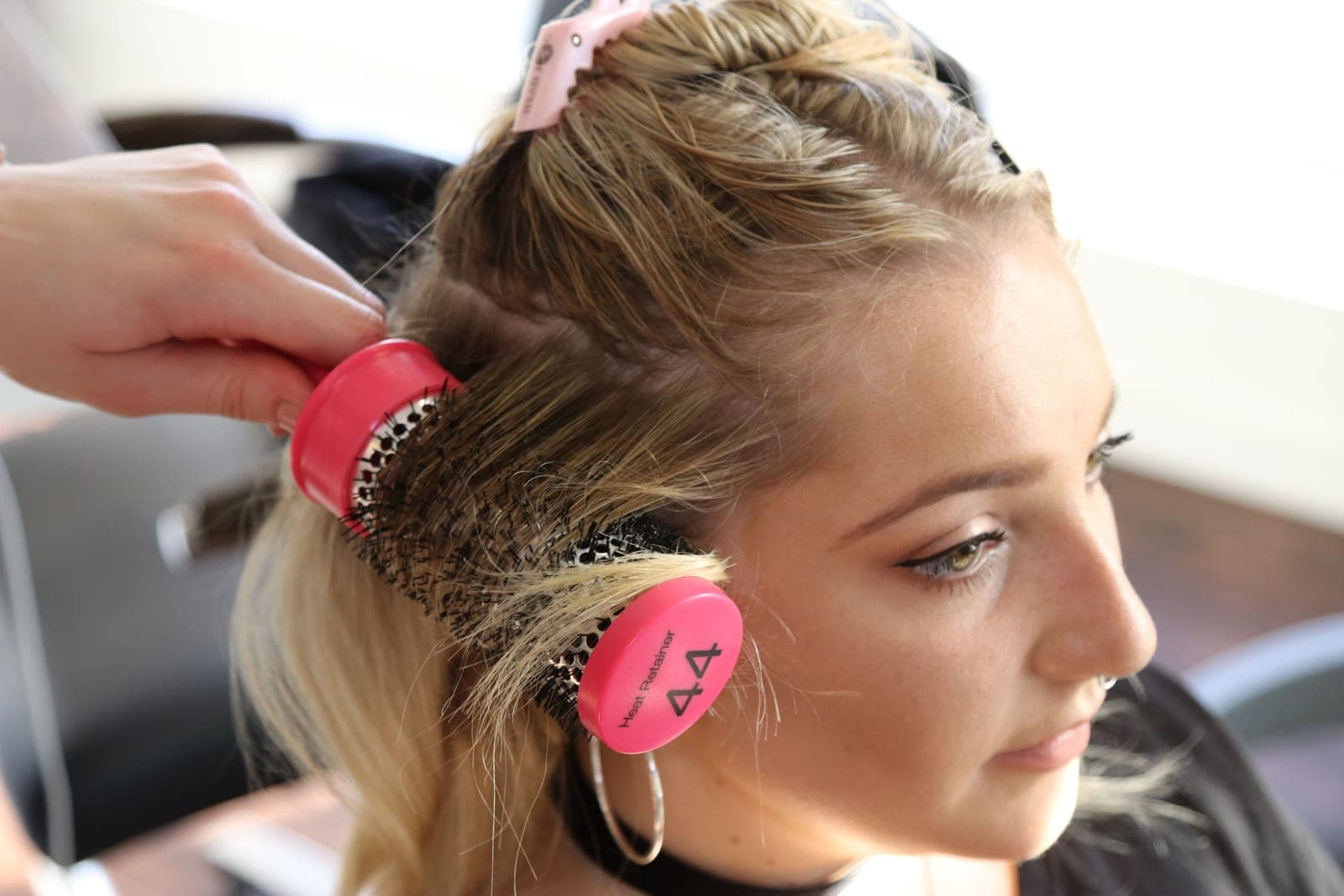
Best Overall
The Best Blow-Dry Brushes
Six blow-dry and hot-air brushes ranked on barrel diameter, bristle design and published temperature, from budget to multi-styler.
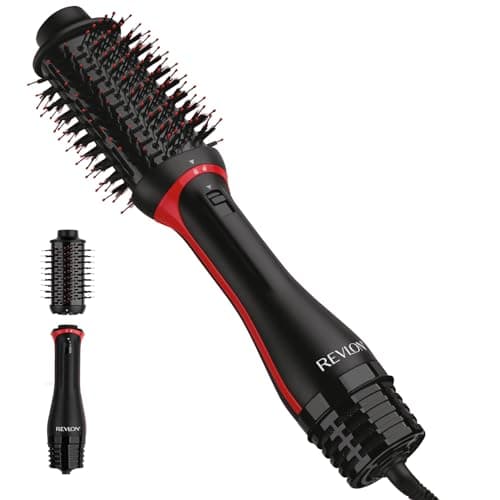
Top pick: Revlon One-Step Volumizer PLUS 2.0

Fine Hair Guide
Hair Styling Tools for Fine and Thin Hair
Every dryer, flat iron, brush and curler we recommend for fine and thin hair, with the temperature rules that apply across all of them.
Top pick: amika Hair Blow Dryer Brush 2.0
Best for Fine Hair
The Best Hair Dryers for Fine and Thin Hair
Five dryers for fine and thin hair, ranked on published temperature ceilings and weight rather than on wattage nobody needs.
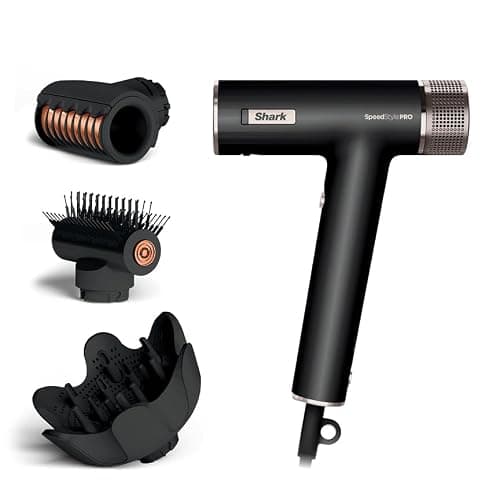
Top pick: Shark SpeedStyle Pro Ionic Dryer (HD732)

Blowout Technique
How to Get a Blowout at Home
The salon blowout method step by step — sectioning, tension and the cool shot — with the tools that make each stage easier.
Top pick: Revlon One-Step Volumizer PLUS 2.0
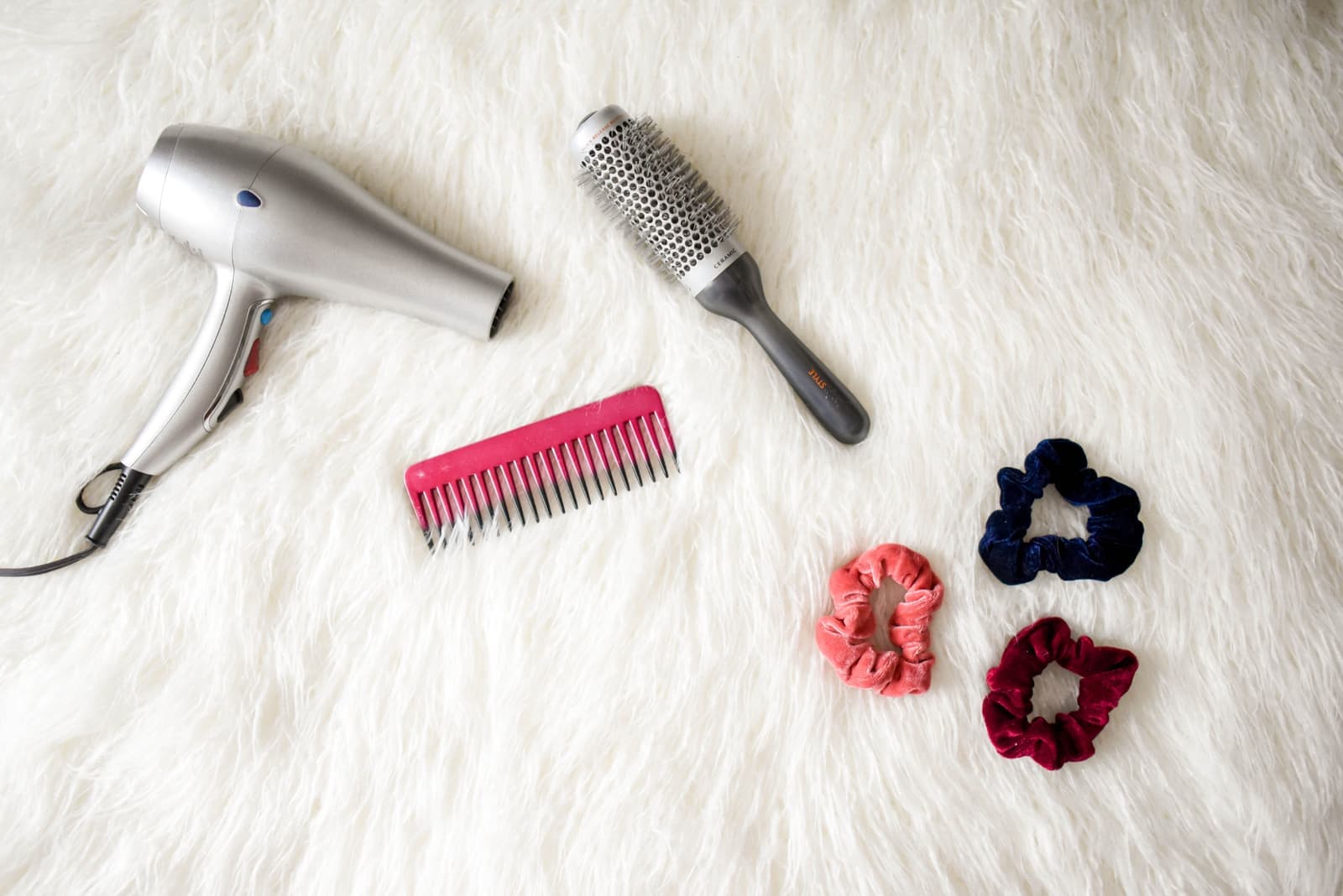
Best Value Blowout
Revlon One-Step Volumizer Review
The Revlon One-Step read from its published specs, including the PLUS-versus-original difference and the usage mistake behind most complaints.
Top pick: Revlon One-Step Volumizer PLUS 2.0