TYMO Ring Review
Almost no brush tells you how hot it gets. This one names every setting in degrees, which makes it the easiest tool in its category to use responsibly.
How this page is funded: the buy links below are affiliate links, and Heat Index earns a commission on qualifying purchases at no cost to you. Nothing on this page was supplied by a manufacturer, and commission plays no part in the ranking — read the full disclosure. Picks are chosen from published specifications, not from hands-on testing; the method is written down so you can check it. Prices last verified October 22, 2026.
Straightening brushes are the worst-documented category on this site. They sit in direct contact with hair, they are marketed to people with fragile or textured hair, and most of them publish nothing about temperature at all — just a number of settings and a promise.
The TYMO Ring is the exception, and that is the entire reason it is reviewed here. It names all five of its settings in degrees and prints a hair type beside each one on the tool itself.
Every published specification
| Specification | Published figure |
|---|---|
| Temperature settings | Five: 266F, 302F, 338F, 374F and 410F, labeled by hair type on the tool |
| Coating | Keratin-infused ceramic |
| Heating surface | 25 ceramic heating plates with 3D heating teeth |
| Heat-up | 20 seconds |
| Voltage | Dual voltage |
| Safety | Anti-scald protection and a 30-minute auto shut-off |
| Cord | 360-degree swivel |
| Wattage | Not published |
| Weight | Not published |
Two absences are worth naming: no wattage and no weight. Neither is critical on a brush — you are not judging drying power and you are not holding it above your head — but both are cheap to publish and their absence is the category norm showing through.
Quick picks
Ranked, with the reasoning underneath. Tap any row to jump to that write-up; tap the price to check it on Amazon. Prices come from the live layer, never from this page.
| # | Product | Best for | Type | Price |
|---|---|---|---|---|
| 1 | 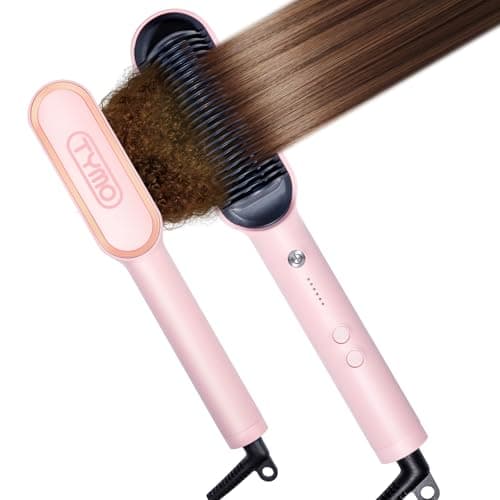 TYMO Ring Hair Straightener BrushFive published temperatures from 266F to 410F, each labeled for a hair type, on a tool that smooths rather than clamps. That last part is the whole point. | Smoothing thick hair without pressing it flat | Straightening brush | |
| 2 | 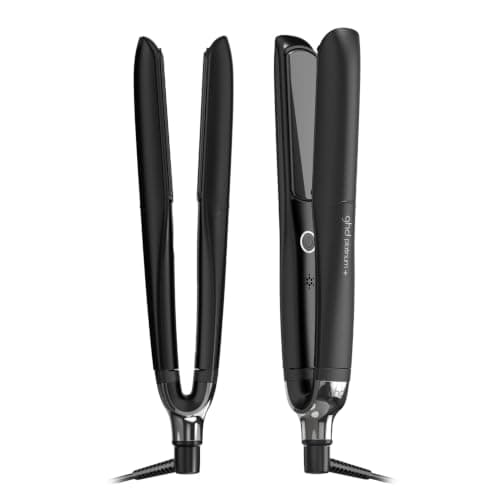 ghd platinum+ StylerOne temperature, 365F, held by a sensor system reading 250 times a second. It is the opposite design philosophy to a 450F iron and it is the better one. | A single temperature chosen for hair health, not marketing | Predictive-heat iron | Check price#ad |
| 3 | 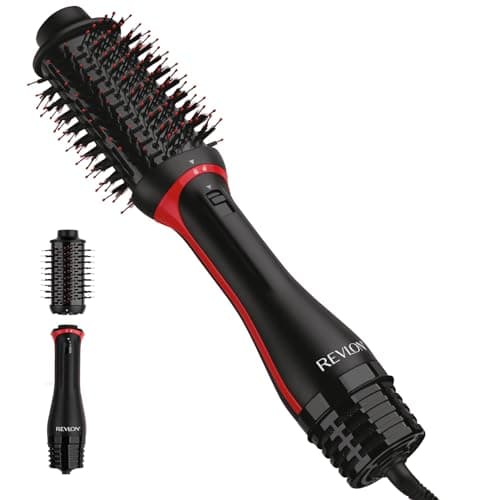 Revlon One-Step Volumizer PLUS 2.0A 2.4-inch oval barrel at 1,100W and 15 ounces: the tool that made at-home blowouts a normal thing, in its most refined version. | A first blow-dry brush that does not need technique | One-step dryer brush |
#1 · Smoothing thick hair without pressing it flat
TYMO Ring Hair Straightener Brush
Five published temperatures from 266F to 410F, each labeled for a hair type, on a tool that smooths rather than clamps. That last part is the whole point.
| Temperature settings | 5 settings — 266F, 302F, 338F, 374F and 410F, labeled by hair type on the toolsource |
|---|---|
| Coating | Keratin-infused ceramicsource |
| Heating surface | 25 ceramic heating plates, 3D heating teethsource |
| Heat-up | 20 secondssource |
| Voltage | Dual voltagesource |
| Safety | Anti-scald protection, 30-minute auto shut-offsource |
| Cord | 360-degree swivel cordsource |
What those numbers mean
A brush cannot press hair between two plates, so it cannot deliver a poker-straight finish. What it does instead is smooth the cuticle with much less mechanical stress, which is why it suits hair that breaks under a clamp.
Publishing all five temperatures with a hair type attached to each is unusually honest labeling. It means the tool is telling you not to use 410F on fine hair rather than leaving you to guess.
Twenty seconds to heat is faster than any iron here, and on a weekday that is the difference between using it and not.
What it does well
- All five temperatures published and labeled by hair type
- Far less mechanical stress than a clamping iron
- 20-second heat-up
- Anti-scald protection and a 30-minute auto shut-off
What it does not
- Cannot produce a fully straight, pressed finish
- The bristles need care around the scalp even with anti-scald
- 410F top setting is above the thresholds in the research
Skip this one if: Skip it if you want a sleek, glass-straight result or a silk press. A brush smooths; it does not press, and no setting on it will change that.
#2 · A single temperature chosen for hair health, not marketing
ghd platinum+ Styler
One temperature, 365F, held by a sensor system reading 250 times a second. It is the opposite design philosophy to a 450F iron and it is the better one.
| Temperature | Optimized constant 365F across the platessource |
|---|---|
| Heat regulation | Ultra-zone predictive technology monitors heat 250 times a secondsource |
| Adaptation | Recognizes hair thickness and speed of styling and adjusts accordinglysource |
| Plates | Precision-milled ceramic plates with a wishbone hinge and round barrelsource |
| Auto shut-off | After 30 minutessource |
| Voltage | Universal voltagesource |
What those numbers mean
365F as a fixed target is a deliberate rejection of the specification race. It sits under every temperature the thermal-damage literature associates with cortex damage, and the tool simply will not let you go higher.
The interesting part is the 250-readings-per-second control loop. A conventional iron cools when cold hair hits it and then overshoots on the way back; a fast loop holds the number, which is why one pass at 365F can beat two at 400F.
ghd publishes percentage claims about stronger hair, more shine and color protection. Those are the manufacturer's own claims from their own testing, and we are not in a position to verify them, so treat them as positioning rather than data.
What it does well
- One well-chosen temperature, under every threshold in the cited research
- 250 temperature readings per second, the fastest control loop published here
- Rounded barrel makes curls and waves possible with the same tool
- Universal voltage and a 30-minute auto shut-off
What it does not
- No adjustment at all, so very coarse hair may need more passes
- Premium price for a single-temperature tool
- The percentage benefit claims are the manufacturer's own and unverifiable from outside
Skip this one if: Skip it if you have dense, coarse or 4C hair and want a silk-press result in one pass. 365F is a health-first ceiling, and on that hair type it will mean revisiting sections.
#3 · A first blow-dry brush that does not need technique
Revlon One-Step Volumizer PLUS 2.0
A 2.4-inch oval barrel at 1,100W and 15 ounces: the tool that made at-home blowouts a normal thing, in its most refined version.
| Power | 1,100W motorsource |
|---|---|
| Barrel | 2.4-inch oval barrelsource |
| Settings | Four settings — low, medium, high and coolsource |
| Barrel materials | Ceramic, titanium and tourmaline, with ionic technologysource |
| Weight | 15 ozsource |
What those numbers mean
An oval barrel is doing something a round brush cannot: the flat faces smooth while the curved ends bend the end of the section. That is why one pass produces both smoothness and a bit of shape.
1,100W is modest next to a standalone dryer, and it should be. This tool is in contact with your hair rather than held six inches away, so the same wattage delivers far more heat to the strand.
Fifteen ounces is the specification that decides whether you finish. A brush you hold at head height for twenty minutes is an endurance event if it is heavy.
What it does well
- Combines the dryer and the round brush, which removes the two-handed coordination problem
- Oval barrel smooths and shapes in one pass
- A genuine cool setting for setting the style
- 15 oz, light enough for a long session
What it does not
- Revlon does not publish an actual temperature for any setting
- A one-step brush cannot match a separate dryer and round brush for control
- 2.4 inches is too large for short hair or a fringe
Skip this one if: Skip it if your hair is soaking wet and very thick. These brushes are designed for hair towel-dried to roughly 80 percent, and starting from wet is where people conclude they are underpowered.
The settings chart is the product
Here is what those five numbers mean against the thermal thresholds this site uses everywhere.
| Setting | Against the research |
|---|---|
| 266F | Below the 302F point at which cuticle degradation is reported to begin. The fine and damaged-hair setting |
| 302F | Exactly at the reported cuticle threshold |
| 338F | Above the cuticle threshold, well below the cortex one. The normal working setting |
| 374F | Approaching the 392F cortex threshold |
| 410F | Above the reported cortex threshold. Coarse or 4C hair only, and not as a default |
The 266F floor is the genuinely useful number. Our temperature guide puts fine and bleached hair at 250-300F and notes that most tools will not go that low. This one does, and it labels it on the housing so you do not have to remember which click is which.
What a brush does that an iron does not
A flat iron clamps a section between two plates and presses. A brush drags heated teeth through hair with far less pressure over a much wider area. That difference decides who each tool is for, and it is not a quality difference.
- A brush smooths; it does not press. The cuticle lies down, the frizz drops, and the hair keeps its movement. For wavy or thick hair that never wanted to be poker-straight, that is the desired outcome rather than a compromise.
- Less mechanical stress per pass. No clamping force, which matters on hair that is already fragile at the bends — the 4C and coily case.
- Faster on a full head. A wider working surface covers more hair per stroke, which is why this format took over the market for everyday smoothing.
- It cannot deliver glass-straight. No setting changes this. If you want a sleek finish or a silk press, you want an iron and this is the wrong purchase.
The 25 plates and the 3D teeth
TYMO publishes 25 ceramic heating plates and 3D heating teeth, which is a construction claim rather than a performance one. The intent is even heat across the whole brush head rather than hot spots at the center, and teeth that contact hair from more than one angle as they pass through.
We cannot verify either as an outcome — nobody publishes a plate-temperature map for a brush — so treat it as what it is: a description of how the tool is built, which is more than most brushes in this price range disclose. The anti-scald protection is the related safety claim, and on a tool you drag against your scalp it is a sensible one.
Dual voltage, and the detail that makes it a travel tool
TYMO publishes dual voltage, which is the specification that decides whether a styling tool can leave the country at all. A plug adapter changes the shape of the pins and nothing else; a single-voltage 120V tool on 240V mains is destroyed almost immediately.
Combined with a 20-second heat-up and a 30-minute auto shut-off, that makes this an unusually low-anxiety tool to pack. Travel flat irons covers the wider field, and the same voltage rule applies to every tool on it.
Twenty seconds, and why it changes the routine
A 20-second heat-up sounds like a convenience specification and behaves like a behavioral one. A tool that is ready before you have finished sectioning your hair gets used on the days you are in a hurry; a tool that takes two minutes gets skipped, and skipped styling is how people end up brushing dry frizz instead.
It pairs with the 30-minute auto shut-off in a way worth noticing. Fast to heat and automatic to stop is the combination that makes a heated tool safe to keep on a bathroom shelf rather than packed away — which, on a brush you might use for two minutes before leaving the house, is most of whether you actually own it or merely bought it.
What the specifications cannot tell you
- How accurate the five settings are. TYMO publishes the numbers but no tolerance, and no independent plate-temperature measurement exists to check them against.
- How long the keratin-infused ceramic coating lasts. No coating lifespan is published by anyone in this category.
- How it performs on 4C hair specifically, which is the hair type the low settings most obviously serve and the one where a wrong answer costs the most.
- Wattage, so heat-up consistency across a long session is unverifiable from the spec sheet.
Who should skip it
Skip it if you want a glass-straight finish or a silk press. This is the limitation that matters and no setting fixes it. A brush lays the cuticle down; it does not compress the hair. The ghd Platinum+ holds one constant 365F and will give you the sleek result instead.
Skip it if your hair is already dry when you start and very fine. The lowest setting is genuinely low, but a heated brush still drags, and on fine hair a lower-stress option is a blow-dry brush used on damp hair — the Revlon One-Step dries and shapes in the same pass.
Skip it if you need the top setting. If your hair genuinely needs 410F to respond, you are at the top of this tool's range every time, which means no headroom and a setting above the reported cortex threshold. A titanium iron is built for that hair — see flat irons for thick hair.
The verdict
For smoothing thick, wavy or textured hair without flattening it, this is the easiest tool on the site to use responsibly, purely because it tells you what it is doing. Five named temperatures with hair types printed beside them removes the guesswork that makes every other brush in this price range a gamble.
What it will never do is press hair flat, and buying it expecting that is the one way to be disappointed. The straightening brushes roundup covers the format against its alternatives.
Questions people actually ask
Is the TYMO Ring worth it?
If you want to smooth thick, wavy or textured hair without pressing it flat, yes - and its five published temperatures (266F to 410F, each labeled by hair type on the tool) make it far easier to use responsibly than brushes that publish nothing. If you want a sleek, glass-straight finish or a silk press, no setting on it will get you there and you want a flat iron instead.
What temperature should I use on the TYMO Ring?
The lowest that works on your hair. Its settings are 266F, 302F, 338F, 374F and 410F, and each is labeled with a hair type on the housing. For context, published research reports cuticle damage beginning around 302F and cortex damage around 392F - so the 266F setting sits below both, and the top 410F setting sits above the higher one and should be treated as a coarse-hair exception rather than a default.
Does a straightening brush damage hair less than a flat iron?
It applies less mechanical stress, because there is no clamping force and the pressure is spread over a wider area. That is a genuine advantage on fragile or textured hair. Heat is still heat though - a brush at 410F is applying 410F - so the temperature discipline matters exactly as much, which is why a brush that publishes its settings is worth more than one that does not.
Is the TYMO Ring dual voltage?
Yes, TYMO publishes dual voltage, which means it can be used abroad with only a plug adapter rather than a voltage converter. That matters because a plug adapter changes the shape of the pins and nothing else - a single-voltage 120V tool plugged into 240V mains is destroyed almost immediately.
Can the TYMO Ring straighten 4C hair?
It can smooth it, and the low end of its range is genuinely useful for hair that is fragile at the bends. What it cannot do is deliver a silk press, which needs the compression a flat iron provides. Our flat irons for 4C hair and silk press page covers that job specifically, and the honest answer is that these are two different results rather than two grades of the same one.
Sources
Every figure on this page traces to one of these. If a number here disagrees with the manufacturer, the manufacturer is right and we want to know — tell us.
Read next
Reviews
Single-Product Reviews
Eleven products read closely from their published specifications, each with a reasons-to-skip section and every figure linked to its source.
Top pick: Dyson Airwrap i.d. Multi-Styler and Dryer
Best Brush
The Best Straightening Brushes
Four straightening and smoothing brushes ranked on published temperature and bristle design, with an honest account of the finish they cannot produce.
Top pick: TYMO Ring Hair Straightener Brush
Temperature Chart
Flat Iron Temperature by Hair Type
The temperature-by-hair-type chart, set against the damage thresholds published research reports, with irons that let you hit them.
Top pick: ghd platinum+ Styler
Best for Silk Press
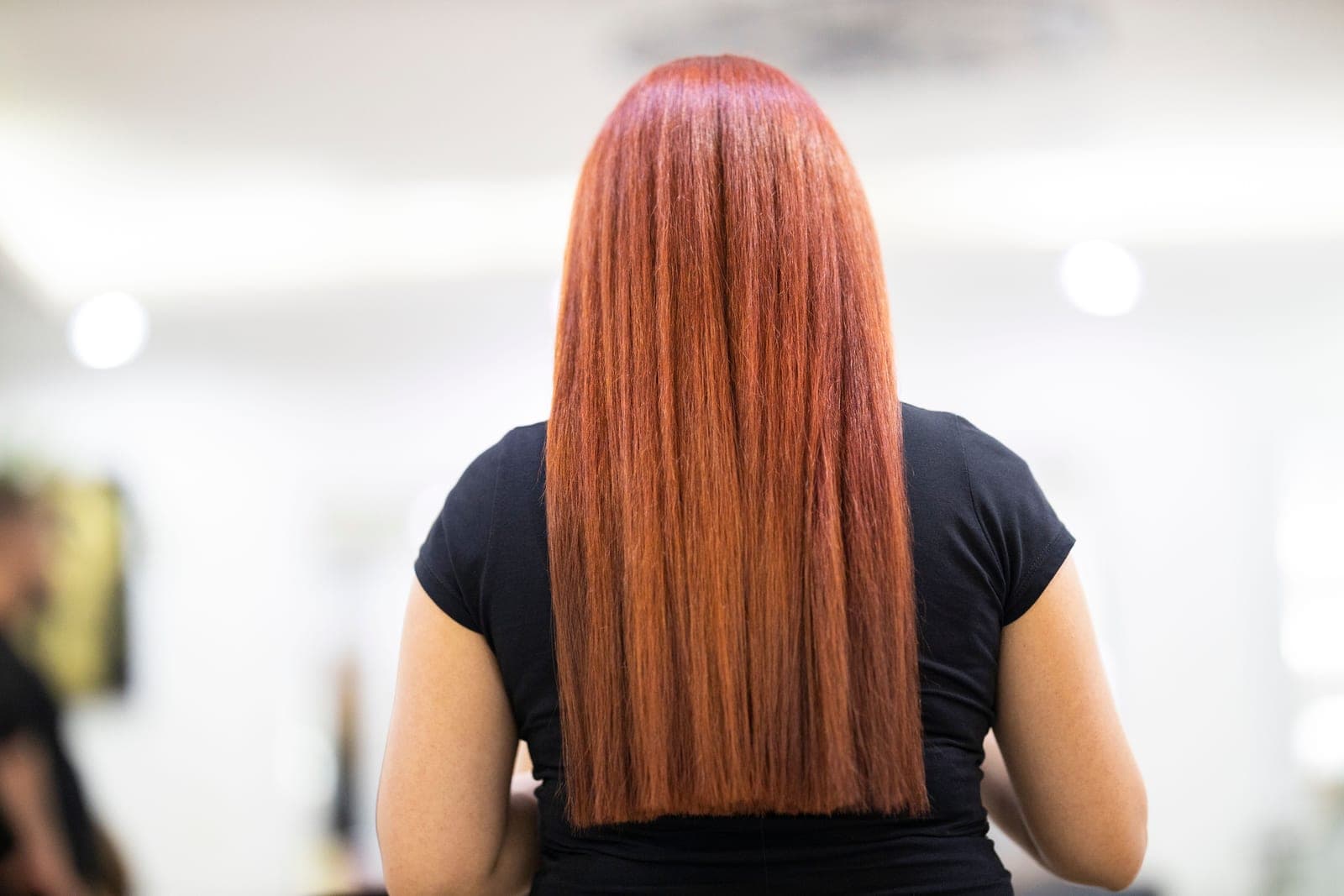
The Best Flat Irons for 4C Hair and Silk Press
Five flat irons for 4C hair and silk pressing, ranked on heat recovery, plate length and control — with a straight answer on temperature.
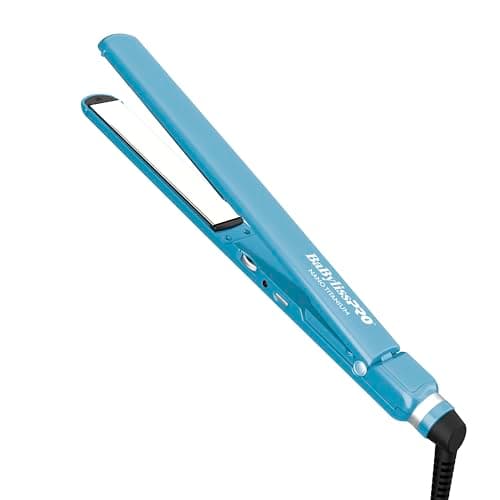
Top pick: BaBylissPRO Nano Titanium 1-inch Ultra-Thin Straightener

Best for Travel
The Best Travel and Dual Voltage Flat Irons
Four genuinely dual-voltage flat irons ranked for travel, with the adapter-versus-converter mistake explained and the label to check before you pack.
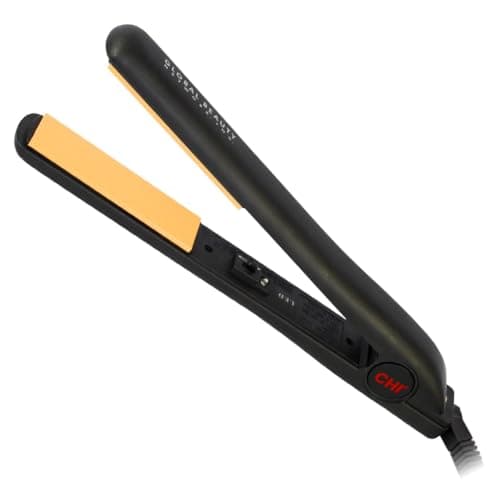
Top pick: CHI Original 1-inch Ceramic Hairstyling Iron (GF1001)
Best for Thick Hair
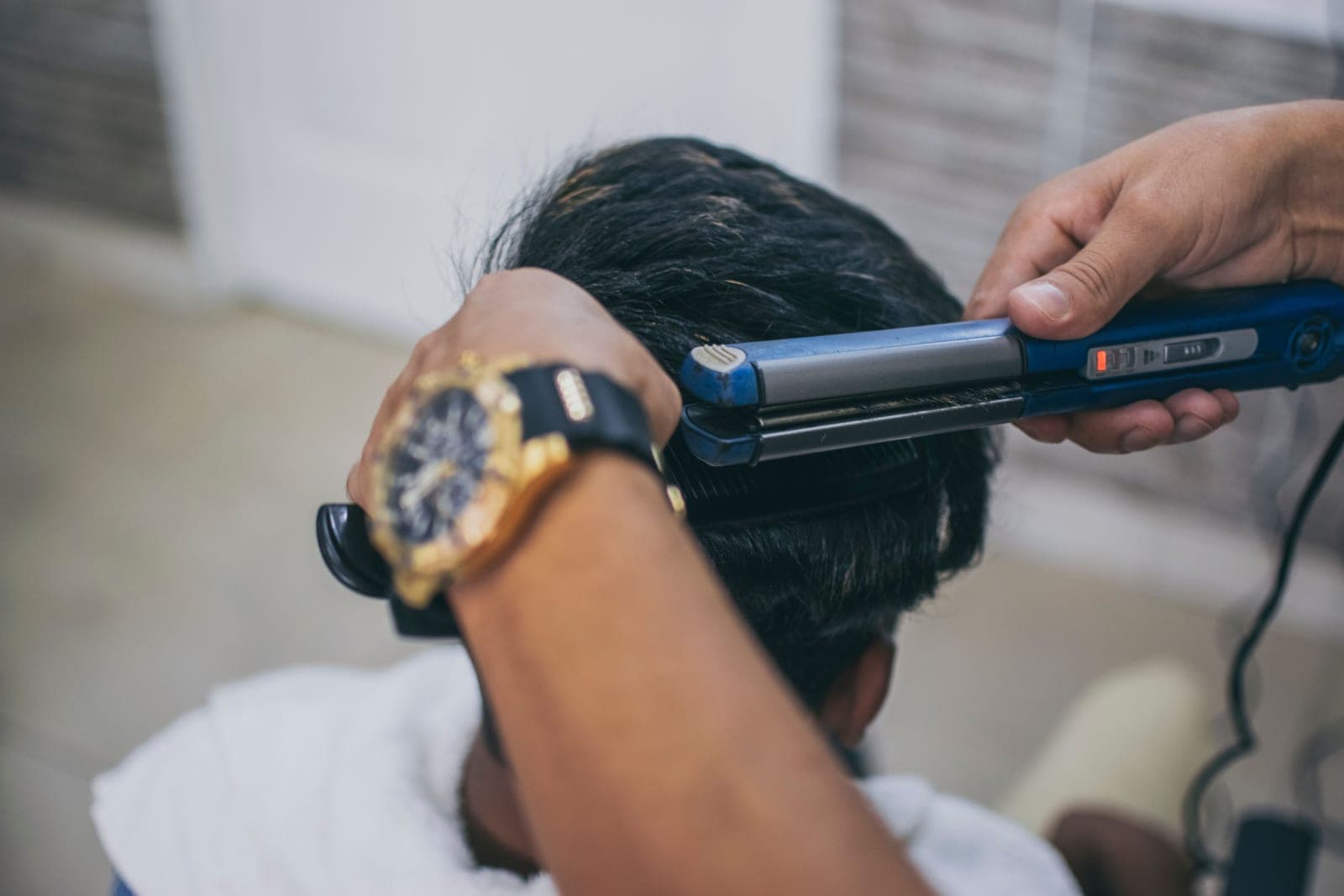
The Best Flat Irons for Thick Hair
Five flat irons for thick and coarse hair, ranked on plate length and heat recovery — the two specs that cut pass count.
Top pick: BaBylissPRO Nano Titanium 1-inch Ultra-Thin Straightener