Dyson Supersonic Review
Set aside the design and the price for a moment. This is the only dryer on the market that tells you exactly how hot each setting is and how much air it moves.
How this page is funded: the buy links below are affiliate links, and Heat Index earns a commission on qualifying purchases at no cost to you. Nothing on this page was supplied by a manufacturer, and commission plays no part in the ranking — read the full disclosure. Picks are chosen from published specifications, not from hands-on testing; the method is written down so you can check it. Prices last verified October 23, 2026.
Almost every hair dryer sold has three heat settings labeled with dots, bars or the words low, medium and high. Not one of those labels tells you a temperature, which means you cannot compare two dryers on the specification that decides whether they damage your hair.
The Supersonic publishes 212F, 176F, 140F and constant cold. That is the single most useful thing about it and it is the reason it appears on more pages of this site than any other dryer.
Quick picks
Ranked, with the reasoning underneath. Tap any row to jump to that write-up; tap the price to check it on Amazon. Prices come from the live layer, never from this page.
| # | Product | Best for | Type | Price |
|---|---|---|---|---|
| 1 | 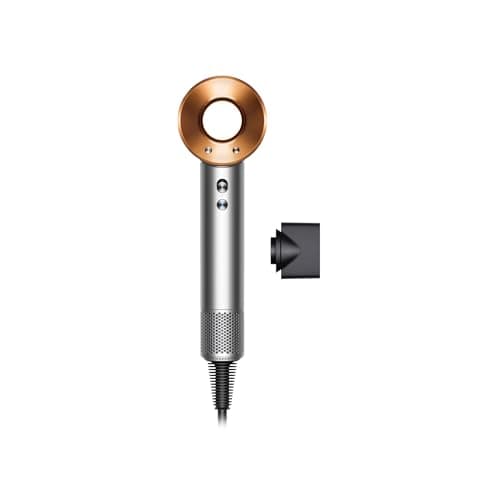 Dyson Supersonic Origin Hair DryerThe one dryer that tells you what each heat setting actually is in degrees, which makes it the only one in the category you can plan a routine around. Dyson Supersonic Origin Hair DryerThe one dryer that tells you what each heat setting actually is in degrees, which makes it the only one in the category you can plan a routine around. | Published temperatures on every heat setting | 1,600W dryer | |
| 2 | 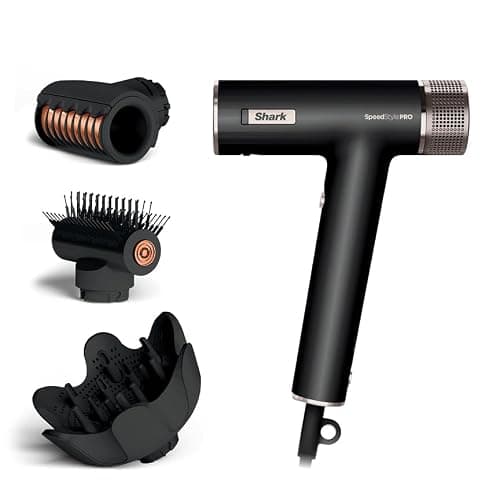 Shark SpeedStyle Pro Ionic Dryer (HD732)The rare dryer that publishes the numbers that matter: every heat setting in degrees, plus a ceiling it says it never exceeds at 230F, which is below every damage threshold in the literature. Shark SpeedStyle Pro Ionic Dryer (HD732)The rare dryer that publishes the numbers that matter: every heat setting in degrees, plus a ceiling it says it never exceeds at 230F, which is below every damage threshold in the literature. | A published temperature ceiling you can actually check | High-velocity dryer |
#1 · Published temperatures on every heat setting
Dyson Supersonic Origin Hair Dryer
The one dryer that tells you what each heat setting actually is in degrees, which makes it the only one in the category you can plan a routine around.
| Power | 1,600W at full powersource |
|---|---|
| Heat settings | 4 settings — 212F (100C), 176F (80C), 140F (60C), and constant coldsource |
| Speed settings | 3 — fast drying, regular drying, gentle dryingsource |
| Airflow | Up to 41 liters per secondsource |
| Heat regulation | Measures air temperature over 40 times a secondsource |
| Dimensions | 9.6 in long, 3.9 in wide, 3.1 in deepsource |
What those numbers mean
Four heat settings published as 212F, 176F and 140F plus cold is the disclosure the rest of the category refuses to make. It means you can pick a setting against a damage threshold instead of against a vague label.
Note where those numbers sit. Even the hottest setting, 212F, is below the 302F figure Shark names as its damage line and far below the temperatures at which the literature reports cuticle degradation.
1,600W is less nominal power than a US 1,875W dryer, and 41 l/s of airflow is how it compensates. Again: air speed, not temperature.
What it does well
- Publishes an actual temperature for every heat setting, uniquely in this category
- Airflow figure published in liters per second
- Top setting of 212F is below every damage threshold in the cited research
- Attachments attach magnetically and can be changed mid-dry
What it does not
- Costs several times what a competent 1,875W dryer costs
- 1,600W nominal will feel slower than an AC dryer on very thick hair
- Dyson does not sell through every retailer, so availability moves around
Skip this one if: Skip it if the budget is the constraint rather than the information. Everything the Supersonic does for hair health can be approximated by running a cheaper dryer on medium heat and high speed, which costs nothing.
#ad · how this is funded · price as of October 23, 2026
#2 · A published temperature ceiling you can actually check
Shark SpeedStyle Pro Ionic Dryer (HD732)
The rare dryer that publishes the numbers that matter: every heat setting in degrees, plus a ceiling it says it never exceeds at 230F, which is below every damage threshold in the literature.
| Heat settings | Three published settings — low 65C, medium 80C, high 100C — plus a cool shot and a permanent cool modesource |
|---|---|
| Temperature ceiling | Measures and regulates temperature 1,000 times a second, never exceeding 230F, and never approaching 302Fsource |
| Power | 1,600 watts at 120 voltssource |
| Weight | 1.674 lbsource |
| Noise | About 83 decibelssource |
| Cord | Approximately 8 ftsource |
| Scalp Shield mode | Reduces air temperature to a level Shark states is optimized for scalp comfort and root drying, developed with dermatologistssource |
| Attachments | Three accessories per dryer, chosen from the DefrizzFast diffuser, QuickSmooth brush, Express Touchup brush, Lift & Stretch wide-tooth comb, Turbo concentrator and FrizzFighter finishing toolsource |
What those numbers mean
A stated ceiling of 230F is the single most useful specification on any dryer, and almost nobody publishes one. It puts the airflow well under the 302F figure Shark itself names as the damage line and far under the cuticle-degradation range in the research.
Shark also names each setting in degrees — 65C, 80C and 100C — which is disclosure the rest of the category mostly refuses. It means you can pick a setting against a damage threshold rather than against an unlabeled dial, and note that even the top setting lands under that 230F ceiling.
The accessory list is a choice rather than a fixed bundle, which matters more than it sounds. The DefrizzFast diffuser is the attachment that earns this dryer its place on curly and coily pages, so check it is one of the three in the configuration you buy.
What it does well
- Publishes a temperature ceiling AND every heat setting in degrees
- Published wattage, weight, cord length and even a decibel figure
- Regulates 1,000 times a second, the same control loop as the FlexStyle
- Scalp Shield mode is aimed squarely at root drying on fragile new growth
What it does not
- Shark publishes no airflow figure, so drying speed cannot be checked on paper
- 1,600W is less power than an 1,875W AC dryer, and the low ceiling compounds that
- Three accessories is a choice, so the diffuser is not guaranteed to be in the box
- The retail listing says 1,750W where Shark's own support article says 1,600W
Skip this one if: Skip it if you want maximum heat for a fast, poker-straight blowout on coarse hair. The ceiling that protects fragile hair is the same ceiling that will frustrate you here.
#ad · how this is funded · price as of October 23, 2026
Every published specification
| Specification | Published figure |
|---|---|
| Power | 1,600W at full power |
| Heat settings | 212F (100C), 176F (80C), 140F (60C), and constant cold |
| Speed settings | Three — fast drying, regular drying, gentle drying |
| Airflow | Up to 41 liters per second |
| Heat regulation | Measures air temperature over 40 times a second |
| Dimensions | 9.6 in long, 3.9 in wide, 3.1 in deep |
Airflow published in liters per second is the second unusual disclosure here. It is the figure that explains how a 1,600W dryer competes with 1,875W ones: it dries by moving a large volume of air rather than by heating a smaller volume more.
What 212F means against the research
Published research on thermally treated hair reports cuticle degradation beginning around 150C (302F) and cortex damage from around 200C (392F). The Supersonic's hottest setting is 212F — a hundred degrees below the first threshold.
That reframes the usual concern about blow drying. Whatever damage a Supersonic does is not thermal denaturation of keratin; it is the mechanical effect of air on the cuticle, which is addressed by lower speeds and better technique rather than by lower heat. The heat damage guide covers the difference.
The running-cost arithmetic
cost = (watts / 1000) x hours x rate per kWh
(1600 / 1000) x 0.17 h x $0.1834 = about $0.05 per 10-minute dry
Using the US average residential rate of 18.34 cents per kilowatt-hour reported by the EIA for June 2026. Roughly 5 cents a session, or about $18 a year for daily use — which is to say the electricity is never the interesting part of this purchase. Full working in what a blow dry costs to run.
What the specs do not cover
- Which attachments are in the box. This varies by configuration, and some bundles include a diffuser while others do not. Check before buying if you have curls.
- Durability. No manufacturer publishes a lifespan and we are not going to estimate one.
- Noise. Dyson does not publish a decibel figure for the Supersonic, though Laifen does for the Swift.
- Whether it feels worth it. That is a judgment about money, and the spec sheet cannot settle it.
Who should skip it
Skip it if budget is the constraint rather than the information. Everything the Supersonic does for hair health can be approximated by running a cheaper dryer on medium heat and high speed, and the alternatives are scored here on which of its published specs each one actually replaces. That costs nothing, and the Shark SpeedStyle publishes a 230F ceiling for considerably less.
Skip it if you have very thick hair and want the fastest possible dry. 1,600W is real but it is below the 1,875W and 2,000W tools on the thick hair page, and airflow only partly compensates on genuinely dense hair.
The verdict
The Supersonic is the best-documented dryer in the category and the disclosure is not a marketing exercise — it lets you style against a threshold rather than against a guess. Whether that documentation and the engineering behind it justify the price against a Shark that also publishes a ceiling is a money question, and we will not pretend the specification sheet answers it for you.
Questions people actually ask
Is the Dyson Supersonic worth the money?
It is the only dryer that both publishes an actual temperature for every heat setting — 212F, 176F, 140F and cold — and an airflow figure in liters per second. If you are trying to style around a damage threshold rather than trusting an unlabeled dial, that disclosure is genuinely valuable. Whether it is worth the gap over a Shark SpeedStyle that also publishes a ceiling is a judgment about money.
How hot does the Dyson Supersonic get?
Dyson publishes four settings: 212F (100C), 176F (80C), 140F (60C) and constant cold, with air temperature measured over 40 times a second. The hottest setting is 212F, which is around a hundred degrees below the roughly 302F at which published research reports cuticle degradation beginning.
How much does it cost to run a Dyson Supersonic?
At 1,600W and the US average residential rate of 18.34 cents per kilowatt-hour reported by the EIA for June 2026, a ten-minute dry costs roughly 5 cents — about $18 a year for daily use. The electricity is never the significant cost of owning one of these.
Is the Dyson Supersonic good for thick hair?
It works, but it is not the fastest option. At 1,600W it sits below the 1,875W and 2,000W dryers on our thick hair page, and while its 41 liters per second of airflow compensates substantially, on genuinely dense hair a powerful AC dryer will finish sooner. Its advantage is heat control rather than raw drying speed.
Sources
Every figure on this page traces to one of these. If a number here disagrees with the manufacturer, the manufacturer is right and we want to know — tell us.
- Dyson Supersonic hair dryer
- Shark SpeedStyle Pro ionic dryer, curly and coily (HD732) — product listing
- Thermal-induced changes in cuticle and cortex of chemically treated hair, PubMed Central
- U.S. Energy Information Administration, Electric Power Monthly table 5.3 — average retail price of electricity to residential customers
Read next
Reviews
Single-Product Reviews
Eleven products read closely from their published specifications, each with a reasons-to-skip section and every figure linked to its source.
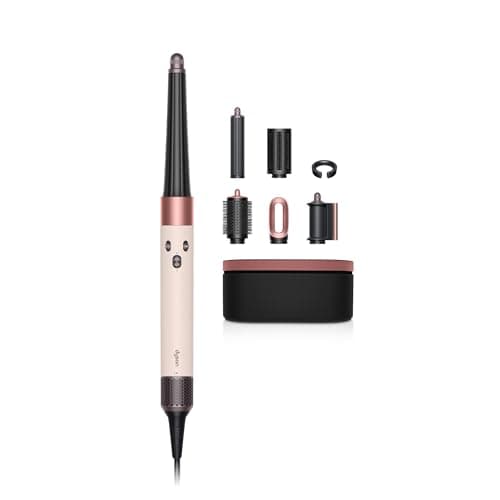
Top pick: Dyson Airwrap i.d. Multi-Styler and Dryer

Best Overall
The Best Hair Dryers, Chosen by Hair Type
Nine dryers compared on published wattage, airflow and temperature ceilings, then routed to the hair type each one genuinely suits.
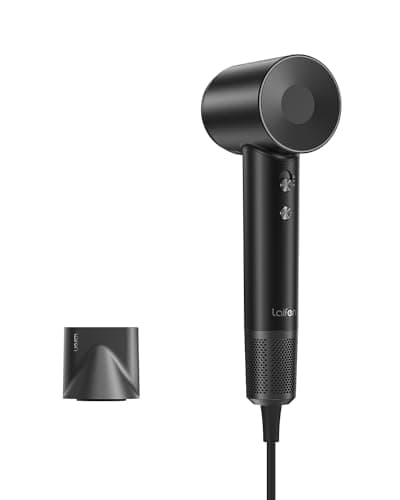
Top pick: Laifen Swift High-Speed Hair Dryer
Dyson Verdict
Dyson Airwrap vs Dyson Supersonic
The Airwrap and Supersonic compared on published specs, with a clear answer on which of the two you actually need.
Top pick: Dyson Supersonic Origin Hair Dryer
Best for Damaged Hair
The Best Hair Dryers for Damaged and Bleached Hair
Five dryers ranked strictly on published temperature disclosure — the only specification that matters when the cuticle is already compromised.
Top pick: Dyson Supersonic Origin Hair Dryer
Cost Calculator
How Many Watts Should a Hair Dryer Be?
What hair dryer wattage means, what a blow dry costs on the current EIA average rate, and why airflow matters more than watts.
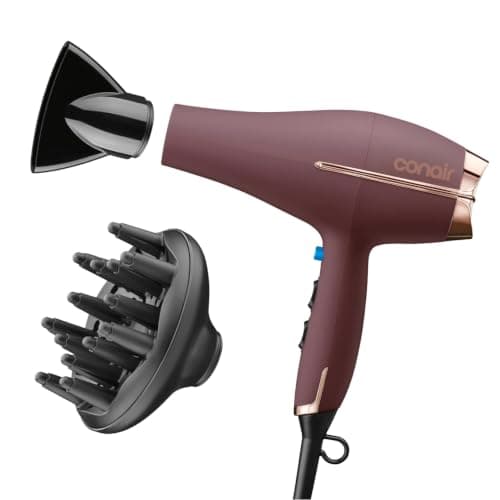
Top pick: Conair InfinitiPro 1875W Salon Performance AC Motor Dryer (259BDNRY)

Fine Hair Guide
Hair Styling Tools for Fine and Thin Hair
Every dryer, flat iron, brush and curler we recommend for fine and thin hair, with the temperature rules that apply across all of them.
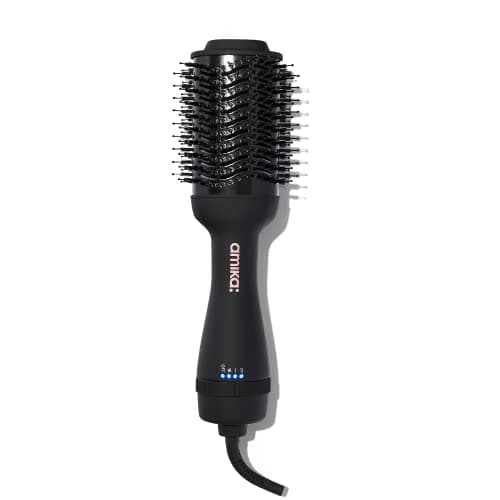
Top pick: amika Hair Blow Dryer Brush 2.0