Does Blow Drying Damage Hair?
The answer is more interesting than yes or no, because air drying is not the risk-free comparison people assume it is.
How this page is funded: the buy links below are affiliate links, and Heat Index earns a commission on qualifying purchases at no cost to you. Nothing on this page was supplied by a manufacturer, and commission plays no part in the ranking — read the full disclosure. Picks are chosen from published specifications, not from hands-on testing; the method is written down so you can check it. Prices last verified October 22, 2026.
Short answer: yes, but much less than a flat iron, and not always more than air drying. A dryer on a published setting reaches 212F to 230F; a flat iron reaches 330F to 450F in direct contact with the fiber. Published research reports cuticle degradation beginning around 302F, which puts most dryers below the threshold and most irons above it.
That is the 40-second version. The rest of this page is why the comparison people actually make — blow drying against air drying — does not resolve the way they expect.
What the temperatures actually are
| Tool or threshold | Temperature | Source of the figure |
|---|---|---|
| Dyson Supersonic, hottest setting | 212F | Manufacturer, published |
| Shark SpeedStyle, stated ceiling | Never exceeds 230F | Manufacturer, published |
| amika blow-dry brush, hottest setting | 230F | Manufacturer, published |
| Cuticle degradation begins | ~302F | Published research |
| Typical flat iron working range | 330-400F | Manufacturer, published |
| Cortex damage begins | ~392F | Published research |
| Flat iron maximum on many models | 450F | Manufacturer, published |
The gap between rows three and four is the whole answer. A dryer that publishes its figures is operating below the temperature at which the research reports thermal damage beginning. The irons are not.
Quick picks
Ranked, with the reasoning underneath. Tap any row to jump to that write-up; tap the price to check it on Amazon. Prices come from the live layer, never from this page.
| # | Product | Best for | Type | Price |
|---|---|---|---|---|
| 1 | 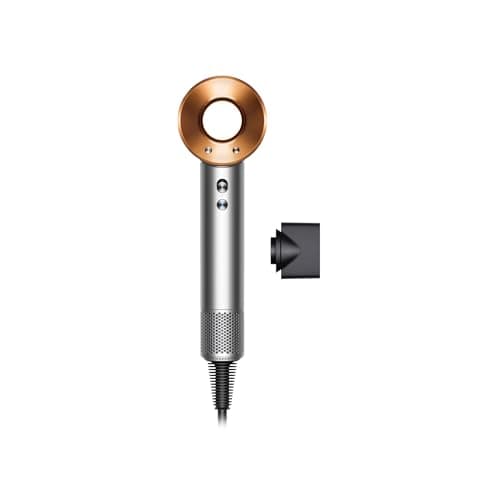 Dyson Supersonic Origin Hair DryerThe one dryer that tells you what each heat setting actually is in degrees, which makes it the only one in the category you can plan a routine around. Dyson Supersonic Origin Hair DryerThe one dryer that tells you what each heat setting actually is in degrees, which makes it the only one in the category you can plan a routine around. | Published temperatures on every heat setting | 1,600W dryer | |
| 2 | 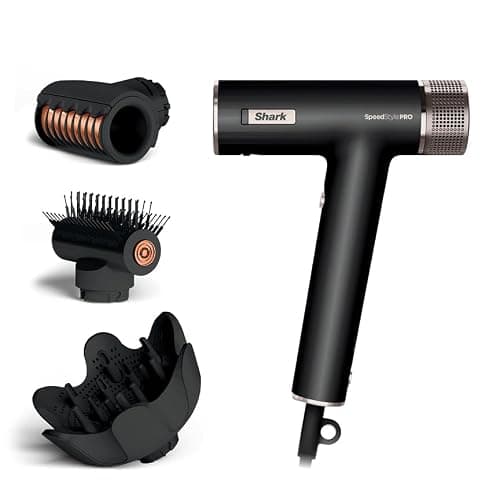 Shark SpeedStyle Pro Ionic Dryer (HD732)The rare dryer that publishes the numbers that matter: every heat setting in degrees, plus a ceiling it says it never exceeds at 230F, which is below every damage threshold in the literature. Shark SpeedStyle Pro Ionic Dryer (HD732)The rare dryer that publishes the numbers that matter: every heat setting in degrees, plus a ceiling it says it never exceeds at 230F, which is below every damage threshold in the literature. | A published temperature ceiling you can actually check | High-velocity dryer | |
| 3 | 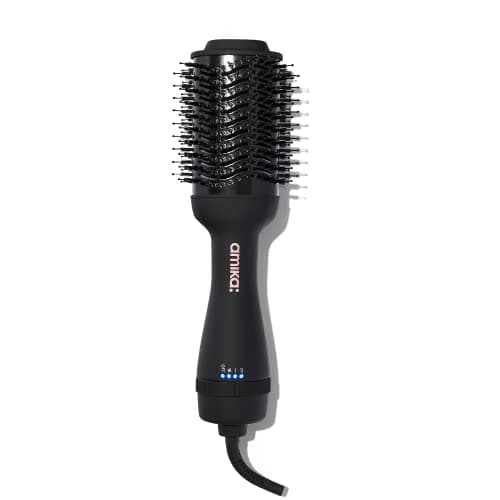 amika Hair Blow Dryer Brush 2.0The only blow-dry brush here that publishes its three temperatures — 115F, 190F and 230F — and every one of them is below the damage thresholds in the research. amika Hair Blow Dryer Brush 2.0The only blow-dry brush here that publishes its three temperatures — 115F, 190F and 230F — and every one of them is below the damage thresholds in the research. | Knowing exactly how hot the brush is | One-step dryer brush | Check price#ad |
#1 · Published temperatures on every heat setting
Dyson Supersonic Origin Hair Dryer
The one dryer that tells you what each heat setting actually is in degrees, which makes it the only one in the category you can plan a routine around.
| Power | 1,600W at full powersource |
|---|---|
| Heat settings | 4 settings — 212F (100C), 176F (80C), 140F (60C), and constant coldsource |
| Speed settings | 3 — fast drying, regular drying, gentle dryingsource |
| Airflow | Up to 41 liters per secondsource |
| Heat regulation | Measures air temperature over 40 times a secondsource |
| Dimensions | 9.6 in long, 3.9 in wide, 3.1 in deepsource |
What those numbers mean
Four heat settings published as 212F, 176F and 140F plus cold is the disclosure the rest of the category refuses to make. It means you can pick a setting against a damage threshold instead of against a vague label.
Note where those numbers sit. Even the hottest setting, 212F, is below the 302F figure Shark names as its damage line and far below the temperatures at which the literature reports cuticle degradation.
1,600W is less nominal power than a US 1,875W dryer, and 41 l/s of airflow is how it compensates. Again: air speed, not temperature.
What it does well
- Publishes an actual temperature for every heat setting, uniquely in this category
- Airflow figure published in liters per second
- Top setting of 212F is below every damage threshold in the cited research
- Attachments attach magnetically and can be changed mid-dry
What it does not
- Costs several times what a competent 1,875W dryer costs
- 1,600W nominal will feel slower than an AC dryer on very thick hair
- Dyson does not sell through every retailer, so availability moves around
Skip this one if: Skip it if the budget is the constraint rather than the information. Everything the Supersonic does for hair health can be approximated by running a cheaper dryer on medium heat and high speed, which costs nothing.
#ad · how this is funded · price as of October 22, 2026
#2 · A published temperature ceiling you can actually check
Shark SpeedStyle Pro Ionic Dryer (HD732)
The rare dryer that publishes the numbers that matter: every heat setting in degrees, plus a ceiling it says it never exceeds at 230F, which is below every damage threshold in the literature.
| Heat settings | Three published settings — low 65C, medium 80C, high 100C — plus a cool shot and a permanent cool modesource |
|---|---|
| Temperature ceiling | Measures and regulates temperature 1,000 times a second, never exceeding 230F, and never approaching 302Fsource |
| Power | 1,600 watts at 120 voltssource |
| Weight | 1.674 lbsource |
| Noise | About 83 decibelssource |
| Cord | Approximately 8 ftsource |
| Scalp Shield mode | Reduces air temperature to a level Shark states is optimized for scalp comfort and root drying, developed with dermatologistssource |
| Attachments | Three accessories per dryer, chosen from the DefrizzFast diffuser, QuickSmooth brush, Express Touchup brush, Lift & Stretch wide-tooth comb, Turbo concentrator and FrizzFighter finishing toolsource |
What those numbers mean
A stated ceiling of 230F is the single most useful specification on any dryer, and almost nobody publishes one. It puts the airflow well under the 302F figure Shark itself names as the damage line and far under the cuticle-degradation range in the research.
Shark also names each setting in degrees — 65C, 80C and 100C — which is disclosure the rest of the category mostly refuses. It means you can pick a setting against a damage threshold rather than against an unlabeled dial, and note that even the top setting lands under that 230F ceiling.
The accessory list is a choice rather than a fixed bundle, which matters more than it sounds. The DefrizzFast diffuser is the attachment that earns this dryer its place on curly and coily pages, so check it is one of the three in the configuration you buy.
What it does well
- Publishes a temperature ceiling AND every heat setting in degrees
- Published wattage, weight, cord length and even a decibel figure
- Regulates 1,000 times a second, the same control loop as the FlexStyle
- Scalp Shield mode is aimed squarely at root drying on fragile new growth
What it does not
- Shark publishes no airflow figure, so drying speed cannot be checked on paper
- 1,600W is less power than an 1,875W AC dryer, and the low ceiling compounds that
- Three accessories is a choice, so the diffuser is not guaranteed to be in the box
- The retail listing says 1,750W where Shark's own support article says 1,600W
Skip this one if: Skip it if you want maximum heat for a fast, poker-straight blowout on coarse hair. The ceiling that protects fragile hair is the same ceiling that will frustrate you here.
#ad · how this is funded · price as of October 22, 2026
#3 · Knowing exactly how hot the brush is
amika Hair Blow Dryer Brush 2.0
The only blow-dry brush here that publishes its three temperatures — 115F, 190F and 230F — and every one of them is below the damage thresholds in the research.
| Heat and speed settings | 3 adjustable settings at 115F, 190F and 230Fsource |
|---|---|
| Power | 950Wsource |
| Barrel | Tourmaline-coated oval barrel generating negative ions and infrared heatsource |
| Bristles | Mixed long and short bristles to detangle, smooth and minimize breakagesource |
| Weight | 0.85 lb / 380 gsource |
| Cord | 9 ft with 360-degree swivelsource |
| Warranty | 2-year warrantysource |
What those numbers mean
Three published temperatures on a blow-dry brush is close to unique, and the numbers are the reassuring part. Even the top setting of 230F sits below the 302F line and far below anything the thermal research associates with cortex damage.
950W is the lowest wattage of any brush here and, for hair that is bleached or fine, that is a feature. Less power means a slower dry and a lower ceiling, and slower is the safe direction.
0.85 lb is the lightest tool in this entire registry. On a twenty-minute blowout, that is the specification you will notice most.
What it does well
- Publishes all three temperatures, and all three are conservative
- 0.85 lb, the lightest tool here
- 9-foot swivel cord and a 2-year warranty
- Mixed bristle lengths for detangling without dragging
What it does not
- 950W is genuinely slow on thick hair
- A 230F ceiling will not produce a sharp, glassy finish
- Priced above the Revlon brushes it competes with
Skip this one if: Skip it if your hair is thick and you want to be done quickly. 950W and a 230F ceiling are a deliberate choice for hair health, and on dense hair that choice reads as a long, slow blowout.
So what does a dryer damage?
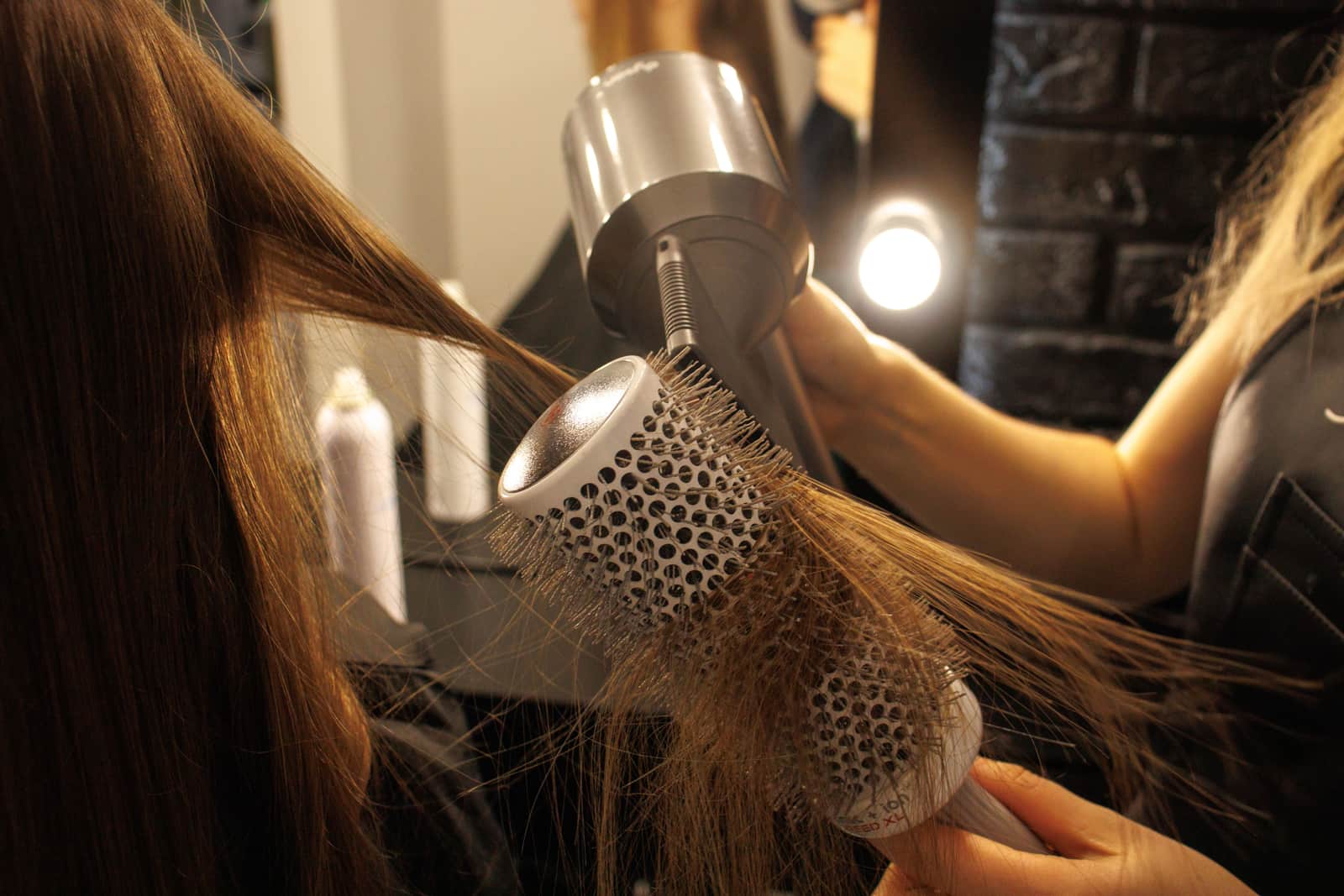
Mostly not by heat. The damage a dryer does is largely mechanical: fast-moving air lifts cuticle scales, and a raised cuticle is what tangles, catches and reads as frizz. That is why the useful adjustment on a dryer is fan speed rather than temperature, and why a diffuser helps so much on curly hair.
- Fast air lifts cuticle. Lower the fan speed; use a diffuser if you have any curl pattern.
- Air directed against the cuticle lifts it further. Point the nozzle root to tip, never tip to root.
- A stationary nozzle creates a hot spot. Keep the dryer moving. Panasonic's oscillating head is a mechanical fix for exactly this.
- Over-drying does real damage. Past dry, you are removing bound water from the cortex. Stop at around 80 to 90 percent.
Why air drying is not automatically safer
This is the part most coverage skips. Wet hair is mechanically weaker than dry hair — the cortex is swollen and the bonds that give it strength are temporarily disrupted, which is the same property that lets heat styling reshape it at all.
Air drying means the hair spends hours in that weakened state, being touched, moved, tied up, rubbed against a collar and slept on. That is a lot of mechanical stress at the point of maximum vulnerability, and it is why the honest comparison is not obvious.
The five changes that matter
- Lower the heat, raise the fan speed. Free, works on any dryer, and gets most of the drying from air volume rather than temperature.
- Use a heat protectant. The AAD recommends one alongside low or medium settings.
- Keep the nozzle moving and pointed root to tip.
- Stop before it is bone dry.
- Buy a dryer that publishes its temperature, because you cannot manage a number you cannot see.
The longer version of the science is on preventing heat damage, and the tool-by-tool version is on dryers for damaged hair.
Questions people actually ask
Does blow drying damage hair?
Yes, but considerably less than a flat iron. The dryers that publish figures reach 212F to 230F, while published research reports cuticle degradation beginning around 302F - so a dryer on a published setting is operating below the thermal threshold. Most blow-dry damage is mechanical, from fast air lifting cuticle scales, which is why fan speed matters more than heat.
Is air drying better than blow drying?
Not automatically, and this is the part usually left out. Wet hair is mechanically weaker than dry hair, and air drying means hours in that weakened state being touched, tied up, rubbed and slept on. A short session on a published low setting with a heat protectant is a defensible alternative. What is clearly worse than both is towel-rubbing, or ironing hair that is not fully dry.
How often can I blow dry my hair?
The AAD's guidance is to limit heat styling generally, without naming a frequency, and we are not going to invent one. What the numbers support: a dryer is the mildest heat tool most people own, so if you are cutting back on something, cut back on the iron first. Damage is cumulative, so frequency is the variable with the clearest effect.
What is the least damaging way to blow dry?
Medium heat with high fan speed, a heat protectant applied to damp hair before you start, the nozzle kept moving and pointed root to tip, and stopping at around 80 to 90 percent dry rather than bone dry. If your hair has any curl pattern, a diffuser on the lowest fan speed instead - the mechanical damage from fast air is the larger factor there.
Sources
Every figure on this page traces to one of these. If a number here disagrees with the manufacturer, the manufacturer is right and we want to know — tell us.
- Dyson Supersonic hair dryer
- Shark SpeedStyle Pro ionic dryer, curly and coily (HD732) — product listing
- amika hair blow dryer brush 2.0
- Thermal-induced changes in cuticle and cortex of chemically treated hair, PubMed Central
- Thermal denaturation and structural changes of alpha-helical proteins in keratins, Journal of Structural Biology
- American Academy of Dermatology — tips for healthy hair
Read next
Reference
Guides and Reference
Fourteen reference guides covering temperature by hair type, running costs, spec explainers and technique, every figure linked to its source.
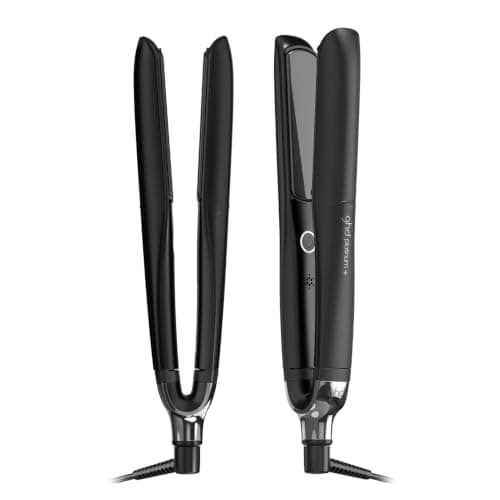
Top pick: ghd platinum+ Styler
Damage Guide
How to Prevent Heat Damage
The thermal thresholds from published research, and the seven changes that reduce heat damage most, ordered by how much they help.
Top pick: Dyson Supersonic Origin Hair Dryer
Best for Damaged Hair
The Best Hair Dryers for Damaged and Bleached Hair
Five dryers ranked strictly on published temperature disclosure — the only specification that matters when the cuticle is already compromised.
Top pick: Dyson Supersonic Origin Hair Dryer
Guide
Do I Need a Heat Protectant?
What a heat protectant does and does not do, what the AAD recommends, and why it is not permission to raise the temperature.
Damaged Hair Guide
Hair Styling Tools for Damaged and Color-Treated Hair
Every tool we recommend for damaged and bleached hair, filtered strictly on published temperature disclosure.
Top pick: Dyson Supersonic Origin Hair Dryer
Best Overall
The Best Hair Dryers, Chosen by Hair Type
Nine dryers compared on published wattage, airflow and temperature ceilings, then routed to the hair type each one genuinely suits.
Top pick: Laifen Swift High-Speed Hair Dryer