Curling Iron Temperature by Hair Type
Curling holds hair against the heat for seconds at a time instead of passing over it, which is why the right number here is lower than the one on your flat iron.
How this page is funded: the buy links below are affiliate links, and Heat Index earns a commission on qualifying purchases at no cost to you. Nothing on this page was supplied by a manufacturer, and commission plays no part in the ranking — read the full disclosure. Picks are chosen from published specifications, not from hands-on testing; the method is written down so you can check it. Prices last verified October 23, 2026.
Curl fine or bleached hair at 250-300F, medium hair at 300-350F, and thick or coarse hair at 350-375F — and set the dial lower than you would for the same hair on a flat iron. The tool that makes that easiest is the Conair InfinitiPRO Curl Secret, because it is the only curling tool on this site that names every one of its settings in degrees: 300F, 330F, 355F, 385F and 410F.
The second half of the question people usually ask — which iron holds its heat most stably — has an answer nobody wants to hear. No curling iron on this site publishes a temperature regulation figure at all. Flat irons do: ghd publishes 250 readings a second, Dyson publishes 100. In curling irons that specification simply does not exist, and the section below sets out what you can honestly use instead.
| Hair type | Working range | Notes |
|---|---|---|
| Fine, thin or bleached | 250-300F | At or below the reported cuticle-degradation threshold. Most curling irons do not publish a floor this low |
| Fine but healthy | 300-330F | At the edge of the cuticle threshold |
| Medium, normal, healthy | 300-350F | The most common working range for a curl that holds |
| Thick or coarse | 350-375F | Below the reported cortex-damage threshold. Treat 375F as a ceiling rather than a setting |
| Coily or 4C | Start at the lowest that holds and move up one step at a time | There is no risk-free number. Dwell time matters more here than the dial does |
| Damaged or over-processed | As low as the tool goes | The floor matters more than the ceiling, and most cheap irons do not publish one |
Why a curling iron's number should be lower than a flat iron's
This is the part the charts copied from each other all miss. A flat iron and a curling iron at the same temperature do not deliver the same thermal load, because they do not hold the hair for the same length of time.
thermal load = temperature x contact seconds x passes
a flat iron pass is 1-2 seconds per inch; a curl holds the section 5-10 seconds
A flat iron's contact is a moving pass. A curl wraps the section around the barrel and holds it there until it sets. Same number on the dial, several times the dwell - which is why the top of a curling iron's range deserves more suspicion than the top of an iron's, and why 375F is a sensible ceiling here where 390F is defensible there.
There is a second consequence worth knowing: a curl sets as it cools, not while it is hot. Dropping a hot curl straight out of the barrel and brushing it immediately undoes most of the work, and the usual response to that is to turn the heat up — which is both the wrong fix and the damaging one. Let each curl cool in your hand or pinned up before touching it, and a lower setting will hold better than a higher one did.
Quick picks
Ranked, with the reasoning underneath. Tap any row to jump to that write-up; tap the price to check it on Amazon. Prices come from the live layer, never from this page.
| # | Product | Best for | Type | Price |
|---|---|---|---|---|
| 1 | 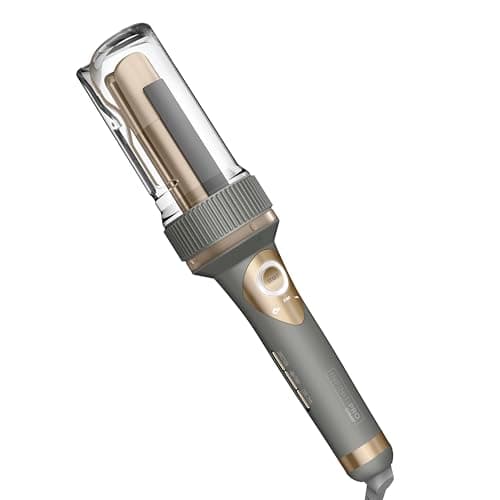 Conair InfinitiPRO Curl SecretFive published temperatures from 300F to 410F and three curl directions, on a tool that draws the hair in for you rather than asking you to wrap it. | Consistent curls without any wrapping technique | Automatic curler | |
| 2 | 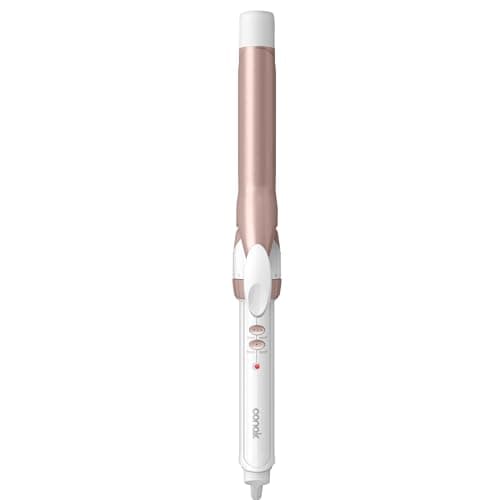 Conair Double Ceramic Curling IronThirty settings topping out at 375F, and Conair publishes which settings suit which hair type. That is more honest guidance than most premium irons print. | A fine-grained dial at a low price | 30-setting ceramic iron | |
| 3 | 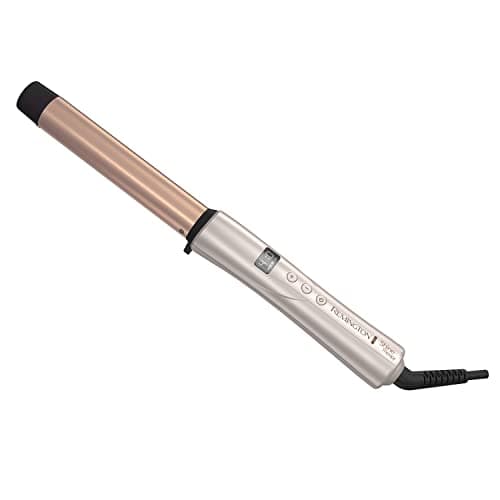 Remington Shine Therapy 1-inch Curling WandThe only tool under $30 here with a temperature lock, and the only one with no clip — which removes the crease a clamp leaves at the start of every curl. | A locked setting and no clip to crease the curl | Clipless ceramic wand | |
| 4 | 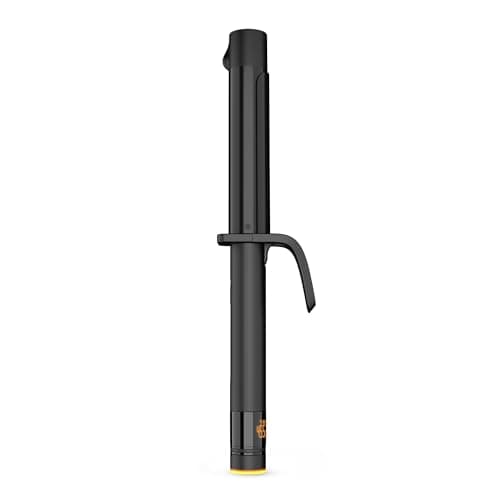 Hot Tools Black Gold Digital Curling Iron (1.25 in)A digital display, a 455F ceiling and a two-hour auto shut-off. The ceiling is far more heat than most hair needs, and the display is why you can avoid it. | Coarse hair that will not hold a curl | Digital salon iron | |
| 5 | 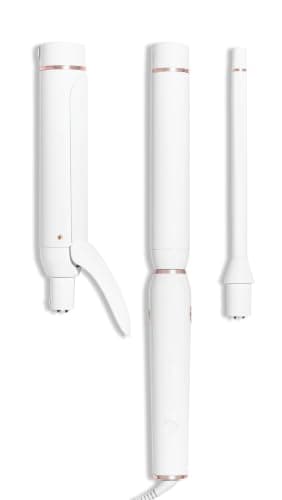 T3 Switch Kit Curl TrioOne handle and three barrels — half-inch and 1.25-inch wands plus a 1.5-inch clip barrel — with nine temperature settings, which covers the whole curl vocabulary in one purchase. | Three curl shapes from one handle | Interchangeable barrel set |
#1 · Consistent curls without any wrapping technique
Conair InfinitiPRO Curl Secret
Five published temperatures from 300F to 410F and three curl directions, on a tool that draws the hair in for you rather than asking you to wrap it.
| Heat settings | 5 settings — 300F, 330F, 355F, 385F and 410Fsource |
|---|---|
| Curl directions | 3 directionssource |
What those numbers mean
Publishing all five temperatures as actual numbers is the reason this is here. A 300F floor is genuinely usable on fine hair, and you can see exactly what you are choosing.
An automatic curler removes the wrapping skill, which is the part people find hardest and the part that produces uneven curls. What it cannot do is handle a section bigger than the chamber, so long thick hair means many small sections.
Three curl directions matters more than it sounds: alternating direction section by section is what stops a head of curls looking like a wig.
What it does well
- All five temperatures published, starting at a usable 300F
- No wrapping technique required, so curls are consistent
- Three directions, which is what makes a full head look natural
What it does not
- Only handles small sections, so long thick hair takes a long time
- Conair does not publish a chamber size or timing figure for this model
- The mechanism is more to go wrong than a barrel and a clamp
Skip this one if: Skip it if your hair is long and dense. Feeding a whole head through a small chamber section by section is slower than a barrel, and the time cost outweighs the consistency gain.
#ad · how this is funded · price as of October 23, 2026
#2 · A fine-grained dial at a low price
Conair Double Ceramic Curling Iron
Thirty settings topping out at 375F, and Conair publishes which settings suit which hair type. That is more honest guidance than most premium irons print.
| Temperature | 30 heat settings, up to 375Fsource |
|---|---|
| Setting guidance | Settings 1-5 for fragile or fine hair, 6-10 thin, 11-15 medium or normal, 16-20 wavy or curly, 21-30 coarse or thicksource |
| Turbo Heat | Up to a 27F burst of heat for difficult-to-style spotssource |
| Other | Instant heat-up, cool tip, recessed buttons, auto-offsource |
| Voltage and cord | Dual voltage, 5-foot cordsource |
What those numbers mean
A 375F ceiling is the quiet advantage. It is high enough to set a curl on almost any hair and low enough that the worst-case setting is not catastrophic, which is not true of the 455F irons.
Publishing a settings-to-hair-type map on the product page is genuinely useful and almost unheard of. It converts an abstract dial into instructions.
The five-foot cord is the shortest here by a wide margin, and it will decide where you can stand.
What it does well
- 375F ceiling, a sane maximum rather than a marketing one
- Thirty settings with published hair-type guidance
- Cool tip and recessed buttons, both real usability features
- Dual voltage
What it does not
- Five-foot cord, the shortest in this registry
- Conair does not publish a heat-up time figure
- Coarse hair may want more than 375F for a lasting set
Skip this one if: Skip it if you are curling very coarse or very long hair that historically drops out by lunchtime. 375F may not be enough to set it, and no number of settings changes the ceiling.
#3 · A locked setting and no clip to crease the curl
Remington Shine Therapy 1-inch Curling Wand
The only tool under $30 here with a temperature lock, and the only one with no clip — which removes the crease a clamp leaves at the start of every curl.
| Temperature | 10 digital heat settings with a temperature lock, 410F maximumsource |
|---|---|
| Barrel | 1-inch straight ceramic barrel, cliplesssource |
| Coating | Ceramic infusion combining argan oil and keratin, stated for even, consistent heatsource |
| Heat-up | 30 secondssource |
| Safety | Automatic shut-offsource |
What those numbers mean
A clip is the thing that puts a flat kink in the first half-inch of a curl, and a wand has none — you wrap the hair around the barrel instead. The trade is that a wand needs a heat glove and a bit of practice, and it holds the section only as well as your hand does.
The temperature lock is the genuinely unusual feature at this price. Every other tool on this page has a dial that can be nudged while you work; this one can be fixed at a setting and left there.
410F is also the highest ceiling of anything here, and that cuts the other way. A lock is only a safety feature if you lock it somewhere sensible.
What it does well
- A temperature lock, which nothing else under $30 offers
- No clip, so no crease at the root end of the curl
- 10 digital settings rather than an unmarked dial
- 30-second heat-up and an automatic shut-off
What it does not
- 410F is the highest maximum on this page, well above the cortex-damage threshold in the research
- No published floor, so the bottom of the ten steps is unknown
- A clipless wand needs a heat glove, and Remington does not state that one is included with this model
- Remington publishes no voltage rating, weight or cord length for it
Skip this one if: Skip it if you have never used a wand. Without a clip the hair is held by your fingers next to a 410F barrel, and a clipped iron like the Conair here is the easier tool to learn on.
#ad · how this is funded · price as of October 23, 2026
#4 · Coarse hair that will not hold a curl
Hot Tools Black Gold Digital Curling Iron (1.25 in)
A digital display, a 455F ceiling and a two-hour auto shut-off. The ceiling is far more heat than most hair needs, and the display is why you can avoid it.
| Temperature | Up to 455Fsource |
|---|---|
| Controls | Digital controls and displaysource |
| Auto shut-off | 2-hour auto shut-offsource |
| Voltage | Universal dual voltagesource |
What those numbers mean
455F exists so the box can say 455F. Nothing in the thermal-damage literature supports taking hair there, and the reason to buy a digital iron is precisely so you can sit at 330F or 350F and know it.
A two-hour auto shut-off is generous to the point of being a safety note rather than a safety feature. Most irons here shut off in thirty minutes or one hour.
Dual voltage on a curling iron is more useful than it sounds, because curling irons are the tool people most often ruin abroad.
What it does well
- Digital display means you know the actual number
- Enough heat ceiling for genuinely coarse hair
- Universal dual voltage
What it does not
- 455F is well above every threshold in the cited research
- A two-hour shut-off is a long time for a hot metal object
- Hot Tools does not publish a heat-up time for this model
Skip this one if: Skip it if your hair is fine or color-treated. You would be buying headroom you must never use, and a lower-ceiling iron removes the temptation entirely.
#5 · Three curl shapes from one handle
T3 Switch Kit Curl Trio
One handle and three barrels — half-inch and 1.25-inch wands plus a 1.5-inch clip barrel — with nine temperature settings, which covers the whole curl vocabulary in one purchase.
| Barrels | Half-inch wand, 1.25-inch wand, and 1.5-inch clip barrelsource |
|---|---|
| Settings | 9 temperature settings with T3 Rapid HeatIQ technologysource |
What those numbers mean
Barrel diameter is what decides curl shape, and it is not a preference so much as a physical fact: a half-inch barrel makes a tight spiral and a 1.5-inch barrel makes a loose bend. Owning three is owning three tools.
The clip barrel among two wands is a deliberate mix. Clips are easier and faster; wands give a more natural end because there is no crimp where the clamp sat.
T3 does not publish what the nine settings are in degrees, which is the same disclosure gap as their brushes.
What it does well
- Three barrel diameters covering tight spirals to loose waves
- Nine settings rather than a three-step dial
- One handle, so storage and travel are simpler than three irons
What it does not
- T3 does not publish actual temperatures for the nine settings
- Swapping barrels means handling a hot component
- Premium price for a kit where most people use one barrel
Skip this one if: Skip it if you already know the one curl you want. A single iron in the right diameter costs far less and does that job identically.
#ad · how this is funded · price as of October 23, 2026
Who publishes a real range, and who publishes a number
This is the table that answers the "widest temperature range" half of the question. Every figure is the manufacturer's own, and the right-hand column is the thing that actually decides whether the range is usable.
| Tool | Published settings | Ceiling | Is the range usable? |
|---|---|---|---|
| Conair InfinitiPRO Curl Secret | Five, each named in degrees: 300F, 330F, 355F, 385F, 410F | 410F | Yes - the only tool here where you can ask for a temperature by name |
| Conair Double Ceramic curling iron | 30 settings, mapped to hair type: 1-5 fragile or fine, 6-10 thin, 11-15 medium, 16-20 wavy or curly, 21-30 coarse | 375F, plus a stated 27F Turbo burst | Yes, by hair type rather than by degree - and the lowest ceiling here |
| Remington Shine Therapy wand | 10 digital steps with a temperature lock | 410F | Partly - the lock is unique here, but the steps are not labeled in degrees |
| Hot Tools Black Gold Digital | Digital controls with a display | 455F | Widest ceiling on the site, and no floor is published |
| T3 Switch Kit Curl Trio | 9 settings with T3's Rapid HeatIQ | Not published | No - nine steps with no degrees attached to any of them |
Two findings fall out of that, and both are useful. The widest published range belongs to a tool you should mostly ignore the top of: Hot Tools' 455F ceiling is above every threshold in the published literature, which makes the digital display more valuable than the headroom. And the lowest ceiling belongs to the cheapest tool here — the Conair Double Ceramic stops at 375F, below the roughly 392F at which cortex damage is reported to begin, which on a tool that holds hair for seconds at a time is the single best specification on this page.
The "stable heat" question, answered honestly
A setting on a dial is a target, not a measurement. When a cold section of hair wraps a barrel, the barrel cools; the heater compensates and overshoots on the way back. What the hair experiences swings around the set point, and in flat irons the manufacturers tell you how tightly they control that — ghd's 250 readings a second, Dyson's 100.
In curling irons, not one manufacturer on this site publishes a sampling rate, a tolerance or a recovery time. We are not going to invent a stability ranking out of nothing. What you can honestly use instead is three proxies, in this order:
- Digital control over an analogue dial. A digital controller with a display is reading a sensor to decide what to do; a knob with thirty unlabeled clicks is a position. The Curl Secret, the Remington wand and the Hot Tools iron all have digital control; the Conair Double Ceramic has a dial with published hair-type mapping, which is the next best thing.
- A temperature lock. The Remington wand is the only tool here with one, and it solves a real problem rather than a theoretical one: a dial knocked two clicks up in a drawer or mid-session is the most common cause of an unexplained hot curl.
- Barrel mass and material. A thicker ceramic barrel stores more heat and so drops less when cold hair hits it. This is physics rather than a published figure, so treat it as a tiebreaker and not as a specification - ceramic versus titanium covers what the materials actually do.
Which one, by what your hair needs
- You want to ask for a temperature by name — the Conair InfinitiPRO Curl Secret. Five named settings from 300F to 410F, and it wraps the section for you, which removes most of the technique variable at the same time.
- Fine, fragile or color-treated hair — the Conair Double Ceramic curling iron. A 375F ceiling means the tool cannot take you past the cortex threshold, and settings 1 to 5 are published as the fragile-or-fine band so you are not guessing which click is which.
- You want a setting that cannot be knocked — the Remington Shine Therapy wand, for its temperature lock. Just lock it somewhere sensible: 410F is the top of its range and well above the reported cortex line.
- Thick or coarse hair that genuinely does not respond — the Hot Tools Black Gold Digital, for the display rather than the 455F. Set it in the 350-375F band, read the number back off the screen, and leave the rest of the range alone.
- You want several curl sizes from one purchase — the T3 Switch Kit Curl Trio, with the honest caveat that its nine settings are unlabeled. What size curling iron is the diameter decision on its own.
Three free changes that beat a hotter setting
- Bone-dry hair, every time. Wet keratin is reported to denature between 120C and 150C - 248F to 302F - far below dry keratin, so a 350F barrel on a damp section is the worst thing on this page. Can you straighten wet hair covers the tools that are built for damp hair, and a curling iron is not one of them.
- Let the curl cool before you touch it. The set happens during cooling. This single habit does more for hold than any 25F on the dial.
- Fewer seconds, not more degrees. If a curl did not hold, the section was too thick or still warm when you released it. Raising the temperature is the common fix and the wrong one.
How to prevent heat damage covers the mechanism properly, and heat protectant explained sets out what the film can and cannot do before any of this.
Related
The curling irons hub has the full ranking and the barrel-diameter arithmetic, curling irons for fine hair is the shortlist for the bottom of this chart, curling irons for beginners covers the two mistakes behind most bad first attempts, and the flat iron temperature chart is this page's sister for straightening.
Questions people actually ask
What temperature should I curl my hair at?
Roughly 250-300F for fine, thin or bleached hair, 300-350F for medium hair, and 350-375F for thick or coarse hair. Set it lower than you would for the same hair on a flat iron: a flat iron passes over a section in one or two seconds while a curl holds it against the barrel for five to ten, so the same number on the dial delivers several times the thermal load. Published research reports cuticle degradation beginning around 302F and cortex damage from around 392F.
Which curling iron has the widest temperature range?
The Hot Tools Black Gold Digital, which publishes a 455F ceiling with digital controls and a display - though 455F is above every threshold in the published literature, so the display is worth more than the headroom. The most USABLE range belongs to the Conair InfinitiPRO Curl Secret, which is the only curling tool on this site that names all five of its settings in degrees: 300F, 330F, 355F, 385F and 410F. Note that four of five publish a maximum and none publishes a minimum.
Which curling iron holds its heat most stably?
No curling iron on this site publishes a figure that would let us answer that, and we are not going to invent one. Flat iron makers publish sampling rates - ghd states 250 readings a second, Dyson 100 - and no curling iron manufacturer publishes a sampling rate, a tolerance or a recovery time. The honest proxies are digital control rather than an unlabeled dial, a temperature lock (only the Remington Shine Therapy wand has one), and a thicker ceramic barrel, which stores more heat and so drops less when cold hair hits it.
Is 400F too hot for curling hair?
For most hair, yes. 400F sits above the roughly 392F at which published research reports cortex damage beginning, and a curling iron holds the section against that heat for five to ten seconds rather than passing over it. Thick, coarse hair that genuinely will not hold a curl below 375F is the only case for going higher, and even then it is a ceiling rather than a default. If curls are dropping out, the cause is almost always releasing them warm rather than the iron being too cool.
Why does my curl fall out within an hour?
Usually because the curl was still warm when it was released. A curl sets as it cools, so dropping it hot out of the barrel and brushing it straight away undoes most of the work. Let each curl cool in your hand or pinned up before touching it. Turning the heat up instead is the common response and the damaging one - on a 410F tool it is well past the reported cortex-damage threshold.
Should I use a lower temperature on a wand than on a clipped iron?
The temperature guidance is the same, but the dwell time usually is not. A clipped iron holds the section for you and tends to be released sooner; a clipless wand means you are holding hair against a hot barrel by hand, which people often do for longer while they get the wrap right. Same dial, more seconds, more load - so if you are learning on a wand, start at the bottom of your hair type's range rather than the middle.
Sources
Every figure on this page traces to one of these. If a number here disagrees with the manufacturer, the manufacturer is right and we want to know — tell us.
- InfinitiPRO by Conair Curl Secret (CD1031)
- Conair Double Ceramic curling iron
- Remington Shine Therapy 1-inch curling wand — product listing
- Hot Tools Black Gold digital salon curling iron
- T3 Switch Kit Curl Trio interchangeable styling iron
- Thermal-induced changes in cuticle and cortex of chemically treated hair, PubMed Central
- Thermal denaturation and structural changes of alpha-helical proteins in keratins, Journal of Structural Biology
- American Academy of Dermatology — tips for healthy hair
Read next
Reference
Guides and Reference
Fourteen reference guides covering temperature by hair type, running costs, spec explainers and technique, every figure linked to its source.
Top pick: ghd platinum+ Styler
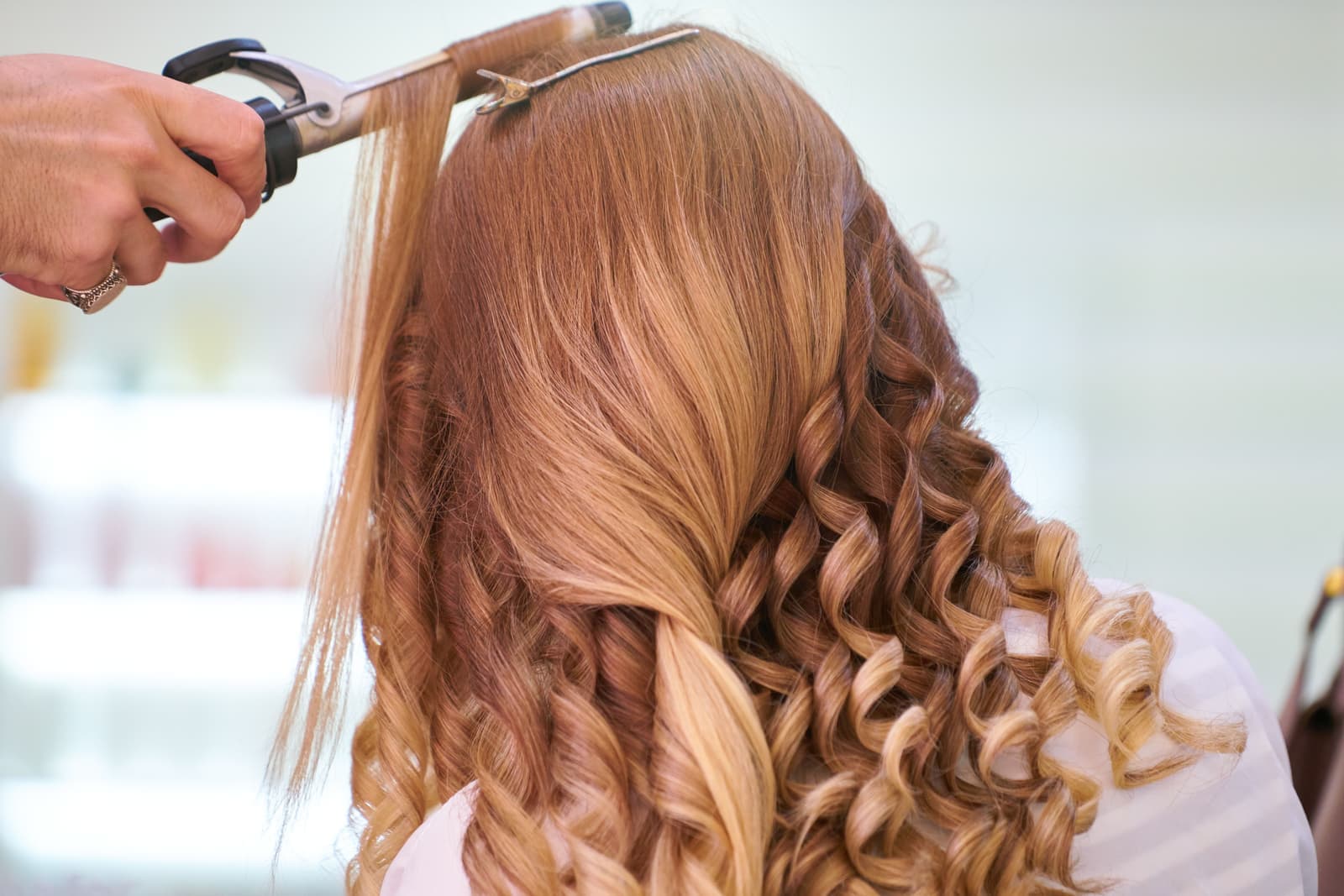
Best Overall
The Best Curling Irons and Wands
Six curling irons, wands and wavers ranked on published temperature and barrel size, with the diameter-to-curl-shape chart.
Top pick: T3 Switch Kit Curl Trio
Temperature Chart
Flat Iron Temperature by Hair Type
The temperature-by-hair-type chart, set against the damage thresholds published research reports, with irons that let you hit them.
Top pick: ghd platinum+ Styler
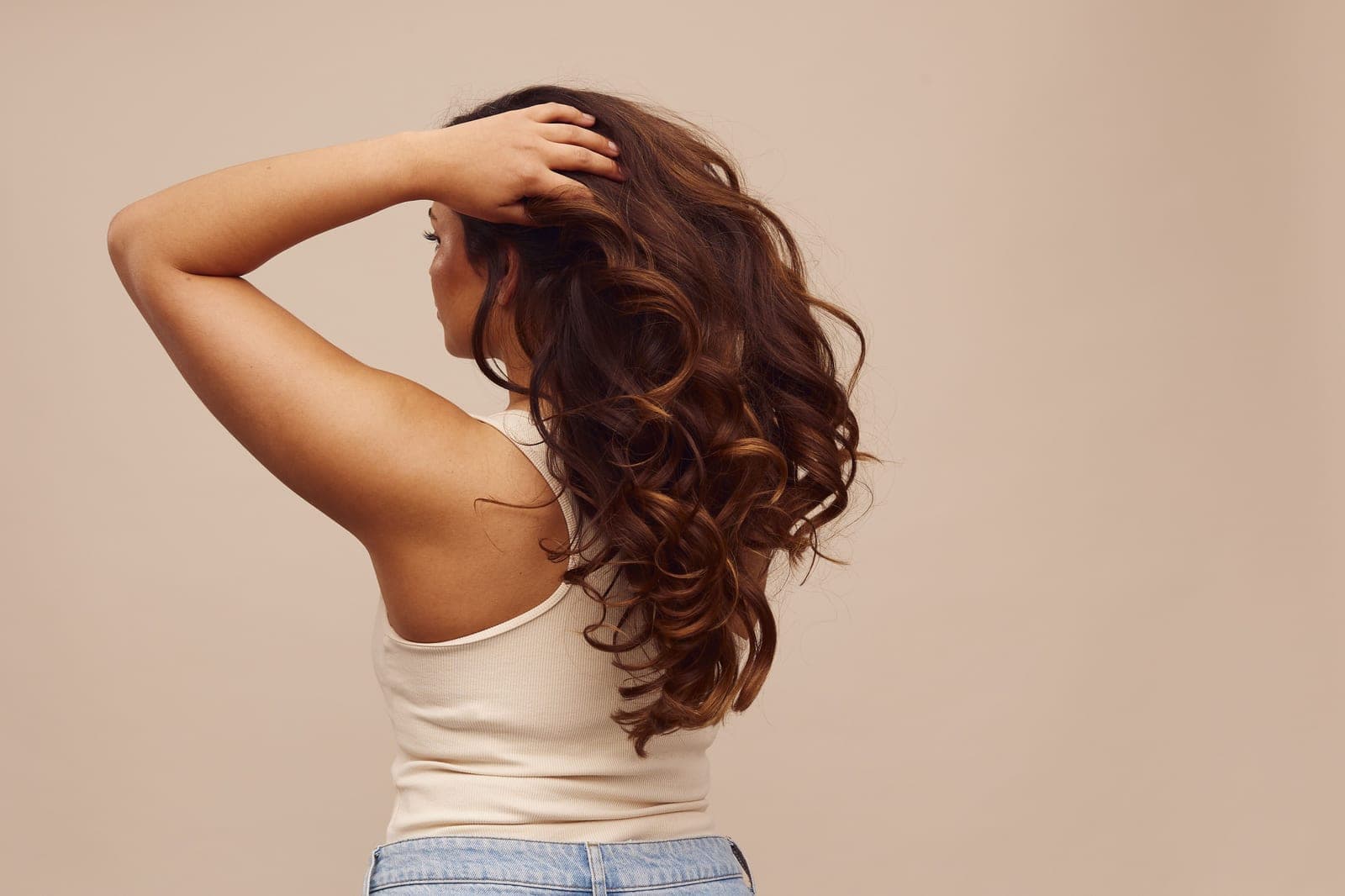
Best for Fine Hair
The Best Curling Irons for Fine Hair
Four curling tools for fine hair, ranked on published low temperature settings, with the cooling technique that actually makes curls hold.
Top pick: Conair InfinitiPRO Curl Secret
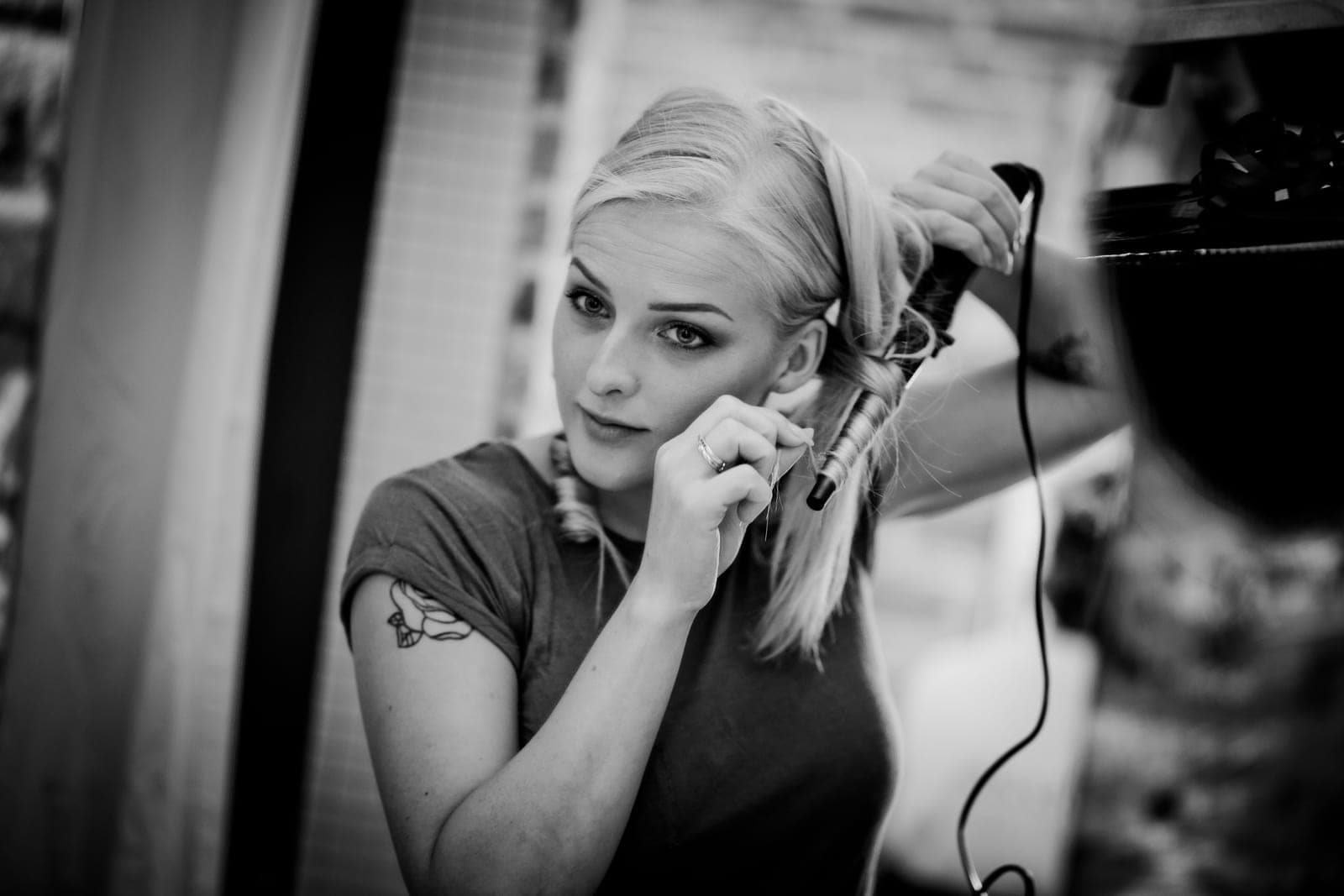
Best for Beginners
The Best Curling Irons for Beginners
Four curling tools ranked on how hard they are to get wrong, with the two mistakes behind almost every bad first attempt.
Top pick: Conair InfinitiPRO Curl Secret
Barrel Size Chart
What Size Curling Iron Do You Need?
The barrel-diameter chart mapping size to curl shape and hair length, plus the drop-out rule that means sizing down.
Top pick: T3 Switch Kit Curl Trio