CHI Original Flat Iron Review
It has one temperature and no way to change it. That single decision is the whole product - it removes the most common way people damage their hair, and it rules out an entire hair type.
How this page is funded: the buy links below are affiliate links, and Heat Index earns a commission on qualifying purchases at no cost to you. Nothing on this page was supplied by a manufacturer, and commission plays no part in the ranking — read the full disclosure. Picks are chosen from published specifications, not from hands-on testing; the method is written down so you can check it. Prices last verified October 22, 2026.
Buy it if your hair is medium to coarse and healthy. Do not buy it if your hair is fine, bleached or breaking. The CHI Original runs at a pre-set 392F (202C) and has no dial — not a locked dial, no dial — and that one design decision answers the whole question. On hair that can take 392F it removes the most common way people cause damage, which is turning the iron up because the first pass did not work. On hair that cannot, there is no way to turn it down.
This is the iron people mean when they say "ceramic flat iron", and the question the search data shows them asking about it is a temperature question. So that is where this review starts, rather than ending there.
Every published specification
| Specification | Published figure |
|---|---|
| Temperature | Pre-set 392F (202C), not adjustable |
| Plates | 1-inch ceramic floating plates |
| Cord | 11 ft swivel cord |
| Voltage | Dual voltage |
| Weight | 1.4 lb |
| Warranty | 2-year limited warranty |
| Heat-up time | Not published - CHI states "flash-quick heating" without a figure |
| Auto shut-off | Not published |
| Temperature regulation | Not published - no sampling rate or tolerance |
Three absences are worth naming. No heat-up time, only an adjective. No auto shut-off, which on an iron with no off-temperature is a genuine gap — a tool that is either 392F or unplugged wants a timer more than an adjustable one does. And no regulation figure, which matters here more than on most irons: when the only temperature is fixed, how tightly it is held IS the specification, and CHI does not publish it.
Quick picks
Ranked, with the reasoning underneath. Tap any row to jump to that write-up; tap the price to check it on Amazon. Prices come from the live layer, never from this page.
| # | Product | Best for | Type | Price |
|---|---|---|---|---|
| 1 | 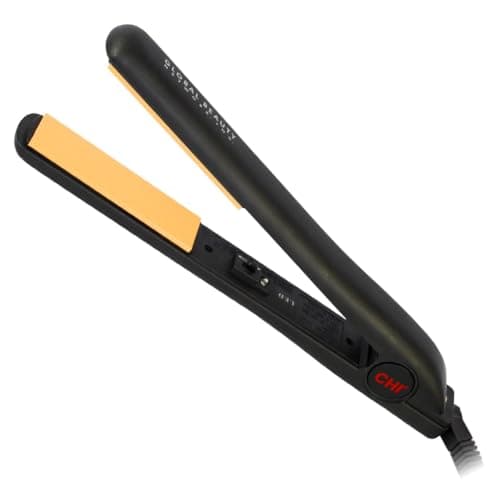 CHI Original 1-inch Ceramic Hairstyling Iron (GF1001)A single preset of 392F and no dial at all, which removes the most common way people damage their hair: turning it up because the first pass did not work. | One fixed, sensible temperature and nothing to get wrong | Single-temperature ceramic iron | |
| 2 | 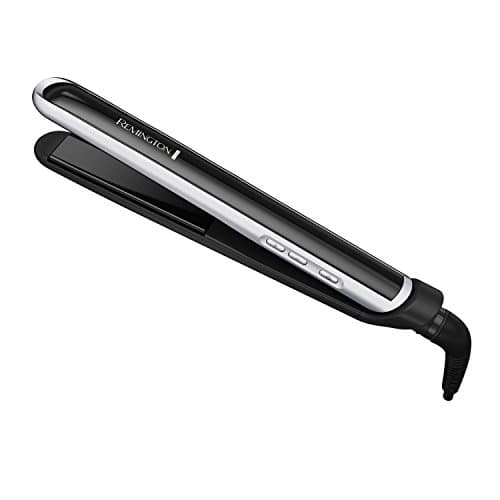 Remington Pearl Pro 1-inch Ceramic Flat Iron (S9500PP)The only iron in the sub-$50 bracket that pairs a digital set point with a temperature lock, which is the feature that stops the dial creeping while you work. | Digital control with a temperature lock | Digital ceramic iron | |
| 3 | 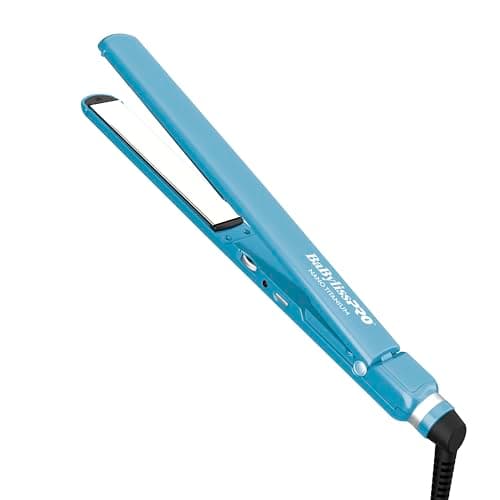 BaBylissPRO Nano Titanium 1-inch Ultra-Thin StraightenerFifty heat settings from 240F to 450F on extra-long 5-inch titanium plates — the reach coarse hair needs, and a floor low enough for fine hair if you trust yourself with the dial. | Thick or coarse hair that needs one pass, not four | Titanium iron, 50 settings |
#1 · One fixed, sensible temperature and nothing to get wrong
CHI Original 1-inch Ceramic Hairstyling Iron (GF1001)
A single preset of 392F and no dial at all, which removes the most common way people damage their hair: turning it up because the first pass did not work.
| Temperature | Pre-set 392F (202C), not adjustablesource |
|---|---|
| Plates | 1-inch ceramic floating platessource |
| Cord | 11 ft swivel cordsource |
| Voltage | Dual voltagesource |
| Weight | 1.4 lbsource |
| Warranty | 2-year limited warrantysource |
What those numbers mean
A fixed 392F is a design decision with a real argument behind it. It sits above the range dermatological guidance points fine hair toward and below the 450F that irons advertise, so it is a defensible single answer for medium and coarse hair.
It is also the reason this iron is wrong for fine or bleached hair. There is no way to turn it down, and 392F on hair that snaps when you brush it wet is not a setting anyone should be using.
An 11-foot cord is the longest here and it changes where you can stand. Combined with dual voltage, this is a genuinely travel-capable professional iron.
What it does well
- One temperature means one fewer way to damage your hair
- 11-foot swivel cord, the longest in this roundup
- 1.4 lb, with the weight published
- Dual voltage
What it does not
- No temperature control at all, which rules out fine and fragile hair
- Ceramic plates heat more slowly than titanium on coarse hair
- No auto shut-off published
- CHI publishes no heat-up time, only a "flash-quick heating" claim
Skip this one if: Skip it if your hair is fine, bleached or already breaking. A locked 392F cannot be turned down, and this is exactly the temperature that hair should not be seeing.
#2 · Digital control with a temperature lock
Remington Pearl Pro 1-inch Ceramic Flat Iron (S9500PP)
The only iron in the sub-$50 bracket that pairs a digital set point with a temperature lock, which is the feature that stops the dial creeping while you work.
| Temperature | 450F maximum, digital salon-high heatsource |
|---|---|
| Plates | 1-inch floating plates, ceramic infused with crushed pearlsource |
| Heat-up | 15 secondssource |
| Controls | Digital controls with LED temperature display and temperature locksource |
| Auto shut-off | 60 minutessource |
| Ions | Evenly-distributed ionic heatsource |
| Warranty | 3-year limited warrantysource |
What those numbers mean
The temperature lock is the reason this leads the bracket. Cheap irons put the controls where your palm sits, and a set point that drifts upward mid-style is how people end up ironing at 450F without choosing to. Locking it is a thirty-dollar feature doing a two-hundred-dollar job.
What Remington does NOT publish is where the range starts. The 450F ceiling is stated and the floor is not, so if your hair needs a genuinely low setting you cannot confirm from the spec sheet that this iron offers one.
A 3-year warranty at this price is the longest here and it is the most honest durability signal available at the bottom of the market, where build quality is exactly what gets cut.
What it does well
- A temperature lock, which almost nothing under $50 has
- Digital set point with an LED readout rather than a numberless dial
- Floating plates and a 15-second heat-up
- 3-year limited warranty, the longest in this bracket
What it does not
- The bottom of the temperature range is not published, only the 450F top
- 450F is above both the cuticle and cortex damage thresholds in the research
- Remington publishes no cord length, weight or dual-voltage figure
- Pearl infusion is a coating claim with no published performance figure behind it
Skip this one if: Skip it if you need a confirmed low setting. The ceiling is published and the floor is not, so for bleached or breaking hair the Shine Therapy's stated 300F start is the safer purchase.
#3 · Thick or coarse hair that needs one pass, not four
BaBylissPRO Nano Titanium 1-inch Ultra-Thin Straightener
Fifty heat settings from 240F to 450F on extra-long 5-inch titanium plates — the reach coarse hair needs, and a floor low enough for fine hair if you trust yourself with the dial.
| Plates | 1-inch wide, extra-long 5-inch platessource |
|---|---|
| Temperature | 50 heat settings, up to 450Fsource |
| Heater | Dual-voltage ceramic heater for rapid heat-up and recoverysource |
| Housing | Ryton, to resist high heatsource |
| Ions | Emits negative ionssource |
| Cord | 9 ft swivel cordsource |
| Warranty | Limited 4-year warrantysource |
What those numbers mean
Plate length is the specification nobody markets and everybody should. Five inches of plate covers more hair per pass, which means fewer passes, which is the only heat-damage variable fully in your control.
Fifty settings is not gimmickry when the range runs to 450F. It means you can sit at 320F or 340F precisely rather than choosing between a low, medium and high that nobody has defined.
Titanium conducts heat faster than ceramic and recovers faster after a cold section of hair pulls the temperature down. That is genuinely useful on coarse hair and genuinely dangerous on fine hair.
What it does well
- Extra-long 5-inch plates mean fewer passes on long hair
- Fifty discrete settings, so a low temperature is actually selectable
- Fast titanium heat recovery mid-section
- Four-year warranty and a 9-foot cord
What it does not
- 450F is above every threshold in the research and should not be used
- Titanium's fast heat transfer is unforgiving of a slow hand
- No auto shut-off — the manual warns it burns out if left on, voiding the warranty
Skip this one if: Skip it if you are the kind of person who reaches for the maximum setting. Fifty settings only helps if you use the low ones, and the top of this range is a number no hair needs.
The 392F argument, taken seriously
A single fixed temperature sounds like a cost saving and it is defensible as a design. Here is the case for it, set against the published thermal research rather than against marketing.
| Threshold | Reported temperature | Where 392F sits |
|---|---|---|
| Hydrogen bonds break reversibly | 120-150C / 248-302F | Well above - this is the range that makes styling possible at all |
| Cuticle degradation begins | 150C / 302F | Above it, by 90F |
| Cortex damage begins | 200C / 392F | Exactly at it |
| Melting and alpha-helix denaturation reported | 220-250C / 428-482F | Below it, by 36F or more |
So 392F lands precisely on the reported cortex-damage threshold, and comfortably below the range where melting and denaturation are reported. Against a market where irons advertise 450F — above every threshold in the literature — that is a more conservative number than the headline suggests. The temperature chart puts healthy medium hair at 330-370F and thick or coarse hair at 370-390F, so 392F is a plausible single answer for the coarse end of that table and slightly hot for the middle of it.
Who the locked temperature rules out
The flip side is absolute, and it is the reason this review opens the way it does. There is no low setting. There is no "start gentle and work up". If your hair is fine, bleached, over-processed or snapping when you brush it wet, the right working range is 250-300F and this tool offers one number 92F above the top of that range.
- Fine or thin hair — the working range is 250-330F depending on condition. Not this iron.
- Bleached, highlighted or color-treated hair — the tool's FLOOR matters more than its ceiling, and this one has no floor. Flat irons for damaged and bleached hair is the right shortlist.
- Anyone who shares the iron across hair types in a household - one fixed temperature cannot serve two people whose hair needs differ by 100F.
- Anyone still learning technique. The safest way to learn is to start low and move up; this iron removes that option and asks you to get sectioning and dryness right first time.
Ceramic, and what the material actually does
Ceramic plates heat more evenly and more gently than titanium, and they heat more slowly. That is the real trade and it is the right trade for this iron: a fixed-temperature tool wants the material that holds a steady surface rather than the one that spikes hardest.
Where it costs you is on coarse, dense hair that resists the first pass — titanium transfers heat faster and is why flat irons for thick hair lean titanium. Floating plates are the other spec worth noticing here: plates mounted on a small amount of travel self-align to the section instead of pinching one edge, which means more even contact and fewer passes. Ceramic versus titanium has the full material comparison.
The eleven-foot cord is not a footnote
Eleven feet is the longest cord on this site, and it changes where you can physically stand — a different mirror, a different room, away from the one outlet behind the door. Combined with a published dual-voltage rating, this is a genuinely travel-capable professional iron, which is unusual at this price and in this format.
Dual voltage is the specification that decides whether a styling tool can leave the country at all. A plug adapter changes the shape of the pins and nothing else; a 120V-only tool on a 240V socket is destroyed in about two seconds. Travel and dual voltage flat irons covers the wider field.
What the specifications cannot tell you
- How tightly 392F is held. No sampling rate, no tolerance, no recovery time is published. On a single-temperature tool this is the one figure that would matter most, and it does not exist.
- How long it takes to heat. "Flash-quick heating" is an adjective. Remington publishes 15 seconds for the Pearl Pro; CHI publishes nothing.
- Whether it shuts itself off. No auto shut-off is published, so assume it does not.
- How long the ceramic coating lasts. No coating lifespan is published by anyone in this category, CHI included.
The two alternatives, and when each is the better buy
- You want this iron's simplicity but need a lower setting — the Remington Pearl Pro. Digital controls with an LED display, a 15-second heat-up, a 60-minute auto shut-off and, most usefully, a temperature lock: you get to choose the number once and then it behaves like a fixed-temperature iron. That is arguably the better version of the CHI's idea, and it is the cheaper tool.
- Your hair is thick or coarse and one pass is not enough — the BaBylissPRO Nano Titanium. Fifty settings from 240F to 450F on extra-long 5-inch plates, which means fewer passes per section, and its manual maps every dial position to a temperature. The full review reads that mapping.
- You want the CHI and you also want it cheap — note that it is the only tool here with no auto shut-off published and no heat-up figure. Those absences are the honest cost of the design, not a reason on their own to avoid it.
The verdict
For healthy medium to coarse hair, this is a good iron and an unusually honest one: it tells you exactly what temperature it will apply, every time, and it cannot be escalated. The 11-foot cord and the dual voltage are real advantages that nothing else at this price pairs. The fixed 392F is not a compromise on that hair; it is the feature.
For fine, bleached or fragile hair it is simply the wrong tool, and no technique compensates for a temperature you cannot lower. Best ceramic flat irons ranks it against the adjustable alternatives, and BaBylissPRO vs CHI puts it head to head with the titanium answer.
Questions people actually ask
What temperature does the CHI Original flat iron get to?
A pre-set 392F (202C), and it is not adjustable - there is no dial at all. For context, published research reports cuticle degradation beginning around 302F and cortex damage from around 392F, so this iron sits exactly on the cortex threshold and well below the 428-482F range where melting and alpha-helix denaturation are reported. It is a more conservative number than the 450F irons advertise, and it is still too hot for fine or bleached hair.
Is the CHI Original flat iron good for fine hair?
No. Fine, thin or bleached hair straightens at roughly 250-330F depending on condition, and this iron offers one fixed temperature of 392F with no way to lower it. That is 62F or more above the top of the appropriate range, on hair that is least able to take it. If you want this iron's set-and-forget simplicity with a temperature you choose, the Remington Pearl Pro pairs digital control with a temperature lock and costs less.
Why does the CHI have no temperature control?
Because the design treats escalation as the main risk rather than the setting. The most damaging thing most people do with a flat iron is turn it up when one pass did not straighten a section - where the real cause is usually a section that was too thick or hair that was not bone dry. An iron with no dial cannot be turned up. On medium to coarse healthy hair that is a genuine safety feature delivered by subtraction; on fine hair it is disqualifying.
Is a ceramic flat iron better than titanium?
They are different, not ranked. Ceramic heats more evenly and more gently and takes longer to get there, which suits a fixed-temperature tool and suits finer or healthier hair. Titanium transfers heat faster and harder, which is what coarse, dense hair needs to straighten in one pass instead of three - and fewer passes is the heat-damage variable most under your control. Our ceramic versus titanium guide works through the whole comparison.
Can I take the CHI Original abroad?
Yes - CHI publishes a dual-voltage rating, which is the specification that decides this. You still need a plug adapter for the socket shape, but you do not need a voltage converter. That matters because an adapter changes the shape of the pins and nothing else: a single-voltage 120V tool plugged into 240V mains is destroyed almost immediately. The 11-foot swivel cord, the longest on this site, makes it unusually practical in an unfamiliar bathroom too.
Does the CHI Original turn itself off?
CHI publishes no auto shut-off on this product, so assume it does not and unplug it. That absence matters more on this iron than on most, because its only state when powered is 392F - there is no low setting it could be sitting on. If an automatic shut-off is something you rely on, the Remington Pearl Pro publishes a 60-minute one.
Sources
Every figure on this page traces to one of these. If a number here disagrees with the manufacturer, the manufacturer is right and we want to know — tell us.
- CHI 1-inch original ceramic hairstyling iron (GF1001)
- Remington Pearl Pro 1-inch ceramic flat iron (S9500PP)
- BaBylissPRO Nano Titanium 1-inch ultra-thin straightener (BNT4072TUC)
- Thermal-induced changes in cuticle and cortex of chemically treated hair, PubMed Central
- Thermal denaturation and structural changes of alpha-helical proteins in keratins, Journal of Structural Biology
- American Academy of Dermatology — tips for healthy hair
Read next
Reviews
Single-Product Reviews
Eleven products read closely from their published specifications, each with a reasons-to-skip section and every figure linked to its source.
Top pick: Dyson Airwrap i.d. Multi-Styler and Dryer
Best Ceramic Iron
The Best Ceramic Flat Irons
Four ceramic flat irons ranked on published temperature range and control precision - and an honest account of where ceramic is the wrong choice.
Top pick: ghd platinum+ Styler
Iron Head-to-Head
BaBylissPRO vs CHI Flat Iron
The BaBylissPRO Nano Titanium and CHI Original compared on published plate material, temperature control and cord - with a verdict per buyer.
Top pick: BaBylissPRO Nano Titanium 1-inch Ultra-Thin Straightener
Plate Material Guide
Ceramic vs Titanium Flat Irons
The plate material decision explained by heat transfer rather than price, with which material suits which hair type and why.
Top pick: BaBylissPRO Nano Titanium 1-inch Ultra-Thin Straightener
Temperature Chart
Flat Iron Temperature by Hair Type
The temperature-by-hair-type chart, set against the damage thresholds published research reports, with irons that let you hit them.
Top pick: ghd platinum+ Styler
Best for Damaged Hair
The Best Flat Irons for Damaged and Bleached Hair
Four flat irons for damaged and bleached hair, ranked strictly on published temperature and how precisely each holds it.
Top pick: ghd platinum+ Styler