Laifen Swift vs Dyson Supersonic
The comparison everyone makes on price, decided instead by which of the two numbers you actually need — because they do not publish the same ones.

How this page is funded: the buy links below are affiliate links, and Heat Index earns a commission on qualifying purchases at no cost to you. Nothing on this page was supplied by a manufacturer, and commission plays no part in the ranking — read the full disclosure. Picks are chosen from published specifications, not from hands-on testing; the method is written down so you can check it. Prices last verified October 22, 2026.
This is the cross-shop of the moment: a high-speed brushless dryer at around a third of the price against the tool that created the category. The usual framing is that one is the budget version of the other. The specifications do not support that framing, because the two companies do not publish the same figures.
What each one actually publishes
| Laifen Swift | Dyson Supersonic | |
|---|---|---|
| Motor | 110,000 rpm brushless | Not published as an rpm figure |
| Power | 1,400W | 1,600W at full power |
| Airflow | 22.3 m/s air speed | Up to 41 liters per second |
| Heat settings | Hot, warm, cold, plus auto-cycling — no degrees published | 212F, 176F, 140F and constant cold — every setting named |
| Heat regulation | Air temperature monitored 100 times per second | Air temperature measured over 40 times a second |
| Ions | 200 million negative ions | Not published as a count |
| Noise | 59 dB, from third-party testing | Not published |
| Weight | 407 g / 0.9 lb | Not published; dimensions are 9.6 x 3.9 x 3.1 in |
| Voltage | 120V, stated as not dual voltage | Not published in this specification set |
| In the box | One magnetic smooth nozzle — no diffuser | Attachments vary by configuration |
Quick picks
Ranked, with the reasoning underneath. Tap any row to jump to that write-up; tap the price to check it on Amazon. Prices come from the live layer, never from this page.
| # | Product | Best for | Type | Price |
|---|---|---|---|---|
| 1 | 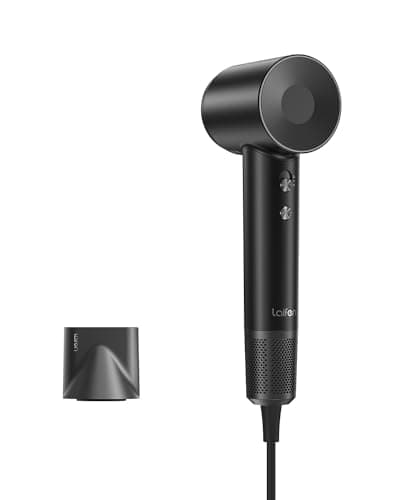 Laifen Swift High-Speed Hair DryerA 110,000 rpm brushless motor moving air at 22.3 m/s, which dries by air speed rather than temperature. That trade is the entire argument for high-speed dryers. | Cutting drying time without cranking the heat | High-speed brushless dryer | |
| 2 | 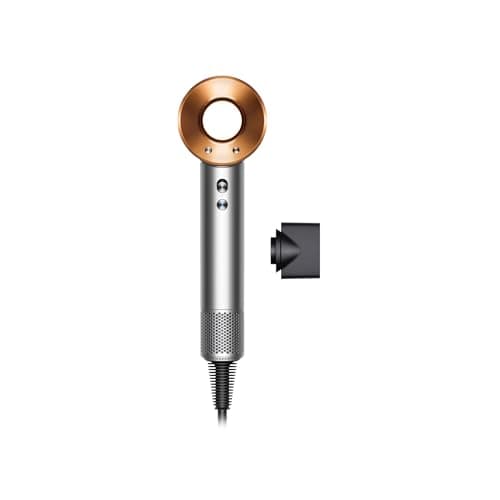 Dyson Supersonic Origin Hair DryerThe one dryer that tells you what each heat setting actually is in degrees, which makes it the only one in the category you can plan a routine around. | Published temperatures on every heat setting | 1,600W dryer |
#1 · Cutting drying time without cranking the heat
Laifen Swift High-Speed Hair Dryer
A 110,000 rpm brushless motor moving air at 22.3 m/s, which dries by air speed rather than temperature. That trade is the entire argument for high-speed dryers.
| Motor | 110,000 rpm brushless motorsource |
|---|---|
| Air speed | 22.3 m/ssource |
| Rated power | 1,400Wsource |
| Voltage | 120V — Laifen states plainly that it is not dual voltagesource |
| Heat regulation | Thermo-Control microprocessor monitors air temperature 100 times per second and alternates hot and cold airstreamssource |
| Ions | 200 million negative ionssource |
| Noise | 59 dBsource |
| Weight | 0.9 lb / 407 gsource |
| In the box | Dryer, one magnetic smooth nozzle, manual — no diffusersource |
What those numbers mean
Air speed and heat are two different ways to get water out of hair, and only one of them denatures protein. A dryer that moves air at 22.3 m/s can finish the job at a lower temperature, which is the whole reason this category exists.
0.9 lb is less than half the weight of the AC dryers it competes with. Over a fifteen-minute blowout on long hair that is the difference between finishing properly and giving up damp.
59 dB is a published figure, which almost no dryer brand offers. For context, that is conversational-speech territory rather than the vacuum-cleaner range most 1,875W dryers occupy.
What it does well
- Dries by air speed, so the heat setting can stay lower for the same result
- 0.9 lb, the lightest serious dryer in this roundup
- Publishes both an air-speed and a noise figure, which the mass market does not
- Temperature sampled 100 times a second
What it does not
- No air temperature in degrees — the settings are named hot, warm and cold
- 120V only. Laifen states it is not dual voltage, so it cannot travel abroad
- Only the smooth nozzle is in the box; the diffuser is a separate purchase
- The magnetic nozzles are proprietary; nothing else fits
- The narrow high-velocity stream takes practice on a big head of hair
Skip this one if: Skip it if you diffuse curls and want a wide, gentle airflow. A high-velocity stream is the opposite of what a curl pattern wants, and the diffuser is a separate purchase here rather than something in the box.
#2 · Published temperatures on every heat setting
Dyson Supersonic Origin Hair Dryer
The one dryer that tells you what each heat setting actually is in degrees, which makes it the only one in the category you can plan a routine around.
| Power | 1,600W at full powersource |
|---|---|
| Heat settings | 4 settings — 212F (100C), 176F (80C), 140F (60C), and constant coldsource |
| Speed settings | 3 — fast drying, regular drying, gentle dryingsource |
| Airflow | Up to 41 liters per secondsource |
| Heat regulation | Measures air temperature over 40 times a secondsource |
| Dimensions | 9.6 in long, 3.9 in wide, 3.1 in deepsource |
What those numbers mean
Four heat settings published as 212F, 176F and 140F plus cold is the disclosure the rest of the category refuses to make. It means you can pick a setting against a damage threshold instead of against a vague label.
Note where those numbers sit. Even the hottest setting, 212F, is below the 302F figure Shark names as its damage line and far below the temperatures at which the literature reports cuticle degradation.
1,600W is less nominal power than a US 1,875W dryer, and 41 l/s of airflow is how it compensates. Again: air speed, not temperature.
What it does well
- Publishes an actual temperature for every heat setting, uniquely in this category
- Airflow figure published in liters per second
- Top setting of 212F is below every damage threshold in the cited research
- Attachments attach magnetically and can be changed mid-dry
What it does not
- Costs several times what a competent 1,875W dryer costs
- 1,600W nominal will feel slower than an AC dryer on very thick hair
- Dyson does not sell through every retailer, so availability moves around
Skip this one if: Skip it if the budget is the constraint rather than the information. Everything the Supersonic does for hair health can be approximated by running a cheaper dryer on medium heat and high speed, which costs nothing.
#ad · how this is funded · price as of October 22, 2026
The real split: air speed against named temperatures
Strip away the marketing and each brand has published the number it is proud of, and stayed quiet about the other one.
Laifen publishes the air. 110,000 rpm and 22.3 m/s describe a dryer that removes water by moving air fast, which lets you finish at a lower heat setting. It publishes no air temperature in degrees at all — only that it samples temperature 100 times a second and alternates hot and cold.
Dyson publishes the heat. 212F, 176F and 140F are the most useful disclosure any dryer maker offers, because temperature is what decides thermal damage and a setting labeled HIGH is not a temperature. What Dyson does not publish here is a weight, which on a tool held above your head for fifteen minutes is not a trivial omission — and Laifen does, at 0.9 lb.
| Your situation | The answer |
|---|---|
| Your hair is bleached, fine or fragile and you want a number, not a word | Dyson — it names every setting in degrees |
| Arm fatigue ends your blow dry before your hair is dry | Laifen — 0.9 lb, published, against a Dyson weight that is not |
| You want the shortest possible drying time on thick hair | Either; both are built on the same air-over-heat trade |
| You travel internationally with a dryer | Neither on published specs — Laifen states it is 120V only, and Dyson publishes no voltage here. See travel dryers |
| You diffuse curls | Neither by default — the Laifen ships no diffuser, and Dyson attachments vary by configuration |
| Budget is the binding constraint | Laifen — it publishes more of its own specification sheet than dryers costing twice as much |
What the price gap actually buys
At roughly three times the money, the Dyson is buying you disclosure and a service ecosystem rather than raw performance you can point at on a spec sheet. The named temperatures are genuinely worth paying for if your hair is fragile, because they let you hold the tool to a limit.
What the gap does not buy, on published figures, is a proven airflow advantage — see the unit problem above — or a lighter tool, or a quieter one. Laifen publishes 59 dB from third-party testing; Dyson publishes no decibel figure, as almost nobody in the category does. Our quiet hair dryers page covers how thin that disclosure is across the board.
Both reviews go deeper on each tool individually: the Laifen Swift review works through the 120V limitation and the missing diffuser, and the Dyson Supersonic review covers what the named temperatures mean against the damage research.
The running cost, which is not the story
Because the wattages differ, it is worth doing the arithmetic once so nobody buys on it. The site uses the same method and the same rate everywhere.
cost = (watts / 1000) x hours x rate per kWh
Laifen 1,400W: (1.4) x 0.17 x $0.1834 = $0.044 | Dyson 1,600W: (1.6) x 0.17 x $0.1834 = $0.050
Using 18.34 cents per kilowatt-hour, the US average residential price for June 2026 reported by the EIA. Substitute your own rate from your bill.
Six tenths of a cent per dry. Over a year of daily drying that is under three dollars, against a purchase-price gap of roughly three hundred. Anyone selling either of these on efficiency is selling you a rounding error — the full wattage arithmetic works this through across the category.
Two things the price gap does not change
Neither ships a diffuser by default. Laifen states the box contains the dryer, one magnetic smooth nozzle, a manual and a QC card, and sells the diffuser separately. Dyson attachment sets vary by configuration. If you diffuse curls, budget for it on either side and check the specific bundle rather than the product family.
Neither publishes a decibel figure you can compare. Laifen publishes 59 dB from third-party testing; Dyson publishes nothing here, so a quieter-than claim in either direction is unsupported. That is the category norm rather than a failing of either brand, and quiet hair dryers sets out how thin the disclosure is.
The two-year view
Purchase price is the loudest number in this comparison and the least useful on its own, so it is worth asking what owning each one looks like after the first month.
- Laifen publishes a motor lifespan. The motor is bench-tested to 1,000 hours, which the company frames as up to 16 years at ten minutes a day. That is a bench figure rather than a field result, and it is more than most brands disclose at all.
- The Laifen's nozzles are proprietary and magnetic. They attach and rotate easily, which is genuinely better than a friction fit, and nothing from another brand will fit — so accessories are bought at Laifen's prices or not at all.
- Both depend on a clean air intake. Airflow is the mechanism in both dryers, and a clogged filter degrades the exact property you paid for. This is the maintenance task that decides how long either one feels new.
- Neither publishes a warranty length in the specification sets cited here, so check the specific listing rather than assuming parity.
What neither publishes
- A comparable airflow figure. One speed, one volume, no shared unit.
- A decibel figure from Dyson, so the noise comparison is one-sided by default.
- A weight from Dyson in this specification set, which is the figure that decides whether a session gets finished.
- An air temperature from Laifen, in degrees, which is the figure that decides damage.
- Durability or motor lifespan for either, beyond Laifen's bench-tested 1,000-hour motor rating.
Questions people actually ask
Is the Laifen Swift as good as the Dyson Supersonic?
On the specifications each publishes, they are strong at different things rather than one being a cheaper copy. Laifen publishes air speed, weight and a noise figure; Dyson publishes every heat setting in degrees. If your hair is fragile and you want a temperature you can hold the tool to, the Dyson's disclosure is worth the gap. If weight and drying speed are your problems, the Laifen publishes more about them.
Which has more airflow, the Laifen or the Dyson?
Nobody can honestly say. Laifen publishes 22.3 m/s, which is a speed. Dyson publishes up to 41 liters per second, which is a volume flow rate. Those are different physical quantities, and converting between them needs the nozzle area, which neither company publishes. Any article ranking them on airflow is comparing units that do not meet.
Is the Laifen Swift dual voltage like the Dyson?
The Laifen is not - it states plainly that it is 120V and not dual voltage, so it cannot be used abroad on 240V mains. Dyson does not publish a voltage figure in the specification set we cite for the Supersonic, so we will not claim one either way. If international travel is the requirement, check the specific unit before buying.
Does the Laifen Swift come with a diffuser?
No. The box contains the dryer, one magnetic smooth nozzle, a manual and a QC card; Laifen sells a diffuser as a separate accessory. Dyson attachment sets vary by configuration, so check the specific bundle. If you diffuse curls, that is a real cost to factor into the comparison on both sides.
Why is the Dyson Supersonic three times the price?
On published specifications, the clearest thing the extra money buys is disclosure - named temperatures at 212F, 176F and 140F, measured over 40 times a second - plus the brand's service and accessory ecosystem. It does not buy a proven airflow advantage, since the two figures are not comparable, and it does not buy a lighter or quieter tool on anything either company has published.
Sources
Every figure on this page traces to one of these. If a number here disagrees with the manufacturer, the manufacturer is right and we want to know — tell us.
Read next

Compare
Head-to-Head Comparisons
Spec-by-spec comparisons of the hair and grooming tools people are genuinely choosing between, with both options priced live.
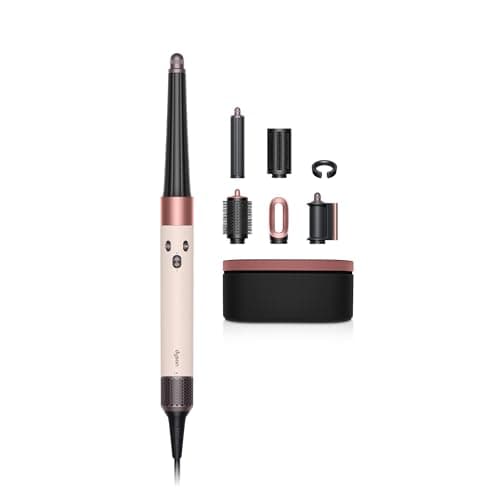
Top pick: Dyson Airwrap i.d. Multi-Styler and Dryer

Best Overall
The Best Hair Dryers, Chosen by Hair Type
Nine dryers compared on published wattage, airflow and temperature ceilings, then routed to the hair type each one genuinely suits.
Top pick: Laifen Swift High-Speed Hair Dryer
Swift Verdict
Laifen Swift Review
The Swift read from Laifen's own spec sheet: 110,000 rpm, 1,400W, 59 dB, and the 120V line that decides whether it can travel.
Top pick: Laifen Swift High-Speed Hair Dryer
Supersonic Verdict
Dyson Supersonic Review
The Supersonic read from its published specifications, including the combined temperature and airflow disclosure nothing else in the category matches.
Top pick: Dyson Supersonic Origin Hair Dryer

Quietest Published
The Quietest Hair Dryers
Four dryers assessed for noise, led by the quieter of the only two publishing a decibel figure - plus how to reason about the rest without inventing numbers.
Top pick: Laifen Swift High-Speed Hair Dryer
Dyson Verdict
Dyson Airwrap vs Dyson Supersonic
The Airwrap and Supersonic compared on published specs, with a clear answer on which of the two you actually need.
Top pick: Dyson Supersonic Origin Hair Dryer