How to Blow Dry Curly Hair
The single most useful change is not the temperature. It is the fan speed, and it is free.

How this page is funded: the buy links below are affiliate links, and Heat Index earns a commission on qualifying purchases at no cost to you. Nothing on this page was supplied by a manufacturer, and commission plays no part in the ranking — read the full disclosure. Picks are chosen from published specifications, not from hands-on testing; the method is written down so you can check it. Prices last verified October 23, 2026.
A curl holds its shape because strands are grouped together and the cuticle lies flat along them. That grouping is broken by mechanical force rather than primarily by heat — which means the biggest single cause of frizz when blow drying curls is fast, directed air, and turning the temperature down while leaving the fan on high fixes very little.
The method
- Detangle in the shower, with conditioner in, using fingers or a wide-tooth comb. Detangling dry curls is where breakage starts, and it is the step that decides how the rest goes.
- Do not towel-rub. Squeeze water out with a cotton t-shirt or a microfiber towel. Terry towel loops catch cuticle and lift it, which is frizz before you have even switched anything on.
- Apply product to soaking wet hair, not damp. Curl products need water to distribute evenly, and applying to damp hair leaves them sitting on the surface in patches.
- Attach the diffuser and set the LOWEST fan speed and MEDIUM heat. Not high heat. Medium.
- Cup a section into the diffuser bowl and hold it still against your head for 20 to 30 seconds. Do not move the dryer around — move to the next section instead.
- Do not touch the hair between sections. Every touch separates the curl grouping. This is the hardest rule and the most effective one.
- Finish each section with the cool shot before moving on. Cool air is what sets the cuticle flat after heat has made it moldable.
- Stop at about 80 percent dry and let the rest air dry. Over-drying is what turns a good curl day into a frizzy one.
Quick picks
Ranked, with the reasoning underneath. Tap any row to jump to that write-up; tap the price to check it on Amazon. Prices come from the live layer, never from this page.
| # | Product | Best for | Type | Price |
|---|---|---|---|---|
| 1 | 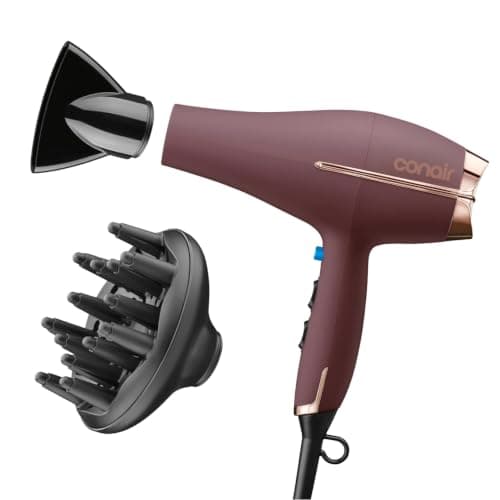 Conair InfinitiPro 1875W Salon Performance AC Motor Dryer (259BDNRY)An AC motor, a diffuser and a concentrator in the box, at a price where most dryers give you a DC motor and one nozzle. This is the sensible default. Conair InfinitiPro 1875W Salon Performance AC Motor Dryer (259BDNRY)An AC motor, a diffuser and a concentrator in the box, at a price where most dryers give you a DC motor and one nozzle. This is the sensible default. | The most drying power per dollar, with a diffuser included | 1,875W AC dryer | |
| 2 | 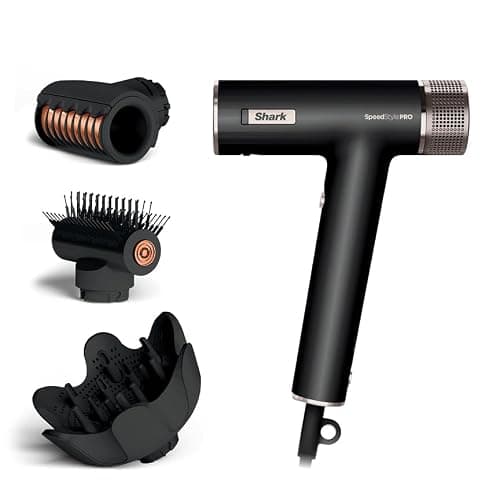 Shark SpeedStyle Pro Ionic Dryer (HD732)The rare dryer that publishes the numbers that matter: every heat setting in degrees, plus a ceiling it says it never exceeds at 230F, which is below every damage threshold in the literature. Shark SpeedStyle Pro Ionic Dryer (HD732)The rare dryer that publishes the numbers that matter: every heat setting in degrees, plus a ceiling it says it never exceeds at 230F, which is below every damage threshold in the literature. | A published temperature ceiling you can actually check | High-velocity dryer | |
| 3 | 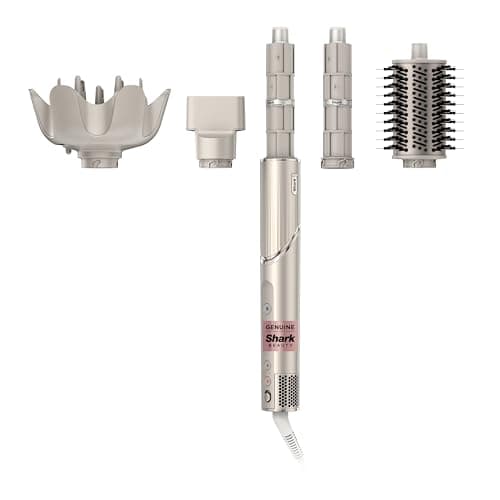 Shark FlexStyle Air Styling & Drying System (HD435)The one multi-styler whose published temperature ceiling is low enough to justify the price on hair that is already fragile, and it converts to a straight dryer in a twist. Shark FlexStyle Air Styling & Drying System (HD435)The one multi-styler whose published temperature ceiling is low enough to justify the price on hair that is already fragile, and it converts to a straight dryer in a twist. | One tool that dries and styles, on curly or coily hair | Multi-styler + dryer |
#1 · The most drying power per dollar, with a diffuser included
Conair InfinitiPro 1875W Salon Performance AC Motor Dryer (259BDNRY)
An AC motor, a diffuser and a concentrator in the box, at a price where most dryers give you a DC motor and one nozzle. This is the sensible default.
| Power | 1,875 watts, AC motorsource |
|---|---|
| Settings | 3 heat / 2 speed settingssource |
| Manufacturer claim | Up to 50 percent faster drying time and 3x longer dryer life than a DC motorsource |
| Attachments | Concentrator and diffusersource |
| Other | True cold-shot button, removable filtersource |
| Weight | 2.27 lbsource |
What those numbers mean
AC versus DC is the one motor distinction worth caring about. AC motors are heavier and last longer, and they are the reason a salon dryer survives daily use while a drugstore dryer does not.
The 50-percent and 3x figures are Conair's own claims about their AC motor relative to a DC one, not independent measurements. Read them as the manufacturer's positioning, which is exactly what they are.
2.27 lb is heavy for a home dryer. If you hold a dryer overhead for fifteen minutes, that weight is a real ergonomic cost and the lighter high-speed dryers are worth the price difference.
What it does well
- AC motor at a mass-market price, which is the genuinely uncommon part
- Diffuser in the box, so curly routines need nothing extra
- Removable filter and a true cold shot
- 1,875W is the practical maximum for a US household circuit
What it does not
- 2.27 lb, noticeably heavy in the hand
- Conair does not publish an air temperature, so heat settings are unquantified
- Three heat settings is a coarse grid next to digital tools
Skip this one if: Skip it if arm fatigue is your actual complaint. The AC motor that makes this durable is also what makes it heavy, and no amount of power fixes a tool you put down early.
#2 · A published temperature ceiling you can actually check
Shark SpeedStyle Pro Ionic Dryer (HD732)
The rare dryer that publishes the numbers that matter: every heat setting in degrees, plus a ceiling it says it never exceeds at 230F, which is below every damage threshold in the literature.
| Heat settings | Three published settings — low 65C, medium 80C, high 100C — plus a cool shot and a permanent cool modesource |
|---|---|
| Temperature ceiling | Measures and regulates temperature 1,000 times a second, never exceeding 230F, and never approaching 302Fsource |
| Power | 1,600 watts at 120 voltssource |
| Weight | 1.674 lbsource |
| Noise | About 83 decibelssource |
| Cord | Approximately 8 ftsource |
| Scalp Shield mode | Reduces air temperature to a level Shark states is optimized for scalp comfort and root drying, developed with dermatologistssource |
| Attachments | Three accessories per dryer, chosen from the DefrizzFast diffuser, QuickSmooth brush, Express Touchup brush, Lift & Stretch wide-tooth comb, Turbo concentrator and FrizzFighter finishing toolsource |
What those numbers mean
A stated ceiling of 230F is the single most useful specification on any dryer, and almost nobody publishes one. It puts the airflow well under the 302F figure Shark itself names as the damage line and far under the cuticle-degradation range in the research.
Shark also names each setting in degrees — 65C, 80C and 100C — which is disclosure the rest of the category mostly refuses. It means you can pick a setting against a damage threshold rather than against an unlabeled dial, and note that even the top setting lands under that 230F ceiling.
The accessory list is a choice rather than a fixed bundle, which matters more than it sounds. The DefrizzFast diffuser is the attachment that earns this dryer its place on curly and coily pages, so check it is one of the three in the configuration you buy.
What it does well
- Publishes a temperature ceiling AND every heat setting in degrees
- Published wattage, weight, cord length and even a decibel figure
- Regulates 1,000 times a second, the same control loop as the FlexStyle
- Scalp Shield mode is aimed squarely at root drying on fragile new growth
What it does not
- Shark publishes no airflow figure, so drying speed cannot be checked on paper
- 1,600W is less power than an 1,875W AC dryer, and the low ceiling compounds that
- Three accessories is a choice, so the diffuser is not guaranteed to be in the box
- The retail listing says 1,750W where Shark's own support article says 1,600W
Skip this one if: Skip it if you want maximum heat for a fast, poker-straight blowout on coarse hair. The ceiling that protects fragile hair is the same ceiling that will frustrate you here.
#ad · how this is funded · price as of October 23, 2026
#3 · One tool that dries and styles, on curly or coily hair
Shark FlexStyle Air Styling & Drying System (HD435)
The one multi-styler whose published temperature ceiling is low enough to justify the price on hair that is already fragile, and it converts to a straight dryer in a twist.
| Power | 1,300Wsource |
|---|---|
| Settings | 4 heat and 3 airflow settings, plus a cool shotsource |
| Heat regulation | Measures and regulates temperature 1,000 times per secondsource |
| Weight | Just over 1.5 lbsource |
| In the box (HD435) | Curl-defining diffuser, oval brush, Coanda curlers, styling concentratorsource |
What those numbers mean
One thousand temperature readings per second is not marketing garnish. A dryer that samples that often can hold a target instead of overshooting it, which is the difference between a stated setting and an actual one.
The convertible design is the practical argument. The same barrel that dries your hair rotates to become a styler, so a single purchase covers the drying step and the shaping step rather than two tools that both need storage.
1,300W is below the 1,875W most American dryers advertise. On thick hair that means a longer dry; on curly or coily hair it means the airflow is not shaking the pattern apart while it works.
What it does well
- Published heat regulation at 1,000 readings per second, the tightest figure any brand publishes at this price
- Converts between dryer and styler without swapping tools
- Diffuser and curl attachments come in the box on the HD435 rather than as extras
- Light enough at just over 1.5 lb to hold through a full blowout
What it does not
- 1,300W is genuinely less power than an 1,875W AC dryer, and thick hair will feel it
- The attachment set is bulky to store
- Costs several times what a competent 1,875W dryer costs
Skip this one if: Skip it if what you actually need is a fast dryer for thick hair and nothing else. A 1,875W AC dryer will dry the same head sooner and cost a fraction as much; the FlexStyle price buys styling versatility, not drying speed.
Why each step is there
| Step | Why |
|---|---|
| Detangle wet with conditioner | Wet hair with slip has far less friction. Dry detangling snaps the fiber at the bends |
| No terry towel | Towel loops physically catch cuticle scales and lift them |
| Product on soaking hair | Water is the distribution medium. Damp hair means patchy coverage |
| Lowest fan speed | Air velocity is what separates curl clumps. This is the main variable |
| Diffuser | Spreads the same air volume over a much larger area, dropping the velocity |
| Hold still, do not move | Movement is mechanical disruption, which is the thing you are avoiding |
| Do not touch between sections | Same reason. Hands are mechanical disruption too |
| Cool shot | Cool air re-sets the hydrogen bonds and closes the cuticle |
| Stop at 80 percent | The last 20 percent is where over-drying and frizz happen |
Tension drying, for coily hair
If your hair is 4C or tightly coiled and you want it stretched rather than defined, the method changes. Instead of a diffuser, use a narrow concentrator and hold each section taut with your hand or a brush while directing air along it, root to tip.
The tension does the elongating and the heat only sets it, which means the temperature can stay lower than a comb attachment would need. There is more on this in dryers for 4C hair.
Common mistakes
- High fan speed. The single biggest one, and free to fix.
- Touching it while it dries. Understandable and destructive.
- Using a concentrator on curls. A concentrator narrows and speeds the air, which is the opposite of what a curl wants.
- Drying it completely. Stop at 80 percent.
- Skipping the cool shot, and then wondering why it frizzed an hour later.
- Brushing after drying. A brush through dry curls separates every clump you just formed.
If you want the smooth finish instead of the defined curl, that is a different technique — see blow-dry brushes for curly hair and how to get a blowout at home.
Questions people actually ask
How do you blow dry curly hair without frizz?
Use the lowest fan speed with a diffuser, medium heat rather than high, and do not touch the hair while it dries. Fast air is what separates the strand groupings that make a curl, so air speed matters more than temperature. Finish each section with cool air and stop at about 80 percent dry.
Should I diffuse or air dry curly hair?
Diffusing is often gentler than it sounds. Air drying avoids heat but usually means hours of the hair being touched, moved and rubbed while wet, and wet hair is mechanically weaker than dry hair. Diffusing on low speed with medium heat dries the curl in place with minimal handling.
What setting should I use to diffuse curly hair?
Lowest fan speed, medium heat. The low speed is what protects the curl grouping and it is the setting most people have never used. The heat setting matters far less — on the Shark SpeedStyle it is moot entirely, since Shark states it never exceeds 230F on any setting.
Why does my curly hair frizz as it dries?
Usually air speed or touching. Fast directed air separates the strands grouped into a curl and lifts the cuticle; hands do the same thing mechanically. Both are free to fix. If the frizz appears only after the hair is fully dry, you are probably over-drying — stop at around 80 percent.
Can I blow dry curly hair every day?
The AAD's guidance is to limit heat styling generally. On the specific numbers, dryers are the mildest heat tool here — the ones that publish figures top out at 212F to 230F, well under the roughly 302F at which cuticle degradation is reported. Diffusing on low speed daily is a much lower exposure than daily ironing, though less often is still better.
Sources
Every figure on this page traces to one of these. If a number here disagrees with the manufacturer, the manufacturer is right and we want to know — tell us.
- InfinitiPro by Conair 1875-watt salon dryer (259BDNRY)
- Shark SpeedStyle Pro ionic dryer, curly and coily (HD732) — product listing
- Shark FlexStyle air multi-styler and drying system (HD435) product listing
- American Academy of Dermatology — tips for healthy hair
- Thermal-induced changes in cuticle and cortex of chemically treated hair, PubMed Central
Read next
Reference
Guides and Reference
Fourteen reference guides covering temperature by hair type, running costs, spec explainers and technique, every figure linked to its source.
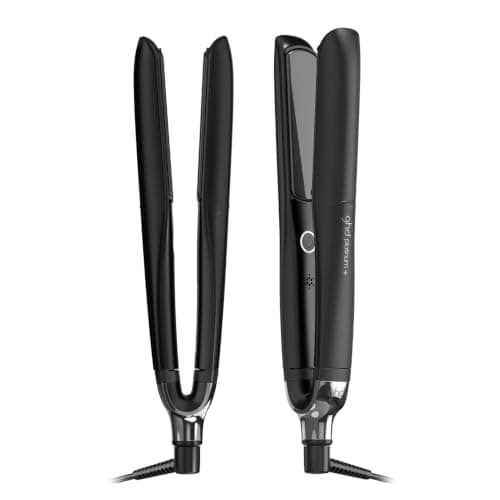
Top pick: ghd platinum+ Styler
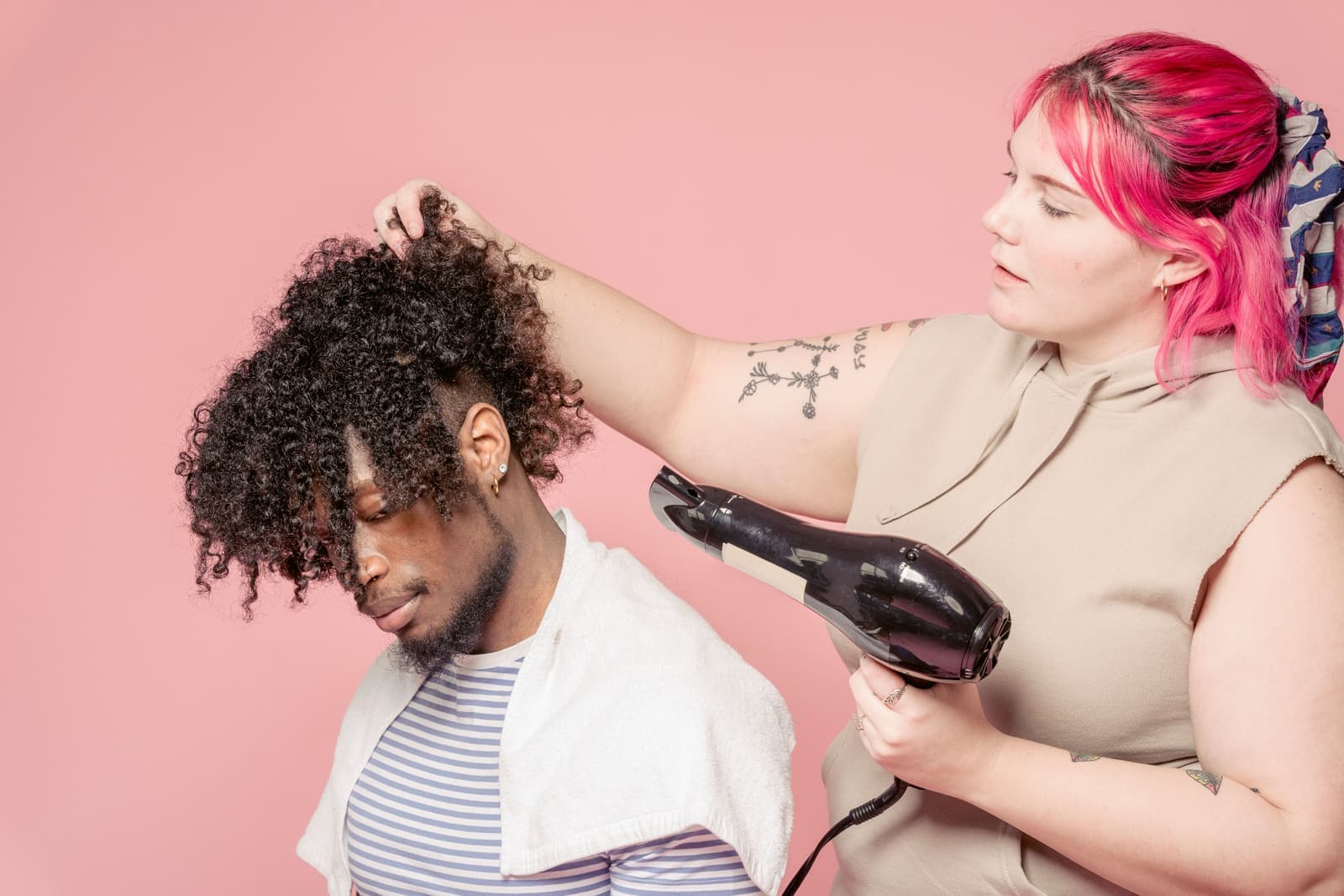
Best for Curls
The Best Hair Dryers for Curly Hair
Five dryers ranked for curls on diffuser quality, airflow control and published heat ceilings — including which ones ship a diffuser and which quietly do not.
Top pick: Conair InfinitiPro 1875W Salon Performance AC Motor Dryer (259BDNRY)
Curly Hair Guide
Hair Styling Tools for Curly Hair
Every dryer, iron, brush and styler we recommend for curly hair, with the airflow and technique rules that apply to all of them.
Top pick: Conair InfinitiPro 1875W Salon Performance AC Motor Dryer (259BDNRY)
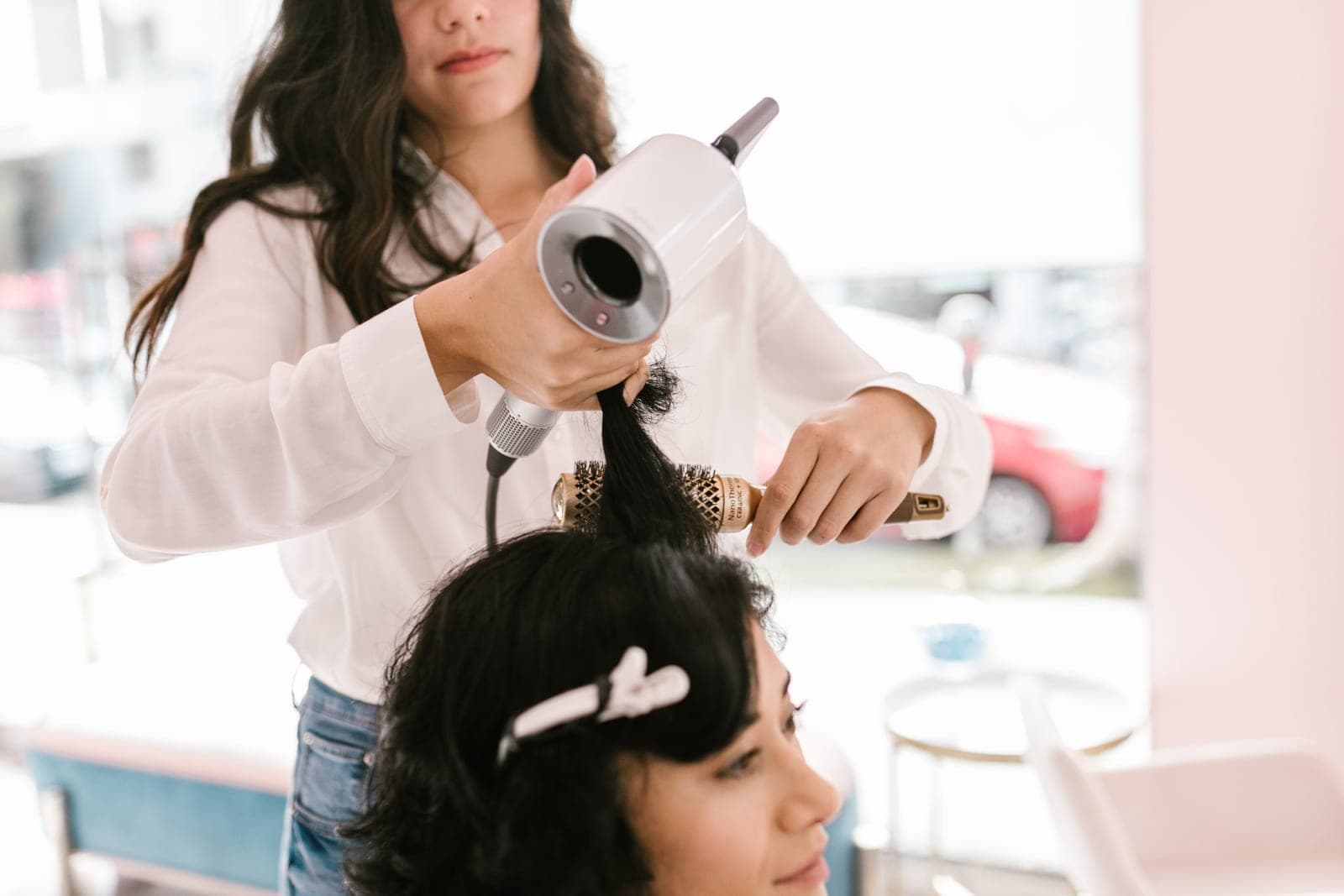
Best for Curls
The Best Blow-Dry Brushes for Curly Hair
Four blow-dry brushes for curly hair, ranked on heat control, with an honest account of the finish they produce versus a flat iron.
Top pick: Shark FlexStyle Air Styling & Drying System (HD435)

Blowout Technique
How to Get a Blowout at Home
The salon blowout method step by step — sectioning, tension and the cool shot — with the tools that make each stage easier.
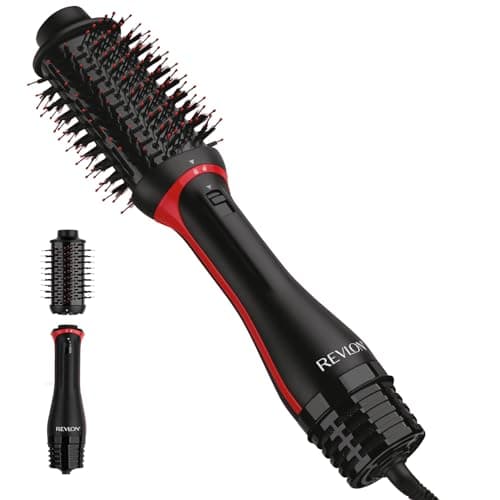
Top pick: Revlon One-Step Volumizer PLUS 2.0
Best for 4C Hair
The Best Hair Dryers for 4C and Coily Hair
Four dryers for 4C and coily hair, ranked on published temperature ceilings and the attachments tension drying actually needs.
Top pick: Shark SpeedStyle Pro Ionic Dryer (HD732)