Dyson Airwrap vs Dyson Airstrait
One curls with air, the other straightens with air. They are priced alike and sold on the same promise, which is exactly why people buy the wrong one.

How this page is funded: the buy links below are affiliate links, and Heat Index earns a commission on qualifying purchases at no cost to you. Nothing on this page was supplied by a manufacturer, and commission plays no part in the ranking — read the full disclosure. Picks are chosen from published specifications, not from hands-on testing; the method is written down so you can check it. Prices last verified October 23, 2026.
Almost every other comparison on this site puts two rival products side by side. This one does not. The Airwrap and the Airstrait are both made by Dyson, both sit at the top of the price range, and both are sold on the same headline idea — styling with airflow instead of hot metal. What they are not is alternatives to each other. One curls and the other straightens, and neither does the other job.
That is the whole reason this page exists. When two tools share a brand, a price bracket and a marketing promise, it is easy to read them as a good version and a better version of the same thing. Buy on that assumption and you spend a lot of money on a tool that physically cannot produce the look you wanted.
The mechanisms are genuinely different. The Airwrap uses the Coanda effect: fast air moving over a curved surface drags the surrounding air, and the hair in it, along the barrel — so the barrel wraps the section for you and sets the curl with airflow. The Airstrait has no barrel. Its two arms close around a section and aim converging jets of air downward through it, so the hair dries and is pulled straight in the same pass. There are no plates in it at all.
The published specifications, side by side
| Dyson Airwrap i.d. | Dyson Airstrait | |
|---|---|---|
| Motor | 13-blade impeller to 110,000 rpm | 13-blade impeller to 106,000 rpm, moving 11.9 liters of air per second |
| Air pressure | 3.2 kPa | Up to 3.6 kPa |
| Power | Not published | 1,600W at 120V |
| Temperatures | Three settings, held below 302F by Intelligent Heat Control | 175F, 230F and 285F from wet; 250F or 285F dry, plus Boost |
| Heat regulation | Intelligent Heat Control | Glass bead thermistors in the arms, up to 30 times a second |
| Weight | Not published | 2.2 lb |
| Works from | Damp hair | Wet hair |
| What it produces | Curls, waves and volume; smoothing with brush attachments | A straight, smooth finish only |
| Extras | Ionizer, Bluetooth to the MyDyson app | No app, no ionizer claim |
Two things in that table are worth sitting with. The first is that the Airstrait spins slower and pushes harder — 106,000 rpm against 110,000, but up to 3.6 kPa against 3.2. That is not a worse motor; it is a motor tuned for a different job. Curling with the Coanda effect needs fast air over a curved surface. Pulling a section straight needs pressure driven down through it.
The second is a disclosure difference that runs the other way. The Airstrait publishes its wattage, its weight and every one of its temperatures as specific numbers. The Airwrap publishes neither a wattage nor a weight, and states its heat as a ceiling rather than a set of figures. Both approaches tell you something real, but if you like knowing exactly what a tool runs at, the Airstrait tells you more.
Quick picks
Ranked, with the reasoning underneath. Tap any row to jump to that write-up; tap the price to check it on Amazon. Prices come from the live layer, never from this page.
| # | Product | Best for | Type | Price |
|---|---|---|---|---|
| 1 | 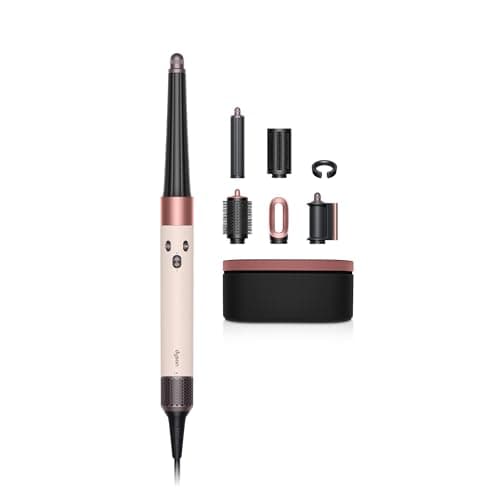 Dyson Airwrap i.d. Multi-Styler and DryerIt wraps hair around the barrel with airflow rather than heat, and it holds below 302F while doing it. That is a genuinely different mechanism, not a better version of a curling iron. | Curling with air instead of a hot barrel | Coanda multi-styler | |
| 2 | 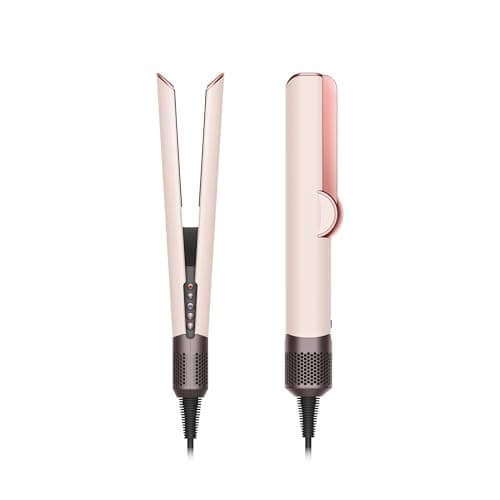 Dyson Airstrait StraightenerIt straightens with two converging jets of air instead of hot plates, which means it works from wet and its highest published temperature is still well under what a conventional iron runs at. | Drying and straightening in one pass, with no plate contact | Wet-to-dry air straightener |
#1 · Curling with air instead of a hot barrel
Dyson Airwrap i.d. Multi-Styler and Dryer
It wraps hair around the barrel with airflow rather than heat, and it holds below 302F while doing it. That is a genuinely different mechanism, not a better version of a curling iron.
| Motor | 13-blade impeller spinning at up to 110,000 rpm, generating 3.2 kPasource |
|---|---|
| Heat control | Intelligent Heat Control keeps the temperature below 302Fsource |
| Heat settings | Three precise heat settingssource |
| Ions | Ionizer adds negatively charged particles to the airflow to reduce staticsource |
| Connectivity | Bluetooth to the MyDyson app for a personalized curling sequencesource |
What those numbers mean
The Coanda effect is the actual product. Fast-moving air over a curved surface pulls nearby air, and hair, along with it — so the barrel wraps the section for you and sets it with airflow rather than by pressing hot metal onto it.
A published ceiling below 302F is the number that justifies the price to anyone with fragile hair. Compare it to a 455F curling iron doing the same job.
It works on damp hair by design, which collapses the dry-then-style sequence into one step. That is where the time saving comes from, not from being faster per section.
What it does well
- Sets curls below 302F, far under any conventional iron
- Dries and styles in one pass from damp
- Three published heat settings and a stated ceiling
- No hot metal in contact with the hair
What it does not
- The most expensive tool in this registry by a wide margin
- Curls set with air drop out faster than curls set with a hot barrel
- A large attachment set to store
Skip this one if: Skip it if you need curls that survive a humid day at work. Air-set curls are gentler and looser, and on hair that resists holding a curl they will fall out well before an iron-set curl would.
#ad · how this is funded · price as of October 23, 2026
#2 · Drying and straightening in one pass, with no plate contact
Dyson Airstrait Straightener
It straightens with two converging jets of air instead of hot plates, which means it works from wet and its highest published temperature is still well under what a conventional iron runs at.
| Motor | 13-blade impeller spinning up to 106,000 rpm, propelling 11.9 liters of air per secondsource |
|---|---|
| Air pressure | Up to 3.6 kPa, enough to straighten hair as it driessource |
| Power | 1,600W at 120Vsource |
| Wet-to-dry temperatures | Three preset airflow temperatures: 175F, 230F and 285Fsource |
| Dry styling temperatures | 250F or 285F, plus an optional Boost modesource |
| Heat regulation | Glass bead thermistors in the machine arms regulate airflow temperature up to 30 times a secondsource |
| Weight | 2.2 lbsource |
What those numbers mean
There are no plates, so nothing hot is ever pressed onto the hair. The two arms close to aim converging airflow down the section, and the straightening is done by that airflow and the tension of your own hand.
285F is the highest number it publishes, and that is the figure to weigh against a conventional flat iron. It is below the temperature at which published research reports cuticle degradation beginning, and roughly 165F below where a titanium iron tops out.
Working from wet is the structural difference from every other straightener here. Drying and straightening collapse into one pass, which is where the time comes back — not from being faster per section.
1,600W and 2.2 lb are both published, which is more than Dyson discloses about the Airwrap. On a tool at this price, a stated wattage and a stated weight are worth something.
What it does well
- Works from wet, collapsing drying and straightening into one pass
- No hot plates ever touch the hair
- Every temperature is published, and the highest is 285F
- Thermistors regulate airflow temperature up to 30 times a second
- Published wattage and published weight, which Dyson does not state for the Airwrap
What it does not
- It only straightens — it will not curl, and it is not a conventional dryer
- At 2.2 lb it is heavier than most corded irons
- Air-straightened hair is smoothed rather than pressed, so it will not hold a poker-straight finish as long as plates do
- Among the most expensive tools in this registry
Skip this one if: Skip it if you want one tool that does more than one thing, or if you need a glass-flat finish that survives humidity. It does a single job without plate contact; a plated iron presses the cuticle flat and holds that shape longer, and a multi-styler will also curl.
#ad · how this is funded · price as of October 23, 2026
What the Airstrait does that the Airwrap cannot
- It straightens from genuinely wet hair. Not damp — wet. Drying and straightening become one pass, which is where the time saving comes from rather than from being quicker per section.
- It produces a straight finish without plate contact. Every other way of getting that look in this registry presses heated metal onto the hair. This does not, which is the entire argument for it on hair that is bleached, fine or already damaged.
- It publishes a complete temperature set. 175F, 230F and 285F from wet; 250F or 285F when styling dry. You can pick a number rather than a vague low-medium-high.
- It states a wattage and a weight. 1,600W and 2.2 lb. The Airwrap gives you neither.
What the Airwrap does that the Airstrait cannot
- It curls. This is not a minor advantage, it is a different capability. The Airstrait cannot produce a curl, a wave or a bend at all.
- It is a styling system rather than one tool. Barrels and brushes let it add volume at the root, smooth, and shape ends — several looks from one machine.
- It publishes a hard ceiling. Below 302F, stated as a limit rather than a target, which is still the most useful single number anyone in this category discloses.
- It is lighter in the hand than 2.2 lb, although Dyson does not publish by how much — which is a gap, not a win.
The temperature claims, compared honestly
Both tools are sold on heat, and the numbers reward a careful read. The Airwrap is capped below 302F. The Airstrait's highest published figure is 285F — which means the Airstrait's hottest setting sits under the Airwrap's ceiling, not above it. Anyone assuming the straightener must run hotter because straightening feels more aggressive has it backwards.
For context, that 285F maximum is roughly 165F below where a titanium flat iron tops out, and both Dysons sit under the temperature at which published research reports cuticle degradation beginning. If heat exposure is the thing driving your decision, the honest conclusion is that this comparison does not separate them meaningfully — they are both in the low-temperature group, and a conventional iron is the outlier. Our heat damage guide covers what those thresholds actually mean.
What does separate them is contact. The Airstrait never presses anything hot onto the hair; the Airwrap never does either. Compared to any plated iron, both avoid the mechanism that does most of the visible damage. That is a point in favor of the pair of them, not of one over the other.
How each one changes the routine
The specifications decide what each tool can do. How it slots into a morning decides whether you will keep using it, and here the published starting condition matters more than anything else on the sheet.
The Airstrait is specified to start on wet hair. That removes a step rather than speeding one up: there is no towel-dry-then-rough-dry-then-iron sequence, because the drying and the straightening are the same pass. The trade is that you are working with tension from your own hand rather than clamped plates, so the result depends on how slowly and evenly you draw it through — and on long or dense hair that is more sections, not fewer.
The Airwrap is specified to start on damp hair, which means a rough-dry first if you have come straight out of the shower. From there it is an attachment-swapping tool: a barrel for curls, a brush for smoothing, and a different attachment for root volume. That is the source of its versatility and also its main practical cost — more parts to fit, swap and store than a single-purpose tool has.
Neither of these is a conventional dryer, and that catches people out. If your routine currently starts with ten minutes under a 1,875W AC dryer because you have a lot of hair to move, keep that dryer. Both Dysons are styling tools that happen to dry as part of styling, which is a different job from drying fast.
The verdict, with a buyer attached
Buy the Airstrait if you wear your hair straight and that is the end of the matter. It is the only tool here that takes wet hair to a finished straight style in one pass without plate contact, and it tells you exactly what temperature it is doing that at. If your current routine is dry-then-flat-iron, this replaces both steps.
Buy the Airwrap if you ever want a curl, a wave or root volume. It is also the better choice if you want one machine to produce several different looks, or if a published sub-302F ceiling is the specific reassurance you are paying for. It can smooth with its brush attachments, so it is the more versatile of the two even though it is not the better straightener.
Buy neither in two cases. If you want a poker-straight finish that holds through a humid day, air-straightened hair is smoothed rather than pressed and a plated iron will hold that shape longer for a fraction of the money. And if what you really need is to dry a lot of thick hair quickly, neither of these is a conventional dryer — a proper AC dryer for thick hair will do it sooner and cheaper.
There are longer write-ups in the Airwrap review and the Airstrait review, and the Dyson Corrale is worth a look if you want Dyson's plated straightener instead of its air one. If the Airwrap appeals but the price does not, cheaper alternatives widens the field, and Airwrap vs FlexStyle is the multi-styler comparison most people ask for next.
Questions people actually ask
What is the difference between the Dyson Airstrait and the Dyson Airwrap?
The Airwrap curls, waves and adds volume using the Coanda effect, where fast air over a curved barrel wraps the section for you. The Airstrait only straightens: its two arms aim converging jets of air down through a section so hair dries and pulls straight in one pass, with no barrel and no plates. They are not two versions of one tool — the Airstrait cannot curl and the Airwrap is not a dedicated straightener.
Can the Dyson Airstrait curl hair?
No. It has no barrel and no curling attachments, and its mechanism is converging downward airflow designed to pull a section straight. If you want curls or waves from a Dyson air tool, the Airwrap is the one that does it.
Does the Airwrap or the Airstrait run hotter?
The Airwrap is held below 302F by Intelligent Heat Control. The Airstrait's highest published temperature is 285F, so its hottest setting is actually below the Airwrap's ceiling. Both are far below the 450F a titanium flat iron can reach, and neither presses hot metal onto the hair.
Can the Dyson Airstrait be used on dry hair?
Yes. Dyson publishes two dry-styling temperatures, 250F and 285F, plus an optional Boost mode, alongside the three wet-to-dry settings of 175F, 230F and 285F. Working from wet is the headline feature, but dry styling is a published mode rather than a workaround.
Which one should I buy if I have fine or damaged hair?
Decide on the style you want first, because on heat exposure the two are close enough that it should not be the deciding factor — 285F against a sub-302F ceiling, and neither one touches the hair with a hot surface. If you wear it straight, the Airstrait. If you want curls or volume, the Airwrap. Either is gentler than a plated iron on that measure.
Sources
Every figure on this page traces to one of these. If a number here disagrees with the manufacturer, the manufacturer is right and we want to know — tell us.
Read next
Compare
Head-to-Head Comparisons
Spec-by-spec comparisons of the hair and grooming tools people are genuinely choosing between, with both options priced live.
Top pick: Dyson Airwrap i.d. Multi-Styler and Dryer
Airstrait Verdict
Dyson Airstrait Review
The Airstrait read from its published specifications: how straightening with airflow works, what 285F means next to a 450F iron, and who should skip it.
Top pick: Dyson Airstrait Straightener
Airwrap Verdict
Dyson Airwrap i.d. Review
The Airwrap read from its published specifications: how the Coanda effect works, what the heat ceiling means, and who should skip it.
Top pick: Dyson Airwrap i.d. Multi-Styler and Dryer
Corrale Verdict
Dyson Corrale Review
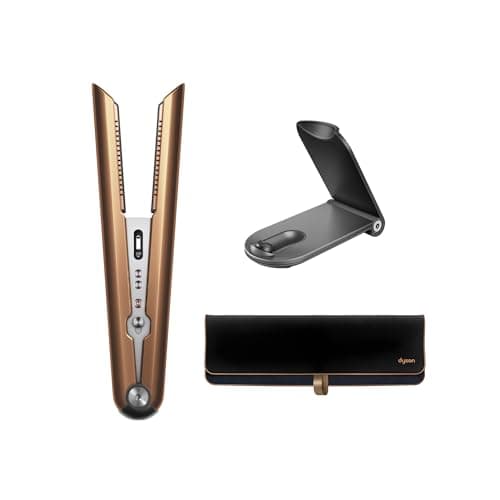
The Corrale read from Dyson's published specs: flexing plates, 30 minutes cordless, three named temperatures - and the comparison hiding in the footnote.
Top pick: Dyson Corrale Straightener
Best Overall
The Best Hair Straighteners and Flat Irons
Six flat irons compared on plate material, plate length and published temperature range, then matched to hair type.
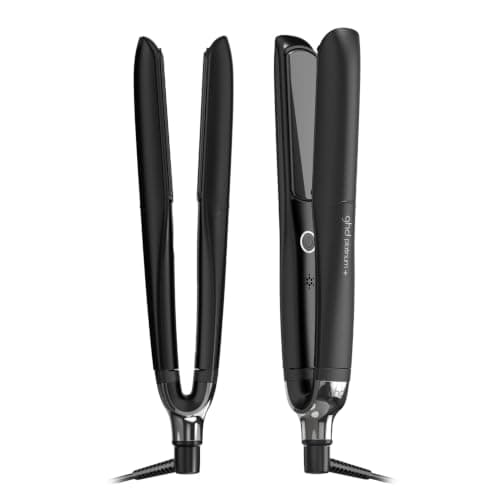
Top pick: ghd platinum+ Styler
Best for Damaged Hair
The Best Flat Irons for Damaged and Bleached Hair
Four flat irons for damaged and bleached hair, ranked strictly on published temperature and how precisely each holds it.
Top pick: ghd platinum+ Styler