Clipper Guard Sizes Explained
The numbering system is genuinely simple once somebody tells you what it means, and almost nobody does.
How this page is funded: the buy links below are affiliate links, and Heat Index earns a commission on qualifying purchases at no cost to you. Nothing on this page was supplied by a manufacturer, and commission plays no part in the ranking — read the full disclosure. Picks are chosen from published specifications, not from hands-on testing; the method is written down so you can check it. Prices last verified October 23, 2026.
The rule: the guard number is how many eighths of an inch of hair it leaves. A #1 leaves 1/8 inch. A #4 leaves 4/8, which is half an inch. An #8 leaves 8/8 — a full inch. To get millimeters quickly, multiply the guard number by roughly 3.
That is the whole system, and knowing it means you never need a chart again. Here is the chart anyway.
| Guard | Inches | Millimeters | Typical use |
|---|---|---|---|
| #0 (no guard) | 1/32 | ~0.8 mm | Skin fade, bald taper |
| #0.5 | 1/16 | ~1.5 mm | Very short fade |
| #1 | 1/8 | ~3 mm | Short sides, low fade |
| #1.5 | 3/16 | ~4.5 mm | Between 1 and 2, useful for blending |
| #2 | 1/4 | ~6 mm | The most common sides length |
| #3 | 3/8 | ~10 mm | Longer sides, short all-over buzz |
| #4 | 1/2 | ~13 mm | Short back and sides, top on a buzz |
| #5 | 5/8 | ~16 mm | Top length, longer buzz |
| #6 | 3/4 | ~19 mm | Longer top |
| #7 | 7/8 | ~22 mm | Long top |
| #8 | 1 | ~25 mm | The longest common guard |
Quick picks
Ranked, with the reasoning underneath. Tap any row to jump to that write-up; tap the price to check it on Amazon. Prices come from the live layer, never from this page.
| # | Product | Best for | Type | Price |
|---|---|---|---|---|
| 1 | 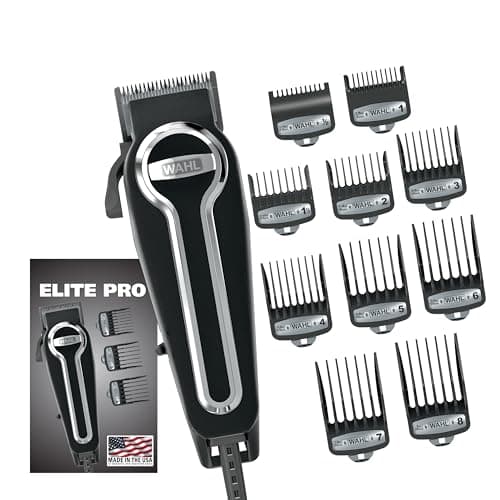 Wahl Elite Pro Corded High-Performance Clipper Kit (79602)Ten metric-labeled guards and a taper lever, corded so it never fades mid-cut. This is the home haircut kit that behaves like a barber's tool. Wahl Elite Pro Corded High-Performance Clipper Kit (79602)Ten metric-labeled guards and a taper lever, corded so it never fades mid-cut. This is the home haircut kit that behaves like a barber's tool. | Cutting your own hair at home, properly | Corded home clipper kit | |
| 2 | 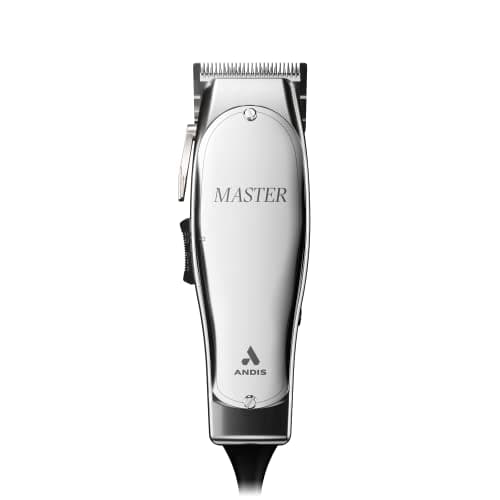 Andis Master Adjustable-Blade ClipperCarbon-steel blades adjustable from 000 to 1 in an aluminum body at 1.25 lb — the tool barbers actually use, with a lever instead of a guard for the close end. Andis Master Adjustable-Blade ClipperCarbon-steel blades adjustable from 000 to 1 in an aluminum body at 1.25 lb — the tool barbers actually use, with a lever instead of a guard for the close end. | Close, adjustable cutting on any hair texture | Professional adjustable clipper | Check price#ad |
#1 · Cutting your own hair at home, properly
Wahl Elite Pro Corded High-Performance Clipper Kit (79602)
Ten metric-labeled guards and a taper lever, corded so it never fades mid-cut. This is the home haircut kit that behaves like a barber's tool.
| Blades | Self-sharpening precision stainless steel blades, stated to cut hair 40 percent fastersource |
|---|---|
| Motor | 15 percent more power than Wahl's PowerDrive premium motorsource |
| Guards | 10 attachment combs — 1.5, 3, 4.5, 6, 10, 13, 16, 19, 22 and 25 mmsource |
| Taper | Adjustable taper lever for fading and blendingsource |
| Kit contents | Corded clipper, 10 combs, blade guard, storage case, comb, scissors, cape, blade oil and cleaning brushsource |
What those numbers mean
Corded is the right choice for a home clipper and the one people regret not making. A cordless clipper loses torque as the battery drops, and torque loss mid-cut is what produces the tug-and-skip that ruins a fade.
Guards labeled in millimeters rather than only by number is a real usability win, because the number system is eighths of an inch and nobody remembers that under pressure.
The taper lever is what separates a clipper from a beard trimmer. It lets you move between two guard lengths continuously, which is the only way to blend a fade without a visible line.
What it does well
- Corded, so torque never drops mid-cut
- Ten guards spanning 1.5 mm to 25 mm, labeled in millimeters
- Taper lever makes actual blending possible
- Full kit including cape, scissors and case
What it does not
- Corded means a cable to work around on the back of your own head
- The 40-percent and 15-percent figures are Wahl's own within-brand claims
- Not designed for wet use
Skip this one if: Skip it if you only need to tidy a neckline and edges. A detail trimmer is smaller, cordless and far easier to control for that job, and this kit is more tool than the task needs.
#2 · Close, adjustable cutting on any hair texture
Andis Master Adjustable-Blade Clipper
Carbon-steel blades adjustable from 000 to 1 in an aluminum body at 1.25 lb — the tool barbers actually use, with a lever instead of a guard for the close end.
| Motor | 14,000 cutting strokes per minutesource |
|---|---|
| Blades | Extra-sharp carbon-steel blades, adjustable from size 000 to 1source |
| Housing | aluminum casingsource |
| Weight and size | 1.25 lb, 2 x 1.75 x 6 insource |
| Power | 120V / 60 Hzsource |
| Control | Thumb-controlled on/off for one-handed operationsource |
What those numbers mean
The 000-to-1 lever range is the point. It covers the closest part of a fade continuously, where guards can only step. That is why this is a fading clipper and the Wahl kit is a length-cutting kit.
Carbon steel takes a sharper edge than stainless and holds it well, at the cost of needing oil and a dry storage spot. It will rust if you ignore both.
An aluminum body at 1.25 lb feels heavy in the hand and that is deliberate: the mass is what keeps the clipper stable against the head instead of chattering.
What it does well
- Continuous 000-to-1 adjustment, which is what fades need
- Carbon-steel blades take and hold a sharper edge than stainless
- aluminum body, built for daily professional use
- One-handed thumb control
What it does not
- Carbon steel requires oiling and will rust if neglected
- No guards included in the base clipper
- 1.25 lb is heavy for a long session on your own head
Skip this one if: Skip it if this is your first clipper and you want to cut your own hair. It ships without guards, it demands maintenance, and the adjustable lever rewards skill you have not built yet.
The taper lever, and why guards are not enough
Guards step in fixed increments. A #2 is 6 mm and a #3 is 10 mm, and there is nothing available between them — which is a visible step on the side of a head, and it is why a haircut done with guards alone looks like it was done with guards alone.
A taper lever adjusts the blade continuously between two guard lengths, which is the only way to blend that step. It is the single feature separating a clipper from a beard trimmer with big guards, and it is why the Wahl and Andis are the picks on this page. The Andis's lever spans 000 to 1 continuously, covering the closest part of a fade where guards cannot help at all.
Which lengths to actually use
- A basic buzz all over: one guard, usually #3 or #4. Simplest possible haircut and hard to get wrong.
- Short back and sides: #2 on the sides, #4 or longer on top, blended at the transition with the lever.
- A low fade: #0.5 or #1 at the bottom, #2 in the middle, #3 above, blending each join.
- Cleaning up a neckline only: no guard, and a light hand. This is the one job a detail trimmer does better than a clipper.
- Always start one guard longer than you think. You can always take more off. You cannot put it back.
The rules that prevent regret
- Cut dry. Wet hair hangs longer and springs up shorter as it dries, so a guard that looks right wet finishes noticeably short.
- Against the grain. Clippers cut by lifting hair into the blade. Going with the growth lays it flat and leaves it long, which is why one pass looks uneven.
- Overlap every pass. Each stroke covers part of the previous one. Gaps produce the lines people call steps.
- Blend last, with the guard off and the lever doing the work, flicking out of the head at each join.
- Two mirrors for the back, or a phone with the camera on. That is where home haircuts go wrong, and it is a visibility problem rather than a technique one.
The full clipper comparison is on best hair clippers for home use, and beard trimmer versus electric shaver covers the neighboring category decision.
Questions people actually ask
What do clipper guard numbers mean?
The guard number is how many eighths of an inch of hair it leaves. A #1 leaves 1/8 inch (about 3 mm), a #4 leaves 4/8 which is half an inch (about 13 mm), and an #8 leaves a full inch (about 25 mm). Multiply the guard number by roughly 3 to get millimeters.
What is a number 2 clipper guard in mm?
About 6 mm, or 1/4 inch. It is the most commonly used length for the sides of a short back and sides. The Wahl Elite Pro kit publishes its combs directly in millimeters, which includes a 6 mm guard, so you do not have to translate the number at all.
Do clipper guard sizes vary between brands?
The numbering convention is consistent but not universal — some brands offer half sizes others do not, and a few label only in millimeters. The reliable approach is to check the millimeter marking stamped on the guard itself before your first cut with any new clipper, rather than assuming a #3 is the same everywhere.
What guard should I use for a first home haircut?
Start at a #4 (half an inch) all over and work down if it is too long. Starting long is the single most useful rule in home haircutting, because you can always take more off and you cannot put it back. Cut dry and against the direction of growth.
Can I fade my hair with guards alone?
Not cleanly. Guards step in fixed increments, so the join between a #2 and a #3 is a visible line. Blending requires a taper lever, which adjusts the blade continuously between guard lengths — both the Wahl Elite Pro and the Andis Master have one, and the Andis's spans 000 to 1 for the closest part of a fade.
Sources
Every figure on this page traces to one of these. If a number here disagrees with the manufacturer, the manufacturer is right and we want to know — tell us.
Read next

Reference
Guides and Reference
Fourteen reference guides covering temperature by hair type, running costs, spec explainers and technique, every figure linked to its source.
Top pick: ghd platinum+ Styler
Best Clipper
The Best Hair Clippers for Home Use
Four clippers ranked for home haircutting on motor type, guard range and taper adjustment, with why corded beats cordless here.
Top pick: Wahl Elite Pro Corded High-Performance Clipper Kit (79602)

Best Overall
The Best Grooming Devices
Six grooming devices ranked on published cutting rates, blade materials and guard ranges, with the trimmer-shaver-clipper distinction made plain.
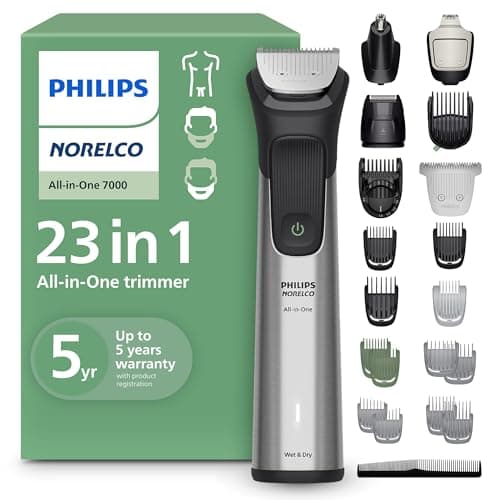
Top pick: Philips Norelco All-in-One 7000 Trimmer, 23-in-1 (Multigroom 7000)
Best Beard Trimmer
The Best Beard Trimmers
Four beard trimmers ranked on published guard range, blade material and stubble precision — including which ones handle a genuinely long beard.
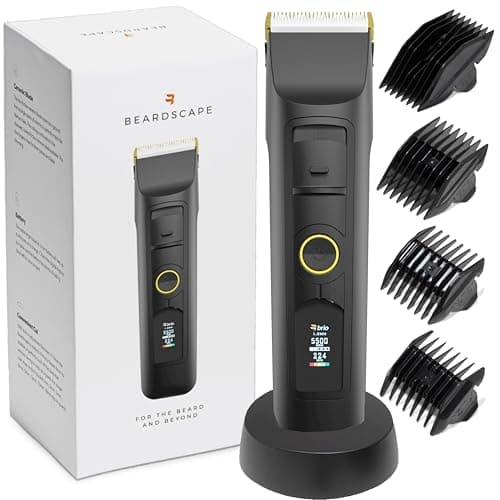
Top pick: Brio Beardscape Beard and Body Trimmer

Grooming Verdict
Beard Trimmer vs Electric Shaver
Trimmers and shavers compared on what each one physically can and cannot cut, with a decision rule based on the look you want.
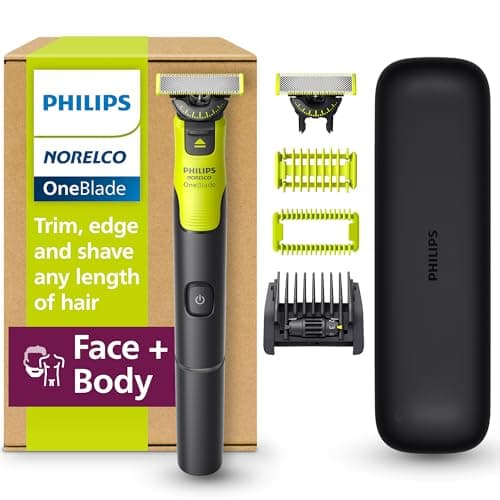
Top pick: Philips Norelco OneBlade 360 Face + Body (QP4631/90)
Best for Short Hair
The Best Hair Dryers for Men
Four dryers ranked for short hair, where nozzle control and speed matter and most premium features do not.
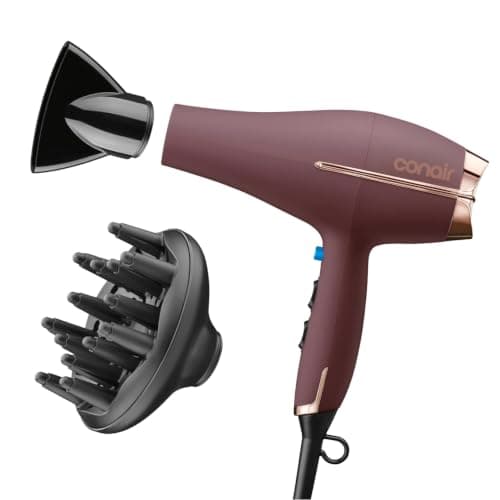
Top pick: Conair InfinitiPro 1875W Salon Performance AC Motor Dryer (259BDNRY)